Summary

  • This live page has now closed - read more on Starmer's comments here

  • Prime Minister Keir Starmer says he is "not going to yield" to pressure from President Donald Trump over the US-Israel war with Iran

  • Asked by Lib Dem leader Ed Davey at PMQs about a Trump threat to "rip up" a trade deal with the UK over their lack of involvement, Starmer says he will not get "dragged into the war with Iran"

  • Conservative leader Kemi Badenoch presses the prime minister on warnings from a former Nato secretary general that the government has shown "corrosive complacency" towards defence

  • Starmer says he doesn't agree with the comments, saying his job is to keep British people safe

  • The prime minister adds that the government has raised defence spending since taking office, and blamed the previous Conservative government for cuts to the armed forces

Media caption,
Watch: "I'm not going to not yield" over Trump pressure, says Starmer
  1. Legal advisers helping migrants pose as gay to get asylum - BBC investigationpublished at 11:45 BST 15 April

    Billy Kenber and Phil Kemp
    Politics investigations correspondent and politics reporter

    A shadow industry of law firms and advisers is charging thousands of pounds to help migrants pretend to be gay in order to stay in the UK, the BBC has found.

    Migrants whose visas are due to run out are being given fake cover stories and instructed in how to obtain fabricated evidence, including supporting letters, photographs and medical reports.

    They then apply for asylum claiming to be gay and in fear for their lives if they return to Pakistan or Bangladesh.

    In response, the Home Office says: "Anyone found trying to exploit the system will face the full force of the law, including removal from the UK."
  2. Southport, EU rules and the Chagos Islands: Other issues that might be raisedpublished at 11:34 BST 15 April

    As ever, we don't know what the two leaders will discuss this week - but away from the war in Iran, here are some of the other events from this week which could be raised:

    Southport attack 'could and should have been prevented'

    The first report from the Southport inquiry was released on Monday. It concluded that there were "catastrophic" failures from a variety of agencies, including the government's Prevent programme, that led to the attack in July 2024, resulting in the death of three young girls.

    UK could adopt EU single market rules under new legislation

    Starmer is planning legislation to allow the UK to adopt new EU laws without Parliament having to hold a full vote each time. The measure is meant to make it easier for the UK to "dynamically" align with future rules required to deliver new deals in areas like food standards. The government says MPs will retain a role in scrutinising any new rules, but it has drawn criticism from the Conservatives and Reform UK.

    Chagos deal paused indefinitely

    The Chagos Islands deal - which would have seen the UK cede sovereignty of the territory to Mauritius and pay yearly to lease back a joint UK-US military base - has been paused after Trump pulled his support. The government confirmed on Monday that legislation would not progress during this parliamentary session.

  3. Starmer makes his way to the Commons for PMQspublished at 11:30 BST 15 April

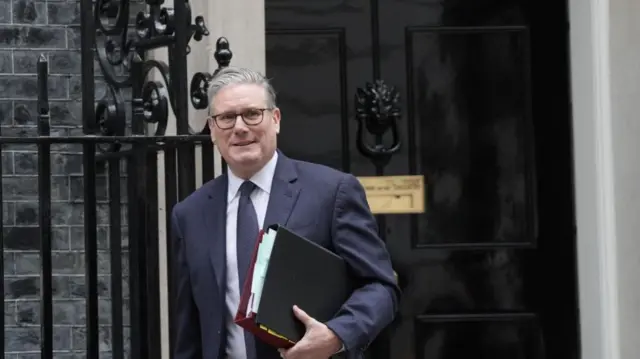
    Keir Starmer walks out of No 10 Downing StreetImage source, PA

    We've just seen Keir Starmer leave 10 Downing Street, heading for the House of Commons.

    He'll shortly be facing questions from Conservative leader Kemi Badenoch and other MPs - proceedings kick off at midday.

  4. Fuel prices and wholesale energy prices remain high from Iran warpublished at 11:25 BST 15 April

    A file photo of Cargo ships in the Gulf during the Iran warImage source, Reuters

    As we reported in our last post, the Iran war poses economic challenges to the UK, with the government facing higher energy and fuel prices alongside calls for greater defence spending. Here's a brief overview:

    Reeves 'angry' over US approach: "I feel very frustrated and angry that the US went into this war without a clear exit plan," the chancellor told The Mirror, external. Our political editor Chris Mason writes about the challenges Reeves faces in her approach to the war's economic fallout and the demands for more defence spending.

    Fuel duty pressure: The PM's cost-of-living adviser has said he should consider extending the fuel duty cut owing to rising petrol prices. The Conservatives, Lib Dems and Reform UK have all argued that the war in Iran means the chancellor should keep the existing cut in place. Starmer has previously said the planned rise would be kept "under review in light of what is happening in Iran".

    Trump wants UK to 'drill, baby, drill': "Europe is desperate for Energy, and yet the United Kingdom refuses to open North Sea Oil," Donald Trump said yesterday, calling the UK's position "absolutely crazy". The government has banned new licences for new oil and gas fields. A government spokesperson said they are reducing energy bills and "another fossil fuel crisis" shows a need "to get off the fossil fuel rollercoaster".

  5. UK faces biggest hit to growth from Iran war of major economies, IMF sayspublished at 11:17 BST 15 April

    Faisal Islam
    Economics editor

    The energy shock from the Iran war will hit the UK the hardest of the world's advanced economies, the International Monetary Fund (IMF) has forecast.

    In its latest World Economic Outlook, the IMF cut its estimate for UK growth this year to 0.8%, from the 1.3% prediction made in January before hostilities began.

    The Fund said the downgrade was due to the war, fewer interest rate cuts, and the expectation that the impact of higher energy prices would linger into next year.

    It also warned the war threatened to throw the world economy "off course" and a prolonged conflict risked a global recession. The IMF urged central banks to be cautious over raising interest rates to counter higher inflation.

    The UK's downgrade of half a percentage point is the largest of the world's advanced economies, with the UK now earmarked to have middling growth this year compared to its peers.

    This Flourish post cannot be displayed in your browser. Please enable Javascript or try a different browser.

  6. Starmer says UK will not join US blockade, insisting focus is on opening Strait of Hormuzpublished at 11:14 BST 15 April

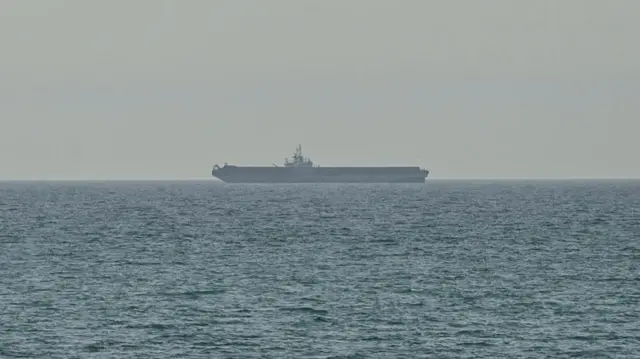
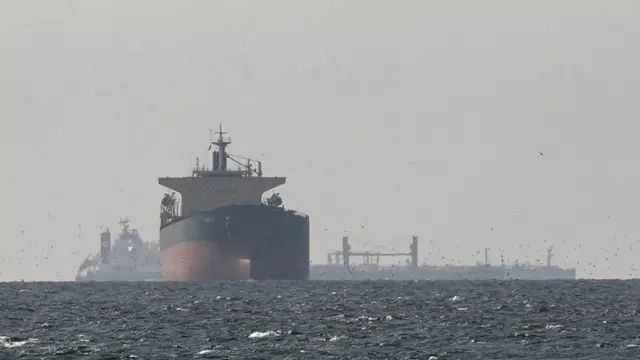
    A large tanker ship seen on the horizon on the sea. It's a grey day with a hazy sky and rippled seaImage source, AFP

    Starmer has said the UK won't join the US in enforcing their blockade of Iranian ports, and says instead his focus is on working with allies to get the strait fully open.

    This week the UK and France will co-host a summit which Starmer says will "advance work on a coordinated, independent, multinational plan to safeguard international shipping when the conflict ends".

    Starmer, who has recently returned from a visit to the Gulf region, said he had been working with allies to "keep the strait open, not shut".

    UK minesweepers and anti-drone capabilities will continue operating in the region but British naval ships and soldiers will not be used to block Iranian ports.

    Around one-fifth of global oil and liquefied natural gas shipments pass through the Strait of Hormuz, with Iran effectively cutting off the waterway since US-Israeli strikes began on 28 February.

    This Flourish post cannot be displayed in your browser. Please enable Javascript or try a different browser.

  7. Labour former Nato chief criticises Starmer's approach to defencepublished at 11:06 BST 15 April

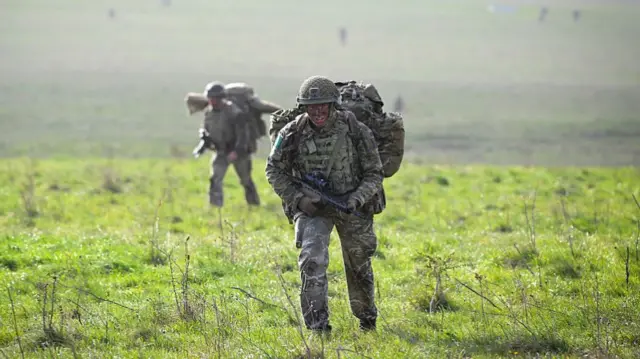
    Two soldiers in a field walking towards the camera. They wear the uniform, a large backpack and hold large gunsImage source, Getty Images

    The UK's security is "in peril" and Keir Starmer's government has shown "corrosive complacency" towards defence, a former Nato secretary general has said.

    Lord George Robertson, who wrote the government's Strategic Defence Review (SDR), accused "non-military experts in the Treasury" of "vandalism" on Tuesday. "We cannot defend Britain with an ever-expanding welfare budget," he said.

    While the SDR was delivered in June last year, the 10-year defence investment plan to fund it has been repeatedly delayed and Lord Robertson told the Financial Times, external Starmer was "not willing to make the necessary investment".

    Defence minister Luke Pollard denied the claims, saying the government is "working flat out" to publish the plan. A government spokesperson said the defence review was "backed by the largest sustained increase in defence spending since the Cold War".

    Defence spending last year was 2.3% of GDP (around £66bn). A defence official highlighted the government's target to spend 3% of GDP on defence by the end of the next Parliament and 3.5% of GDP on core defence by 2035.

    The defence review was published in June 2025 - the government said it would implement all 62 of its recommendations, but is yet to share how it will fund these plans.

  8. Starmer to face Badenoch at PMQspublished at 11:05 BST 15 April

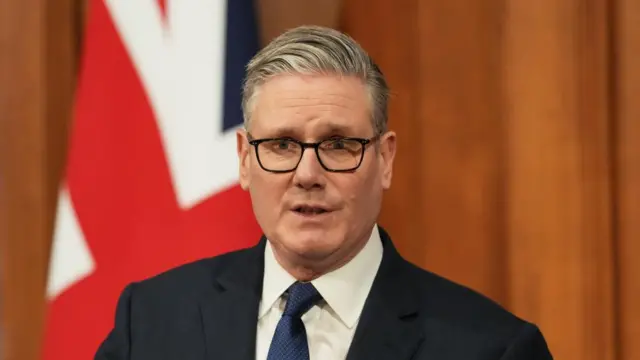
    Keir Starmer speaks in front of a UK flagImage source, PA Media

    After a two-week break for the Easter holidays, MPs are back in the House of Commons and will put questions to the prime minister at 12:00.

    The Iran war and the economic ramifications for the UK remain high on the political agenda.

    Keir Starmer and Kemi Badenoch will also have their eyes on England's local elections and the Scottish and Welsh elections to their national parliaments on 7 May.

    As ever, we don't know what the questions at today's Prime Minister's Questions will be, and much has happened in the past two weeks that could be raised in the Commons today - we'll provide an overview in the next few posts.