Summary

  • We've ended our live coverage of the Iran war on this page. You can follow all the latest updates on our new page here

  • Israeli military spokesperson Effie Defrin says there are still , hours after to include areas in western and central Iran

  • Iranian Foreign Minister Abbas Araghchi says Tehran has not asked the US "for a ceasefire"

  • In an interview with CBS News, the BBC's US media partner, Araghchi also says Iran doesn't "see any reason why we should talk with [the] Americans, because we were talking with them when they decided to attack us"

  • US President Donald Trump had said on Saturday Iran wanted to make a deal, but that he felt the terms were "not good enough"

  • Meanwhile, - the UK government says the pair spoke about the "importance of to end the disruption to global shipping"

  1. UAE port struck by drone is one of the largest oil storage facilities in Middle Eastpublished at 10:37 GMT 14 March

    Nick Beake
    Europe Correspondent, reporting from Dubai
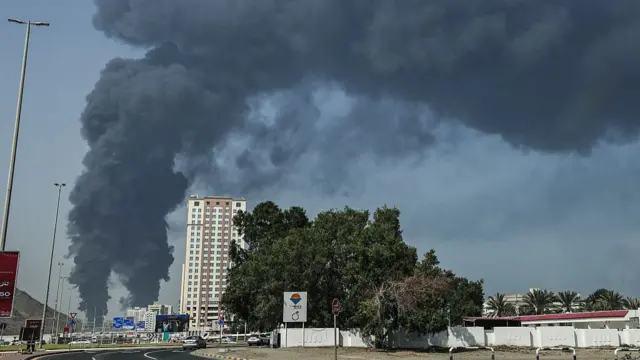
    Smoke rises from the direction of an energy installation in the Gulf emirate of Fujairah.Image source, AFP via Getty Images
    Image caption,

    Smoke rises from the direction of an energy installation in Fujairah

    The port of Fujairah, which was targeted by a drone strike earlier, is a very significant location for the United Arab Emirates and one of the largest oil storage facilities in the Middle East.

    It’s also a key location for bunkering - the refuelling of ships.

    Fujairah sits on the Gulf of Oman, rather than the Gulf, and so vessels don’t need to navigate the Strait of Hormuz - which has been practically closed to marine traffic since this war began a fortnight ago.

    Footage shared online today shows huge clouds of smoke rising across the complex on the UAE’s eastern coast.

    It comes as Iran's Revolutionary Guards Corps said US interests in the UAE, including ports, docks and military locations had become legitimate targets in light of American attacks on Kharg island, which is so crucial to Tehran’s oil industry and the wider economy.

    • We'll bring you more on the strike on Kharg Island in our next few posts

  2. Two weeks of warpublished at 10:27 GMT 14 March

    Katie Williams
    Live reporter

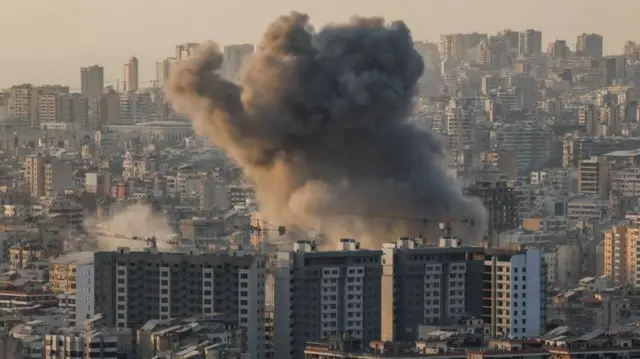
    Smoke rises after Israeli strikes on Beirut, 12 MarchImage source, Reuters

    Two weeks into the US-Israel war with Iran, the impact of the conflict has spread across the Middle East. The conflict has quickly escalated and Gulf countries have found themselves in the firing line.

    As the war enters its third week, we've taken a brief look back:

    Strikes, counter-strikes and Iranian leadership

    • The war began on 28 February, when the US and Israel launched joint strikes on Iran. Trump said the aim was to eliminate "imminent threats"
    • Iran launched counter-strikes, targeting Israel and Gulf states in response
    • After mounting speculation, Iran's Supreme Leader Ayatollah Ali Khamenei was confirmed dead a day after the conflict began
    • Tehran was then hit by an extensive bombing campaign - satellite imagery shows damage to nuclear and missile facilities. Oil depots and refineries are also struck, with photos showing black rain in the aftermath
    • Israel launched strikes on Beirut and southern Lebanon, and conducted commando raids inside Lebanese territory - it has said the campaign will continue until the Shia militia group Hezbollah is disarmed
    • The late supreme leader's son, Mojtaba Khamenei, was announced as Iran's next leader. He has not been seen in public. US Defence Secretary Pete Hegseth said he is "wounded, and likely disfigured"

    Wider repercussions

    • The human cost of the war continues to grow, with thousands of deaths reported across the Middle East
    • Thirteen US service members have been killed in operations against Iran - including all six members of the crew on board a military refuelling aircraft that crashed in western Iraq
    • Oil prices have been taken on a rollercoaster ride, exceeding $100 (£75) a barrel, prompting inflation fears and economic uncertainty
    • Travel chaos persists as a result of airspace closures and commercial jets being grounded - over 170,000 Britons register their presence in the region

    For more on how the bombing of Iran sent shockwaves around the world, our diplomatic correspondent Paul Adams has taken a closer look.

  3. Israeli strikes hit Hezbollah command centres in Beirut, IDF sayspublished at 10:02 GMT 14 March

    The Israel Defense Forces (IDF) has issued an update in the last few minutes, saying it hit Hezbollah command centres in Beirut in strikes carried out yesterday.

    It says it has struck approximately 110 command centres since the start of the war.

    "Prior to the strikes, measures were taken to mitigate the risk of harm to civilians," the IDF says.

    It has issued sweeping evacuation orders in southern Lebanon in recent days, displacing hundreds of thousands of residents.

  4. Iranian missile hits residential area in central Israel - IDFpublished at 09:56 GMT 14 March

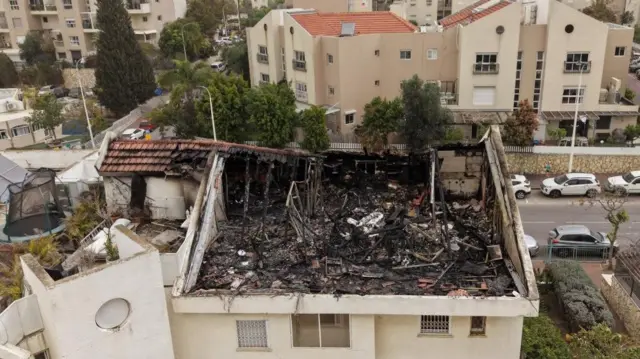
    A damaged building after a reported overnight missile strike hit a residential area near the city of Shoham, central IsraelImage source, EPA

    We're seeing some new images from Shoham, central Israel, where an overnight missile strike hit a residential area, taking the roof off a building.

    The Israel Defense Forces (IDF) said it detected Iranian missiles targeting Israel overnight.

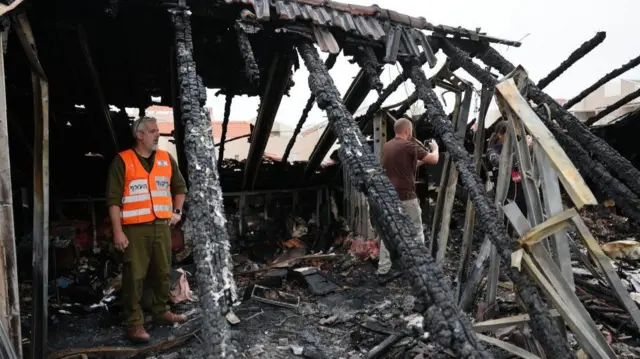
    Home Front Command members and emergency services can be seen inspecting the damage at the scene.

    Home Front Command members and emergency services inspect the damage after a reported overnight missile strike hit a residential area near the city of Shoham, central IsraelImage source, EPA
  5. Hamas urges Iran to avoid targeting neighbouring countriespublished at 09:47 GMT 14 March

    Hamas has called for Iran to avoid targeting neighbouring countries and called for nations and international organisations to work towards halting the war immediately.

    The Palestinian militant group says it is following the ongoing war in the Middle East with "deep concern" and adds that it "threatens peace and security in the region and the world".

    Hamas adds that the US-Israeli aggression against Iran violates international law and international humanitarian law in a statement on Telegram, and urged all states in the region to co-operate and stop the aggression.

    Hamas is considered a terrorist organisation by the US, UK, Israel and many other countries.

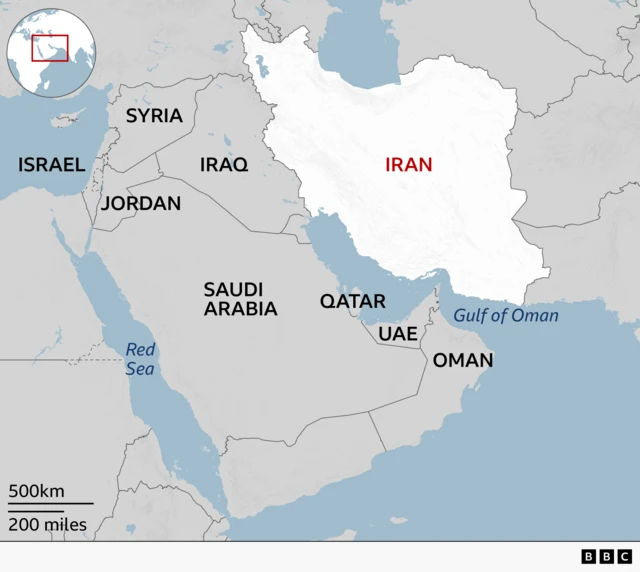
    A regional map highlighting Iran in white with its name in red. Surrounding countries are labeled in grey, neighbouring Iraq to the west and other Middle Eastern countries including Syria, Jordan, Israel, Gaza and Saudi Arabia, Qatar, UAE, and Oman. Bodies of water such as the Red Sea and the Gulf of Oman are marked in blue.
  6. Work under way to contain fire in Fujairah, UAE - local authoritiespublished at 09:33 GMT 14 March

    The media office of the government of Fujairah, in the northwest of the United Arab Emirates, says the local civil defense is working to contain a fire in the area.

    Authorities say the blaze is the result of "falling debris following the successful interception of a drone by air defenses". "No injuries were reported," they add in a post on Facebook.

    The statement comes after Bloomberg reported that some oil loading operations at the port of Fujairah, which is located just off the Strait of Hormuz, had been suspended after a drone attack and a fire.

  7. Analysis

    Qatar's evacuation order focused on areas hosting US economic interestspublished at 09:15 GMT 14 March

    Barbara Plett Usher
    Reporting from Doha

    Shortly after midnight in Doha, people living in the central Musheireb district got phone alerts to evacuate immediately to the "nearest safe place" as a "precautionary measure".

    Some residents and hotel guests rushed into underground car parks for shelter.

    Then around 01:30 (22:30 GMT) a thunderous boom echoed across the city. A member of the BBC's team here saw the explosion as the missile was intercepted, briefly lighting up the city skyline. That was followed by distant bangs in the opposite direction.

    Later this morning, the Qataris shot down a second missile.

    If you look at the areas receiving evacuation orders, it seems the aim was to protect places which host US economic interests. Iran said earlier this week these were legitimate targets.

    Offices for Google and American Express are located in Musheireb, as are some Qatari government offices.

    Parts of a 12-acre campus known as Education City were also evacuated, possibly because Microsoft has a presence there, as do branches of six American universities.

  8. Iranian capital 'hit hard' overnight, residents tell BBCpublished at 09:02 GMT 14 March

    Ghoncheh Habibiazad
    Senior reporter, BBC Persian

    I’ve been hearing from residents in the north, east and west of Tehran who tell me that the Iranian capital was "hit hard" last night.

    "Something exploded nearby and it shook the house to the core. It was never like this. My heart was pounding," said a woman in her 20s in Tehran last night.

    "I was trying to sleep and woke up with the sound of explosion," added a man in his 20s.

    "I didn’t go out at all. It seemed to be such a dangerous day," said a man in his 30s.

    While a woman in her 40s told me:"“It’s like calm before the storm right now."

  9. Iran's 'crown jewel' struck by US military - what's the latest?published at 08:53 GMT 14 March

    Jacob Phillips
    Live reporter

    Rescue workers inspect a burnt out building in front of the wreckage of a carImage source, Shutterstock
    Image caption,

    Rescuers work at the site of an Israeli air strike in the Haret Saida area of Sidon in southern Lebanon

    On Friday, Donald Trump announced that the US "totally obliterated" military targets in Iran's Kharg Island, which he called the country's "crown jewel".

    The island, situated 22 miles (35km) off the coast of Iran, is a critical economic lifeline for Tehran as one analyst says around 90% of Iran's oil exports pass through the island.

    Iranian state media says there were more than 15 explosions on the island but no damage to oil infrastructure has been reported.

    On Saturday, the Israeli military issued evacuation warnings in western Iran while Tehran's state media says the Islamic Revolution Guards Corps have launched their 48th wave of attacks against Israeli targets.

    Across the Middle East, strikes continued overnight.

    Earlier the US embassy in the Iraqi capital of Baghdad was attacked, with flames and thick smoke filmed rising from the building.

    The Lebanese health ministry says at least 12 medics were killed in the town of Burj Qalawiya when a healthcare centre was hit.

    Meanwhile, residents in the heart of Doha have received phone alerts telling them to immediately evacuate.

  10. Smoke billows in aftermath of Israeli air strike in southern Lebanonpublished at 08:23 GMT 14 March

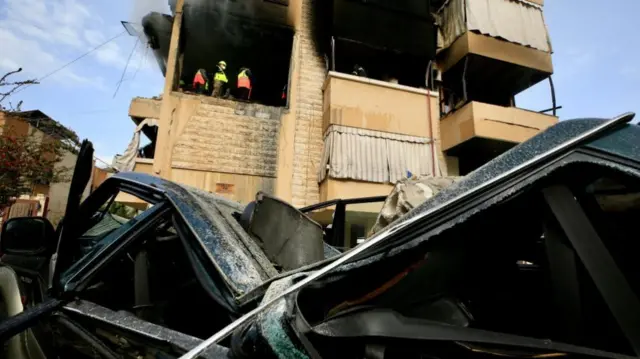
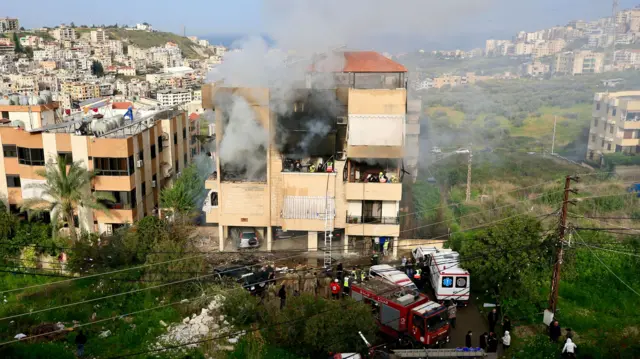
    We're seeing some new pictures from southern Lebanon, where an Israeli air strike has caused damage to a building in the Haret Saida area of Sidon.

    It is not clear if there have been any casualties.

    More than 770 people have been killed in Lebanon since the start of the war, according to the country's health ministry.

    Rescuers work at a building after an Israeli airstrike hit the Haret Saida area of Sidon, southern LebanonImage source, EPA
    Image caption,

    Photos show the aftermath of an Israeli air strike in the Haret Saida area of Sidon, southern Lebanon

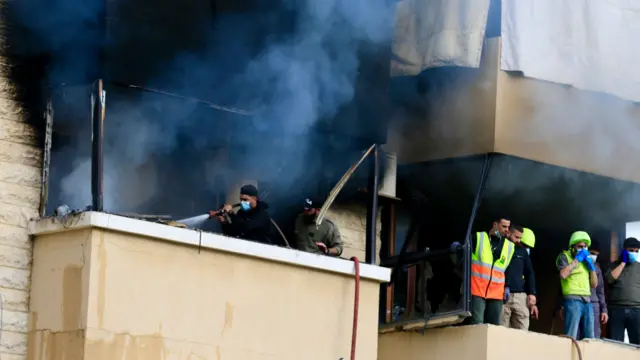
    A close-up of the building, where rescuers can be seen working as thick smoke billows from the balconiesImage source, EPA
    Image caption,

    A close-up image shows rescuers at work, as thick smoke billows from the balconies

  11. IDF strikes weapons facility in southern Lebanonpublished at 08:12 GMT 14 March

    The Israeli Defense Forces (IDF) says it has struck a weapon storage facility in southern Lebanon.

    The IDF says it spotted members of Iranian-backed armed group Hezbollah carrying rockets into the facility in the Al-Majadel area on Friday.

    Minutes later the Israeli Air Force struck the warehouse and "eliminated" those Hezbollah members, it says in a post on social media.

  12. Iran launches wave of attacks on Israelpublished at 07:57 GMT 14 March
    Breaking

    The Islamic Revolution Guards Corps says it has launched the 48th wave of attacks against Israel, Iranian state media reports.

    The Islamic Republic News Agency says that the attacks have been launched simultaneously with Hezbollah in Lebanon.

  13. Israeli military issues evacuation warning for part of western Iranpublished at 07:36 GMT 14 March

    The Israeli military has issued an evacuation warning to individuals in an industrial area of the western Iranian city of Tabriz.

    The warning was accompanied by a map outlining the designated zone and says the Israeli army will be "active in this area in the coming hours".

    It said the attack would be similar to recent actions in Tehran targeting Iranian regime military infrastructure.

    It urged people to immediately evacuate the specified area for their safety and well-being, warning that remaining there would put lives at risk.

  14. Smoke rises from US embassy in Baghdadpublished at 07:22 GMT 14 March

    Media caption,

    Fire at US embassy in Iraq after Iranian strike

    As we reported earlier, smoke has been rising above the US embassy in Baghdad following an attack on the building in the Iraqi capital.

    Reuters and the Associated Press news agencies report that a missile struck the embassy, while the AFP news agency quotes sources saying damage was caused by a drone strike.

    The attack took place shortly after two Iran-backed fighters were killed in strikes on Iraq's capital, AFP also reported, citing several sources.

  15. No damage to oil infrastructure on Kharg Island - Iranian state mediapublished at 06:57 GMT 14 March

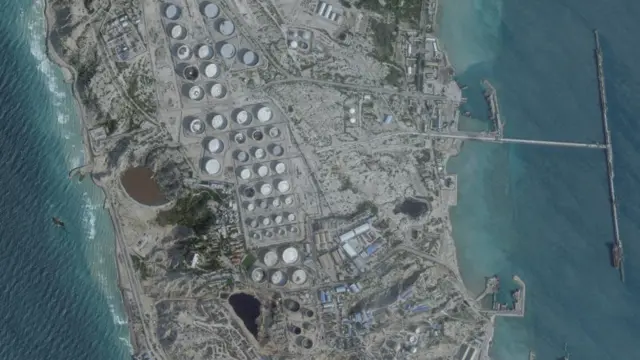
    A satellite image shows an oil terminal at Kharg IslandImage source, Reuters
    Image caption,

    A satellite image shows an oil terminal at Kharg Island

    On Friday, US President Donald Trump said the US military had bombed Iran's Kharg Island.

    He said that he did not target the oil infrastructure. The island is a critical economic lifeline for Tehran as one analyst says around 90% of Iran's oil exports pass through the island.

    The Fars News Agency, which is linked to the Islamic Revolution Guards Corps, says that more than 15 explosions were heard on the island during the US attacks.

    The attacks targeted air defences, a naval base, airport control tower and a helicopter hangar, the agency says in a post on Telegram.

    There was no damage to oil infrastructure on Kharg Island, Iranian state media reports.

  16. At least 12 medics killed in Israeli strike in Lebanon, health ministry sayspublished at 06:40 GMT 14 March

    Wyre Davies
    Reporting from Lebanon

    Reports from southern Lebanon say that more targets not directly related to Hezbollah have been hit in Israeli airstrikes.

    The Lebanese health ministry said that at least 12 medics, including doctors and nurses were killed in the town of Burj Qalawiya when the town's primary healthcare centre was hit overnight.

    Israel has also bombed other civilian infrastructure, including roads and bridges. It has almost doubled the size of its self-declared evacuation zone in the south, urging hundreds of thousands more people to evacuate and head north, where charities and the Lebanese state are struggling to cope with the influx of displaced people.

    Tensions in Lebanon are rising and, with uncompromising language both from Israel and Hezbollah, the fear here is that a wider conflict may be unavoidable.

  17. Evacuations in Doha's central districtpublished at 06:13 GMT 14 March

    Barbara Plett Usher
    Reporting from Doha

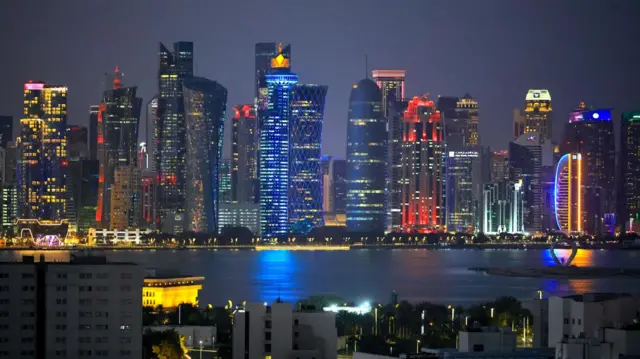
    An image of the Doha skyline illuminated at nightImage source, EPA
    Image caption,

    The skyline of Doha pictured earlier this week

    Qatar's interior ministry made an announcement earlier saying it was evacuating a number of areas as a precautionary measure.

    The nature of the threat is still unknown at this stage, but Qatar did intercept two missile attacks overnight and this morning.

    It seems the aim is to protect places that host US economic interests after Iran said earlier this week these were legitimate targets.

    Locals received phone alerts to immediately evacuate Doha’s central Musheireb district, where offices for Google and American Express are located. Witnesses said some residents rushed to underground car parks for shelter.

    Guards are also said to be stationed at Microsoft’s Qatar headquarters, and the Reuters news agency is reporting that authorities evacuated part of an area that hosts branch campuses of six US universities.

    Elsewhere American embassies remain under threat. Security officials in Baghdad say the mission there has been hit in an attack; and the State Department is ordering non-essential government employees to leave Oman.

  18. US embassy in Baghdad struck by missilepublished at 05:49 GMT 14 March

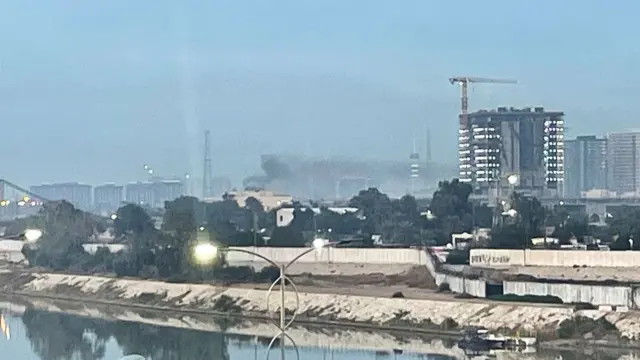
    Smoke rises in the distance of a city landscape with a high rise building next to a crane, and water at the bottom of the frame.Image source, Getty Images
    Image caption,

    Smoke rises above buildings in Baghdad

    Earlier, we started getting details about an attack on the US embassy in Iraq's capital, Baghdad.

    A missile struck the building, causing smoke to rise from the embassy's building, Reuters reported, citing sources, without providing details on the damage.

    Associated Press reports that a missile struck a helipad in the US embassy compound.

    Meanwhile, AFP quotes sources saying a drone struck the embassy.

    The attack took place shortly after two Iran-backed fighters were killed in strikes on Iraq's capital, AFP reported, citing several sources.

    We'll bring you more updates as we get them.

  19. Potential troop movements suggests Washington is weighing its optionspublished at 05:28 GMT 14 March

    Paul Adams
    Diplomatic correspondent

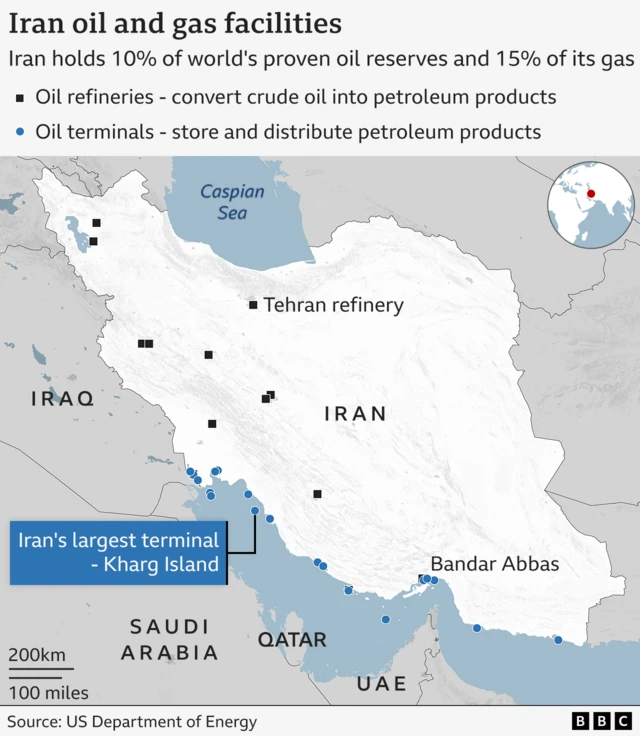
    A map of Iran showing the locations of major oil and gas facilities. Black squares mark oil refineries, including one near Tehran. Blue circles mark oil terminals along Iran’s southern coastline on the Gulf, with a label identifying Kharg Island as Iran’s largest oil terminal. Neighbouring countries such as Iraq, Saudi Arabia, Qatar, the UAE are shown west of Iran, with the Caspian Sea to the north. A small inset map highlights Iran’s position on a world map.

    It’s being widely reported in US media that the American military is sending additional forces to the Gulf, including what’s known as an amphibious ready group (ARG), with up to 5,000 Marines and sailors.

    The amphibious assault ship USS Tripoli will join the substantial armada already operating off the coast of Iran.

    It’s not clear which other vessels will accompany the Tripoli, but an ARG typically includes ships capable of carrying landing craft, as well as large numbers of helicopters.

    The latest deployments suggest the Pentagon is considering an expanded range of options. These could include protecting commercial shipping in the Strait of Hormuz and conceivably some kind of limited amphibious landing.

    One possible objective is Iran’s tiny Kharg Island, in the northern Gulf.

    Lying 22 miles off the Iranian mainland, Kharg is a vital oil hub, where tankers have been seen filling up with Iranian oil since the war began two weeks ago.

  20. More US Marines to be sent to Middle East, reports saypublished at 05:23 GMT 14 March

    More US Marines and warships are expected to be deployed to the Middle East, two officials confirmed to CBS News, the BBC's US partner.

    The officials said the reinforcements were to come from an amphibious ready group and its Marine expeditionary unit, with one official adding that the group would be led by the Japan-based USS Tripoli, an amphibious assault ship.

    The unit headed by the USS Tripoli typically consists of around 5,000 sailors and Marines distributed across several warships.

    The movement of US personnel was first reported by the Wall Street Journal, external.

    The BBC has approached the US military and the Pentagon for comment, though future troop movements are usually not confirmed publicly.