Summary

  1. Trump yet to take to the podium at signing ceremonypublished at 10:08 GMT 22 January

    Donald Trump was due to begin his signing ceremony around 30 minutes ago, but there's no sign of the US president in the Davos hall just yet.

    Remember you can follow his remarks live at the top of the page when he appears at the podium.
  2. Which countries have agreed to join the Board of Peace?published at 09:57 GMT 22 January

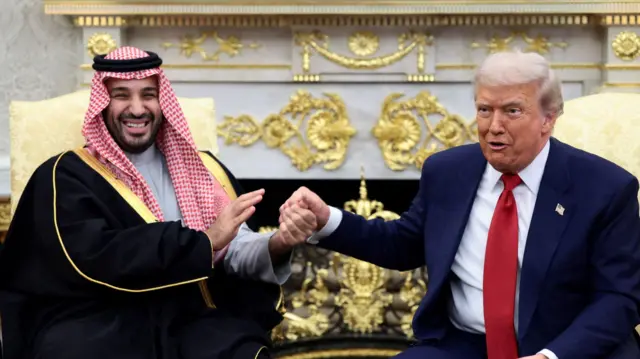
    Saudi Crown Prince Mohammed bin Salman and TrumpImage source, Reuters
    Image caption,

    Saudi Crown Prince Mohammed bin Salman visited the White House in November

    The Board of Peace will be made up of world leaders, and was originally conceived as part of the plan to rebuild Gaza, but its mandate has expanded.

    On Wednesday, seven countries including Saudi Arabia, Qatar, Turkey and Egypt announced they would join the board. Israel has also publicly confirmed its participation.

    A number of countries had already signed up - including Morocco, Belarus and Bahrain.

    Canada, Russia and the UK are among nations to have also been invited. This morning Foreign Secretary Yvette Cooper told the BBC the UK wouldn't be a signatory today, citing concerns about the involvement of Russian President Vladimir Putin.

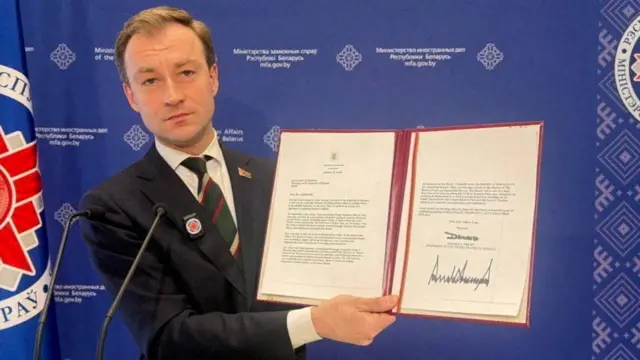
    Belarus's Foreign Ministry spokesman Ruslan Varankov shows a letter from Donald Trump inviting Belarus's President Alexander Lukashenko to join the "Board of Peace", in an image released on MondayImage source, Reuters
    Image caption,

    Belarus's Foreign Ministry spokesman Ruslan Varankov shows a letter from Donald Trump inviting Belarus's President Alexander Lukashenko to join the "Board of Peace", in an image released on Monday

  3. Signing ceremony for Trump's Board of Peace to begin shortly - watch livepublished at 09:30 GMT 22 January

    We're expecting a signing ceremony to begin for Donald Trump's Board of Peace very shortly.

    We'll bring you developments from the event in Switzerland here, and you can also watch live at the top of the page.

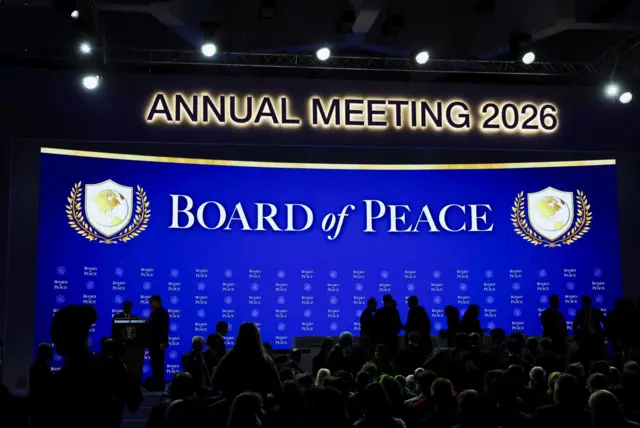
    Board of Peace logo on stageImage source, Reuters
  4. 'Dictators may have subordinates, but we must be partners and friends' - Germany's Merzpublished at 09:29 GMT 22 January

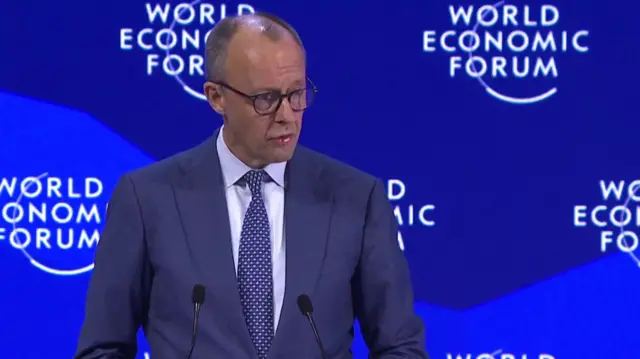
    Merz giving a speech in DavosImage source, WEF

    German Chancellor Friedrich Merz is among the world leaders speaking in Davos today. He says no countries are at "the mercy of a new world order", but instead have a "choice".

    A world where only power counts is a "dangerous place" in which the "winners are very harsh", he says.

    He welcomes the fact that the US is taking the "threat" posed by Russia in the Arctic seriously. "We share the conviction that as European Nato allies, we must do more to secure the high north," he says.

    He then welcomes Trump's comments yesterday, calling them the "right way to go", adding that tariffs would "undermine" the foundations of transatlantic relations.

    However, Merz says it has been "frustrating" to see the recent strain between Nato members, adding that it is essential to "uphold" the alliance.

    "Dictators may have subordinates, but we must be partners and reliable friends."

    He says Europe must be the antithesis to "state sponsored unfair trade practices, raw material protectionism, tech prohibition and arbitrary tariffs", adding that "tariffs have to be replaced by rules and those rules need to be respected".

  5. What do we know about Donald Trump's Board of Peace?published at 09:23 GMT 22 January

    As we’ve been reporting, a signing ceremony for Donald Trump’s Board of Peace is set to take place at Davos today. Here’s what we know about the body:

    A Board of Peace for Gaza?

    Trump's Board of Peace was initially intended to be aimed at helping end the two-year war between Israel and Hamas in Gaza and oversee reconstruction of the Strip.

    But, a leaked charter does not mention the Palestinian territory, and suggests the organisation might instead be designed to replace functions of the United Nations.

    However, included within the Board of Peace’s framework is a “Gaza Executive Board”. This will be responsible for overseeing all on-the-ground work of a Gaza administrative group, according to the White House.

    What we know about the board now

    In the leaked document, the body is declared to be an international organisation mandated to carry out peace-building functions under international law.

    The leaked charter says the body will enter into force once three states formally agree to be bound by it.

    Member states would be given renewable three-year terms and permanent seats would be available to those contributing $1bn (£740m), according to the document.

    Donald Trump is named as chairman - and separately as the US representative - and has authority to appoint executive board members and create or dissolve subsidiary bodies.

    The White House has already listed seven members of the founding executive board, including US Secretary of State Marco Rubio, World Bank President Ajay Banga, and former UK Prime Minister Tony Blair.

    What about Russia?

    Trump also says that Russia's Vladimir Putin has "accepted" an invitation to appear on the Board of Peace, suggesting the Russian leader had offered to help with frozen Russian assets. Reuters reports Putin is considering the offer.

    But UK Foreign Secretary Yvette Cooper said this morning that the UK has "concerns about President Putin being part of something which is talking about peace when we still haven't seen any signs from Putin there will be a commitment to peace in Ukraine".

  6. Trump's Board of Peace signing taking place during day of global diplomacypublished at 09:07 GMT 22 January

    US President Donald Trump's Davos speech dominated the diplomatic agenda on Wednesday. Today more global leaders take to the stage in Switzerland, while crucial meetings take place on the sidelines of the summit, as well as in the UK. Here's what's happening:

    • A signing ceremony for Donald Trump's Board of Peace is set to take place at Davos this morning
    • Trump is also set to meet Volodymyr Zelenksy in Switzerland, after yesterday suggesting that Russia and Ukraine are "reasonably close" to agreeing to a ceasefire
    • Meanwhile, the US president's special envoy Steve Witkoff and son-in-law Jared Kushner are on their way to Moscow, where they'll meet with Russian President Vladimir Putin
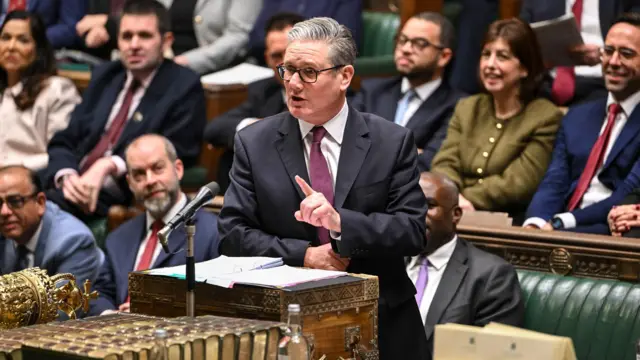
    • On Greenland, UK Prime Minister Keir Starmer is set to welcome Denmark's Prime Minister Mette Frederiksen for talks, after Starmer vowed he "will not yield" in opposition to a US takeover of the Arctic territory during Prime Minister's Questions
    • We're expecting a less dramatic day at the World Economic Forum, where speakers at various talks include: Israeli President Isaac Herzog, German Chancellor Friedrich Merz, Finland's President Alexander Stubb, and Fifa's Gianni Infantino
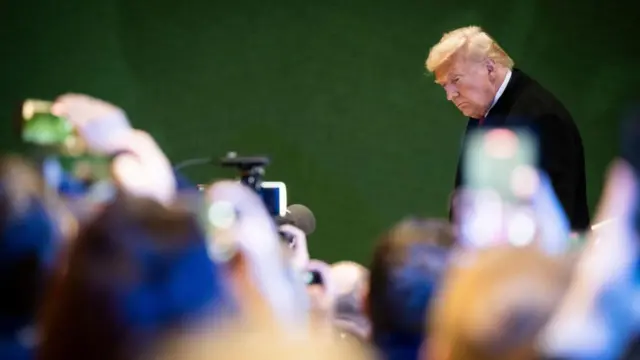
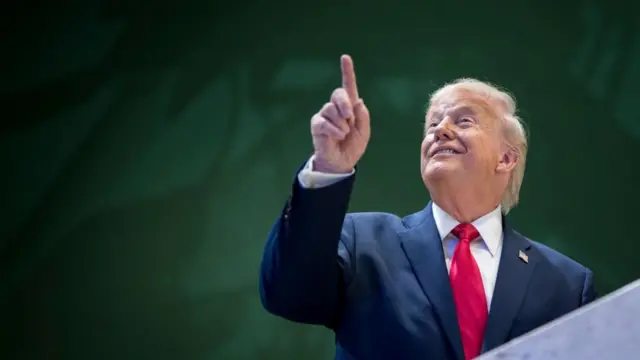
    Donald Trump against a green background with blurred out heads of international press in foreground.Image source, EPA
  7. UK foreign secretary offers further detail on 'Arctic sentry' for Greenlandpublished at 08:47 GMT 22 January

    Foreign Secretary Yvette Cooper has also now spoken to BBC Radio 4's Today programme - she spoke to BBC Breakfast a little earlier.

    Sharing further details on the "Arctic sentry" discussed as part of the deal framework, Cooper said this would be a combined operation programme that draws Nato countries together to work on a "shared threat".

    The work could involve "different Arctic countries coming together, supported by other Nato countries", she said.

    Asked why Trump climbed down on previous threats, Cooper said: "I think there's been a very co-ordinated approach across allies."

    Cooper was also asked about the UK's decision to spend billions on the Chagos deal - in recent days Trump criticised the deal, which gives the Chagos Islands to Mauritius while leasing back a key UK-US military base.

    Cooper said the deal was about ensuring the UK has strong defence and intelligence co-operation with the US, and that it had a legal basis for continuing this in the future.

    She added that Trump used the Chagos deal as a way of putting pressure on the UK over Greenland in recent days, calling it shameful that the Conservatives "jumped on that bandwagon".

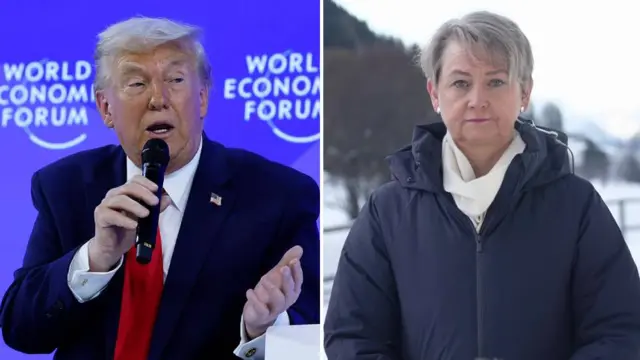
    Left: President Turmp on stage at the World Economic Forum in Davos Right: Yvette Cooper speaking outside in the snow at DavosImage source, Getty Images | BBC
  8. Danish committee proposes 'Arctic sentry' in Greenland security talkspublished at 08:30 GMT 22 January

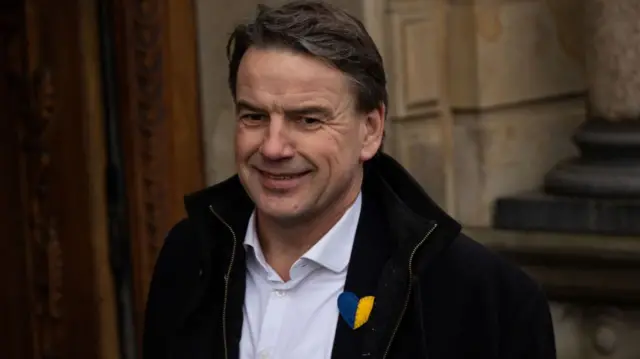
    Christian Friis BachImage source, Getty Images

    The chairman of the Danish parliament's foreign policy committee has offered some detail on what has been proposed in security talks on Greenland.

    Speaking to the BBC's Today programme earlier, Christian Friis Bach said his committee proposed the idea of an "Arctic sentry" - made up of vessels and aircraft patrolling the region - in talks with Nato Secretary General Mark Rutte.

    He said he hoped this would be taken forward in discussions with Trump.

    "Denmark has scaled up our military presence already together with Nato allies. I hope the Americans will join; this would be a welcome development," he told the BBC.

  9. Rutte addresses aims of 'very good' Greenland talks with Trumppublished at 08:15 GMT 22 January

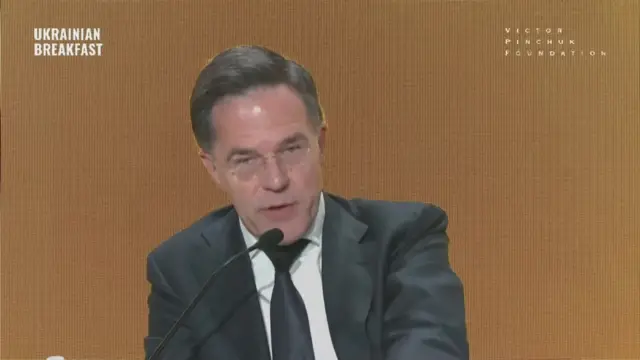
    Mark RutteImage source, Reuters

    As events resume at the World Economic Forum in Davos this morning, Nato Secretary Mark Rutte has been addressing the "very good talks" he held with Donald Trump on Greenland yesterday.

    As a reminder, Trump said the pair agreed the "framework of a future deal" for Greenland when they met yesterday in Switzerland, but little detail has emerged so far about the nature of this agreement.

    One element of the talks, Rutte clarifies this morning, asked how Nato allies can help make sure that "the Arctic circle remains safe, [and] that the Russians and the Chinese stay out".

    Another objective of the talks, Rutte continues, is to ensure that Russia and China "will not gain access to Greenland's economy" militarily - and this will be a discussion "taken forwards".

  10. UK concerned about Putin's involvement in Board of Peacepublished at 08:10 GMT 22 January

    Cooper also tells BBC Breakfast the UK has been invited to join Trump's Board of Peace, which will be focus of a signing ceremony at Davos today.

    But she says the UK won't be one of the signatories "because this is about a legal treaty that raises much broader issues."

    "And we do also have concerns about President Putin being part of something which is talking about peace when we still haven't seen any signs from Putin there will be a commitment to peace in Ukraine," Cooper says.

  11. How much of a role did the UK have in Trump's tariff U-turn?published at 08:09 GMT 22 January

    Asked how much of a role the UK had in diplomacy behind the scenes, Cooper says Keir Starmer has been "strong and robust", and that the UK did three key things.

    It has been "unwavering" in supporting Greenland and Denmark's sovereignty, has "coordinated closely with allies", and has put forward "constructive approaches" about strengthening Arctic security, including through an "Arctic sentry as part of Nato".

    Asked how the relationship between the US and UK is holding up following tensions in recent days - included barbed comments over the Chagos islands - Cooper says: "We work closely with the US, we will continue to work closely with US, but we do so always in the UK's national interest".

  12. UK engaged in 'very determined diplomacy' on Greenland - foreign secretarypublished at 08:04 GMT 22 January

    Foreign Secretary Yvette Cooper has just spoken to BBC Breakfast from Davos.

    She says a period of "very determined diplomacy" has taken place in recent days, with the UK remaining "unwavering" in its principles on Denmark and Greenland's sovereignty.

    She hopes the "coordinated and calm" approach pursued by the UK and allies has brought countries to "a better place on collective security" against threats like Russia, she says.

    Asked what Trump's potential deal entails, she says: "Greenland is clearly part of the Kingdom of Denmark; that remains unwavering".

    Also asked whether the US will be granted small pockets of Greenland for military bases, Cooper says Nato is working on an "overarching framework", which could include an "arctic sentry, similar to the Baltic sentry we already have within Nato".

    She adds that the US, Greenland and Denmark will "continue their talks and discussions" which keep the principle of sovereignty "very firm" while also discussing shared security concerns.

    On whether minerals are part of the deal, Cooper says: "I'm not aware of any discussion having taken place on that at all".

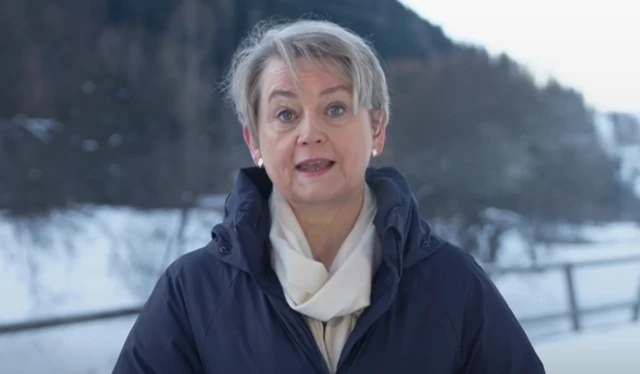
    Foreign Secretary Yvette Cooper in winter clothing in Davos.
  13. Analysis

    Feeling of relief in Westminster - but outstanding questions remainpublished at 07:28 GMT 22 January

    Henry Zeffman
    Chief political correspondent

    Keir Starmer at PMQsImage source, PA Media

    There are feelings of relief and pride in government this morning.

    Those around Keir Starmer feel that President Trump backing down on Greenland is a vindication of the approach he has taken. And they talk up the intense behind the scenes diplomacy to which British officials have contributed.

    But clearly an awful lot of eggs have been broken on the way to making this omelette.

    It is hard to see how the relationship between Trump and Starmer can revert to quite what it was over the past year given the president’s tirade on Tuesday morning, and then the prime minister’s vow not to “yield” to him at Prime Minister’s Questions yesterday.

    There may well be outstanding questions now, as a consequence of this week’s developments, about the UK-Mauritius deal over the Chagos Islands.

    The government is determined to press ahead and Starmer was clear that he believed Trump was only using the issue as a way to get to him over Greenland.

    That interpretation is certainly bolstered by the explanation Trump gave on Tuesday night for changing his mind, which was based on a couple of premises about the deal that were just simply false.

    Nevertheless, the government is still left with a situation where a deal about the security of a US-UK military base is now being objected to by the US. That seems quite problematic.

    But that is a parochial concern in the context of the questions raised this week about the viability of the western alliance and institutions. Those questions are being asked across political parties but especially in government like never before.

    And in that context President Trump backing down on Greenland may well just be a temporary respite.

  14. Nato's Rutte was ridiculed for calling Trump 'Daddy' - now he's aided a major climbdownpublished at 07:23 GMT 22 January

    Nick Beake
    Europe Correspondent

    Mark Rutte was widely lampooned after referring to Donald Trump as “Daddy” in praise of his ability to strongarm the Nato family into boosting their defence spending.

    But it seems the secretary-general has now helped initiate the mother of all climbdowns, as the president tears up his latest tariff threat.

    European leaders are digesting what was a tumultuous few hours in Davos yesterday.

    Denmark's foreign minister, Lars Lokke Rasmussen, said the day had ended "on a better note than it began".

    The Deputy Prime Minister of Sweden, Ebba Busch, told the BBC's Newsnight the relationship between the EU and US had been damaged and now was the time for Europe to "toughen up".

    EU leaders are set to meet in Brussels this evening in what was convened as an emergency summit to respond to a crisis that threatened to blow apart the transatlantic alliance.

    The tension has now eased but this is far from a problem solved.

  15. 'We cannot negotiate on our sovereignty' - Danish PMpublished at 07:16 GMT 22 January
    Breaking

    Adrienne Murray
    Reporting from Copenhagen

    We've just received a statement from Danish Prime Minister Mette Frederiksen. Here it is in full:

    "Security in the Arctic is a matter for the entire Nato alliance. Therefore, it is good and natural that it is also discussed between Nato's Secretary General and the President of the United States. The Kingdom of Denmark has long worked for Nato to increase its engagement in the Arctic.

    "The Danish government has coordinated our efforts with the Greenlandic government Naalakkersuisut throughout the process. We have been in close dialogue with Nato and I have spoken to Nato Secretary General Mark Rutte on an ongoing basis, including both before and after his meeting with President Trump in Davos.

    "Nato is fully aware of the position of the Kingdom of Denmark. We can negotiate on everything political; security, investments, economy. But we cannot negotiate on our sovereignty. I have been informed that this has not been the case either.

    "And of course, only Denmark and Greenland themselves can make decisions on issues concerning Denmark and Greenland.

    The Kingdom of Denmark wishes to continue to engage in a constructive dialogue with allies on how we can strengthen security in the Arctic, including the US's Golden Dome, provided that this is done with respect for our territorial integrity."

  16. What did Nato and Trump discuss on Greenland?published at 07:11 GMT 22 January

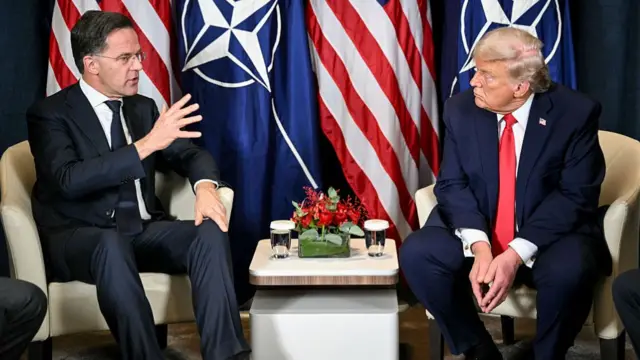
    Mark Rutte and Donald Trump sit at Davos in front of Nato and US flagsImage source, Getty Images

    After talks in Davos with Nato Secretary General Mark Rutte, Donald Trump last night said the pair had "formed the framework of a future deal with respect to Greenland".

    But the details of the agreement remain unclear.

    Diplomatic sources have told the BBC's US partner CBS that there was no agreement for American control or ownership of the autonomous Danish dependent territory.

    After the talks Rutte told Fox News that the issue of Greenland "did not come up anymore in my conversations tonight with the president".

    Speaking to reporters after his meeting with the Nato head, Trump suggested the possible deal could involve mineral rights, and also indicated there could be collaboration on the "Golden Dome" defence system.

    "It's the ultimate long-term deal", Trump later told reporters. "It puts everybody in a really good position, especially as it pertains to security and to minerals."

    After the talks, Nato spokesperson Allison Hart commented: "Negotiations between Denmark, Greenland, and the United States will go forward aimed at ensuring that Russia and China never gain a foothold - economically or militarily - in Greenland."

  17. Latest twist in Trump diplomacy brings relief for Starmerpublished at 06:59 GMT 22 January

    Chris Mason
    Political editor

    Hurtling into view, noisily and quickly, comes another twist in the rollercoaster that is diplomacy in the era of President Trump.

    Splenetic social media posts, bold claims in front of the cameras and provocative and to some deeply offensive AI-generated images of an American-owned Greenland.

    And now, so many of America's allies allow themselves a deep breath and an expression of relief.

    Just as so many of the furious rows begin on social media under this US president, this latest one has cooled considerably via social media too - with another post on his platform Truth Social.

    Within the government here in the UK, there is a quiet pride that Britain made its contribution to the welter of diplomacy European neighbours and others have been doing in recent days.

    I hear that the British diplomatic machine cranked up at every level: involving ministers, officials and embassies.

    The prime minister insisted on what he saw as the merits of "calm discussion" - but had to judge how to calibrate his response, both publicly and privately.

    At the core of this row, there was a fundamental public disagreement between Downing Street and the White House, something Sir Keir Starmer has sought to avoid where possible.

    Starmer will be meeting the Danish prime minister later today.

  18. A heavy day of diplomacy after Trump backs down on Greenland tariffspublished at 06:59 GMT 22 January

    Donald Trump has backed off his tariff threats towards Europe, announcing that the "framework of a future deal" had been discussed on Greenland.

    In the UK, Keir Starmer - who earlier this week said only Greenland and Denmark should decide Greenland's future - is expected to host Danish Prime Minister Mette Frederiksen later today.

    Elsewhere, Ukraine peace talks will be in focus, with the US leader expected to meet Ukraine's President Volodymyr Zelensky in Davos, while there is also set to be a signing ceremony related to Trump's Board of Peace also at the summit.

    Stick with us as we bring you updates throughout the day.

  19. Trump drops bombshell as he backs away from tariff threats over Greenlandpublished at 22:12 GMT 21 January

    Charlotte Hadfield
    Live editor

    US President Donald Trump pictured in the hallway of the World Economic Forum with his left arm in the airImage source, EPA/Shutterstock

    All eyes were on Davos this morning as world leaders waited to find out how far Trump was prepared to go to acquire Greenland.

    In a speech that lasted more than an hour, Trump said he was seeking "immediate negotations" to take control of the Arctic territory, but ruled out using "excessive force" to do so.

    The US president had threatened to impose 10% tariffs on eight European allies if they opposed his plans.

    But in a bombshell announcement this evening, Trump confirmed this was no longer the case and his latest tariff threats were off the table.

    He also announced the "framework of a future deal" for Greenland, following a "very productive meeting" with Secretary General of Nato Mark Rutte.

    US markets rose sharply following the announcement, which may also offer some relief for the US's European allies.

    But the news still poses more questions than answers, leaving allies guessing what exactly what role the US might have in the island terrority going forward, writes the BBC's Washington correspondent.

    We're now pausing our live coverage, but you can read more here:

    Trump drops tariffs threat over Greenland after Nato talks

  20. Analysis

    European officials burning the midnight oil to work out what just happenedpublished at 21:48 GMT 21 January

    Gary O'Donoghue
    Chief North America correspondent

    The Danish foreign minister greeted the news of President Trump’s apparent climbdown with the words: “the day ended better than it started”.

    Surely the understatement of the century, at least in diplomatic terms.

    On the face of it, normal service has resumed, though how or why the president has been talked down is still very unclear.

    From the president’s words, the issue of ownership of Greenland has, seemingly, been taken off the table – having been the central part of his claim.

    In an interview, the president said the outlines of the deal was everything the US wanted – though how that can be true is again unclear. He promised to explain the deal “down the line”, as he put it.

    They will be burning the midnight oil in European capitals tonight trying to work out just what has just happened.