Summary

  • The public inquiry into the Nottingham attacks of 13 June 2023 - in which Valdo Calocane killed Barnaby Webber, Grace O'Malley-Kumar and Ian Coates, and seriously injured three others - is continuing to hear evidence in London

  • Consultant psychiatrist Dr Faizal Seedat, of Nottinghamshire Healthcare NHS Foundation Trust - which cared for Valdo Calocane before his killings - gave evidence on Thursday

  • Seedat, the inquiry has heard, had warned Calocane during his second admission that he "would end up killing someone" as part of a "frank conversation"

  • The consultant said he was not made aware that Calocane had watched videos of mass shootings online, adding the triple killer had also viewed a video about capital punishment

  • Seedat also admitted he was not aware that Calocane thinking about "red rum" was a reference to murder, and unaware the killer endured an "extreme" reaction after taking cannabis

  1. Calocane did not tell doctor about cannabis experiencepublished at 12:01 BST 23 April

    When Valdo Calocane was admitted to Highbury Hospital in Nottingham, the inquiry heard urine tests were carried out to test for substances, including illicit substances. Those tests showed no evidence of illicit substances.

    However, the inquiry heard Calocane had previously admitted to trying cannabis and had an "extreme" reaction, saying he felt like he was going to die.

    Langdale asked: "So if he'd told you that... would you have explored that more and wanted to understand when and how that happened?"

    Seedat said: "It would have been helpful to understand... what effect it would have if he did take cannabis."

    He added Calocane should have told him.
  2. Common for patients to 'express risk to others', doctor sayspublished at 11:55 BST 23 April

    Dr Seedat said he had seen "a few occasions" in which patients had expressed risk to others in text messages.

    He said: "It is something that is commonly expressed in patients who do have psychotic experiences because there is a general feeling of fear, apprehension, anger etc., because they find it difficult to understand and [are] frustrated [about] why it is happening to them and not to someone else."

    He said he had not seen expressions of violence of "quite the same level" as Calocane in other patients.

  3. Calocane denied being dangerouspublished at 11:48 BST 23 April

    Messages from Calocane used "violent" language, counsel to the inquiry Rachel Langdale KC said.

    She outlined one which said: "I think they are watching, I know that I can break their heads with my hands."

    Dr Seedat said: "I regularly asked him if he had any thoughts or plans about wanting to hurt other people, because I was well aware that some of these experiences can lead to people doing these things and I'm also well aware of the incidents that had already taken place.

    "I laid it out to him about what the potential consequences could be."

    When questioned if Calocane's words were "dangerous", Dr Seedat said: "Having regularly asked and questioned about risk, I was well aware these were potential pointers towards risk, it's not that I had ignored them.

    "Consistently, during the times he was admitted, VC denied having any such experience or thoughts at that time."

  4. Doctor did not realise 'red rum' was reference to murderpublished at 11:41 BST 23 April

    The journal of text messages between Valdo Calocane and his family showed that in April 2020, Calocane had expressed concerns he was being monitored.

    In another log, he said: "I was thinking about red rum."

    A colleague had flagged the text as "worrying in an already worrying situation", but Dr Seedat said: "It didn't worry me. There was a lot of religious discussions, whether religion could somehow help VC solve these experiences he had been experiencing."

    Dr Seedat said he did not know that "red rum'" was murder spelled backwards.

    He added: "That would be something I would have discussed with him and try to determine what he meant by it."

  5. Consultant did not share text messages provided by killer's familypublished at 11:24 BST 23 April

    The inquiry has been told that text messages handed over by Calocane's family were looked into by Dr Seedat.

    He said he read them, but did not share them in full with any other professionals.

    He said: "I used the summary of describing what was evident within the text messages.

    "I carefully read all the messages and highlighted all the important messages within the email."

    He did not share this with the multi-disciplinary meetings, which Dr Seedat said "in hindsight maybe I should have".

  6. Doctor told response to email was 'completely inappropriate'published at 11:17 BST 23 April

    Seedat, the inquiry heard, also told police in an email that Valdo Calocane had "no recollection of the events" after breaking into his neighbour's flat.

    However, he told the inquiry: "There was a variability in terms of - at times he said he didn't remember the incident, and at other times he said that he did."

    Counsel to the inquiry, Rachel Langdale KC, said: "Why did you say that to the police? Instead of saying he had no recollection of the events, saying sometimes he had recollection of the events and other times he didn't?"

    "I should have said that," Seedat said.

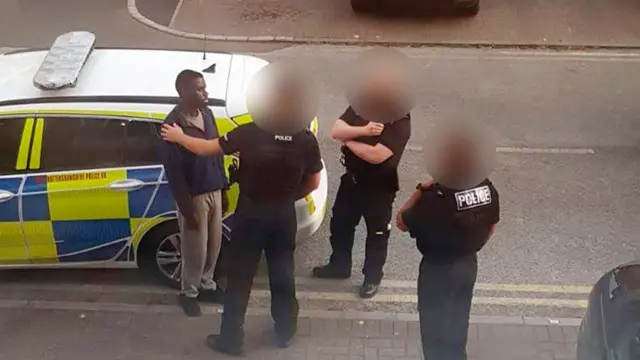
    Calocane outside Brook Court being detainedImage source, Supplied

    Seedat said he did not think the police would use the information as a "decision-maker" on whether they would charge him.

    Langdale said: "It sounds from your evidence as though you've tightened up on that practice since this case, then that you've recognised that it's completely inappropriate for you to respond to an email like that?"

    "That's correct," Seedat said.

  7. Police emailed doctor asking for opinion on Calocanepublished at 11:07 BST 23 April

    The inquiry heard police contacted Seedat while Valdo Calocane was in hospital, asking for his view on Calocane's capacity at the time of an incident in which he broke into a woman's flat.

    That incident was on 24 May 2020, when the woman was forced to flee and fell from a first floor window.

    The woman, who previously gave evidence to the inquiry anonymously, ended up fracturing her spine and needed metal work and screws surgically fitted.

    Seedat told the inquiry that usually police contacted him about whether somebody was fit for interview. He said he usually had an official form to fill in, but on this occasion was told by police "an email would suffice".

    Seedat said in hindsight, he "would have probably insisted" the officer sent a form.

    Seedat told police it was his view that VC was "not of sound mind when he was unwell, when he was carrying out these behaviours".

  8. Calocane wanted to get 'people invading his mind', inquiry toldpublished at 11:02 BST 23 April

    Valdo Calocane had reported believing people were following him and watching him, prior to his admission to Dr Faizal Seedat.

    Dr Seedat said: "This went to the extent where he had moved house to a different area trying to get away."

    Calocane told Dr Seedat about feeling anger rather than fear, and this is why he had gone to the neighbour's house in Brook Court, to get "people who were invading his mind".

    He described hearing a woman crying, which he believed was his mother being raped.

    Calocane explained to Dr Seedat later that he felt "ashamed", and was aware he should seek help if he was hearing voices.

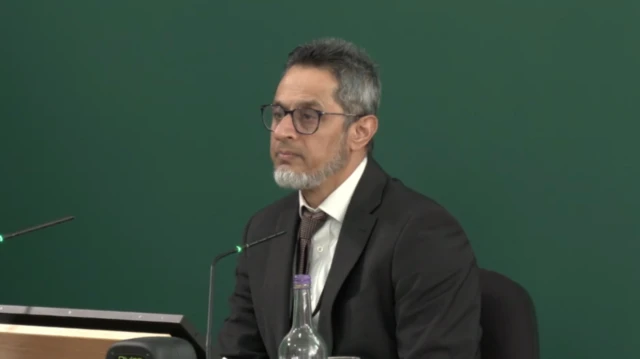
    Dr Seedat (pictured below) said: "I had a very frank conversation with him. He thought people were trying to invade his mind and read his thoughts and memories."

    Faizal SeedatImage source, The Nottingham Inquiry
  9. 'He was feeling scared, probably fearing something'published at 10:55 BST 23 April

    The inquiry has been told that Dr Seedat recorded in mid-June the incident about two weeks prior in the toilet was likely due to "active psychotic symptoms".

    "He was feeling scared, probably fearing something, and decided to hide," he said.

    "This was suggestive of illness and we need to start treatment sooner rather than later."

    Calocane's mother Celeste was visiting, and was informed of his behaviour including the incident leading up to his second admission, in which a neighbour had been injured after falling from a window trying to flee from him.

  10. Valdo Calocane not quizzed about hiding in a toiletpublished at 10:52 BST 23 April

    On 1 June 2020, the Nottingham Inquiry was told Valdo Calocane went to a fellow patient's room and hid in their toilet while "hearing voices".

    Dr Seedat was unable to get details of the incident from a nurse, and he was "surprised" he could not get details as they had not asked Calocane why he had done this.

    Dr Seedat said: "That person did not ask what he was doing in the bedroom or in the toilet, why he was hiding, what was he hiding from."

  11. Calocane was worried about trajectory of his life, inquiry hearspublished at 10:49 BST 23 April

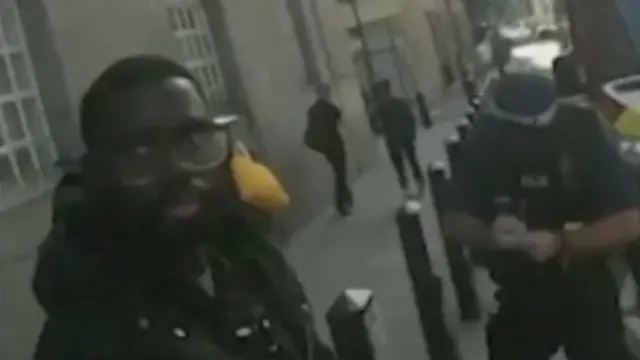
    In records, Calocane - pictured below outside the MI5 headquarters in London - was noted to have spoken about his concerns about his life and mentioned his younger flatmates.

    "I think he felt what he was doing is something he should have been doing - when he was their age," Seedat said.

    The inquiry heard Calocane was worried about his education and employment, and also mentioned his siblings.

    "He was aware that he had somehow fallen back and was behind compared to where his siblings were, and I think there were aspects of self-esteem he was struggling with," Seedat said.

    It was noted Calocane was suffering a psychotic breakdown following stress and a lack of sleep.

    Valdo CalocaneImage source, Met Police
  12. 'Calocane recognised behaviours were not normal'published at 10:47 BST 23 April

    Seedat told the inquiry Calocane had "some acknowledgment" that his behaviours were not right.

    He said: "I think he recognised that his behaviours were not in keeping with what a normal, peaceful individual, would behave in.

    "And my understanding or my conclusion around that, was that he had some acknowledgment about his behaviours not being right, not being just in some ways."

  13. Calocane watched a video about capital punishment, inquiry toldpublished at 10:46 BST 23 April

    During a 72-hour review of Calocane while he was at Highbury Hospital in Nottingham, Calocane told doctors he was thinking about "capital punishment".

    Dr Anna Ludvigsen told the inquiry on Wednesday how she was worried about that.

    Asked if he was also concerned, Seedat said: "Yes, that was the first time that message around capital punishment was made, and subsequent to that when I received the text messages from the brother which was passed on by his mother."

    Seedat explained in one of the messages to his brother Elias, Calocane said he had watched a video on capital punishment.

    Calocane was "frustrated" about people "somehow making a mockery or commenting on his watching that video".

    In discussion with Seedat, Calocane - who is being referred to throughout the inquiry as VC - admitted to watching the video.

    Seedat said: "VC did not suggest any plans or any intent of wanting to harm anyone and he was quite clear he said that he wouldn't do that."

  14. Consultant unaware Valdo Calocane had been viewing mass shootingspublished at 10:41 BST 23 April

    Dr Seedat was told at Valdo Calocane's sentencing, in January 2024, it was found he had been looking at footage of mass shootings.

    Analysis of his phone found he had watched videos of a shooting in Buffalo, New York, and one of the New Zealand massacre.

    But he said without a legal framework and clear guidance, it would not be correct to force access to phones and in Calocane's case, there was little evidence to show he was using his phone more than would be usual.

    He presented as polite and quiet and said he was working on his coursework, Dr Seedat said.

    Dr Seedat added: "Patients will be subject to requests. Some patients would say they'd rather not talk about it, it doesn't give us any further powers to then press on that."

    Tributes at the scene of a mass shooting in front of a US supermarketImage source, Reuters
  15. 'Common' for mental health patients to have phones examinedpublished at 10:36 BST 23 April

    Dr Faizal Seedat said it was "common" for patients to have their phones examined, on the caveat that messages and information on them were not shared with the people they referred to.

    Sometimes patients disagree, but Dr Seedat said: "Sometimes there is relief there is something that helps explain what they have been experiencing."

    Dr Seedat said sometimes sanctions would be put on patients' use of phones.

    He added: "I think it's important we respect people's privacy, it's difficult to cross those boundaries.

    "It could be helpful but it could be an invasion of their privacy, and it's very difficult to know where the balance is."

  16. Triple killer's journal passed to mental health team, inquiry hearspublished at 10:35 BST 23 April

    Documents show Valdo Calocane's mother Celeste was in discussion with Dr Seedat, and a journal from Calocane was passed to him.

    It contained "a lot of odd conversations", Dr Seedat said, who explained the journal "would help to understand" his state of mind and the risks he posed to himself and others.

    Dr Seedat said the journal could "identify specific symptoms of mental illness, specifically looking at things like delusions, hallucinations, and... risk to others, risk to self".

  17. Valdo Calocane was 'chaotic' when first admittedpublished at 10:32 BST 23 April

    Dr Seedat is now being questioned on Valdo Calocane's first mental health admission.

    A report from a multi-disciplinary meeting said he was in "a state that is too chaotic" for a mental health assessment, so it was delayed by 72 hours.

    Dr Seedat said: "When the time came, it became quite evident to me that [Calocane] was very unsettled on the ward."

    He had been kicking a glass door and needed to be restrained, the inquiry heard.

    Dr Seedat said: "It would not be very helpful trying to interview and assess a patient in this chaotic state."

    A decision was made to delay the assessment again, and this was discussed at the meeting.

  18. Responsibilities were shared, doctor sayspublished at 10:29 BST 23 April

    Seedat has told the inquiry it is not "clear cut" to say whether he takes responsibility for inadequate risk assessments.

    Langdale asked: "Do you take responsibility for that, as the consultant? You say you didn't see the risk assessment, but ultimately, do you take responsibility as the consultant that that wasn't effectively undertaken?"

    Seedat said: "I would say that it's not a very clear cut thing to say whether I take responsibility.

    "I think work on the inpatient ward is delegated responsibilities were shared between members of the MDT [multi-disciplinary team], and it would be very difficult, in fact impossible, for a consultant to be versed on every single document that is being completed."

    He added it would be "impossible" to take responsibility for everyone's clinical work.

  19. Information on risk assessments was inadequate, inquiry toldpublished at 10:15 BST 23 April

    The inquiry has been shown risk assessment documents, filled in by an approved mental health practitioner.

    Counsel to the inquiry, Rachel Langdale KC, asked: "Would you agree at the outset that the way information was put on risk assessments was inadequate?

    "It wasn't updated, it wasn't dynamic, it wasn't in real time and not very helpful for people looking at the risks."

    Seedat replied: "I agree."

  20. What was Seedat's role?published at 10:09 BST 23 April

    Asked what his role was in Valdo Calocane's care as consultant, he said: "I am sort of the overarching individual that looks at the proper assessment, formulation, management planning of the patient.

    "And I also would perform my legal duties under the Mental Health Act, particularly when patients are under detention."