Summary

  1. Louise Thompson: I was infantilised during traumatic birthpublished at 07:42 BST
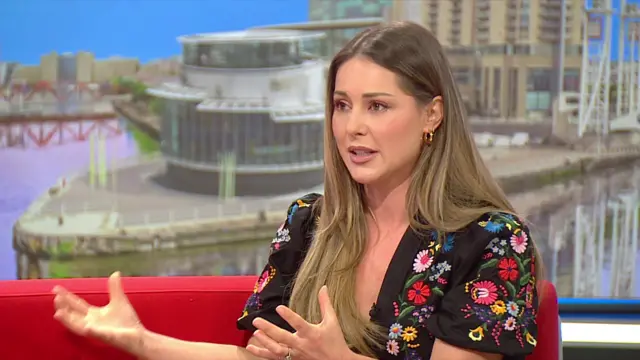
    Louise Thompson

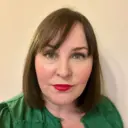
    Louise Thompson tells BBC Breakfast she felt "infantalised" and "wasn't listened to" when she gave birth four years ago, an experienced which she says left her traumatised.

    "I nearly lost my life over a number of occasions," the advocate for maternity safety and former Made in Chelsea star explains, adding that she went on to have six emergency surgeries.

    "I was meant to jump through so many hurdles... I was infantilised, I was patronised."

    Thompson says she thinks the review's recommendations are a "starting point" to tackle maternity safety, but that there is wider change needed, including "adequate funding and staffing levels" for maternity services.
  2. 'We have to change the culture' - review chairpublished at 07:38 BST

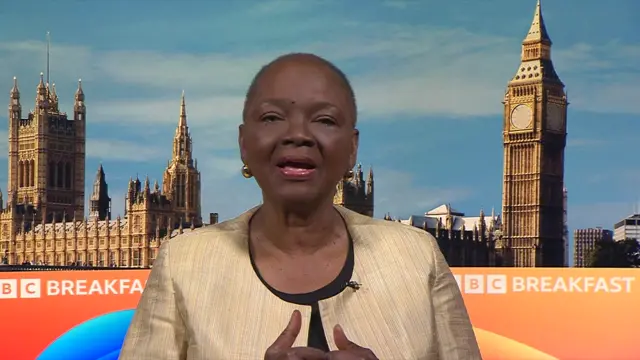
    Responding to a question about why women are not being listened to while being cared for, Baroness Amos says that "we have to change the culture".

    She adds that there needs to be more clinicians who look after women who understand how to deal with trauma, and a culture where patients feel able to "speak up" if something doesn't seem right.

    Amos says women should be able to visit maternity care services if they are not satisfied with support they receive over the phone, and adds that women shouldn't be waiting for "hours and hours" if they are experiencing issues.

    When asked a question about critics saying that doctors encourage natural births, she says the issue is "contested".

    She references the resignation of Dr Bill Kirkup, who investigated maternity services in Morecambe Bay and East Kent, who disagreed with her findings that a push for normal birth was not prevalent nationally.

    Amos says it is important women have the information to make "informed choices".

  3. Review shows inconsistency and variation in care, Amos sayspublished at 07:30 BST

    Baroness Amos

    Baroness Valerie Amos is first asked on BBC Breakfast about where things stand now and what needs to change following the publication of today's report.

    She agrees that the review's findings are "shocking" but stresses "it is about inconsistency and variation in care".

    She describes her inquiry as "comprehensive... in the time available" and cites some key findings including women not being listened to, trusts "not apologising" when things go wrong and a lack of clarity about who is in charge.

    "There are examples of good and bad practice everywhere," she says, adding that the system needs to be improved as a whole "so that families don't have to go through these distressing events time and time again".

    For those who are concerned, she advises talking to your clinical team or using "Martha's Rule", which gives patients the right to a second medical opinion if they request one.

  4. Watch live as Baroness Amos speaks to BBC Breakfastpublished at 07:19 BST

    Baroness Valerie Amos, who chaired the review, is now speaking to BBC Breakfast. You can watch her interview live at the top of the page.

    We will hear from her again on BBC Radio 4's Today programme at around 07:30.

    Health Secretary James Murray is scheduled to speak to BBC Breakfast around the same time, and then to the Today programme at 08:30.

    And at around that time, BBC Breakfast will speak to Gina and Peter Reeves, Alice Topping and Pedro Jacob, Lauren Caulfield, whose experiences with maternity care informed the review.

  5. Recommendations wouldn't have prevented my daughter's death, says bereaved motherpublished at 07:14 BST

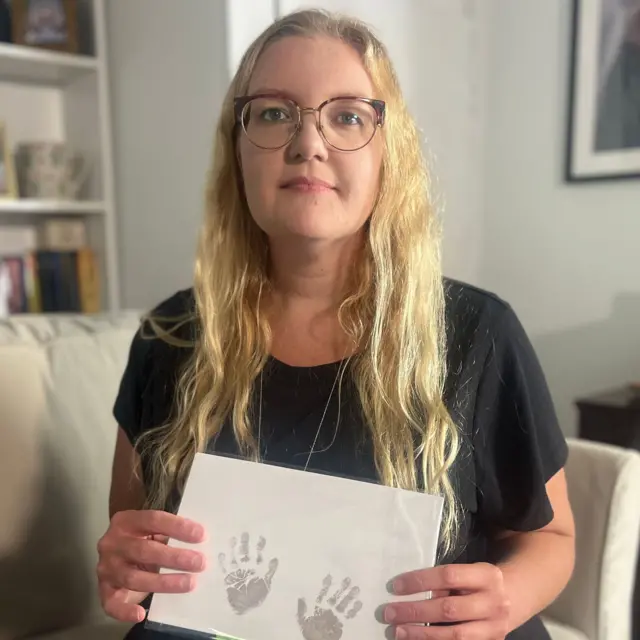
    Emily Barley, whose daughter Beatrice died during labour four years ago, says none of the things in Amos's report would have "prevented what happened to Beatrice".

    Barley, the co-founder of the Maternity Safety Alliance, tells BBC Radio 4's Today programme that the report is "shallow", and that Amos has "not gripped" the "cultural failings" underpinning maternity care.

    Victims have not been "heard in this report", she says.

    Barley disagrees with the recommendation for a new maternity commissioner to oversee change, which she calls "fundamentally dangerous" - arguing it concentrates "all the power and responsibility" in one person's hands.

    Instead, she argues for a statutory inquiry, saying bereaved parents "deserve... the truth" and an inquiry could compel witnesses to take part.

    Amos has previously acknowledged calls for a statutory public inquiry, but is not supportive of such a move, telling the BBC they take "a very, very long time".

    Emily Barley is sitting on a sofa in her lounge and she is holding a piece of paper which has two small handprints printed on it. Ms Barley has long blonde hair and is wearing glasses and a black top. There are framed photographs on the shelves to her right.
  6. Report hears of 'absolute lack of compassion' for womenpublished at 07:01 BST

    Catherine Burns
    Health correspondent

    There’s a theme running throughout this - and every other maternity safety investigation over the last decade: women not being listened to, heard or believed.

    Amos’s report talks about medical misogyny "leading to an embedded culture in which women’s voices are ignored".

    It says they are not consistently treated with kindness or compassion - and argued that changing this is "vital to safety and improving outcomes".

    In the report, women describe being made to feel like a nuisance or a burden. One woman was told she was being a wimp for not being able to cope with the pain of a C-section. Another describes "begging for care" in a waiting room.

    One woman who thought she was losing her baby talks about an "absolute lack of compassion… they really, really didn’t seem bothered…. It was like I was really inconveniencing them".

  7. The report's eight recommendationspublished at 06:55 BST

    Amos's report includes recommendations on how the maternity and neonatal system can be redesigned to deliver fundamental change:

    1. The creation of a "statutory Maternity and Neonatal Commissioner" to oversee change
    2. For the system, including the Department of Health and Social Care and NHS trusts, to "take action to listen to the voices of women, birthing people and families"
    3. To improve the "quality, transparency, oversight and accountability of investigations", including a "full explanation" for families when death or harm occurs
    4. To create a "Modern Service Framework" to set out national standards for "responsive, safe and improved services"
    5. To treat racism, discrimination and inequality as a "critical maternity safety issue", starting work immediately
    6. For the "Modern Service Framework" to include "streamlined, national oversight and leadership model", to have clear accountability
    7. To "improve culture and teamworking" across the board - including those on the ward, on trust boards and in the government department
    8. To "deliver estates and digital systems that are fit for modern maternity and neonatal care"
    Media caption,

    Report chair recommends maternity and neonatal commissioner

  8. ‘I’ll never get back that time with her’published at 06:38 BST

    Eleanor Lawrie
    Social affairs reporter

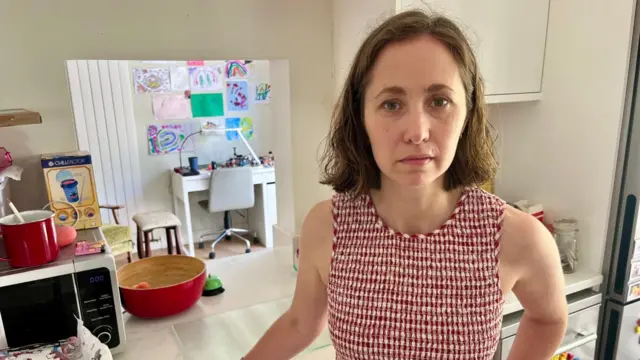
    A woman in a red and white chequered dress stands in a kitchen

    Beth Forrester, 41, had her first child at her local hospital in East Kent in 2018.

    A failed attempt at a forceps delivery left her with internal injuries that were not acknowledged in her discharge notes.

    “If you saw me and my daughter now you would think we were fine, but I’ll never get back that time with her. I’ll never get back those weeks where I wasn’t physically able to care for her the way I wanted to and I wasn’t emotionally in the position I wanted to be,” she says.

    Beth thinks the Amos inquiry marks “a great step forward” but worries “there are so many more women suffering from harm that will never be heard about”.

    “I think there are hundreds, probably thousands of parents like me walking around carrying the scars of incredibly poor care, and those voices aren't heard, and those are the experiences that I fear cut across the whole country and aren't being looked at.

    East Kent Hospitals NHS Trust says it is “truly sorry for the devastating and ongoing impact for families of failings in our service”.

    • For context, an independent review published in 2022 found up to 45 babies might have survived if they had received better care at the trust, and uncovered a "clear pattern" of "sub-optimal" care that led to significant harm
  9. 'Words cannot describe the pain, suffering and trauma I saw and heard' - Amospublished at 06:31 BST

    Catherine Burns
    Health correspondent

    I’ve worked my way through this long and detailed report.

    Really though, the opening words set out a strong and emotive tone.

    Review chair Baroness Amos says: "Words cannot describe the pain, suffering and trauma I saw and heard time and time again when talking to women and families about their experiences of maternal and neo-natal care in England."

    She writes that she wanted to understand how this was still possible in the 21st Century, and says there is absolutely no justification for the tragic cases of unsafe care and avoidable harm we continue to see.

    Her recommendations include system-wide reform that will take some time, but also some actions that should have a quicker impact.

  10. What is the Amos review?published at 06:26 BST

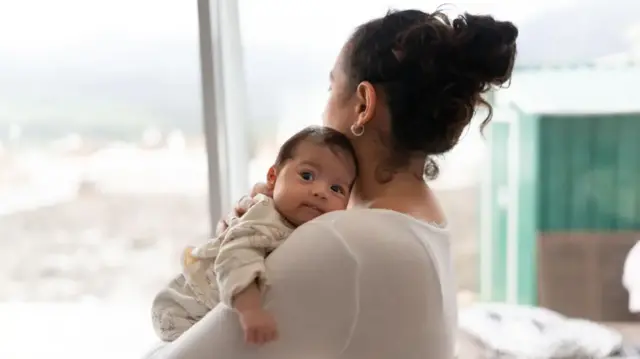
    A woman in a white shirt looks out of a window whilst holding her babyImage source, Getty Images

    The National Maternity and Neonatal Investigation was set-up by then-Health Secretary Wes Streeting in June last year, after he said he had heard “harrowing stories… from mothers and fathers let down by the NHS”.

    Baroness Amos, a former government minister, was asked to head the investigation, reviewing the maternity and neonatal system and bringing together findings from previous reports into a single national set of actions.

    Its aim was to ensure “every woman and baby receives safe, high-quality and compassionate care”, the government said.

    A new National Maternity and Neonatal Taskforce will be responsible for implementing the recommendations.

    However some families have criticised the limitations on what the review can do, and the short time is has to do it, fearing that meaningful action could not follow.

    Controversy has also surrounded the publication of the final report after one of the country's leading maternity investigators resigned over its conclusions.

    Dr Bill Kirkup, who investigated maternity services in Morecambe Bay and East Kent, is understood to have disagreed with Amos over her finding that a push for normal birth, including denying women caesarean sections, was not prevalent nationally.

  11. 'We can't continue like this': Inquiry demands NHS maternity overhaulpublished at 06:17 BST

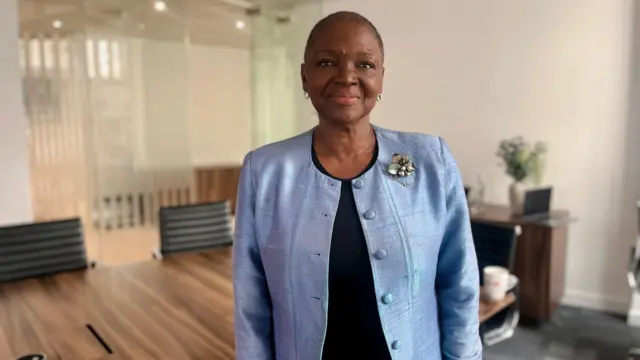
    Baroness Amos standing and looking towards the camera

    The maternity and neonatal system in England is "not set up to deliver consistently safe, high-quality and compassionate care", a national review finds.

    The Independent National Maternity and Neonatal Investigation, published today, finds that the neonatal system needs "urgent reform to put safety at its centre, embed a focus on listening to women, and ensure anti-racist practice at every level".

    Baroness Valerie Amos, who chaired the government-commissioned review, says "as a country... we cannot continue like this".

    She outlines several findings in the report, including:

    • Women not being listened to, heard or believed with serious consequences for safety and quality of care, which it says resulted in "avoidable harm"
    • "Unacceptable racism and discrimination embedded within the system", the report states, "with unacceptable impact on safety, equity and quality of care, and staff wellbeing"
    • It says the design and planning of the service is slow to respond to demand and isn't equipped to meet the changing needs of women, babies and families
    • The system is also described as "inconsistent", saying "antenatal, birth and labour, neonatal and postnatal services are not joined up"

    We'll be going through the report and bringing you all the reaction throughout the morning.