Summary

  1. McSweeney questioned on Mandelson involvement in Cabinet reshufflepublished at 11:38 BST 28 April

    McSweeney is asked to explain the process behind a political strategy document he penned - named 'Labour for the Country' - after the party lost a Hartlepool by-election.

    Was Mandelson involved in writing this?

    McSweeney replies that he wrote the document in February 2021 ahead of local elections, and asked Mandelson for his input.

    "But I also sent it to half the Shadow Cabinet, I also sent it to other colleagues..." he adds, explaining that he'd usually send this sort of document to 10-15 people to get a wider view.

    The former chief of staff is then asked about Mandelson's alleged involvement in a reshuffle after then Deputy Prime Minister Angela Rayner resigned in September 2025.

    McSweeney clarifies Mandelson had been in No 10 on the day of the reshuffle but had no involvement in it.

    Text messages he received from Mandelson that day were part of a number of messages he received from several people, McSweeney adds, suggesting he didn't reply to the texts or seek advice from Mandelson at the time.

    Pushed further on why exactly the ambassador to the US was in No 10 that day, McSweeney says: "It wasn't a planned reshuffle", suggesting only the prime minister and a handful of senior staff were in the room as the reshuffle was organised.
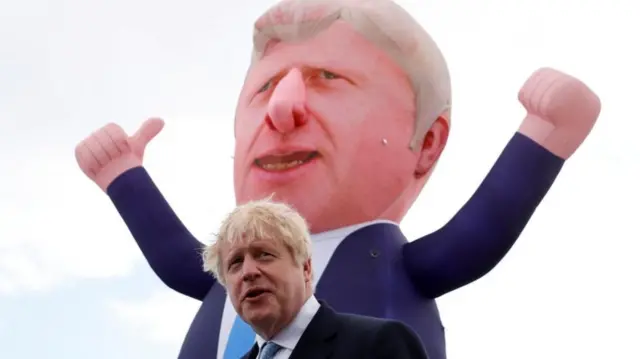
    Boris Johnson in front of inflatable model of himselfImage source, Reuters
    Image caption,

    In the May 2021 Hartlepool by-election, the Conservatives - then led by PM Boris Johnson - won a major swing in the vote to take the seat from Labour
  2. Former ambassador a 'confidant', but not a 'mentor' says McSweeneypublished at 11:32 BST 28 April

    Describing his relationship with Peter Mandelson, McSweeney says the former ambassador was a "confidant" and an "adviser" at times, but he did not act as a "mentor", as has been suggested in some press coverage.

    "I first had a conversation with Peter Mandelson in 2017,” he says.

    “I don't think I really started going to him for advice until about 2021, he continues, adding the advice he got from Mandelson “was useful”.

    Dame Emily Thornberry then asks about reports that Mandelson was helping to "vet [parliamentary] candidates" ahead of the 2024 UK general election and was given access to a "secret Google spreadsheet" of candidates.

    McSweeney says he has no knowledge of the existence of any "secret spreadsheet", adding: "Mandelson had nothing to do with the selection, or the vetting, of any of our parliamentary candidates”.

    Media caption,

    McSweeney says Mandelson was not his 'mentor'

  3. PM would 'not have chosen Mandelson if Harris had beaten Trump'published at 11:24 BST 28 April

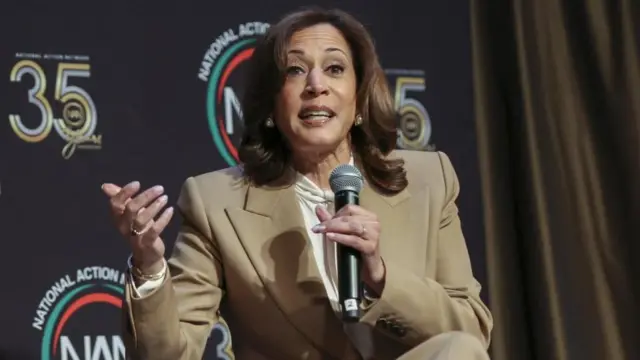
    Kamala HarrisImage source, EPA

    A formal decision on who to appoint as ambassador was not made by Keir Starmer until after the US presidential election in November 2024, McSweeney says.

    He adds that he doesn’t recall there being much discussion ahead of the election, and there was a list of candidates being considered.

    "I don't think the prime minister would have chosen Mandelson if Kamala Harris had been elected president," he says.

    McSweeney continues that he personally felt Mandelson was the strongest candidate due to his experience as European trade commissioner, as the prime minister's priority was to achieve a trade deal with the US.

  4. Starmer was thinking of US ambassador job before he was elected as PMpublished at 11:16 BST 28 April

    Chris Mason
    Political editor

    An interesting early detail just now from Morgan McSweeney about the longevity of Sir Keir Starmer’s thinking about the appointment of an ambassador to Washington.

    McSweeney told the committee that as early as January or February of 2024 - with the election, as it turned out, six months away and potentially further — Labour told the civil service in what are known as "access talks" that Sir Keir was minded to make a political appointment to Washington.

  5. 'I did not request that steps should be skipped'published at 11:16 BST 28 April

    McSweeney continues with his statement by describing his role in appointing Mandelson.

    He says he made a recommendation based on his judgement of Mandelson's "experience, relationships, political skills".

    He adds: "What I did not do was oversee national security vetting, ask officials to ignore procedures, request that steps should be skipped, or communicate explicitly or implicitly that checks should be cleared at all costs.

    "I would never have considered that acceptable."

    He tells the committee he made a "serious mistake" in recommending the appointment of Mandelson, and says he hopes to help it establish facts today.

  6. McSweeney says PM 'relied on my advice, and I got it wrong'published at 11:12 BST 28 April

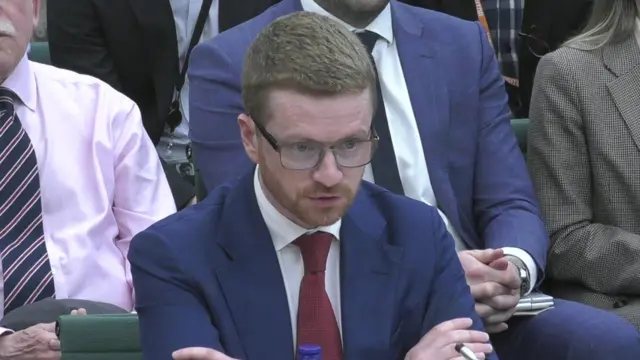
    Keir Starmer's former chief of staff Morgan McSweeney begins his Foreign Affairs committee questioning with a short statement.

    He addresses the victims and survivors of Jeffrey Epstein, apologising for any hurt or distress caused to them by the controversy around Lord Mandelson's appointment.

    McSweeney then says Mandelson's appointment was a "serious error in judgement" and he was "wrong" to advise Keir Starmer in favour of appointing Mandelson.

    "The prime minister relied on my advice, and I got it wrong," he says.

    Media caption,

    McSweeney: PM 'relied on my advice, and I got it wrong'

  7. Watch live as McSweeney begins taken question from MPs on Mandelson appointmentpublished at 11:09 BST 28 April

    McSweeney

    Morgan McSweeney, the prime minister's former chief of staff, has started answering questions from MPs on his role in the appointment of Lord Mandelson as the UK's ambassador to Washington.

    You can watch live above.

  8. Analysis

    Today's big political moments don't stop at the Foreign Affairs Committeepublished at 11:09 BST 28 April

    Chris Mason
    Political editor

    Greetings from a Transport for Wales train trundling from Crewe to Cardiff - a reminder that today’s big political moments don’t end with the testimonies to the Foreign Affairs Select Committee or the debate in the Commons later.

    Tonight, there is a 90-minute live TV debate on the BBC involving the six leading parties contesting the elections to the Senedd, the Welsh Parliament.

    All this amounts to a nightmarish backdrop for Labour in the Welsh elections, the Scottish elections and the English local elections.

    Not because millions of people are devouring every detail of the Lord Mandelson saga, I’m sure many are not. But because it loiters like a big, dark, threatening cloud over everything else the party wants to focus on.

    What stood out for me from Sir Philip Barton’s testimony?

    He worried at the time that Lord Mandelson’s connections to Jeffrey Epstein “could be a problem in the future.”

    But he wasn’t consulted in advance - despite his vast diplomatic experience, including in America.

    In fact, he found out very late that Lord Mandelson was being made ambassador to Washington - just before it was announced.

    His view was that it was unusual for someone to be announced into a role before the vetting process had been complete.

    He distinguished between the real pressure to get him out to America ASAP and, he said, there being no pressure relating to the substance of sorting his vetting.

    And, perhaps unsurprisingly, his swerved some of the juicier opportunities he was given to wade into the various political rows around all this that are still swirling - the sacking of his successor Sir Olly Robbins chief among them.

    He did, rather helpfully for the next witness, the Prime Minister’s former chief of staff Morgan McSweeney, say he did not recall McSweeney ever swearing at him to get a move on in sorting Lord Mandelson’s vetting.

  9. Morgan McSweeney facing select committee MPspublished at 11:02 BST 28 April

    We've just finished hearing evidence from Philip Barton, the former top civil servant at the Foreign Office.

    Next up is Morgan McSweeney, Keir Starmer's ex-chief of staff who left No 10 in February. We expect him to be questioned on his role in advising the PM to appoint Mandelson as ambassador.

    He is due to begin answering questions at 11:00.

  10. No 10 'uninterested' in concerns, as top civil servant not consulted on Mandelson appointmentpublished at 11:01 BST 28 April

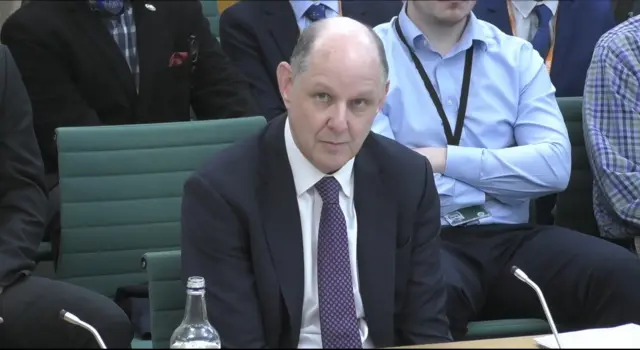
    Philip Barton giving evidence in the Foreign Affairs Select CommitteeImage source, PA Media

    Former top civil servant in the Foreign Office, Philip Barton, has now finished giving evidence to MPs on the Foreign Affairs Committee, taking questions on his involvement in appointing Mandelson as US ambassador, before he left the Foreign Office in January 2025.

    He said he was not consulted over the decision to appoint Mandelson - but that given Mandelson was a political appointee, it could be “reasonable” for civil servants to not be directly involved in discussions.

    He claimed he was first made aware of the decision on 15 December 2024. That’s quite something, considering the decision to appoint Mandelson was made public days later, our political editor Chris Mason writes.

    Barton was “worried” that Mandelson’s links to Jeffrey Epstein “could be a problem in the future” - but said No 10 was “uninterested” in his concerns.

    The former civil servant found it “odd and insufficient” that the Cabinet Office initially suggested not vetting the former US ambassador.

    On the question of pressure being placed on the Foreign Office, Barton says there was no pressure surrounding the vetting itself - but “absolutely” there was pressure to get the case done “as soon as possible”.

    He added he was confident the appropriate processes were carried out around Mandelson's appointment, despite it being "unusual" to be announced by No 10 before vetting.

    Stick with us as Morgan McSweeney is about to be questioned.

  11. 'Self-evidently' challenges for government and civil service relationships - Bartonpublished at 10:56 BST 28 April

    Conservative MP John Whittingdale asked Barton about the damage that has been done to the civil service as a result of the ongoing row.

    Barton said the British system of government works best when civil servants and ministers work together "effectively" to deliver government programmes - with this delivery being affected when this is not happening.

    He said the pair need to have "load-bearing relationships" and there are "self-evidently" now challenges for people in those relationships.

    He adds that he would like to see the government and civil service get back to a point where they have "trusting" relationships.

  12. Was right process followed during Robbins sacking, Barton askedpublished at 10:54 BST 28 April

    Barton has now finished answering the committee’s questions, but we will continue to bring you what he said this morning.

    Toward the end of the session, he was asked whether the right process was followed in the sacking of his successor Olly Robbins.

    Only the prime minister and those involved know what happened and can answer that question, he replied.

    He went on to explain that in a serious gross misconduct case in the Foreign Office, there would be a very short period for a formal process to take place.

    Robbins was dismissed over a failure to inform the PM about Mandelson's security vetting failure. Barton was also asked whether he would have informed No 10 of the concerns about Mandelson once information about his connections to Epstein were in the public domain.

    Barton replied that he recognised Starmer believed he genuinely should have been told, but suggested Robbins felt that he was bound by the rules not to discuss the information from the vetting process.

    The former Foreign Office boss was pushed on whether he understood why Robbins was sacked.

  13. At times, Barton has been helpful to Starmer's case - at others, distinctly unhelpfulpublished at 10:50 BST 28 April

    Harry Farley
    Political correspondent

    There are some bits of Barton's evidence in the last hour that have been helpful to Number 10's case. Other bits have been distinctly unhelpful.

    Barton was just asked: "Do you think the prime minister's statement that 'full due process' was followed is a fair description of what happened in Mandelson's case?"

    That is one of the key points where opposition parties claim Keir Starmer misled the House of Commons.

    In this instance Barton refuses to help Number 10's case. "I'm going to dodge," he says, going on to explain he thought the Foreign Office's processes he was responsible for followed proper process.

    But he seems to indicate he thought the process was not properly followed in Number 10.

    "It was unusual for the announcement [of Mandelson's appointment] to be made before he received DV [developed vetting]," he says.

  14. Barton 'wasn't convinced' Trump inauguration had to be seen as deadlinepublished at 10:48 BST 28 April

    Barton now tells MPs it is his view that it "wasn't essential" for Mandelson to be in the US ambassador post "by the time of the inauguration" of Donald Trump in January 2025.

    Though, Barton points out that in the end, Mandelson was not in the post until after the inauguration.

    "I wasn't quite convinced that we had to see 20th January as a deadline," he says.

    "I don't have any objection,” he answers when asked if this had changed his opinion on the "appropriateness" of political appointments.

    “Personally, as a diplomat I would argue that the vast majority of jobs should go to diplomats, but [political appointments] have been used successfully in the past."

    When asked whether he thinks the statement that "full due process was followed" in Mandelson's appointment is accurate, Barton replies that he doesn’t think “it's for me to sit here... to come to a view on that."

  15. Barton confident appropriate process carried out, despite 'unusual' timing of announcementpublished at 10:41 BST 28 April

    Barton says he is not aware of David Lammy seeing the due diligence carried out on Lord Mandelson prior to his appointment during the time Lammy served as foreign secretary.

    Barton is aware of media reports, he says, including Lammy telling LBC that there were "worries" about Mandelson's appointment within government at the time.

    But he says he was told by Lammy that he was going to talk to No 10 on the issue but adds that a further conversation between the two on Mandelson was inconclusive.

    The "short time scale" of the appointment created pressure, Barton says.

    He continues saying he was very confident the appropriate process was carried out, despite No 10 announcing Mandelson ahead of vetting being "unusual".

  16. Handover of Foreign Office role to Robbins described as 'normal' and 'professional'published at 10:34 BST 28 April

    Barton is asked by MP Uma Kumaran whether he would have raised the matter with the foreign secretary, if he had been aware there were issues identified in the UK Security Vetting process.

    The former head of the Foreign Office replies that’s a question he can't answer without having been placed in that exact scenario.

    Barton was replaced by civil servant Sir Olly Robbins in January 2025. He's asked whether he discussed the pressure to appoint Mandelson from No 10 with his successor.

    Barton describes various meetings and discussions on appointments as “what you'd expect in a normal professional handover".

    He says this partly involved a description "in headline terms" about how the Mandelson appointment had been playing out, as well as discussions over how a conflict of interest would be handled.

    Back to the timeline of Mandelson's appointment, Barton is asked about whether he flagged concerns to No 10.

    He insists that by 18 December "the die was cast" as No 10 were set to announce his role.

  17. Analysis

    Withholding information from foreign secretary a side note to main questions facing Starmerpublished at 10:28 BST 28 April

    Harry Farley
    Political correspondent

    Barton just told the committee it was "unusual" but "not unheard of" for the most senior civil servant in the Foreign Office to withhold information from the foreign secretary.

    He said one example would be if there was a policy disagreement between the PM and foreign secretary.

    In this instance, Sir Olly Robbins did not tell the then Foreign Secretary David Lammy about the security vetting concerns over Peter Mandelson.

    Barton suggests that in his time as head of the Foreign Office, he had been asked to do the same thing.

    It's a side note to the main questions facing Keir Starmer over whether he misled the House of Commons.

    But there was bemusement, bordering on outrage, from the committee's chair Emily Thornberry in response to the idea a civil servant would not tell their political boss a key piece of information.

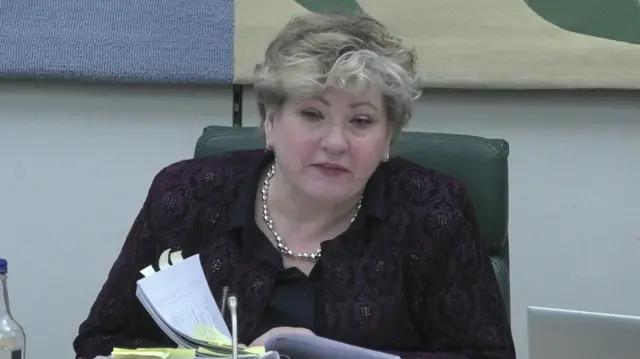
    Foreign Affairs Committee chairwoman Emily Thornberry
    Image caption,

    Foreign Affairs Committee chairwoman Emily Thornberry said it was "extraordinary" that the civil service would keep information from cabinet ministers

  18. Not unheard of to be asked to keep information from foreign secretary, Barton says, but not standard procedurepublished at 10:23 BST 28 April

    "It would have been a crisis, if it got to the point where [Mandelson] had no vetting clearance," Barton continues.

    It is put to him that it looks like Mandelson "got the job" before going through security vetting, as it had been announced by No 10, and the paperwork had gone to the King.

    But Barton says Developed Vetting (DV) was still necessary because to do the US job "effectively", you need access to sensitive information that requires DV.

    Barton insists that Mandelson did not have access to some areas and some papers that were above a certain level of classification.

    Mandelson wasn't "able to roam free", Barton continues, adding that it was the "right thing" to ensure that in a short time scale Mandelson "could arrive in Washington properly prepared".

    The alternative would have been an ambassador "turning up not properly or fully briefed on the government's policies towards the incoming administration". Barton says there was no contingency plan for what might happen if Mandelson wasn't granted clearance.

    He says the first he heard "about Matthew Doyle", who Starmer reportedly considered giving a diplomatic job to, was during Olly Robbins' evidence last week.

    He is asked whether he has ever been asked to keep information from the foreign secretary.

    "It is not unheard of", Barton replies, but "not standard operating procedure".

  19. Timing of Mandelson announcement decided and driven by Downing Street, Barton sayspublished at 10:12 BST 28 April

    Barton says there are two possible questions relating to pressure being placed on the Foreign Office during the vetting of Lord Mandelson: whether pressure was placed on the substance of the case, and whether there was pressure to get it done in a particular time frame.

    He tells the committee: "During my tenure, I was not aware of any pressure on the substance of the Mandelson DV [developed vetting] case."

    He adds that there "absolutely" was pressure to get the case done "as soon as possible", which he claims everybody in the department was aware of.

    Barton says the normal order for the appointment of an ambassador is for vetting to be carried out before the appointment is announced, and he says he was not sure why this occurred the other way round in this case.

    He says the timing of Mandelson's announcement was decided and driven by No 10.

  20. Analysis

    Barton pressed on McSweeney swearing claimpublished at 10:04 BST 28 April

    Chris Mason
    Political editor

    Media caption,

    Ex-Foreign Office chief denies story that McSweeney swore at him

    A key moment just now.

    Headlines have been flying around for a while, and particularly in the last week, that Morgan McSweeney, the prime minister’s former chief of staff, had told the Foreign Office to “just [expletive] approve" the vetting of Lord Mandelson.

    Addressing that, Sir Philip has just said "I didn’t receive any direct calls from the chief of staff" and "I cannot recall him swearing at a meeting at me, or in general".

    The wider question, which is absolutely key to the Commons debate coming this afternoon, is the extent to which there was pressure being exerted on the Foreign Office during the rushed few weeks between announcing Lord Mandelson had been given the job, and the inauguration of President Trump a few weeks later.

    Sir Philip attempted to draw a distinction between being “not aware” of any pressure on the substance of Lord Mandelson’s developed vetting, with the wider pressure they were all aware of given how quickly the government wanted him in Washington.

    Morgan McSweeneyImage source, Reuters
    Image caption,

    Morgan McSweeney stepped down as Keir Starmer's chief of staff in February, after advising Starmer to appoint Mandelson in 2024