Summary

  1. Few are admiring Arnos Grove's architecturepublished at 14:50 BST 4 June

    Harry Low
    Reporting from Arnos Grove station
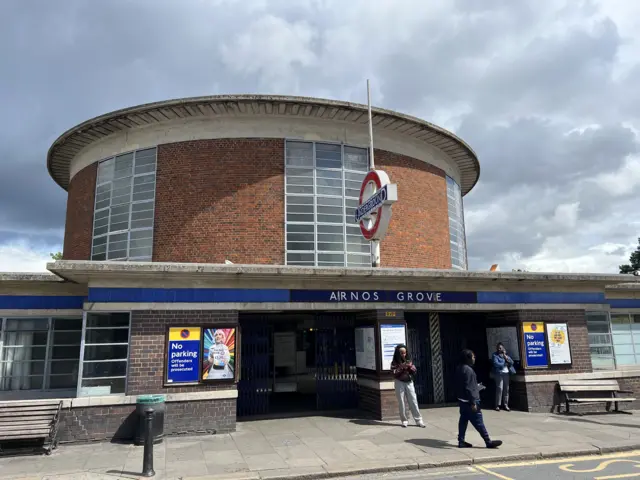
    Arnos Grove station exterior

    Outside the Grade-II listed Arnos Grove station, there are a handful of people waiting for one of the six buses which serve this stop in zone 4.

    The two shops inside the beautiful Art Deco station - a florist and newsagent - have closed their doors.

    Only a fraction of the normal footfall will pass through here today to admire what is widely considered to be one of finest stations designed by architect Charles Holden, who played a major role in shaping the how London transport looked from the 1920s to 1940s.

    That’s because the Piccadilly line is only operating between this station and Cockfosters, which is three stops north from here.
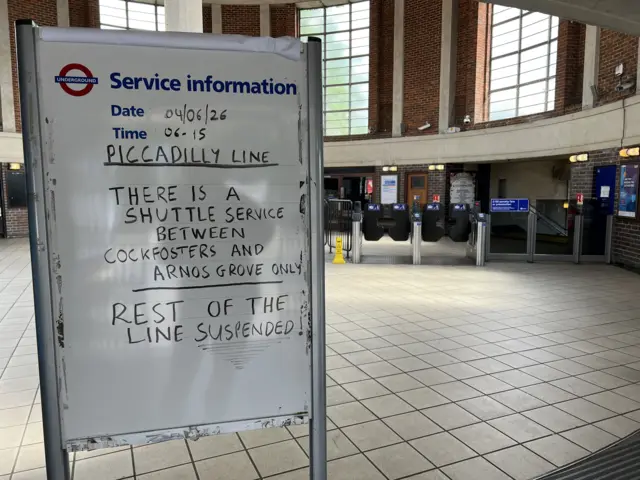
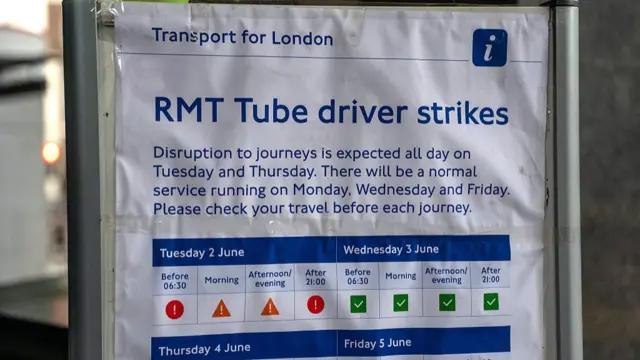
    Tube strike sign inside Tube station
  2. Suspensions and delays now affecting 11 linespublished at 14:39 BST 4 June

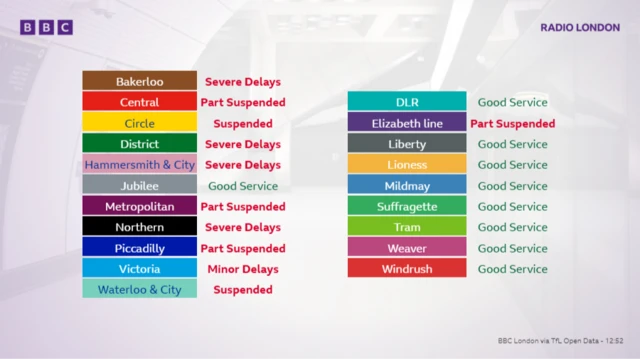
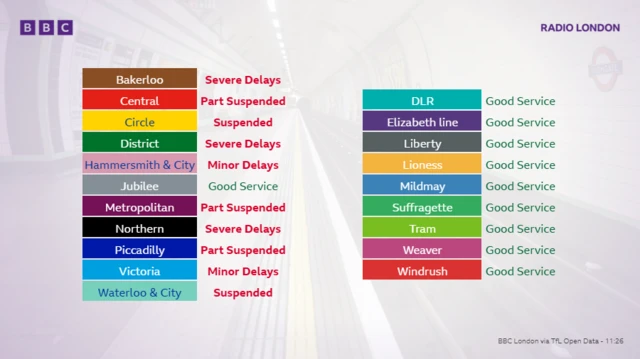
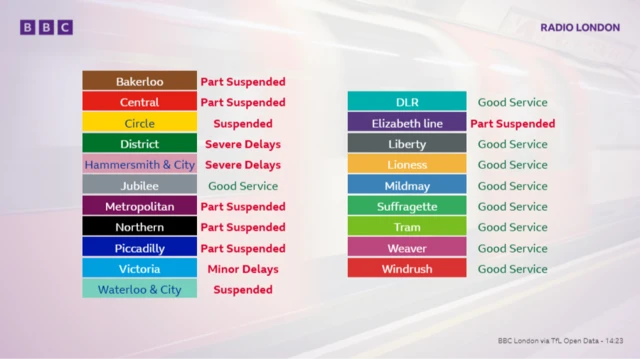
    A table showing which tube lines in London are affected by delays and suspensions

    We're into the afternoon and there are now 11 suspended or delayed lines. The majority of these is being caused by the walkout but the Elizabeth line issues are due to a points failure.

    For the latest on how each line is affected, visit Transport for London's website, external.

  3. Northern and Victoria lines running smoothly but tourists confused by Central line closurepublished at 14:22 BST 4 June

    Jacob Phillips
    Live reporter

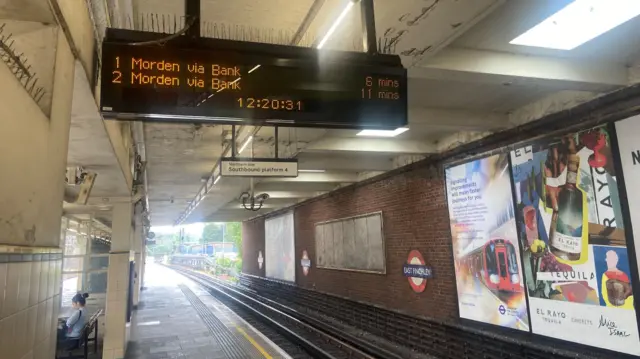
    A sign on East Finchley Tube platform shows that a Morden via Bank train will arrive in six minutes and that a second train will arrive in 11 minutes
    Image caption,

    There were waits of five or six minutes on the Northern Line at lunchtime

    A soggy cycle, a lengthy bus journey or risk the Tube.

    Those were my options to get to my late shift at the BBC's Broadcasting House today.

    Usually my commute takes around 25 minutes from East Finchley, jumping on the Northern line to Euston before being zoomed along the final stretch of my journey on the almighty Victoria line.

    But since Transport for London was warning of severe delays on the Northern line I allowed an extra 20 minutes to get to work this lunch time.

    When I arrived at East Finchley I found gaps of around six minutes between trains in both directions - usually trains arrive roughly every three or four minutes.

    But after a slightly longer wait on the platform I had no trouble reaching Euston and then as usual the Victoria line arrived instantly.

    Just a few minutes were added to my commute but those trying to travel to other areas of London are facing more disruption.

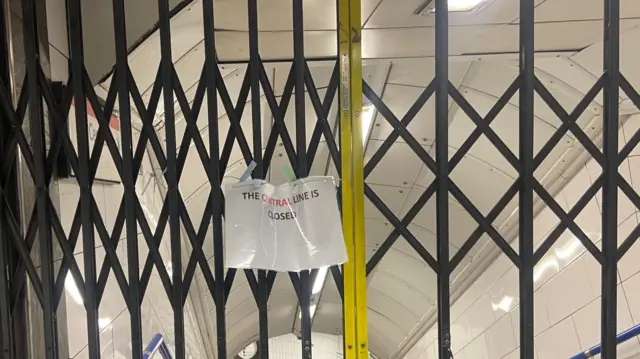
    A laminated sign is tied to some gates at Oxford Circus station. A sign says that 'the central line is closed'
    Image caption,

    A laminated sign showed that the Central Line was closed at Oxford Circus station

    At Oxford Circus the entrance to the Central line had been gated shut due to the strike action, leaving five tourists with suitcases looking very distressed.

    There are currently no services between White City and Liverpool Street on the line.

    Meanwhile, the Bakerloo line was displaying a warning that trains were being held at Oxford Circus. A signal failure at Paddington is currently adding to delays on the line caused by the strike action.

  4. Heathrow disruption to continue into this afternoonpublished at 14:04 BST 4 June

    National Rail says disruption caused by a points failure will continue to cause major disruption on journeys to and from Heathrow Airport until 15:30 BST.

    Elizabeth line trains are affected by this, with services between the airport and Hayes & Harlington suspended, although there is a good service on the rest of the line.

    There are no Heathrow Express trains running between Heathrow and Paddington, as a result of what the service is calling a "significant incident outside of our control".

    There are also no Piccadilly line trains running to the airport due to the strike and Transport for London (TfL) advises people to "use South Western Railway services to / from Feltham station for London Bus connections to / from Heathrow Airport".

    As a result of the disruption caused by the points failure, demand for taxis has increased at Heathrow, with TfL appealing on X for drivers to consider heading to the airport "to support increased passenger demand."

  5. 'I'm excited to work from home' - what's the law on having to travel to the office?published at 13:47 BST 4 June

    Tara Mewawalla
    Live reporter

    Woman working from home in an officeImage source, AFP via Getty Images

    While some commuters are frustrated with the delays getting into work in London, others might be a bit more upbeat about the prospect of working from home for the day.

    Though working from home became a lot more acceptable and even expected after the pandemic, some companies have been introducing measures to enforce office working five days a week.

    I live in east London. My housemate, who works at a sales company in west London is “very excited” to be able to work from home due to the travel disruption.

    Her company has a policy where she would usually have to go into work four days a week and can only take Friday to work from home.

    She is cheerily cooking herself some eggs in our kitchen for lunch, telling me that today she will have “an extra two hours of my life saved from commuting there, commuting back” and “money saved on the same meal deal I have eaten for the last four years of my life!”

    David Greenhalgh, who is an employment lawyer from London, says legally, if your place of work is stated as your office in your employment contract, you should work from there unless your employer says otherwise.

    But, he suggests speaking to HR in advance of travel difficulties, adding: "Employers owe a duty for the care health and safety of all their staff and should therefore not encourage employees to travel where doing so would be unsafe for them."

  6. Strikes cause 'too much traffic' and 'pay for my holidays', say black cab driverspublished at 13:28 BST 4 June

    Harry Low
    Reporting from King's Cross station

    Black cab driver Tony sits behind the wheel of his cab wearing a grey t-shirt and yellow lanyard

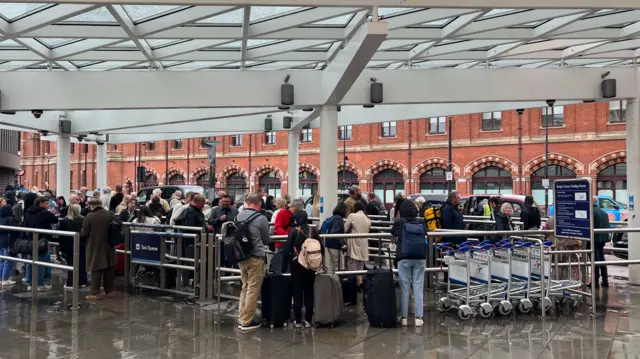
    At the taxi rank outside a rainy King's Cross station, demand is outstripping supply.

    The queue is snaking around near the Tube entrance, which is lacking Piccadilly and Circle line services.

    One black cab driver, Tony, tells me it has taken him 55 minutes to drive from Paddington three miles away, but admits the strikes "pay for my holidays".

    Black cab driver Shak sits behind the wheel of his cab wearing a black Nike cap and black jacket

    Another driver, Shak, says: "It's just too much traffic man, it's not worth it."

    He has been out since 10:00 this morning and says he's done four jobs in that time because the traffic makes it difficult to get around.

    "I'd rather have a normal day!", he adds.

    People queue outside King's Cross station near to the taxi rank
  7. Passengers heading to Heathrow face delays as Elizabeth line part suspendedpublished at 13:08 BST 4 June

    Graphic showing the status of London transport lines. Bakerloo- severe delays, Central, part suspended, Circle – suspended, District – severe delays, Hammersmith & City – severe delays, Jubilee – good service, Metropolitan – part suspended, Northern – Severe delays, Picadilly – part suspended, Victoria, minor delays, Waterloo & City – suspended. DLR – good service, Elizabeth line – part suspended. Liberty, Lioness, Mildmay, Suffragette, Tram, Weaver and Windrush – good service.

    Passengers looking to get to and from Heathrow Airport this afternoon need to brace themselves for further delays.

    The Elizabeth line has experienced a points failure, so is suspended between Heathrow and Hayes & Harlington.

    Transport for London says there is a good service on the rest of the line, and tickets are being accepted on London buses.

    Separately, National Rail says the Heathrow Express, which runs from Paddington to the airport, is also affected by the points failure and major disruption is expected until 13:30 BST.

    It puts extra pressure on people travelling to and from the airport, who already face a closed Piccadilly line, which usually serves its terminals.

  8. From happy travellers to angry commuters, mum and daughter have seen it allpublished at 12:48 BST 4 June

    Nisha Patel
    Reporting from London Waterloo

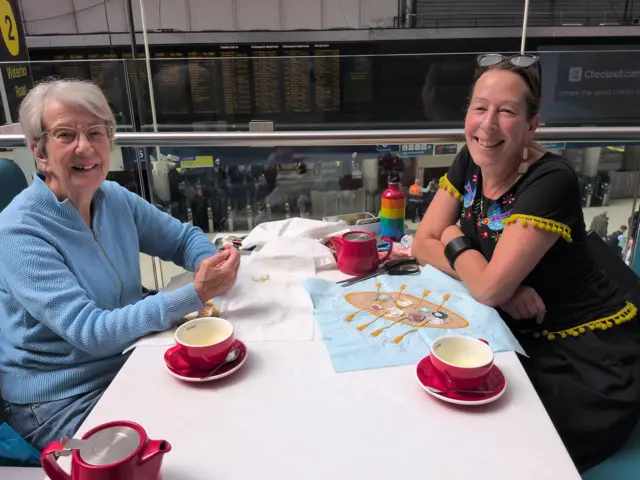
    Two women working on a on a quilt with red coffee cups on the table

    Mother and daughter Carol and Isobel have been coming to Waterloo for about 10 years. They come every week to work on their patchwork quilts because it's an easy commute for them both.

    They say they've seen everything, from angry commuters to happy travellers!

    Isobel says she in favour of the strikes as if you don't make a fuss, you won't see change.

    She adds that public sector workers are vital and they should get paid properly.

  9. RMT members in north London turned out on the picket line early this morningpublished at 12:35 BST 4 June

    Harry Low
    Reporting from Arnos Grove depot

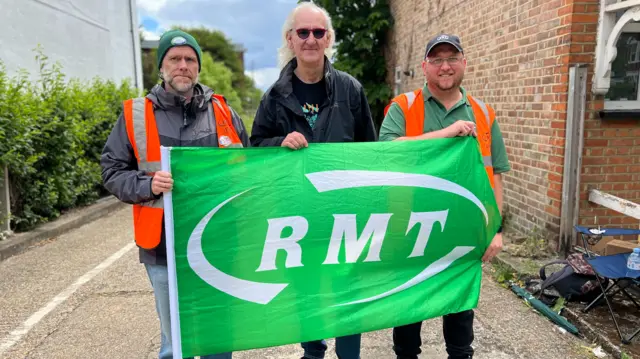
    Three men hold RMT flag

    At the Arnos Grove depot in north London where it is starting to rain, I find Lee Maybin, John Stack and Carl Amodeo on the RMT picket line, where they have been since early this morning.

    They are not able to speak to me but the RMT's members have rejected an offer for drivers to voluntarily work a four-day week.

    Under the proposals, most drivers would see their working week reduced from 36 hours to 35 hours. Their contractual hours would remain the same because paid meal breaks would be introduced.

    This effectively means drivers would work longer days, but fewer days each week and fewer overall hours each week.

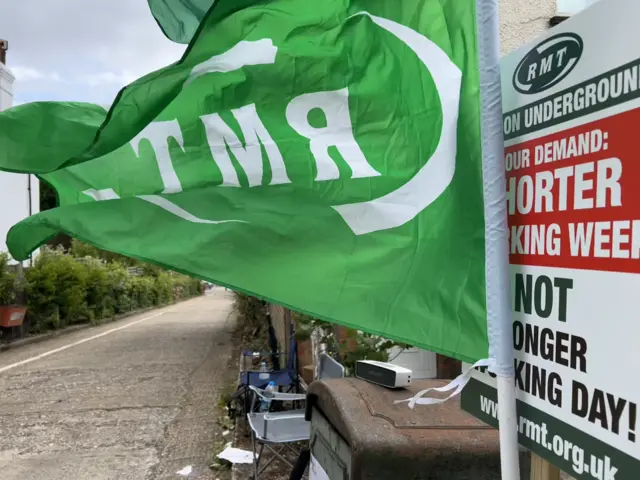
    A green RMT flag

    The RMT union says the working day would be too long under the plans, risking driver fatigue and compromising safety.

    The union instead wants a 32-hour week over four days, meaning drivers would work three fewer hours each week for the same salary.

  10. Charity highlights impact of disruption on blind travellerspublished at 12:16 BST 4 June

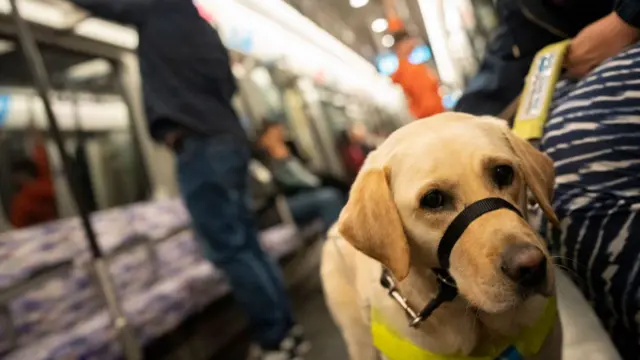
    A close-up shot of a golden Labrador assistance dog wearing a black head collar and a high-visibility yellow harness, sitting on a London Underground carriage. The background shows the interior of the train with blurred passengers, moquette seating, and overhead handrails.Image source, Getty Images

    The sight loss charity Guide Dogs says today's Tube strike is creating extra challenges for people with vision impairments.

    The charity says busier pavements, crowded buses and changes to usual travel routes can make journeys more difficult.

    It has also raised concerns about e-bikes and scooters being left blocking pavements as commuters seek alternative ways to travel.

    Clive Wood, from Guide Dogs, says: “For some, these factors may make journeys feel unpredictable or unsafe, and may lead them to avoid travelling altogether, limiting their independence."

    He adds: "While trains may stop, the need for accessibility doesn't."

    The charity is asking commuters to be mindful of where they leave hire bikes and to consider how small acts of assistance can help people with sight loss travel safely.

  11. Commuters delayed, while union says it will meet TfL to discuss dispute - a recappublished at 12:01 BST 4 June

    Tara Mewawalla
    Live reporter

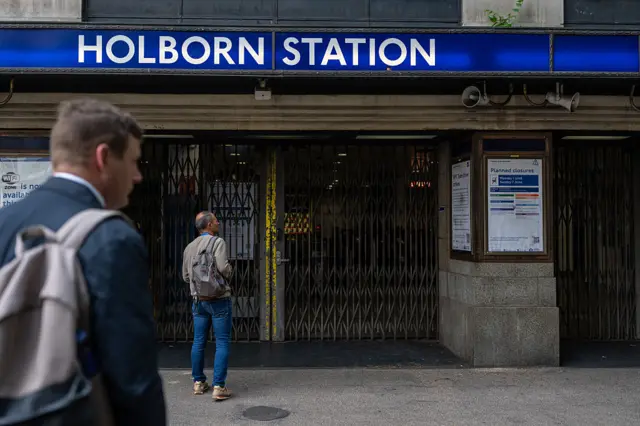
    Two men wait look on outside Holborn Station in London where the barriers are closed due to tube strikesImage source, Getty Images

    It's midday and we're halfway through the second 24-hour strike this week by some drivers on the London Underground.

    The Rail, Maritime and Transport (RMT) Union, which represents today's striking drivers, says it will meet with London Underground again next week to try and resolve their dispute.

    It centres around Transport for London's (TfL) plans to introduce a voluntary four-day working week for drivers.

    But, despite the disruption on the Tube, TfL has reported that there are "no exceptional delays" on London's major roads - apart from Silvertown Tunnel where utility works are causing "serious delays".

    Though, as commuters have found, some buses, trains and the Tubes that are running are busier than usual.

    We've been speaking to them as they make their way into work and around the city.

    Nick Christoforou took the bus to get to Angel station in Islington and said the strikes were "very inconvenient", while Naoise Standing was travelling to work at Kingston Hospital and said drivers should be allowed to strike, but she was confused about the reasons for the strike this week.

    On Tuesday, TfL apologised for the disruption caused by the strike and called on RMT to work with them "to resolve their questions" and suspend future action until that work is completed.

  12. Footfall down in London, phone data showspublished at 11:49 BST 4 June

    Tom Edwards
    Transport Correspondent, BBC London

    Phone service provider O2 has analysed its anonymised motion data in the usually-busy parts of the city, which shows footfall is down compared to a normal Thursday morning.

    • The City is down by 9%
    • King's Cross is down by 12%
    • The West End is down by 5%
    • Westminster is down by 11%

    A Virgin Media O2 spokesperson says the data "highlights the continued impact transport disruption can have on central London, with many people once again changing their usual routines and journeys".

  13. Suspensions, delays still affecting 10 different linespublished at 11:37 BST 4 June

    A graphic shows which Tube lines are affected by strikes on Thursday, the fourth of June.

    As lunchtime approaches, there are still 10 lines suspended or delayed due to the ongoing driver strikes.

    Here's the latest on how each line is affected - for more detailed information and live updates, visit Transport for London's website, external.

  14. Most Paddington commuters unaffected by strikespublished at 11:27 BST 4 June

    Luxmy Gopal
    Reporting from Paddington Station

    Shafaq is pictured outside Paddington Station ,with her hair blown by the wind

    At Paddington station, most people tell me they haven’t been affected by the strikes today.

    But Shafaq says she’s had to take a different route which involved a lot more walking and waiting, though it only added around 20 minutes to her usual 90-minute commute.

    She says Tuesday’s strike action had a far greater impact on her and she was late for work by around half an hour, even though she left a lot of extra time for the journey.

    When I asked if she knew why the drivers were taking industrial action, she says: “I have no idea!”

  15. In pictures: London commuters navigate another day of strikespublished at 11:09 BST 4 June

    While the Tube strikes have affected transport in London, large numbers of commuters have continued to transit through the central city.

    Here's a selection of pictures taken by news photographers this morning.

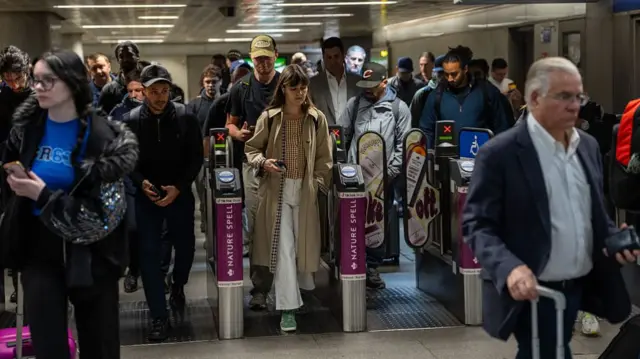
    Commuters pass through the ticket gates at King's Cross St Pancras underground stationImage source, Getty Images
    Image caption,

    Commuters pass through the ticket gates at King's Cross St Pancras Underground station

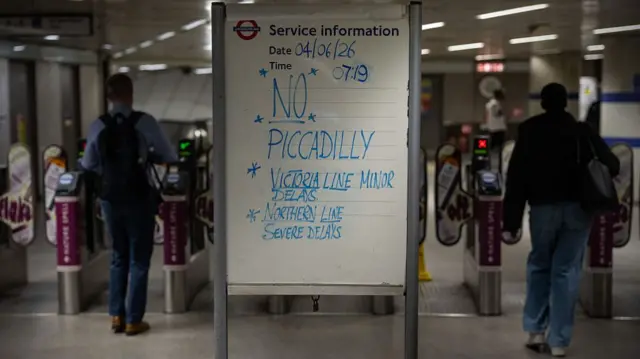
    A sign informs people that no Piccadilly Line is running from King's Cross St Pancras stationImage source, Getty Images
    Image caption,

    A sign informs people that no Piccadilly Line is running from King's Cross St Pancras station

    A commuter talks with Transport for London assistance staff at Euston StationImage source, Getty Images
    Image caption,

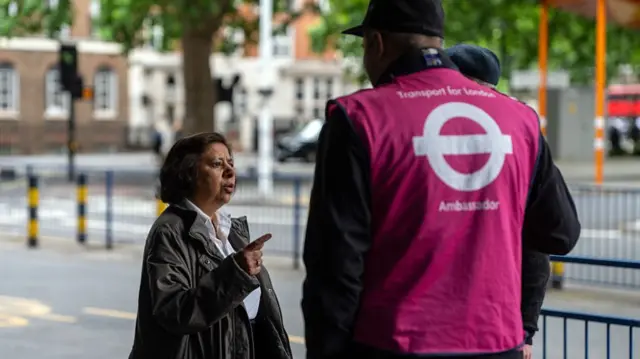
    A commuter talks with Transport for London assistance staff at Euston station

    Commuters board a bus at Euston StationImage source, Getty Images
    Image caption,

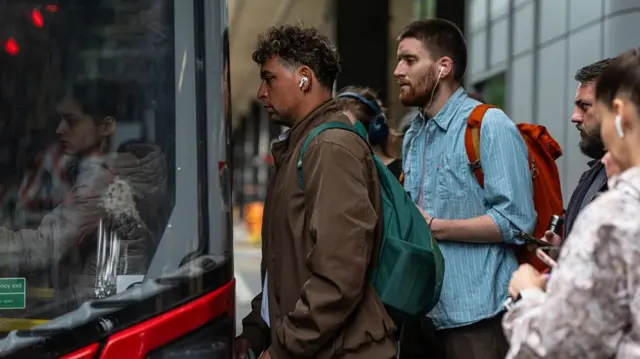
    Commuters board a bus outside Euston station

  16. Tube journeys fell 41% during Tuesday's strikepublished at 10:53 BST 4 June

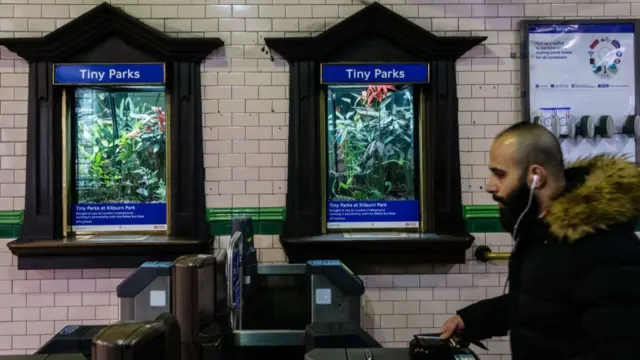
    A man wearing a winter coat with a faux-fur hood and earphones walks past ticket barriers inside a London Underground station. In the background, two historical wooden ticket booth windows set into a tiled wall have been converted into illuminated terrariums filled with green plants. Signage above and inside the displays reads "Tiny Parks at Kilburn Park".Image source, Getty Images

    Not surprisingly, during Tuesday's strike there was a fall in people using the Tube with Transport for London (TfL) data showing journeys were down by 41%.

    But TfL says many passengers switched to other forms of transport instead. Bus boardings were up 5% compared with the equivalent day last year, while journeys on the London Overground rose 9% and Elizabeth line travel increased by 19%.

    Overall, Oyster and contactless taps across London's transport network were down by around 10%, with about 3.4 million unique cards used throughout the day.

    TfL says more than 60% of Tube drivers reported for work during the strike, allowing services to run on every line except the Circle and Waterloo & City lines, which were already scheduled to be closed.

  17. Analysis

    Tricky questions ahead as TfL and RMT head into further talkspublished at 10:36 BST 4 June

    Tom Edwards
    Transport Correspondent, BBC London

    A sign showing the strikes and their impact throughout the day, before 6:30 it is bad, then morning and evening it's okay, back to bad after 21:00Image source, Getty Images

    It is positive news that Transport for London (TfL) and the RMT union are meeting at the conciliation service Acas.

    The issue for the RMT is that the other driver union, Aslef, has already accepted the four-day deal and so TfL has got the proposal halfway there, which arguably weakens the RMT’s position.

    It seems unlikely TfL will suddenly now start talking about the other conditions that the RMT has concerns about, like early starts or when shifts can be changed.

    So does RMT keep striking, and could this become like the Southern dispute that lasted for 18 months?

    And if TfL forces the changes through anyway, what does that do long-term to industrial relations?

    It is very tricky.

  18. 'They need to sort it out'published at 10:21 BST 4 June

    Harry Low
    Reporting from Southgate station

    White bearded and bespectacled man smiles at camera

    “On and off it's been going on for maybe three or four years now,” says Nick Christoforou about the strikes.

    He is trying to get to Angel station in Islington and is now heading back to take the 125 bus he just disembarked from.

    “I’m not sure what the issue is, if I'm being brutally honest. It seems to be a different thing every time.

    “I think it's got to come to an end, the unions are in a monopoly position on this one. They just need to sort it out, don't they?”

    This industrial action follows two 24-hour walkouts in April and another series of strikes which lasted most of the week at the start of September. Strikes called in 2023 and 2024 were eventually called off but there were six walkouts in 2022.

    “It’s very inconvenient,” he adds.

  19. Swiss visitors caught out not knowing about Tube strikespublished at 10:02 BST 4 June

    Nisha Patel
    At Waterloo Station

    Cinna and Stephan are pictured at Waterloo station wearing a hoodie and sweatshirt, they are both smiling.

    Cinna and Stefan are here from Switzerland. They got here on Tuesday, and didn't know there was a walkout - they came from Italy, and say there was a strike there too!

    Cinna has lived in London before so knew how to get around, but they've spent a lot of time navigating the train system and they've got on and off at least two trains this morning.

    Earlier this week was the worst, they say, and they got charged £17 because they didn't tap in and out within two hours.

    They are traveling to Portsmouth today and coming back later tonight; their backup plan is a bus or walking if trains aren't available.

    They say they definitely prefer Swiss travel.

  20. Cricket fans should avoid worst disruptionpublished at 09:53 BST 4 June

    Harry Low
    BBC London

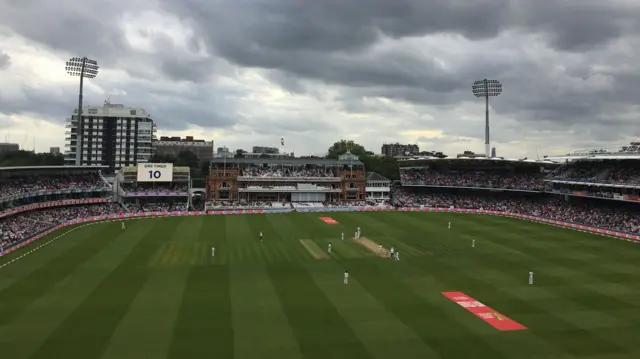
    Lord's cricket ground shows grass and pavilion and cricketers

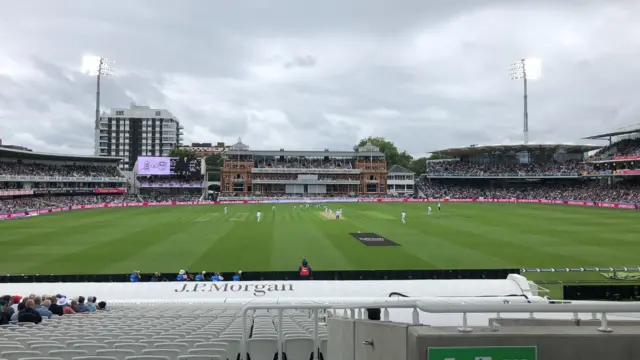
    The second Tube strike this week coincides with the start of first Test match of the summer at Lord's.

    England entertain New Zealand at the home of cricket in north-west London but supporters with tickets should avoid the worst of the disruption, given that St John's Wood, which is on the Jubilee line, is expected to run as normal.

    On Tuesday, TfL says it ran 90% of services on the Jubilee line.

    Lord's cricket ground shows grass and pavilion and cricketers

    The reason is that most drivers on that line belong to the Aslef union, which has accepted the voluntary four-day week, saying it gives participating drivers an extra 35 days off a year "in return for some fairly minor changes to working conditions".

    Other nearby stations, including Baker Street, are open although there will be no Circle line services nor eastbound Metropolitan line trains to Aldgate from there.

    Those heading to Lord's will now just be hoping that the weather holds out.