Summary

  • Police in India's capital Delhi are clearing a site where the Cockroach Janta Party (CJP) had been sitting on a protest since June

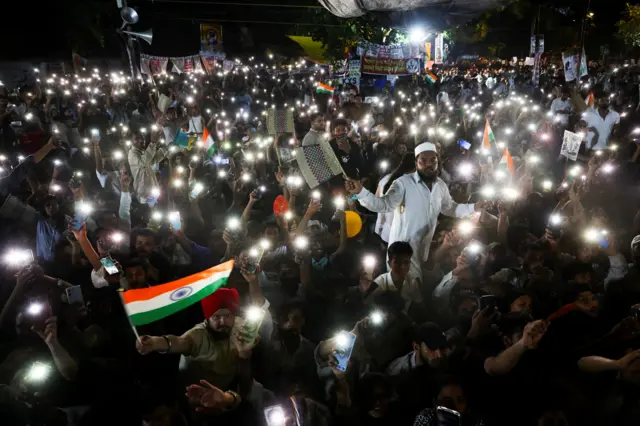
  • Thousands of people turned up in central Delhi for a protest called by the Cockroach Janta Party (CJP) demanding reforms to the education system

  • They had been protesting for weeks, asking India's education minister to take responsibility for recent exam paper leaks and resign

  • The government so far had allowed them to protest, though the minister last month called the CJP the "B-team of disruptive elements"

  • On Monday, a senior government minister held a short meeting with protest leaders, the CJP announced

  • Tensions escalated on Saturday after police forcibly hospitalised activist and educator Sonam Wangchuk , who was on the 21st day of a hunger strike in support of the CJP

  • Despite its name, the Cockroach Janta Party (CJP) is not a political party. It began as a satirical campaign but has since gained a massive following

  • The movement adopted the name "cockroach" after a senior judge used the term to describe unemployed young people, turning it into a symbol of resilience

  1. A rare mass protest in the heart of India's power centrepublished at 09:07 BST 20 July
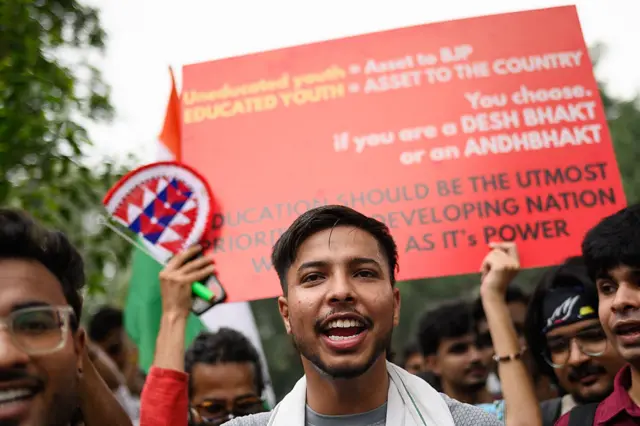
    Activists and supporters of the Cockroach Janta Party (CJP) take part in a protest demanding the resignation of India's Education Minister Dharmendra Pradhan over alleged NEET examination irregularities in New Delhi on July 20, 2026. (Photo by Manan VATSYAYANA / AFP via Getty Images)Image source, AFP via Getty Images

    Demonstrations are common across Indian states, but mass protests converging on the national capital's power centre have become relatively uncommon in recent years amid tighter policing, restrictions on public gatherings and a fragmented opposition.

    Large mobilisations in central Delhi have historically accompanied moments of major political upheaval - from anti-corruption campaigns to farmers' protests - but such scenes have been rare around parliament itself.

    That makes Monday's events significant, regardless of its immediate political impact: it is one of the biggest public displays of dissent in the capital against Prime Minister Narendra Modi's government in recent years.

  2. Three protesting students end fast after 23 dayspublished at 09:04 BST 20 July

    Three students from the All India Students’ Association (AISA), who were fasting alongside Sonam Wangchuk, have ended their hunger strike after 23 days.

    The students, Neha, Manish and Aameen, ended their fast after appeals from political activists, civil society members and Bollywood stars.

    The AISA has said that their protest in support of the CJP's demands will continue.

  3. Much bigger than before: BBC reporter on how the CJP protest has grownpublished at 08:56 BST 20 July

    BBC correspondent Azadeh Moshiri attended the Cockroach Janta Party’s first protest at Jantar Mantar in early June.

    Since then, she says, support for the movement has swollen, with thousands turning up to join Monday's march.

    Watch her report from the protest site.

    Media caption,

    BBC's Azadeh Moshiri reports from the ground.

  4. Some protesters are nearing parliamentpublished at 08:43 BST 20 July

    Dilnawaz Pasha
    Reporting from Jantar Mantar

    The march is beginning to spill beyond the police cordon.

    Police officers are struggling to contain the sheer size of the crowd, and minor scuffles were also reported in some places.

    While CJP founder Abhijeet Dipke and other organisers have been stopped from moving ahead, smaller groups of protesters have peeled away into the web of narrow lanes, using alternate routes to get closer to parliament.

    The vast majority, however, remain crammed into the streets around Jantar Mantar, where the crowd is now so dense that even leaving the protest site has become difficult.

    Police and volunteers are urging people to stay calm as the march continues.

  5. 'March hasn't been paused' - CJP spokespersonpublished at 08:38 BST 20 July

    Reports have been coming in that the CJP has put the protest on hold while it speaks to government representatives.

    However, a CJP spokesperson denied this and told our reporter Geeta Pandey that no such official announcement has been made.

    The protesters remain seated at the barricades near Jantar Mantar while others are slowly walking towards them.

    A little while ago, the CJP said that two of its members had left to meet federal Health Minister JP Nadda for talks - the first time a top minister has engaged with them.

    Meanwhile, we're hearing that some protesters are heading to parliament via other routes. We'll bring you more details soon.

  6. 'I couldn't just watch from the sidelines' - protesterpublished at 08:24 BST 20 July

    Zoya Mateen

    For Samrat Khanna, joining Monday's march meant swapping the cockpit for the protest route.

    The commercial pilot says he reshuffled his flying roster so he could be in Delhi for the protest, driven by what he describes as growing frustration over a lack of public accountability.

    He points to issues ranging from the alleged paper leak - which sparked the protests in the first place - and says the "government should be answerable when institutions fail".

    He also says he is concerned about shrinking space for criticism, arguing that dissent is too often dismissed as being "anti-national" or backed by foreign interests. These are allegations the government has repeatedly rejected.

    "I felt I had to be here," he says. "I couldn't just watch from the sidelines."

    Samrat Khanna
  7. 'Some protesters baton-charged by police' - CJP allegespublished at 08:16 BST 20 July

    CJP spokespersons have alleged that the police baton-charged some protesters who gathered near the parliament building.

    The police haven't responded to their specific allegations but had posted on X, external earlier that media reports on "sporadic use of violence/detentions at Jantar Mantar" were untrue.

    A man, who claimed to be beaten by the police, was just now brought to the protest site. He sat with his legs splayed out on the ground and has been panting.

    The organisers of the protest are offering him medical assistance.

    Meanwhile, the CJP said that the two of its members were on their way to meet federal Health Minister JP Nadda for talks.

  8. Dipke's father says he is worried about his son's healthpublished at 08:00 BST 20 July

    Shrikant Bangale
    BBC Marathi

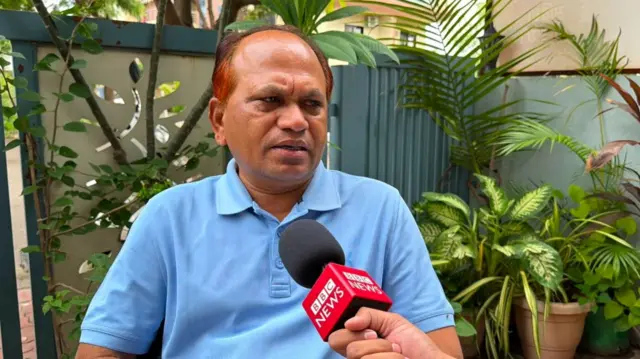
    We have just heard from Bhagwan Dipke, the father of CJP founder Abhijeet Dipke, who is on a hunger strike while also trying to lead the march.

    Bhagwan said he is worried about his son's health.

    "Abhijeet has never gone on a hunger strike before. If he remains without food for a long time, he feels dizzy. I am very worried."

    Dipke, who has been protesting at Jantar Mantar for nearly a month, began his hunger strike on Saturday after activist Sonam Wangchuk was forcibly taken to hospital.

    Bhagwan Dipke wearing a blue tshirt speaks into the red BBC micImage source, Kiran Sakle/BBC Marathi
    Image caption,

    Abhijeet Dipke's father, Bhagwan Dipke, has expressed concern about his son's health as he continues his hunger strike

  9. Police stop protesters at the barricadespublished at 07:55 BST 20 July

    Geeta Pandey
    Reporting from Jantar Mantar, Delhi

    Police are stopping protesters at the barricades that have been set up at the end of the road.

    They also stopped a truck carrying CJP founder Abhijeet Dipke and other protesters.

    Many protesters have sat down near the barricades, since they were advised by the organisers to not jump over the barricades or engage in any form of violence.

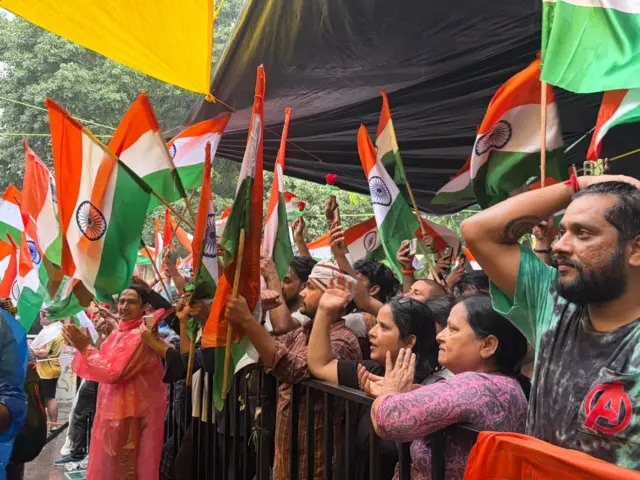
    Other protesters are standing where they are and continuing to wave the Indian flag and shout slogans demanding the resignation of the education minister.

    Many of the protesters seem to be college-going students. Organisers have repeatedly urged protesters to stay safe and to remain calm.

  10. A brief history of student protests in Indiapublished at 07:51 BST 20 July

    Students protesting additional affirmative action in 1990o disadvantaged & scheduled castes for govt. jobs (aka affirmative action). (Photo by Robert Nickelsberg/Getty Images)Image source, Getty Images
    Image caption,

    Students protesting additional affirmative action in 1990

    Student protests have played a pivotal role in India's political history.

    In the freedom movement, students joined campaigns led by Mahatma Gandhi and others against British rule.

    After independence, student-led demonstrations helped shape major political shifts, including the 1974 Bihar movement led by Jayaprakash Narayan, which challenged corruption and fuelled opposition to Indira Gandhi before the Emergency.

    The 1979-85 Assam movement, driven largely by students, demanded action against illegal immigration.

    Since the 1990s, protests have centred on caste-based reservations, university autonomy, corruption, citizenship laws and campus freedoms.

    Students were at the forefront of demonstrations after the 2012 Delhi gang rape, against the Citizenship Amendment Act in 2019-20, and over exam leaks and recruitment delays in recent years.

    While many movements have sparked national debate and policy changes, they have also frequently been met with police crackdowns and political confrontation.

  11. Wangchuk asks hospital authorities to let him join protest marchpublished at 07:42 BST 20 July

    A handwritten letter has been posted to activist Sonam Wangchuk's social media account a short while ago.

    In the note, Wangchuk says he is "feeling very fine" on Monday morning and that his health parameters are "normal".

    "I request you to kindly allow me to leave the hospital, even if temporarily, so that I can join the march to parliament," he wrote, appealing to authorities at Delhi's Safdarjung Hospital.

    Wangchuk was taken from the protest site to the hospital on Saturday. His wife has said that he has continued fasting there while receiving treatment.

  12. Upbeat mood at the protest site this morningpublished at 07:40 BST 20 July

    We will bring you more updates from the ground soon. In the meantime, here's what our reporter Geeta Pandey saw in the morning.

    Despite heavy security, repeated police warnings and the prospect of a stand-off over the planned march, the mood at the protest site was strikingly upbeat.

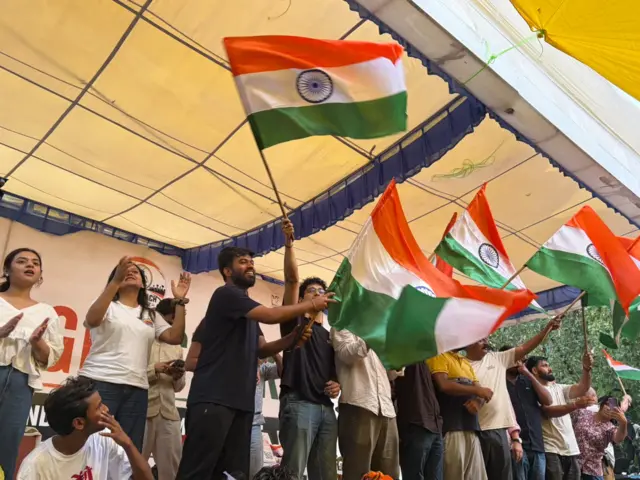
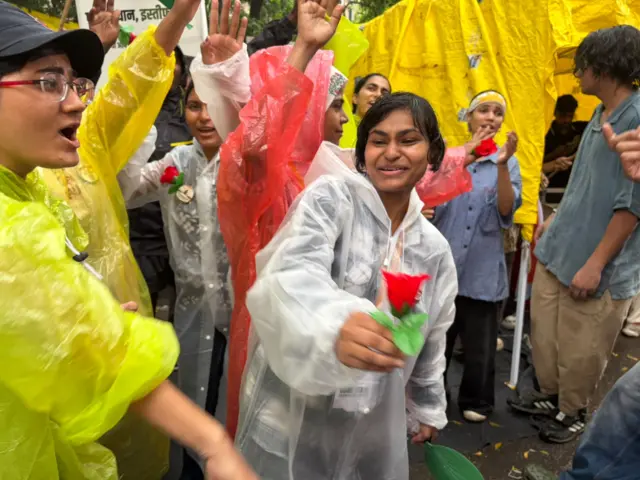
    Hundreds of young people waved Indian flags, clapped along to songs and broke into spontaneous dancing.

    Volunteers moved through the crowd handing out food and water, while others posed for selfies, painted placards and recorded videos.

    Many protesters said the singing and celebrations reflected their determination to keep the movement peaceful.

    CJP protestsImage source, Geeta Pandey
    CJP protestsImage source, Geeta Pandey
    CJP protestsImage source, Geeta Pandey
  13. Protesters begin marchingpublished at 07:34 BST 20 July

    Geeta Pandey
    Reporting from Jantar Mantar, Delhi

    CJP founder Abhijeet Dipke has begun leading the march.

    Thousands of people are headed towards the police barricades at the end of the road.

    It looks like they are likely to be stopped by the police there.

    Earlier, spokespersons of the CJP had advised protesters to maintain calm and to not jump over the barricades.

  14. Speakers ask protesters to maintain calmpublished at 07:15 BST 20 July

    Geeta Pandey
    Reporting from Jantar Mantar, Delhi

    Thousands of protesters are gathered at the site and a short while ago, Abhijeet Dipke, founder of the CJP, said that the march to parliament would begin shortly. There are hundreds of police personnel around.

    BBC Hindi reporter Dilnawaz Pasha tells me there are thousands more people outside Jantar Mantar as well.

    Many opposition leaders are also at the protest site, including the Trinamool Congress's Mahua Moitra and the Aam Aadmi Party's Sanjay Singh, Manish Sisodia and Atishi.

    Bollywood actress Shabana Azmi is also here.

    Organisers of the protest have been urging people to remain calm and maintain peace, even in the face of what they called "provocation".

    "Don't try to jump barricades if police stop you, just sit down on the road and wait," Dipke told the crowd.

  15. What's happening in parliament?published at 07:11 BST 20 July

    The protesters are hoping to march to India's parliament, where lawmakers have gathered for the monsoon session beginning today.

    So what's happening there?

    A short while ago, the Lok Sabha, or the lower house of parliament, was adjourned till noon after the opposition raised slogans, demanding that the government discuss important national issues.

    At the start of the session, Prime Minister Narendra Modi made a speech outside parliament in which, among other things, he praised an Indian private company that achieved its first orbital launch on Saturday.

    He also spoke about India setting up new oil refineries, semi-conductor plants and launching a hydrogen train.

    He urged all parties to engage in a "constructive dialogue" that can take the nation forward.

    However, he did not mention the protesters camping at Jantar Mantar, less than 2km away.

  16. What happened last night?published at 07:04 BST 20 July

    Last night, Jantar Mantar looked like a campsite.

    Students who travelled overnight from across India slept on mats and thin blankets under tarpaulins, while others stayed awake talking, singing protest songs and painting placards for Monday's march.

    As the sun rose, volunteers handed out tea and breakfast and helped newcomers find space among rows of backpacks and sleeping bags.

    Protesters have refused to leave the site despite repeated police announcements asking them to disperse.

    Many said they want to be right at the front of the gathering when the march begins.

    Protesters at Jantar MantarImage source, Reuters
    Image caption,

    Protesters at Jantar Mantar

  17. Protesters say they feel 'ignored' by mainstream politicspublished at 06:57 BST 20 July

    Azadeh Moshiri
    Reporting from Jantar Mantar, Delhi

    I remember being at this same venue more than a month ago, for the Cockroach Janta Party’s (CJP's) very first protest. It’s clear that support for the movement has swollen, with thousands of people here. Some have told us they have travelled hours from outside Delhi to march.

    A group of students have positioned themselves on the floor, in front of a row of riot police.

    Three of them are wearing face masks and have travelled from out of town.

    “We haven’t told our parents we’re here,” they told us. They were worried their parents would stop them from attending given the heavy police presence and the risk of clashes.

    But they feel that after years of being ignored by mainstream politics, young Indians finally have a voice through the CJP.

    “There are multiple issues going on in our country and they are not being acknowledged,” one of them tells me. “The government is not listening.”

    While calls for the education minister to resign is one of the main reasons these crowds have gathered, protesters have told us the popularity of the movement represents the widespread discontent among young Indians.

  18. WATCH: The protest site in the morningpublished at 06:52 BST 20 July

    Protesters waving the Indian flag, dancing in the rain and hundreds of police personnel on the ground - that's what the BBC saw today morning at Jantar Mantar,

    Media caption,

    BBC reports from the ground as protesters prepare to march to parliament

  19. Protesters prepared for a long daypublished at 06:42 BST 20 July

    As thousands of students prepare to join the march, many have spent the past 24 hours doing something more often associated with a music festival than a protest: swapping packing lists, safety tips and meeting plans.

    Across Instagram, WhatsApp and Telegram groups, volunteers have shared detailed advisories urging people to carry water, ORS packets, snacks, power banks, caps and raincoats, wear comfortable shoes and save emergency contact numbers.

    Others have circulated maps of meeting points, legal helpline numbers and instructions on what to do if detained.

    The CJP itself has issued a list of do's and don'ts, asking participants to keep the march peaceful, carry only the Indian flag and refrain from confrontations with police.

    Many say they are prepared for a long day, with protesters arriving carrying backpacks filled with food and water as security tightened around the capital.

  20. In pictures: Huge crowds at Delhi protest sitepublished at 06:37 BST 20 July

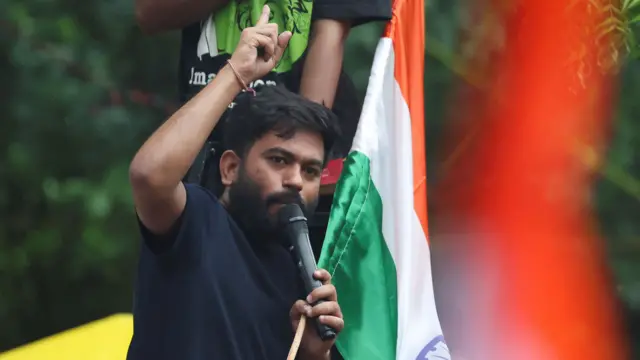
    Abhijeet Dipke, head of the Cockroach Janta Party (CJP) addresses supporters at a protest site ahead of a planned march to Parliament on the opening day of the monsoon session, demanding the resignation of Education Minister Dharmendra PradhanImage source, Reuters
    Image caption,

    Cockroach Janta Party founder Abhijeet Dipke addresses supporters while holding the Indian flag

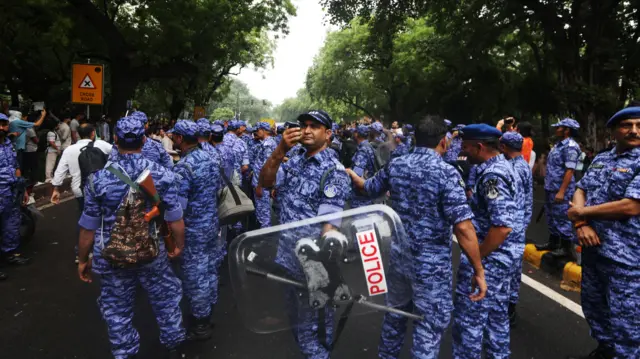
    Police officers stand guard as supporters of the Cockroach Janta Party (CJP) gather for a protest march toward ParliamentImage source, EPA
    Image caption,

    Hundreds of security personnel have been deployed in and around Jantar Mantar

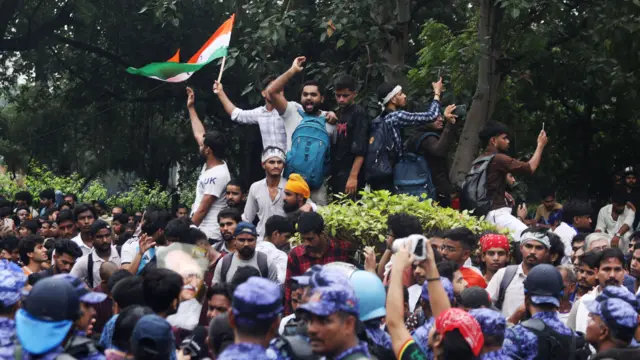
    Supporters of the Cockroach Janta Party (CJP) gather for a protest march toward ParliamentImage source, EPA
    Image caption,

    People from across the country have come to Delhi to take part in the protest