Summary

  • This page is no longer being updated. You can continue to follow our coverage at our new live page here

  1. Iran 'chose this path of violence', says press secretarypublished at 18:29 GMT 4 March

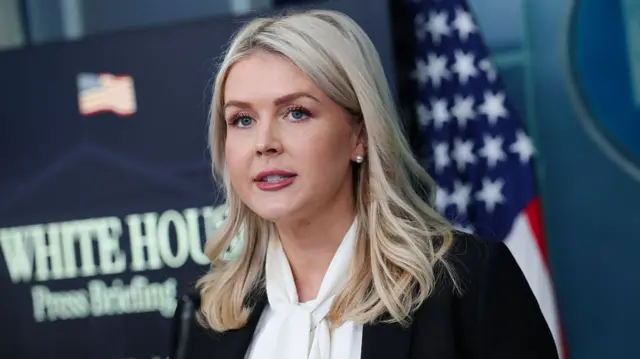
    Leavitt says that US President Donald Trump prefers to put peace and diplomacy first, while Iran "chose this path of violence and destruction and they are reaping the consequences".

    She says the Iranian regime "lied and delayed and tried to string the US along" during negotiations before the initial US-Israeli attack, in order to buy time so they could build ballistic and nuclear weapons.
  2. Press secretary says US aims to 'permanently extinguish' Iran's nuclear ambitionspublished at 18:27 GMT 4 March

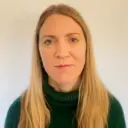
    Karoline LeavittImage source, Getty Images

    The White House press secretary says US operations in Iran are aimed at "permanently extinguishing their nuclear ambitions".

    She lays out the objectives we've been hearing from others in the administration over the last few days - including destroying Iran's ballistic missiles and annihilating its navy.

    Leavitt says the US has destroyed more than 20 ships already - something we heard from the US Central Command earlier.

    Iran's proxies, meanwhile, are "hardly putting up a fight" and will no longer be able to destabilise the world, she says.

  3. Iran 'paying in blood' for crimes against the US - press secretarypublished at 18:25 GMT 4 March

    Leavitt says Iran's leaders are "paying in blood" for what she calls their crimes against the US, before going on to talk about the regime's actions since the 1979 Iranian Revolution.

    She says past presidents have been "too weak" against Iran, but "Trump is finally the man of action".

  4. White House press secretary addresses reporters in Washingtonpublished at 18:20 GMT 4 March

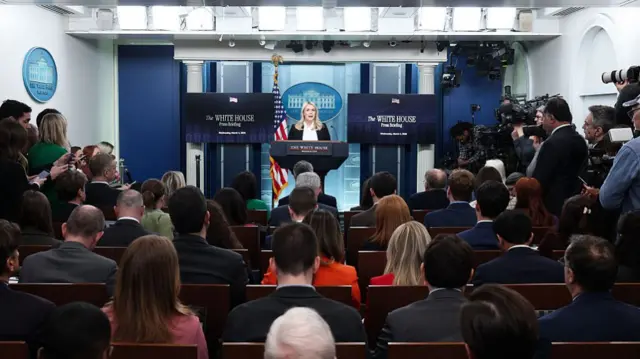
    Karoline Leavitt in front of reportersImage source, Getty Images

    White House Press Secretary Karoline Leavitt is now addressing reporters in Washington DC.

    The US-Israel war with Iran is likely to be the biggest topic on the table today. We'll update you with the key lines here and you can watch live at the top of the page.

  5. Press room packed for White House briefingpublished at 18:00 GMT 4 March

    Daniel Bush
    Washington correspondent, reporting from the White House

    I'm at the White House now, waiting for the first press briefing since the US attacked Iran last Saturday.

    The room is packed ahead of the briefing, which is slated to start at 13:00 local time (18:00 GMT).

    In recent days President Donald Trump, Secretary of State Marco Rubio and other senior administration officials have all addressed Iran.

    But this will likely be the longest exchange yet between the press and the White House on the war.

  6. Iraq affected by national power outage, electricity ministry sayspublished at 17:56 GMT 4 March

    Iraq's electricity ministry says the entire country has been affected by a total power outage.

    "The power grid has completely shut down across all Iraqi provinces," the ministry says, according to the Iraqi News Agency (INA).

    The reason for the blackout is currently under investigation, the ministry says in a statement seen by Reuters news agency.

  7. US embassy in Baghdad tells US citizens to leave Iraqpublished at 17:53 GMT 4 March
    Breaking

    The US embassy in Baghdad is urging all US citizens in Iraq to leave the country as "soon as they are safely able to do so".

    They are told to shelter in place until conditions "are safe to depart".

  8. 'Our people deserve a normal life' - Iranian tells BBC Persianpublished at 17:51 GMT 4 March

    Ghoncheh Habibiazad and BBC Persian

    BBC Persian has been hearing from Iranians, as the country continues to be targeted by US and Israeli strikes.

    Sajad says most shops are closed, food prices have gone up, and the streets are very quiet.

    While people are "anxious and stressed", the death of Supreme Leader Ayatollah Ali Khamenei has made him "more hopeful about the future".

    "Almost no one imagined that things would reach this point," he says, adding that the "scale of these attacks" on the western city of Urmia is "truly shocking".

    Amir, who left Iran two weeks ago and is now stuck in the United Arab Emirates, says: "Nothing good comes out of war. But unfortunately, we’ve been pushed to a point where some people are willing to endure this pain in the hope that we might see a better tomorrow."

    He adds that he "shakes" every time he hears of another attack on Tehran as that's where his family is: "I would rather be under the bombing myself than sit here knowing it’s happening to my loved ones. Our people deserve a normal life".

    "Tehran feels very empty," says one woman in her twenties. "Anyone leaving home I think must have an urgent reason, otherwise they’d stay at home."

    She says that she had a plane ticket, booked for yesterday, to travel to Europe and study, but "all my plans are now up in the air, which makes me feel a bit sad."

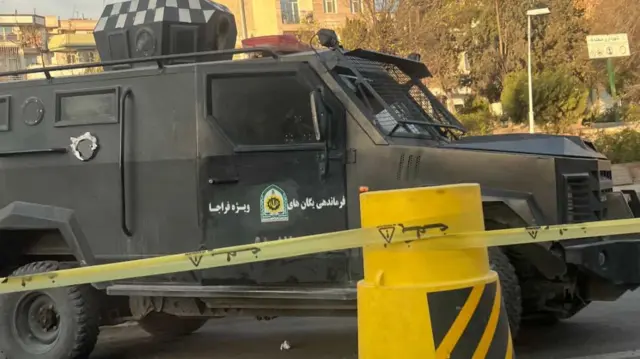
    "On the first day, people were chanting and everyone seemed happy," she says. "But now there are police forces around. Most shops are closed. Supermarkets and bakeries remain open, though some ATMs are out of service."

    A vehicle belonging to Iran’s Police Special Forces sits by yellow caution tapeImage source, Supplied
  9. British Airways flights out of Oman already sold out, BBC toldpublished at 17:40 GMT 4 March

    Simon Browning
    Transport correspondent

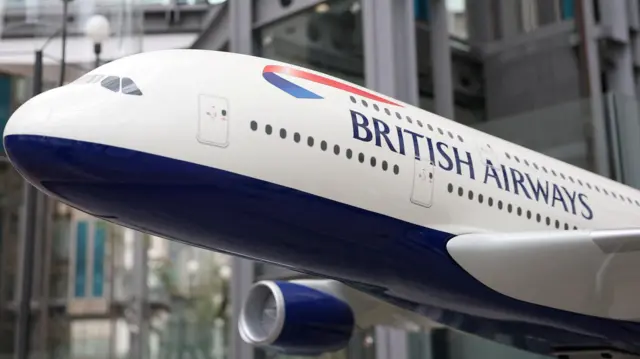
    British Airways planeImage source, Reuters

    The UK government announced previously that it had chartered a commercial flight to help British nationals leave the Middle East, it is scheduled to depart from Oman later on Wednesday at 23:00 local time, (19:00 GMT), with further expected in the coming days.

    British Airways has told the BBC additional services from Oman to London scheduled for later this week have already sold out.

    "Flights from Muscat on 5, 6 and 7 March are now fully booked," the airline says.

    "We will continue to review the situation and if we are able to, we will add additional services."

  10. Airport reunions as conflict escalates across Middle Eastpublished at 17:28 GMT 4 March

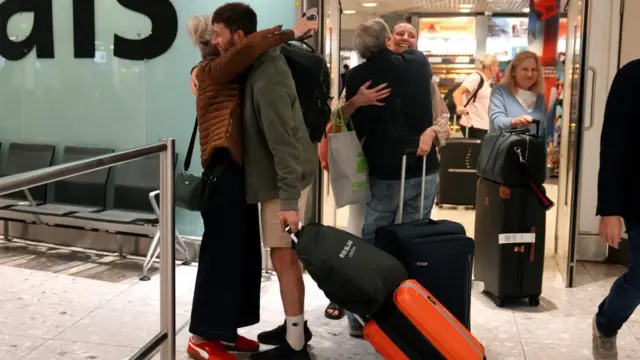
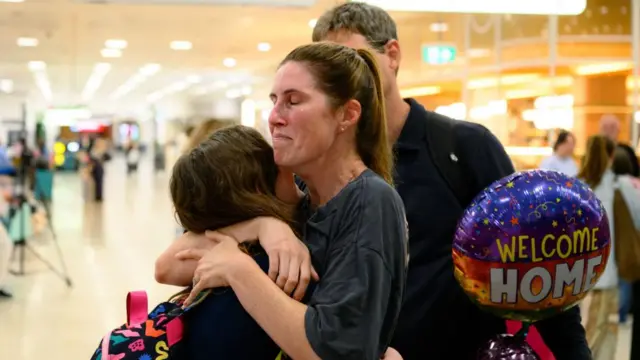
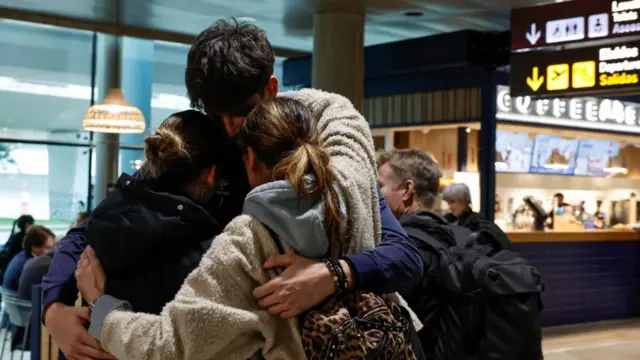
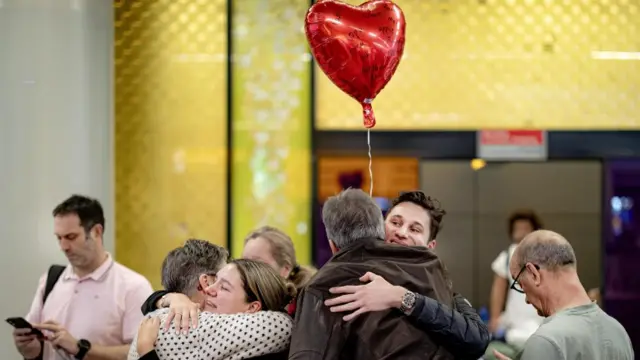
    Photos are coming in from airports across the world of families being reunited as flights across the Middle East continue to be disrupted by the conflict.

    Thousands of flights have been cancelled across the region, according to flight tracking service Flightradar24, with hundreds of thousands of passengers affected.

    Loved ones hug each other at Heathrows arrivalsImage source, PA Media
    Image caption,

    A flight from Dubai landed in London earlier today - Sue and Terry Luminati greet their daughter and her boyfriend as they arrived at Heathrow

    A woman hugs a young child as she holds a welcome home balloonImage source, EPA/Shutterstock
    Image caption,

    'Welcome home' balloons were spotted in Sydney International Airport, as passengers arrived from Dubai

    A family hugs in Valencia's arrivalsImage source, EPA/Shutterstock
    Image caption,

    Valencia's junior basketball team arrived home after being trapped for four days in Abu Dhabi

    Families hugging in AmsterdamImage source, EPA/Shutterstock
    Image caption,

    Stranded travellers returned from Dubai to Amsterdam on Wednesday morning

  11. Iran launches more missiles towards Israel, says IDFpublished at 17:18 GMT 4 March

    The Israel Defense Forces (IDF) says it has detected another launch of missiles from Iran towards Israel.

    It urges those who receive a shelter notification to do so, and not to exit until they are told to do so.

    A IDF statement adds that defence systems are working to intercept the missiles.

  12. Explosions ring out in Beirut as Israel-Hezbollah hostilities escalatepublished at 17:11 GMT 4 March

    Alice Cuddy
    Reporting from Hazmieh, Lebanon

    The death toll from Israeli military action here in Lebanon has risen to 72, with 437 injured since Monday, according to the latest figures from the health ministry.

    It comes as hostilities between Israel and the Iran-backed group Hezbollah continue to escalate.

    Explosions of Israeli air strikes have rung out in the capital Beirut today, while the Israeli military has told people living in southern Lebanon to leave their homes immediately and move north.

    The latest escalation comes after Hezbollah launched rockets and drones at Israel in response to the US and Israeli strikes that killed Iran’s Supreme Leader Ayatollah Ali Khamenei.

    The Israeli military has since launched air strikes and sent troops into the south of Lebanon, with tens of thousands of civilians forced to flee.

    Hezbollah’s rocket fire in the early hours of Monday was the first such action from the group since a November 2024 ceasefire that formally ended 13 months of war. Israel had continued to carry out near-daily strikes on Lebanon, which it said were aimed at Hezbollah targets.

  13. Twenty killed in Lebanon by Israeli strikes, minister sayspublished at 17:04 GMT 4 March
    Breaking

    Lebanese Social Affairs minister Haneen Sayed says 20 people have been killed in Israeli strikes on Lebanon today, according to reports from news agency Reuters and in local media.

    Sayed is currently giving a news conference alongside Prime Minister Nawaf Salam.

  14. The latest from the Middle East as strikes continue across the regionpublished at 17:00 GMT 4 March

    Imogen James
    Live reporter

    Israel expands military action:

    • The United Nations peacekeeping mission in Lebanon, United Nations Interim Force in Lebanon has told the BBC that the Israeli military has entered several Lebanese villages near the Blue Line, the UN-demarcated boundary between Lebanon and Israel
    • In a military update, Israel said it has dropped more than 5,000 munitions on Iran since the beginning of the conflict on Saturday - and its operations there have a particular emphasis on the Tehran area

    United States sinks Iranian ship:

    In Iran:

    UK warship faces delayed arrival in Mediterranean:

    • Royal Navy warship HMS Dragon, which is being sent to Cyprus to bolster security, isn't expected to arrive until next week. While two helicopters will arrive sooner
    • The UK is expecting US bombers to use British bases at Diego Garcia and RAF Fairford in the coming days
  15. Watch: Why did the US go to war?published at 16:52 GMT 4 March

    In the lead up to the 28 February strikes on Iran, US President Donald Trump and his administration signalled that an attack was imminent.

    Since then, the president and his top officials have offered varying explanations for its actions in the war with Iran.

    The BBC's Analysis Editor Ros Atkins takes an in-depth look at how the Trump administration's narrative on the war with Iran has shifted, and the key questions that remain unanswered.

  16. US says it has 'struck or sunk' more than 20 Iranian shipspublished at 16:49 GMT 4 March

    The US says it has "struck or sunk to the bottom of the ocean more than 20 ships" from Iran.

    The update from the US Central Command, a subsection of the US Department of Defense, comes shortly after Defense Secretary Pete Hegseth said a US submarine sank an Iranian warship in the Indian Ocean with a torpedo.

    Sri Lankan authorities say 32 people have been rescued, and an official has told the BBC that the bodies of 80 people have been found on board the Iris Dena.

  17. Iran had 'no choice' but to respond to US-Israeli attack, president tells neighbouring countriespublished at 16:41 GMT 4 March

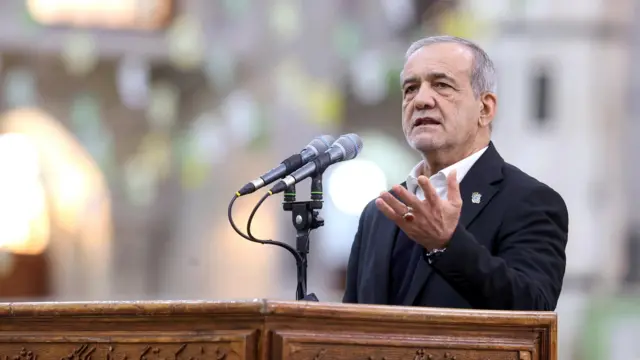
    Masoud PezeshkianImage source, Iran's Presidential website/WANA/Reuters

    Iranian President Masoud Pezeshkian tells neighbouring Gulf countries that Iran had "no choice" but to respond to US and Israeli attacks.

    After the US and Israel launched a campaign of strikes on Iran on 28 February, Iran has responded by firing hundreds of missiles and drones at its Arab neighbours.

    This has included targeting US military bases and civilian and energy infrastructure in Gulf states - including the United Arab Emirates, Qatar and Oman.

    In a post on X, Pezeshkian tells the neighbouring countries that Iran has strived "with your assistance" to avoid a war.

    But, he adds, that the US-Israel attacks left Iran with "no choice but to defend ourselves".

    The Iranian president says he respects the sovereignty of his neighbours and that he believes peace in the region "must be ensured by the countries of the region"

  18. US-Israel attack on Iran was initiated due to two primary concerns - IDFpublished at 16:32 GMT 4 March

    Lucy Williamson
    Middle East correspondent, reporting from Tel Aviv

    An Israeli military official says they understood from the political level three weeks before the war that they were heading into another confrontation with Iran.

    He says the attack was initiated due to two primary concerns: Iran’s nuclear program being moved too deep underground to be reached by conventional means and a rapid increase in Iranian ballistic missile production.

    Speaking to journalists, the military official, who asked not to be named, says the level of integration with the US military in this campaign was so high that up to 70% of the daily activities of the J5 (Planning & Cooperation) directorate are conducted in English to coordinate with their American counterparts.

    The Israel Defense Forces (IDF) Chief of Staff and US Chairman of the Joint Chiefs of Staff are talking at least once every day, he says. Air-refueling was a key area of US assistance, he adds.

    During the initial strike, the US and Israeli war rooms were synchronised in real-time to allow for immediate adjustments based on Iranian reactions, he says.

    The official added that the IDF and the US deliberately projected an image that the Israeli military was standing down for the weekend, to catch Iran off guard.

    “We released photos and information suggesting that IDF staff and senior command were ‘going home for Shabbat dinner’,” he says.

  19. Iranian security chief asks Trump: 'Does America still come first - or Israel?'published at 16:28 GMT 4 March

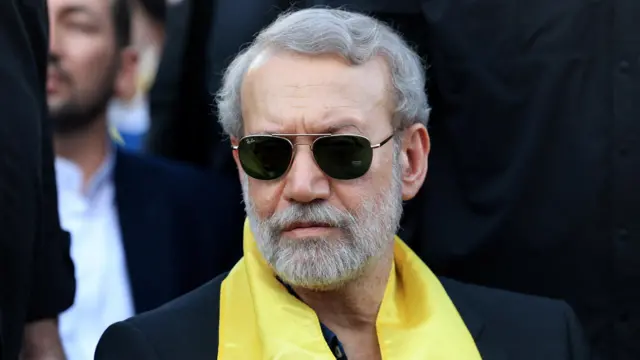
    Ali Larijani wearing sunglasses and a yellow scarfImage source, Reuters

    Iran's security chief Ali Larijani has warned US President Donald Trump the death of Ayatollah Khamenei "will exact a heavy price from you", after the Iranian leader was killed in the US-Israel strikes on Iran.

    In a post on X, Larijani says Trump "has dragged the American people into an unjust war with Iran", after being "swayed" by Israeli Prime Minister Benjamin Netanyahu's "clowinsh antics".

    "Does America still come first - or Israel?" he asks.

    As a reminder, the US and Israel launched widespread strikes on Iran on 28 February, and have since continued to target sites across the country.

    US Secretary of State Marco Rubio has said that the US knew there was going to be Israeli action, which meant the US had to act "pre-emptively" in the face of expected Iranian attacks on American forces.

  20. Israeli military enters villages in south of Lebanon, says UNpublished at 16:14 GMT 4 March
    Breaking

    Samantha Granville
    Reporting from Beirut

    The United Nations peacekeeping mission in Lebanon, United Nations Interim Force in Lebanon (UNIFIL), tells the BBC that the Israeli military has entered several Lebanese villages near the Blue Line, the UN-demarcated boundary between Lebanon and Israel.

    The peacekeeping force did not immediately provide details on the scale or duration of the incursions.

    The Blue Line is the unofficial border between Lebanon and Israel. It was drawn up by the United Nations in 2000 after Israel withdrew troops and ended a 22-year presence in southern Lebanon.