Summary

  • Two men have been jailed after being the first to be sentenced for a new offence of endangering others during a sea crossing to the UK

  • Mohammad Tajik, 32, the first to be convicted under the new law, was sentenced to two years in prison

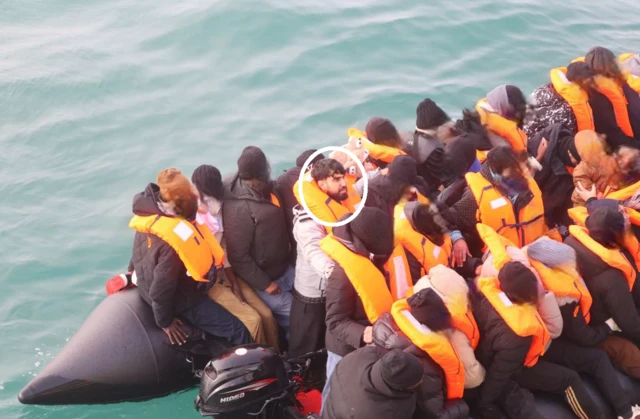
  • Footage showing him piloting an overcrowded dinghy across the English Channel in poor weather on 17 January was played during the hearing at Canterbury Crown Court

  • Separately, Alnour Mohamed Ali, 26, was jailed for 27 months in relation to a crossing attempt on 9 April - footage showed people clinging to the edge of the boat he was steering

  • Prosecutors accepted the deaths of four people trying to board the boat were not part of the allegations and Ali should not be sentenced in relation to them

  • The new offence came into force in April and is a really important part of the government's plan to counter small boat crossings, our home and legal correspondent, Dominic Casciani, writes

Media caption,
Drone footage shows packed dinghy piloted by Mohammad Tajik
  1. Ali pictured onboard small boatpublished at 13:49 BST

    Alnour Mohamed Ali, 26, is pictured here wearing a pink hat on board a small boat on 9 April.

    This is a separate incident to the one involving Mohammad Tajik.

    He has been jailed for 27 months in relation to the crossing attempt. Footage showed people clinging to the edge of the boat he was steering.
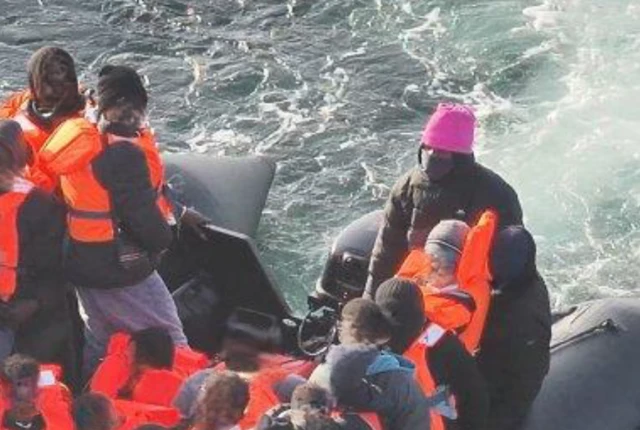
    Alnour Mohamed Ali, 26, in a pink hat on board a small boat packed with people in the Channel.Image source, Crown Prosecution Service
  2. Picture of Tajik on board small boatpublished at 13:45 BST

    The Crown Prosecution Service (CPS) has also released an image of Tajik on board the small boat he was piloting in the Channel on 17 January.

    The dinghy is packed with people wearing life jackets, and their faces have been blurred by the CPS.

    Mohammad Tajik on a boat full of people wearing life jackets.Image source, Crown Prosecution Service.
  3. First image of Tajik releasedpublished at 13:38 BST
    Breaking

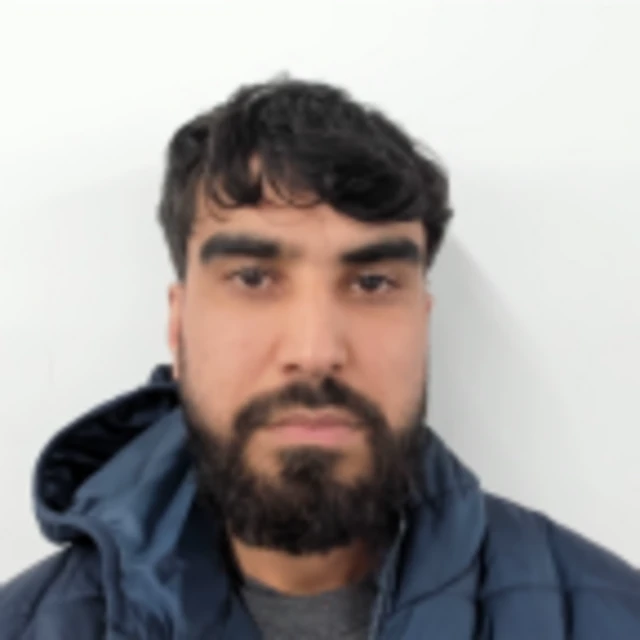
    An image of Mohammad Tajik has been released by the Crown Prosecution Service, the first we have seen.

    He was earlier jailed to two years in prison for a new offence of endangering lives during a small boat crossing.

    Mohammad Tajik.Image source, Crown Prosecution Service
  4. First offenders sentenced under new small boats lawpublished at 13:12 BST

    Afghan national Mohammad Tajik, 32, piloted a packed dinghy from France to the UK in the early hours of 17 January. Footage showed in court today saw him steering the tiller on board the vessel.

    He was handed a two-year prison sentence. As his sentence is over 12 months, he will be automatically considered for deportation by the Home Office.

    In a separate incident, Sudanese national Alnour Mohamed Ali, 26, piloted an "extremely crowded" vessel on the morning of April 9. Four people died trying to reach the boat, the prosecution accepted he was not responsible for those deaths, despite initial suggestions from investigators that he might have been.

    He was handed a 27-month sentence. Ali will also be considered for deportation by the Home Office.

    The maximum sentence the two men could have received was five years imprisonment, or six years if the defendant entered the UK in breach of a deportation order.

    Media caption,

    Drone footage shows packed dinghy piloted by Mohammad Tajik

  5. Ali sentenced to 27 months in prisonpublished at 13:06 BST
    Breaking

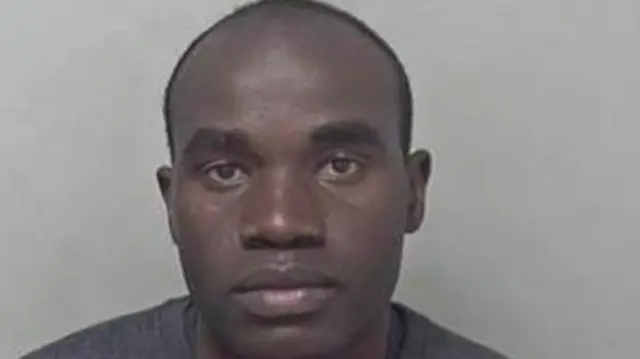
    A mugshot of Alnour Mohamed AliImage source, National Crime Agency

    Alnour Mohamed Ali is sentenced to 27 months in prison.

    As in the case of Tajik previously, the judge says the Home Office will independently decide whether he should be allowed to remain in the UK.

  6. Down to luck and good fortune that people on boat with Ali were rescued, judge sayspublished at 13:05 BST

    The judge begins sentencing Ali, and says at the outset that he is not here to be held responsible for the deaths of four people who drowned off the coast of France.

    He says it has been made expressly clear by the prosecution that it is not the case that UK authorities consider him culpable for those deaths, and accuses Border Force of publishing "misinformation" about the case.

    There is no evidence Ali had any knowledge, let alone responsibility, for others being injured or killed, the judge adds.

    But the judge goes on to say that footage of the boat Ali pilot showed people "packed into every inch of available space", and they were left "at the mercy of the unpredictable sea" due to the dangerous unsuitability of the vessel he steered.

    It was "down to luck and good fortune" that they were rescued before coming to serious harm.

  7. Tajik handed two-year prison sentencepublished at 12:59 BST
    Breaking

    Mohammad Tajik is sentenced to two years in prison.

    The Home Office will separately decide whether he should be entitled to remain in the UK, the judge adds.

  8. Judge says Tajik will receive one-third reduction in sentence due to early guilty pleapublished at 12:56 BST

    Turning to the case of Mohammad Tajik, the judge says he pleaded guilty at a very early stage and so he will receive a one-third reduction in his sentence on those grounds.

    The judge says the boat was not significantly overcrowded but many people were not wearing life jackets.

    He says Tajik let go of the tiller of his boat, resulting in it drifting around in circles, which increased the risk of those on board being endangered.

    The judge says Tajik's case is at the medium end of the scale, as he did not pilot the boat for the entire journey or make a profit from doing so.

  9. Immediate imprisonment is necessary, judge sayspublished at 12:52 BST

    Sean Seddon
    Reporting from Canterbury Crown Court

    The judge goes on to say immediate imprisonment for these offences is necessary in order to deter others from piloting small boats.

    The maximum sentence is five years imprisonment.

    Recorder Simon James says a number of things must be considered when deciding on the length of any punishment, including how many people were on a boat or how long the journey took.

  10. 'Sentence needs to act as a deterrent'published at 12:44 BST

    Sean Seddon
    Reporting from Canterbury Crown Court

    The judge says it is clear to him that those who pilot boats are also assisting others to gain illegal entry to the UK.

    He says these crossing undermine public safety and confidence in the immigration system.

    The offending causes considerable strain on already stretched public resources, while making significant profits for organised criminal gangs.

    In light of those factors and ongoing public concern about small boats, he says today's sentence needs to act as a deterrent.

  11. No precedent or guideline for sentencing new offences, judge sayspublished at 12:40 BST

    Sean Seddon
    Reporting from Canterbury Crown Court

    The judge explains that there is no precedent or clear guidelines for sentencing these new offences.

    He accuses the Sentencing Council of failing to publish guidelines despite "understandable and seemingly increasing" public concern about small boats, which he says is "somewhat sub-optimal", before calling on the legal body to issue guidance as soon as possible.

    The judge says he is not seeking to set a precedent himself today with the sentence he delivers.

  12. Judge begins sentencing by outlining dangers of Channel crossingspublished at 12:37 BST

    Sean Seddon
    Reporting from Canterbury Crown Court

    The judge, Recorder Simon James, begins his sentencing by saying it has long been recognised the Channel crossing is "perilous, fraught with risk".

    As the frequency of such crossings increases, so have instances of tragedy, he says.

    The dangers of seeking to navigate the busy shipping channel in a small boat are obvious, the judge tells the defendant - especially when there are no navigational aides, they are overcrowded and there is not adequate safety equipment.

    Attempting to make the crossing with no regards to the weather condition increases the risk further.

    Despite the best efforts of rescuers, injuries and death occur with "alarming regularity".

  13. Court resumes ahead of sentencingpublished at 12:33 BST

    Sean Seddon
    Reporting from Canterbury Crown Court

    The judge is back in court, which means Mohammad Tajik and Alnour Mohamed Ali will be sentenced shortly.

  14. What we've heard so farpublished at 12:02 BST

    Kieran Kelly
    Live reporter

    Proceedings are under way in Canterbury Crown Court, where two men - Mohammad Tajik, 32, and Alnour Mohamed Ali, 26 - are the first to be sentenced after they were both convicted of endangering others during a sea crossing to the UK.

    This is the first time anyone is being sentenced for the new offence and, though they pleaded guilty to separate incidents, they are side by side in the dock.

    Here's what we've heard so far:

    Alnour Mohamed Ali

    • The court heard how Ali, a Sudanese national, piloted an “extremely crowded” vessel on the morning of April 9 – 74 people were on board, many of which did not have life jackets and were dangling their legs off the side of the vessel
    • The judge intervened to ask the Crown Prosecution Service to make clear that the allegations against Ali did not include the “tragic deaths” of four people who died trying to reach the boat he was piloting - and he should not be sentenced in relation to the deaths
    • Defending Ali, barrister Paul Hogben told the court that Ali was not paid to steer the boat and was ordered to do so by armed smugglers

    Mohammad Tajik

    • Meanwhile, the court was shown footage of Tajik piloting a packed dinghy, which had departed from France in the early hours of 17 January. In the footage, he can be seen at the tiller, which is used to steer the vessel
    • Tajik’s barrister Niall Doherty told the court how his client witnessed his father and brother being killed by the Taliban, and how he fled Afghanistan fearing similar persecution
    • Doherty then asked the judge for a maximum sentence of 12 months given Tajik’s guilty plea

    We'll continue to bring you the latest once proceedings resume shortly.

  15. Proceedings pause until middaypublished at 11:43 BST

    Sean Seddon
    Reporting from Canterbury Crown Court

    Proceedings here at Canterbury Crown Court are pausing now.

    We expect to be back at around 12:00.

  16. People clinging to edges of boat Ali was steering, footage showspublished at 11:43 BST

    Sean Seddon
    Reporting from Canterbury Crown Court

    The court is now being played footage of the small boat Alnour Mohamed Ali has admitted piloting across the English Channel.

    Dozens of people can be seen practically on top of one another in the extremely crowded vessel, the majority of whom are not wearing life jackets.

    Ali, the court is told, can be seen with his hand on the tiller at the back of the boat.

    A French rescue vessel is seen pulling up alongside the small boat and handing out life jackets.

    Many of those on board, the vast majority of whom appear to be adult males, are clinging on to the edges of the boat with one leg dangling in the water.

  17. Ali was ordered to steer boat by armed smugglers and unaware of deaths, court hearspublished at 11:36 BST

    Sean Seddon
    Reporting from Canterbury Crown Court

    Defending Alnour Mohamed Ali, barrister Paul Hogben says his client was born in a village in the Darfur region of Sudan. He and his parents, three brothers and six sisters, were forced to flee by the paramilitary Rapid Support Forces during the civil war because they are not Arabs, and his village had been destroyed.

    He left in 2019 and stayed in Libya, where he was imprisoned without cause on two occasions and suffered torture, including being starved and cut with a bayonet.

    Ali has had no contact with his family for over a year because of the war and has no idea whether his parents or sibling are still alive, the court is told.

    He was not paid to steer the boat, his barrister says, and was ordered to pilot the boat by armed smugglers before they embarked.

    Ali had no knowledge of reports of four deaths prior to the crossing he was involved in, and only became aware of the deaths when he reached the UK.

    Hogben says there has been "misreporting" of Ali's case and accuses British authorities of "wrongly informing the media" that he was charged in relation to the deaths, which has had "severe repercussions" on his client.

    He refers to a National Crime Agency press release which referenced the four deaths, alongside a picture of Ali, which he describes as "defamatory" and damaging, before asking the judge to take that into account during sentencing.

  18. Tajik's barrister asks for sentence of no more than 12 monthspublished at 11:25 BST

    Sean Seddon
    Reporting from Canterbury Crown Court

    More from Mohammad Tajik's barrister now.

    Niall Doherty says Tajik played no part in organising the crossing and took control mid-journey because the original pilot had stopped steering it.

    He made no financial gain from piloting the boat, the court hears.

    Doherty says his client knows a custodial sentence is "inevitable" but argues for no more than 12 months when taking into account his early guilty plea.

  19. Tajik's background reveals complexity of arrivalspublished at 11:25 BST

    Dominic Casciani
    Home and legal correspondent, at Canterbury Crown Court

    Mohammad Tajik’s defence barrister is explaining to the court that he only came to the UK because he had been fleeing for his life - after the Taliban had murdered his brother and father.

    Tajik is said to have been significantly traumatised by witnessing the murders and wanted to seek safety in Europe.

    He first went to Iran and then from there to Europe, entering at Greece. There, the authorities refused him asylum - and he moved on to France and then ultimately the UK. Critics of a tough approach to dinghy arrivals say point to cases like this one as examples of why there need to be more safe and legal routes for people to seek safety in the UK.

    But their critics in turn point out that Tajik passed through a series of European nations where he could have been given safety first.

  20. Tajik fled Afghanistan fearing Taliban persecution, court hearspublished at 11:23 BST

    Sean Seddon
    Reporting from Canterbury Crown Court

    We're now hearing from Tajik's barrister, Niall Doherty. He tells the court Mohammad Tajik grew up in Afghanistan, where his wife and 10-year-old son still live.

    He tells the court that around 10 years ago, members of the Taliban approached his father and asked him to place a "yellow powder" into food served to soldiers visiting his family's restaurant.

    Doherty says his client's father refused because of the likely fatal consequences to the soldiers, so both his father and brother were shot dead by the Taliban in front of him.

    Fearing he would also be targeted, he left Afghanistan intending to seek asylum.

    The defendant had a long route leading to his arrival in the UK, the barrister says. He worked in Iran, then travelled to Greece - where an asylum claim was refused. He eventually travelled through Europe to France.

    Tajik has no ties to the UK, the court hears, and has struggled emotionally since the significant trauma of witnessing the deaths of his father and brother.