Summary

  • This live coverage has finished - follow this link for the latest updates

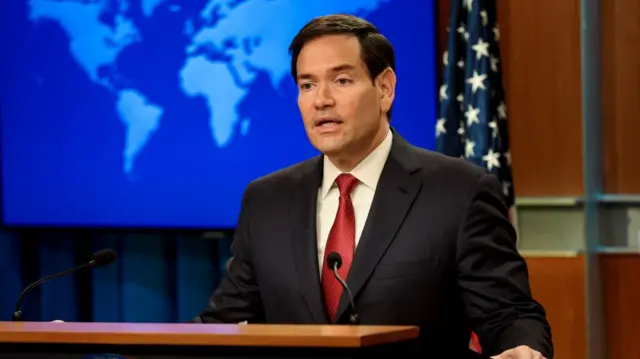
  • US Secretary of State Marco Rubio says America is not at war with Venezuela, a day after US strikes on the country

  • Venezuelan President Nicolás Maduro and his wife Cilia Flores, who were captured by the US, are set to appear in court on Monday, according to a spokesperson

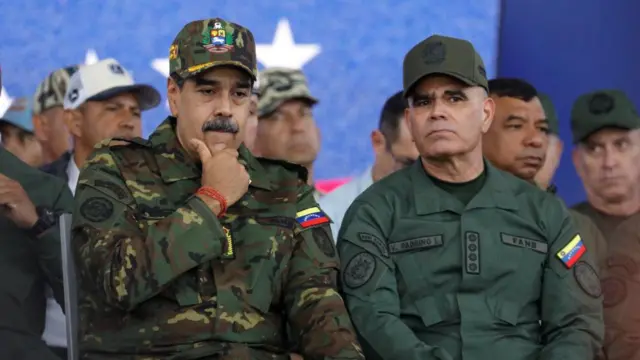
  • Venezuela's Defence Minister Vladimir Padrino says a large part of Maduro's security team and "innocent civilians" were killed in the US operation

  • Venezuela has denounced the "military aggression", and the army says it backs interim President Delcy Rodríguez

  • This is important because it is a confirmation that - despite Donald Trump saying the US will now run the country - Maduro's allies are still in charge, writes our South America correspondent

  • Donald Trump tells The Atlantic that Rodríguez will "pay a big price" if she "does not do what is right". The president also told reporters aboard Air Force One that Venezuela was "our area" invoking the Monroe Doctrine

  • Venezuelans have been sharing their worries about the uncertainty and prospects for a peaceful transition of power with the BBC

  1. Maduro's capture shows 'Trump means what he says' - US vice presidentpublished at 14:02 GMT 3 January
    JD VanceImage source, Reuters

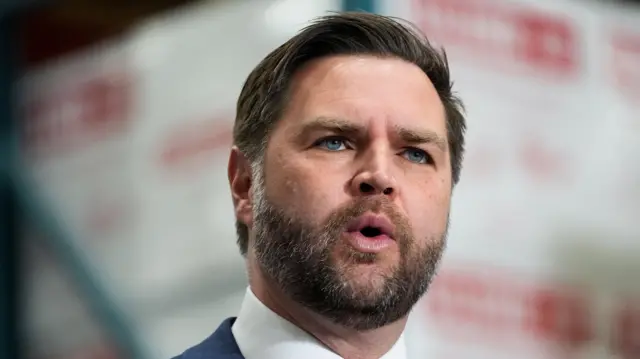
    We've just heard from US Vice President JD Vance.

    He says in a post on X: "The president offered multiple off ramps, but was very clear throughout this process: the drug trafficking must stop, and the stolen oil must be returned to the United States.

    "Maduro is the newest person to find out that President Trump means what he says. Kudos to our brave special operators who pulled off a truly impressive operation."
  2. Apprehension on the streets of Caracaspublished at 13:48 GMT 3 January

    Nicole Kolster
    Reporting from Caracas

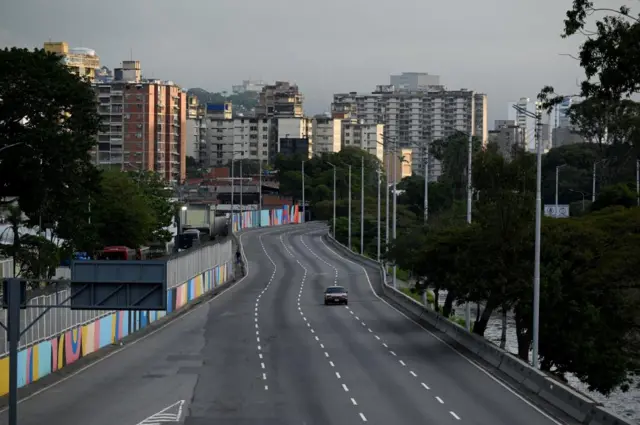
    A highway with only one car on it in caracasImage source, Reuters

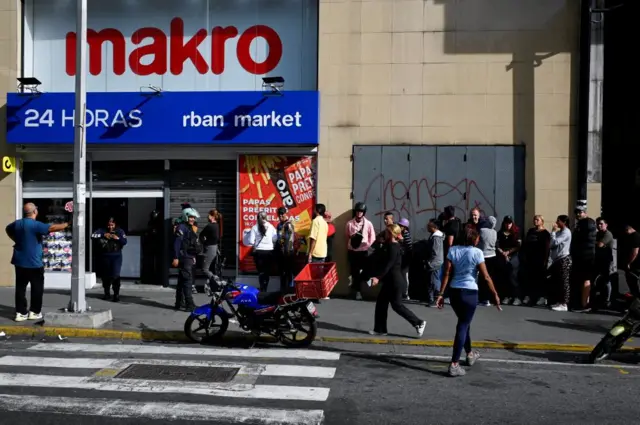
    In Caracas, there is apprehension in the streets. People barely speak out, but there are queues in pharmacies and supermarkets.

    WhatsApp groups are bursting with messages and videos, while people in the streets of Eastern Caracas are mostly silent.

    “Do you know what happened?” a woman asks me in a low voice outside a plaza. She went out to get medicine for her nerves but found the 24-hour pharmacy closed.

    “Please don’t record me,” she asks. A strong smell, reminding me of tear gas - so familiar from the famous protests of 2017 - seeps through my window.

    I’m in a high-rise building, in the eastern part of the capital, Caracas. My mother notices it too.

    Earlier, on the balconies of nearby buildings, there was an outburst of euphoria minutes after a message began circulating on social media from President Donald Trump announcing the capture of Nicolás Maduro and his wife, Cilia Flores.

    But the shouts lasted only seconds.

    A supermarket that also operates 24-hours kept its shutters down for most of the morning, with a line of people waiting for it to open.

    People queue at a supermarket in CaracasImage source, Reuters
  3. Analysis

    Growing fear Trump's attack could trigger greater destabilisation in Venezuelapublished at 13:30 GMT 3 January

    Norberto Paredes
    BBC Mundo correspondent in Miami

    Although it had been a possibility for months, what happened today has come as a shock to Venezuelans.

    For the opposition to Nicolás Maduro’s government, this is a moment many have been waiting for for years.

    It is an opposition that has tried everything: from boycotting the 2018 elections, which it considered fraudulent, to taking part in electoral processes despite the risks, and mobilising massively in the streets when the National Electoral Council — controlled by figures close to Chavismo — announced results in 2024 favourable to Maduro without presenting evidence.

    From Venezuela, some messages of support for the US attacks are reaching me.

    Some opposition supporters saw them as a last resort, a final hope to put an end to a government that much of the international community describes as dictatorial, and whose leader has been accused by Washington and other Latin American governments of heading a drug-trafficking network.

    Meanwhile, among Maduro’s supporters, questions are growing — whispered quietly and echoed on social media: Where is the president? And who is in power?

    Many share the fear that the attack and Maduro’s announced departure could trigger even greater destabilisation in a country already battered by years of political, economic and social crisis.

  4. BBC Verify

    The locations of the strikespublished at 13:02 GMT 3 January

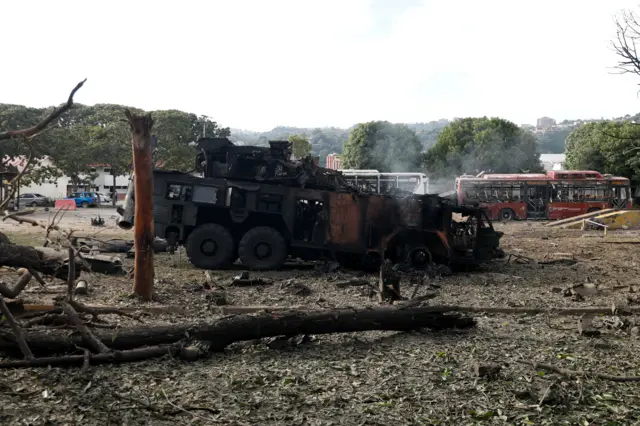
    A destroyed anti-aircraft unit at La Carolta military air baseImage source, Reuters
    Image caption,

    Images from photo agencies show damage to La Carlota military air base

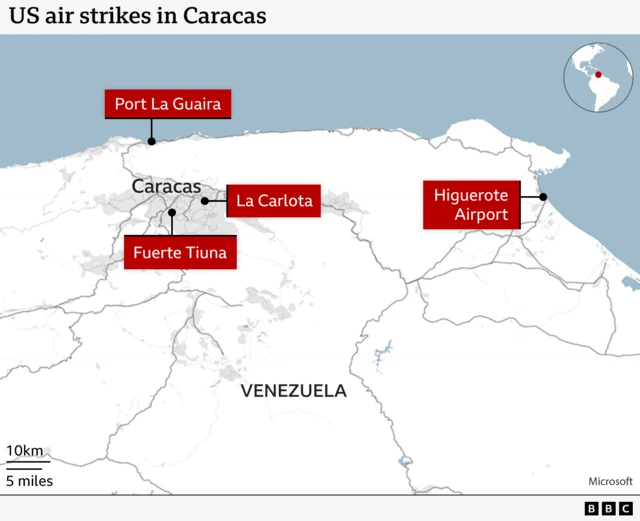
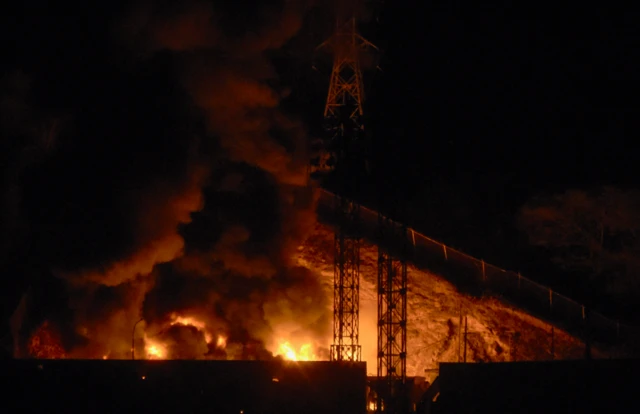
    Since early this morning, BBC Verify have been working through a number of videos showing explosions, fire and smoke in various locations around Caracas to identify which sites have been targeted.

    So far, we have confirmed four locations.

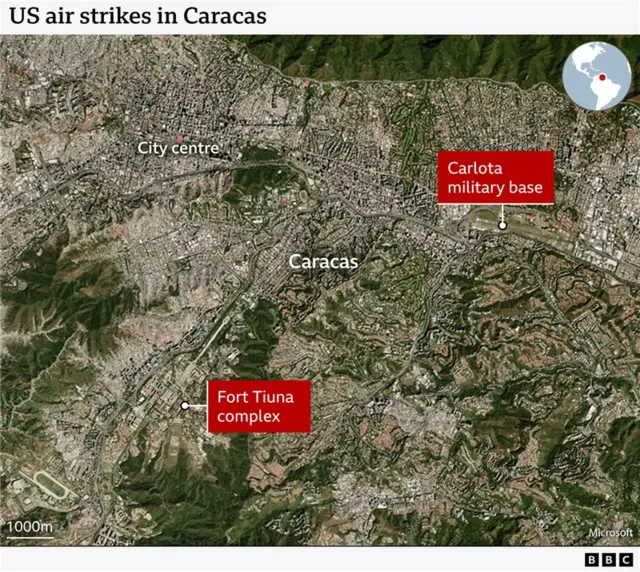
    • Generalissimo Francisco de Miranda Air Base aka La Carlota - footage filmed at a distance shows two plumes of smoke and an explosion close to this military airfield in Caracas
    • Port La Guaira - Caracas' main conduit to the Caribbean Sea, located in Miranda state. Footage filmed nearby shows several plumes of smoke rising into the air, and at least one fire burning
    • Higuerote Airport – also located in Miranda state, just east of Caracas. Footage filmed from two angles shows fire and repeated flashes on the ground, a possible indication of secondary explosions
    • Fuerte Tiuna - The Getty news agency has released images of fire burning in the direction and damage to vehicles at this key military facility in Caracas. Nasa satellites also detected heat signatures in the area at around the time that the US strikes took place
    Map showing locations of US air strikes in and around Caracas, Venezuela. Highlighted sites include Port La Guaira to the north, Fuerte Tiuna and La Carlota in Caracas, and Higuerote Airport to the east.
  5. 'Deeply concerning' and a 'criminal attack' - reaction to strikes in Venezuelapublished at 12:56 GMT 3 January

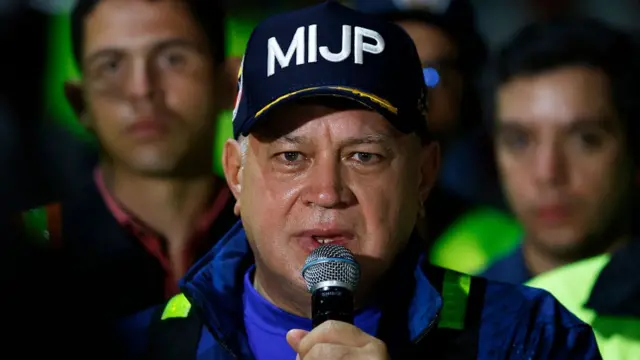
    Venezuelan Interior Minister Diosdado Cabello pictured speaking at a rally last year. He is wearing a hat with the letters 'MIJP' written on it and he is speaking into a microphone.Image source, Getty Images
    Image caption,

    Venezuelan Interior Minister Diosdado Cabello pictured speaking at a rally last year

    • Venezuelan Interior Minister Diosdado Cabello urges citizens to remain calm and to trust the country's leadership and military. Reuters news agency cites him as saying: "The world needs to speak out about this attack."
    • President of Colombia Gutavo Petro says troops are being deployed to the Venezuela border and calls The OAS (Organization of American States) and the UN (United Nations) to "meet immediately"
    • Chilean President Gabriel Boric shares his country's "concern and condemnation regarding the military actions of the United States"
    • Cuban President Miguel Díaz-Canel says his country "denounces and urgently demands the reaction of the international community against the criminal attack by the US on Venezuela"
    • The president of Guyana - which has been in a long-running territorial dispute with bordering Venezuela - Irfaan Ali says the country is "monitoring the situation" and that "security forces are fully mobilised in accordance with our security plans"
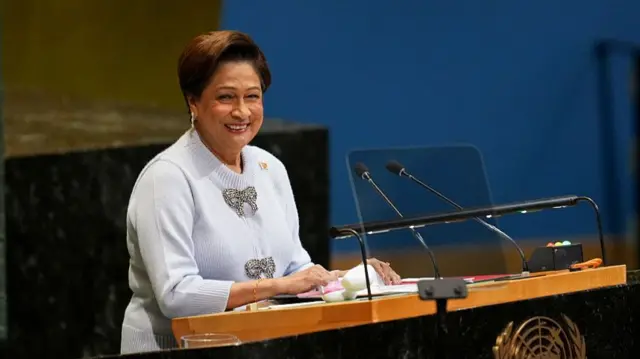
    • Trinidad and Tobago's Prime Minister Kamla Persad-Bissessar says: "Trinidad and Tobago continues to maintain peaceful relations with the people of Venezuela"
    Kamla Persad-Bissessa at the UN last year. She is standing in front of a podium and speaking into a microphone. In the photograph she is smiling.Image source, Getty Images
    Image caption,

    Kamla Persad-Bissessa photographed at the UN last year

  6. Maduro indicted in New York on drugs and weapons charges - US attorney generalpublished at 12:32 GMT 3 January
    Breaking

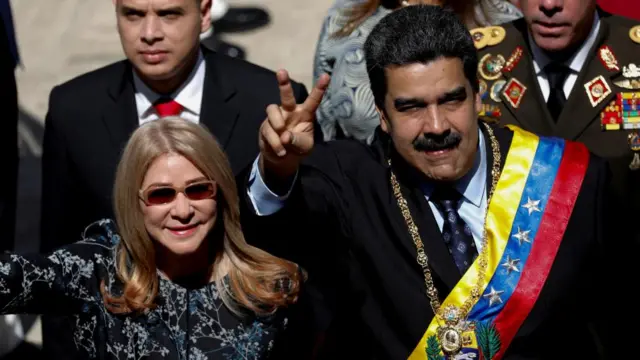
    Venezuela's President Nicolas Maduro gestures next to his wife Cilia Flores.Image source, Reuters

    We can now bring you some comments from US Attorney General Pam Bondi who says that Maduro and his wife have been indicted in the Southern District of New York.

    Maduro, she says, has been charged with "Narco-Terrorism Conspiracy, Cocaine Importation Conspiracy, Possession of Machineguns and Destructive Devices, and Conspiracy to Possess Machineguns and Destructive Devices against the United States".

    "They will soon face the full wrath of American justice on American soil in American courts," Bondi adds but does not say what his wife has been charged with.

    "A huge thank you to our brave military who conducted the incredible and highly successful mission to capture these two alleged international narco traffickers," she adds.

  7. UK not involved in US strikes on Venezuela, Starmer sayspublished at 12:26 GMT 3 January

    Damian Grammaticas
    Political correspondent

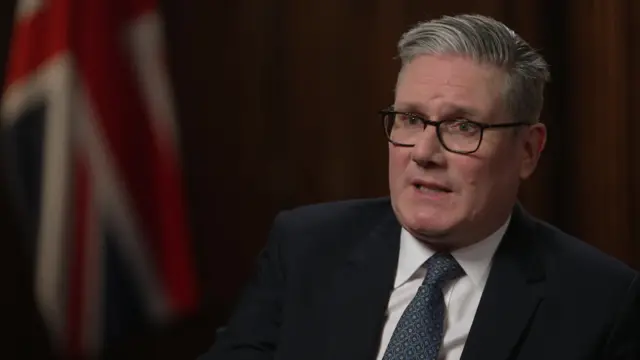
    Keir Starmer.

    Prime Minister Keir Starmer says the UK was not "involved in any way" in the US operation in Venezuela, but he is seeking more information before commenting on it.

    Starmer says he has not spoken to President Trump about the US's capturing of President Nicolás Maduro.

    "No I haven't and it is obviously a fast moving situation and we need to establish all the facts", he said in remarks recorded for UK broadcasters.

    The prime minister added "what I can say is that the UK was not involved in any way in this operation".

    Asked if he would condemn the action as number of UK MPs, some from Labour's left and some independents, already have, Starmer said "I want to establish the facts first. I want to speak to President Trump. I want to speak to allies. As I say I can be absolutely clear we were not involved in that".

    He went on "as you know, I always say and believe we should uphold international law.

    "But I think at this stage, fast moving situation, let's establish the facts and take it from there".

    Commenting on the implications for UK citizens in the South American country Starmer said "there's about five hundred there in Venezuela, and we are working with the embassy to make sure they are well looked-after, safeguarded and get appropriate advice, and we are working at pace with the embassy on that. It is a small number, but it is an important number, so that is what we are doing there".

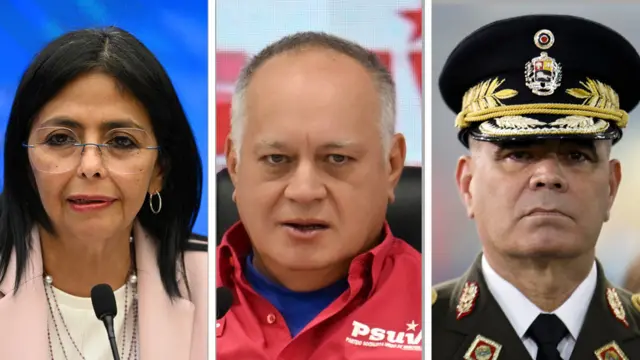
  8. Who's in charge now? Three Venezuelan figures to watch closelypublished at 12:06 GMT 3 January

    Daniel García Marco
    BBC Mundo Editor

    Vice President Delcy Rodríguez; Interior Minister Diosdado Cabello; and Defense Minister Vladimir PadrinoImage source, Getty Images
    Image caption,

    Vice President Delcy Rodríguez (L), Interior Minister Diosdado Cabello, and Defense Minister Vladimir Padrino (R) all appeared on television in Venezuela hours after the US strike

    If it is confirmed that Nicolás Maduro has been detained and taken out of the country, attention will turn to who will govern Venezuela next.

    Apparently, there will be no further attacks, and Donald Trump would consider himself satisfied with having removed Maduro. But that raises the question: will Chavismo remain in power without Maduro?

    If that happens, there are three figures to watch closely: Vice President Delcy Rodríguez; Interior Minister Diosdado Cabello; and Defense Minister Vladimir Padrino.

    All three appeared on television hours after the attack and could assume leadership.

    Both Padrino and Cabello wield significant influence within the military, which could remain loyal to either figure. The role of the armed forces will be key in determining who takes the reins.

    Rodríguez, by contrast, holds greater civilian and economic power and does not have the same access to the military ranks as Cabello and Padrino.

    The other major unknown is what the opposition, led by María Corina Machado, will do. After claiming victory in the July 2024 elections, the opposition is demanding real political change and may not be satisfied with Maduro’s removal from the presidential palace alone.

  9. Are you in Venezuela? Get in touchpublished at 12:01 GMT 3 January

    A red banner with white writing reads: Your Voice

    Are you in Venezuela? If it is safe to do so, get in touch:

    In some cases a selection of your comments and questions will be published, displaying your name and location as you provide it unless you state otherwise. Your contact details will never be published.  

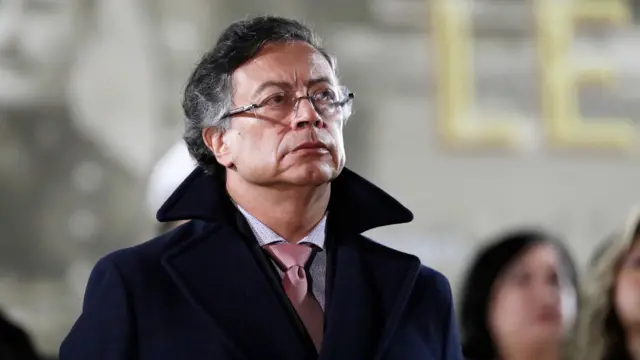
  10. Whole region holds its breath as Colombian president deploys forcespublished at 11:49 GMT 3 January

    José Carlos Cueto
    BBC Mundo correspondent, reporting from Colombia

    A headshot of Colombian President Gustavo Petro who looks beyond the camera. People standing behind him have been blurredImage source, CARLOS ORTEGA/EPA/Shutterstock
    Image caption,

    Colombian President Gustavo Petro

    After a national security council meeting that began at 03:00 local time (08:00 GMT), Colombian President Gustavo Petro announced the deployment of public forces along the Venezuelan border.

    From Bogotá, preparations are under way for a possible massive influx of Venezuelan refugees following the US attacks in Caracas and other areas of the country.

    The region holds its breath amid further reports of the alleged capture of Venezuelan President Nicolás Maduro and his wife, Cilia Flores, as announced by President Donald Trump.

    Petro has repeatedly called for peace and dialogue since the first explosions were reported in Caracas.

    Colombia and Venezuela share more than 2,000 km of land border - and throughout history, economic and security crises in both nations have driven millions to seek refuge on either side.

    It is an unprecedented moment for Venezuela that will have direct consequences in more countries - Colombia is on the front line.

  11. What we know, and what we don'tpublished at 11:31 GMT 3 January

    Charlotte Hadfield
    Live reporter

    An explosion in Caracas, Venezuela.Image source, Getty Images

    What we know

    • Donald Trump says the US launched a "large-scale strike" on Venezuela
    • He adds Venezuela's President Nicolás Maduro, and his wife, have been captured and "flown out of the country"
    • The US army's Delta Force carried out the operation to capture Maduro, officials tell the BBC's US partner CBS News
    • Venezuela has announced a state of national emergency and said it rejects and denounces "military aggression"
    • United States Secretary of State Marco Rubio anticipates no further action against Venezuela, says Republican Senator Mike Lee
    • This is the biggest US military build-up in the Americas since the Cold War and follows weeks of heightened tension, writes our correspondent Will Grant

    What we don't know

    • Where President Maduro and his wife are
    • If there are any deaths or casualties caused by the strikes
    • The extent of any damage to parts of Venezuela following the attack
    • How many strikes and their locations - we'll bring you more on that shortly
    • More details of why Trump decided to take this action - we're expecting to hear more from him at a news conference at 16:00 GMT
    • What happens next - our correspondent Ione Wells unpacks the uncertainty

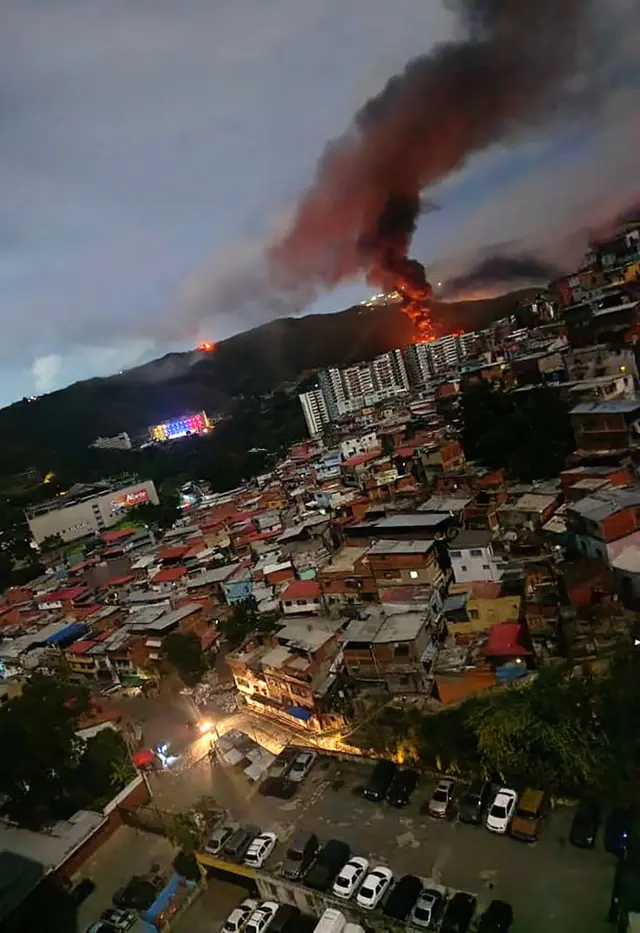
  12. Aftermath of strike - picturedpublished at 11:07 GMT 3 January

    We're seeing more photographs of the US strikes on Venezuela that took place earlier.

    Here is one of them:

    A vertical image showing buildings, car parks and a hilly landscape. In the distance, an orange explosion can be seen with a plume of smoke emitting from it.Image source, AFP via Getty Images
  13. Rubio says Maduro to stand trial in US and anticipates no further action in Venezuela - US senatorpublished at 10:53 GMT 3 January

    Marco Rubio in suit and tie speaking at lecternImage source, Reuters

    United States Secretary of State Marco Rubio anticipates no further action against Venezuela following the capture of Nicolás Maduro, says a Republican senator.

    Mike Lee confirmed Venezuelan President Maduro's arrest, to stand trial on criminal charges in the US, following a phone call with Rubio.

    "He [Rubio] anticipates no further action in Venezuela now that Maduro is in US custody," says Senator Lee.

    Lee adds that the US strikes were "deployed to protect and defend those executing the arrest warrant".

    Earlier, Lee said in a post on X: "I look forward to learning what, if anything, might constitutionally justify this action in the absence of a declaration of war or authorization for the use of military force."

  14. Analysis

    This is an event without modern precedentpublished at 10:42 GMT 3 January

    Joe Inwood
    World affairs correspondent

    If, as claimed, the US has sent Delta Force into the heart of the Venezuelan capital and extracted the sitting president, along with his wife, it is unlike anything we have seen before.

    The closest comparison would be the capture of Panamanian leader Manuel Noriega, also by special forces, on this very day in 1990.

    Both men had recently claimed victory in disputed elections, both had been accused by the US of involvement in drug trafficking and both had been preceded by significant US military build-up.

    But Noriega's capture followed a short, decisive, war between the two countries, in which Panamanian forces were quickly overwhelmed.

    He had taken refuge in the Vatican embassy, where he remained for 11 days.

    Eventually Noriega was persuaded to leave after the use of “psychological warfare” - specifically the constant playing of loud rock music, including The Clash, Van Halen and U2.

    He was taken back to the US, where he was convicted of drugs offences.

    Details of the operation to capture Nicholas Maduro are yet to emerge, but it seems to have been an operation even more ambitious in its scope - succeeding in extracting the President and his wife without the use of conventional ground forces.

    His fate is unclear, but one would imagine it will end in a US prison.

  15. Analysis

    If Maduro is indeed gone, it's unclear what happens nextpublished at 10:37 GMT 3 January

    Ione Wells
    South America correspondent

    The US has not made such a direct intervention in Latin America since it invaded Panama in 1989 to depose the then-military leader Manuel Noriega.

    If Maduro has been forcibly removed from Venezuela, as Trump says, this will be seen as a huge win among some of the more hawkish figures in the US administration - some of whom have openly supported regime change.

    The US has accused Maduro of leading a criminal narco-trafficking organisation, something he denies.

    It also does not recognise him as the legitimate president of Venezuela after the 2024 elections were widely dismissed as neither free nor fair.

    For its part, Venezuela has accused the US of wanting to steal its lucrative oil reserves - which are thought to be the biggest in the world.

    What is really unclear is what happens now in Venezuela itself if Maduro is indeed gone.

    Supporters of US intervention have argued it would pave the way for the Venezuelan opposition to take over, led by Nobel Peace Prize winner Maria Corina Machado or the opposition candidate from 2024, Edmundo Gonzalez.

    However, others believe it would by no means be that simple.

    The military and paramilitaries in Venezuela had remained loyal to Maduro, and even some critics of Maduro had feared that direct US intervention could lead to further destabilisation in the country.

    There will certainly be other close allies of him fearing for their own futures after the news of Maduro’s capture.

  16. All armed forces will be deployed, says Venezuelan defence ministerpublished at 10:17 GMT 3 January

    Two men wearing khaki/green jackets and capsImage source, Reuters
    Image caption,

    López (R) has been defence minister under Maduro (L) since 2014

    Earlier, our correspondent Ione Wells brought you an update from Venezuela's defence minister, we can now bring you more.

    Venezuela’s Defence Minister has announced an immediate deployment of military forces across the country.

    Speaking in Spanish in a video address, Vladimir Padrino López called for a united front of resistance in the face of "the worst aggression" ever against Venezuela, adding that Venezuela was following “Maduro’s orders” that all armed forces will be deployed.

    "They've attacked us but they will not subdue us," says the defence minister.

    A map showing an aerial view of Caracas, two labels point our military bases, Fort Tiuna in the bottom left and Carlota milirary base in the top right of the map.
  17. Venezuela's Vice President demands proof of life, as Maduro's whereabouts unknownpublished at 10:11 GMT 3 January
    Breaking

    We’ve just heard from Venezuela’s Vice President Delcy Rodríguez.

    She says the government does not know the whereabouts of President Maduro or the First Lady Cilia Flores.

    She added that the government demanded “immediate proof of life” for them both.

  18. Venezuela investigating deaths and injuries following strikes - defence ministerpublished at 09:58 GMT 3 January

    Ione Wells
    South America correspondent

    There are still lots of unknowns about this morning’s strikes.

    What damage was done to the military infrastructure hit? And what casualties are there?

    Venezuela’s defence minister Vladimir Padrino has said that the government is compiling information about the dead and injured people and alleged that the strikes hit civilian areas.

    He added that Venezuela will “resist” the presence of foreign troops.

  19. Maduro and wife captured by US army's Delta Force, officials tell CBSpublished at 09:53 GMT 3 January
    Breaking

    Venezuelan President Nicolás Maduro was captured by the US army's Delta Force, officials tell the BBC's US partner CBS News.

    Delta Force is the US military's top counter terrorism unit.

  20. Analysis

    Details of Maduro's capture remain thinpublished at 09:41 GMT 3 January

    Ione Wells
    South America correspondent

    The US has long accused Nicolás Maduro of leading an international drug trafficking organisation, something that Maduro denies.

    Trump did not give more detail about how Maduro was captured or where he has been taken.

    The Venezuelan government have not yet confirmed this.

    The US had offered a $50m reward for information leading to the arrest of Maduro.

    That, along with the huge military build-up in the region over the last few months, were interpreted in the region as encouragement for someone inside the country to turn against him.

    Donald Trump adds on Truth Social that there will be a news conference at 11:00 EST (16:00 GMT), at the president's Florida residence Mar-a-Lago.