Summary

  1. Recap: A new study shows how HPV vaccine is saving livespublished at 17:00 BST

    Madeleine Lake
    Live reporter

    As our coverage draws to a close, here's a recap on what you need to know about HPV (human papillomavirus):

    • A new study shows that children who are vaccinated against HPV aged 12-13 have close to zero risk of dying from cervical cancer before the age of 30
    • In England between 2020-2024, no deaths from cervical cancer were recorded in women aged 20-24
    • The vaccine doesn't protect against all types of the virus that cause cancer. You should still attend cervical screenings whether you've had a HPV vaccination or not
    • A positive HPV test means a high-risk strain has been detected. You may be invited to more frequent follow-ups to check it's gone, or require treatment. It's very rare for an abnormal result to show that cancer has already developed

    That's all from us today, if you'd like to read more you can find our story here.
  2. 'I shared my cervical screening online to help break stigma'published at 16:54 BST

    Madeleine Lake
    Live reporter

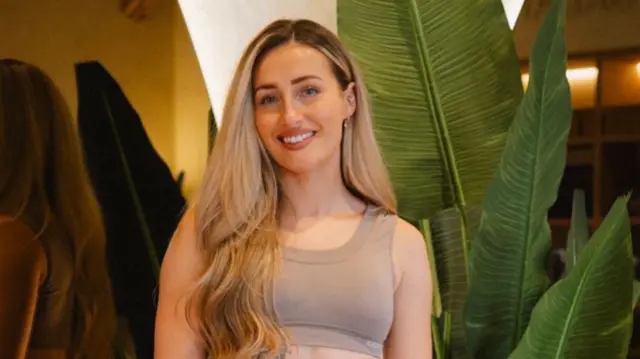
    A woman with long blonde hair, blue eyes, smiling and wearing a gym outfit.Image source, Emma Gilligan

    Emma Gilligan, 34, has been speaking to me about attending cervical screenings - she tells me that she posted a video online of her own appointment.

    She was "overwhelmed" by messages from women who told her they had been delaying their appointment or were anxious about it, and says she wants to help "normalise the conversation" around cervical screenings.

    As a women’s health and fitness coach, she says she supports women to take care of their health, build confidence in their bodies and make choices that support their long-term wellbeing, and that "extends far beyond exercise and nutrition".

    "If sharing my appointment helps even one woman feel more comfortable attending hers, then it’s worth it," she says.

    "Early detection saves lives, and I think having more honest conversations about women’s health can help break down some of the fear and stigma that still exists around these important appointments."

  3. Why isn't the HPV vaccine offered by the NHS to women over 30?published at 16:42 BST

    Smitha Mundasad
    Health reporter

    Estelle, from Solihull, wonders if it's worth being vaccinated in your 30s, while Kerrie, from London, says she is having to pay for the vaccine privately as she wasn't given it at school and only realised later on that there was a family history of cervical cancer.

    The vaccine is most effective before people are sexually active and have had exposure to HPV. That’s why in the UK children are offered it aged 11 to 13. But people can get it up to the age of 25 if they miss the vaccine during the school roll-out.

    Deciding who is eligible for a vaccine is complex. One factor is how effective it is, another is cost-effectiveness.

    The vaccine doesn’t help the body clear strains of HPV that people may have already come into contact with, but may offer some protection against other strains.

    Officials will have also taken risk into account in deciding who is offered the jab. Some other groups, including men who have sex with men, who are under 45 years old can also get the jab.

    People who aren’t in these groups can access it privately if a clinician feels it is appropriate.

    A banner reading "Your Voice" in white against a purple background.
  4. Some women are self-testing for HPVpublished at 16:35 BST

    Michelle Roberts
    Health editor

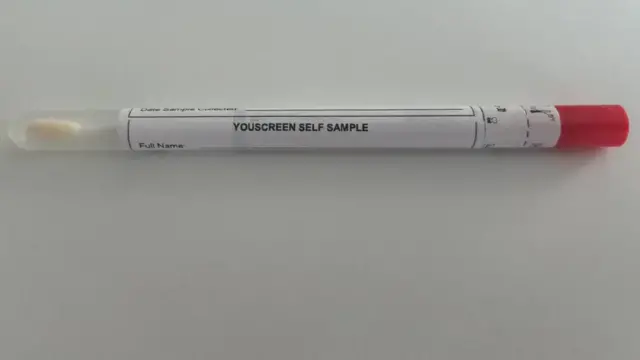
    To help boost the number of women who get screened, UK researchers have been exploring offering some women the opportunity to self-test at home. DIY test kits contain a vaginal swab similar to a long cotton-wool bud.

    The charity Eve Appeal says it can help those who find it difficult "for whatever reason" to get checked. People do the test in the comfort of their own home, without a nurse or doctor present.

    Research shows the kits are accurate, but the UK National Screening Committee, external still recommends most people get screened in the usual way.

    If a self-test finds high-risk HPV, the user will be invited to have a standard cervical screening test done by your doctor or nurse practice along with any further testing, monitoring or treatment.

    Self-testing is already available for some patients in Scotland as part of a national pilot. England, Wales and Northern Ireland are yet to introduce it as widely. High street pharmacies around the UK sell self-testing kits for around £55, but people are encouraged to use the free NHS cervical screening service.

    Youscreen self-sampleImage source, Youscreen
    Image caption,

    The swab looks for HPV, the driving force behind most cervical cancers

  5. Women who have sex with women can still get HPV, says sex educatorpublished at 16:26 BST

    Tara Mewawalla
    Live reporter

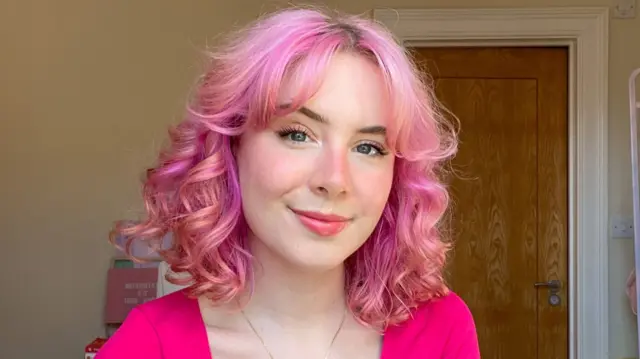
    Milly Evans smiling in a photo in a bedroom, wearing a neon pink topImage source, Milly Evans

    Some of the myths around HPV and cervical cancer stem from "huge" misconceptions that "women who have sex with women can't get STIs", 26-year-old sex educator Milly Evans tells me.

    "Because HPV is often transmitted through skin-to-skin contact, anyone can get HPV," she explains, but some lesbian women avoid going for cervical screenings because they are not aware of this.

    Others, she says, have struggled to access smear tests because of NHS staff misunderstandings about their sexuality: "I think people don’t understand what queer sex is and therefore don’t understand the risk factors that you're open to."

    She adds that some trans and non-binary people can be "missed out by the system", especially if they change their name on NHS records, but says it is "really positive to see" NHS communications like cervical screening leaflets "explaining why trans men still need to access screening".

    If you are struggling with healthcare access, Evans advises contacting your GP surgery and explaining the situation. In the event that doesn't work, try using the NHS complaints procedures, changing your GP surgery, or using sexual health services.

    NHS England has been contacted for comment.

  6. Some young people not receiving HPV jab due to 'misinformation', says gynaecology doctorpublished at 16:20 BST

    Dr Brooke Vandermolen smiling in scrubs and taking a selfieImage source, Dr Brooke Vandermolen
    Image caption,

    Dr Brooke Vandermolen is an obstetrics & gynaecology doctor and author of Bloody Powerful, a book about periods and menopause

    Too few teenagers and young people are coming forward for the HPV jab, a trend that is largely driven by "misinformation", says obstetrics & gynaecology doctor Dr Brooke Vandermolen.

    Dr Vandermolen, who raises awareness of women's health online, says social media has fuelled "a wave of general vaccine hesitancy" and the HPV vaccine has been "caught in that current".

    She says that the internet has made it "far more normal to talk about smear tests and HPV" but that the same platforms still carry "harmful misinformation".

    "Myths that the vaccine is unsafe or affects fertility, none of which the evidence supports, are leaving children unprotected against a cancer we now know we can prevent."

  7. 'If I hadn’t attended my smear test when I did, the cancer would have spread'published at 16:14 BST

    Tara Mewawalla
    Live reporter

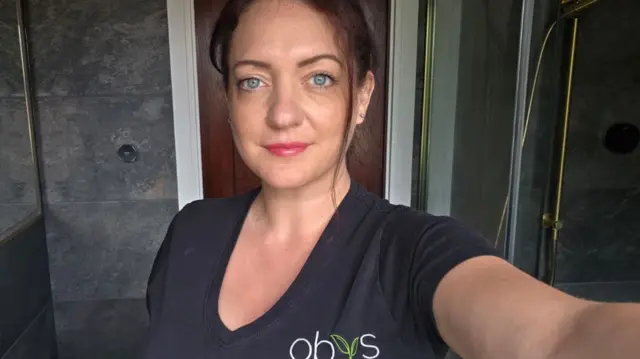
    Sian Colson taking a selfie in her bathroomImage source, Sian Colson
    Image caption,

    Sian Colson quit her job after her experience with cancer and set up her own skincare brand

    In November 2021, Sian Colson got a regular NHS letter inviting her to go for a cervical screening - sometimes known as a "smear test" - having never had issues with them before, she tells me.

    When she got to the clinic, she was told the letter had been sent in error - she was there six months early - but the doctor went ahead with the screening anyway.

    Weeks later, after a colposcopy - where a speculum is used to have a closer look at the cervix - and a biopsy, she was diagnosed with stage 1 cancer caused by HPV on Christmas Eve.

    “I was in disbelief when I first heard…I had absolutely no symptoms whatsoever.”

    In January 2022, Colson had a LLETZ (Large Loop Excision of the Transformation Zone) procedure - where a thin wire loop is used to remove an area of the cervix with abnormal cells - and is now in remission.

    “If I hadn’t attended my smear test when I did, it would have spread," she says.

    “When you get that letter to go to your smear test, put that at the top of your list because even if you wait a week or two weeks or a year, it could spread."

  8. Why is vaccine uptake lower in some ethnic minority groups?published at 16:00 BST

    Dr Zoyah HussainImage source, Dr Zoyah Hussain

    According to an audit published by the UK Health Security Agency in March this year, Year 9 pupils at schools based in areas with the largest ethnic minority populations were far less likely to have had a HPV vaccine.

    Dr Zoyah Hussain leads the work of the local GP partnership Modality AWC in Keighley, Bradford, which aims to improve the uptake of vaccinations in deprived areas.

    She says the reasons for certain communities having lower vaccination uptake are "multifactorial".

    One reason she suggests is that there is a "historical mistrust of vaccinations", but some people are unaware of what vaccinations are and how they work.

    "It actually might be more hesitancy than outright refusal," she says.

    If you give people more information about the vaccine, Dr Hussain says, it tends to change their opinion, especially if they hear it from a health professional.

    "We have responsibility as health professionals to give them the right information in... simple language instead of complicated jargon."

  9. If I have transitioned from female to male, do I still need screening?published at 15:34 BST

    Michelle Roberts
    Health editor

    Anyone aged 25 to 64 with a cervix should go for cervical screening, says NHS England.

    In England, if you are registered as male with your GP, you may not be automatically invited for cervical screening.

    If you have a cervix, you are still eligible for cervical screening.

    You can opt-in to receive automatic invites for cervical screening by contacting your GP and signing a cervical screening opt-in form., external

  10. Australia leading the way on cervical cancer eliminationpublished at 15:29 BST

    Tabby Wilson
    Live reporter

    As we've been reporting, between 2020 and 2024, no cervical cancer deaths were recorded in women aged 20 to 24 in England for the first time over a five year period.

    When looking at the issue on a global scale, Australia has said it wants to be the first in the world to eliminate cervical cancer as a public health issue.

    And the country is on track to do that within a decade, thanks to a breakthrough in a Queensland lab two decades ago.

    Scientists in 2006 developed a pioneering jab which could prevent the human papillomavirus (HPV) - and a year later it launched a national immunisation programme.

    Australia also has a world-class screening programme, which includes at home tests. Incidence and mortality rates for cervical cancer have both halved.

    And the most recent data shows, for the first time since records began, there were no cervical cancer cases diagnosed in women under the age of 25 in 2021.

    In practical terms, eliminating cervical cancer as a public health issue in Australia does not mean it would become a thing of the past entirely - scientists define elimination as fewer than four cases of cervical cancer per 100,000 people.

    You can read more about the challenges which remain here.

  11. Mum who told sons to get vaccine says 'I don't want them in the same position as me'published at 15:04 BST

    Tara Mewawalla
    Live reporter

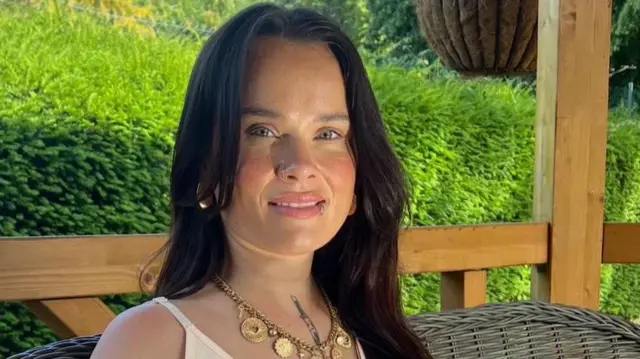
    Natasha Hall smiling on holiday with a sunny green hedge behind herImage source, Natasha Hall

    Natasha Hall, 35, had always been “really scared” of going for a cervical screening, but when she was 30 she started experiencing abnormal bleeding, spotting, lower back pain and severe fatigue.

    She went for a screening, tested positive for HPV and was diagnosed with cervical cancer in August 2021 - three days before her 31st birthday.

    “I was absolutely devastated…the first thing that people think when they get told they have cervical cancer is: ‘I’m going to die'…I couldn’t function.”

    Natasha, from Leicester, had a radical hysterectomy to have her womb, uterus, cervix and a third of her vagina removed. She has now been in remission for four and a half years.

    The mum-of-three says the screening was "over and done in about thirty seconds" and she regrets not going for one sooner.

    Natasha has three sons, and her 17-year-old has been given the vaccine at school.

    “I don’t want them in the same position as me", she says, adding that if the vaccine was rolled out when she was in school: "I very likely wouldn’t have been in the same position as I was four and a half years ago."

  12. What to expect at your first smear testpublished at 14:49 BST

    Michelle Roberts
    Health editor

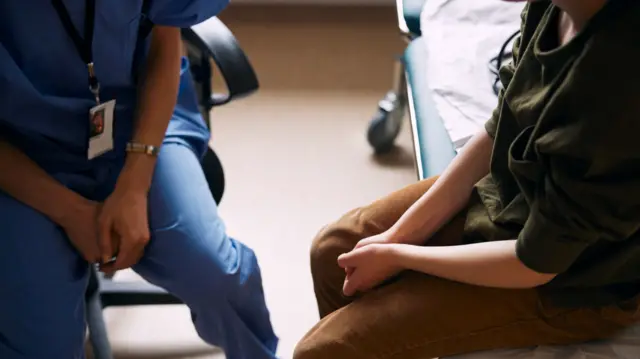
    High angle view of doctor with patient sitting on examination table in clinic.Image source, Getty Images

    Going for cervical screening, which used to be called a smear test, can feel daunting.

    The doctors and nurses who do them are very experienced at performing these tests. Let them know if it is your first one or you are feeling anxious or embarrassed.

    The test can be uncomfortable but should not be painful.

    Tell the nurse or doctor if you are finding it difficult, and you can stop the test at any point if you want to.

    There are also things that may help, such as booking a longer appointment or bringing a friend along for support.

  13. Our health team answer key questions - recappedpublished at 14:21 BST

    Madeleine Lake
    Live reporter

    Who can get the vaccine? It's recommended for children aged 12 to 13, those under 24 who missed it during school, and those with higher risks to HPV.

    Do I need a cervical screening if I've had a HPV jab? Screenings are still important even if you've been vaccinated. It doesn't protect against all types of HPV that cause cervical cancer.

    If my HPV test is positive, does it mean I have cancer? It's rare for an abnormal result to show that cancer has already developed. A positive test means a high-risk strain of HPV has been found – which will then be checked under a microscope to look for cell changes.

    Can men get HPV? Yes and many do. Most men will not know they have HPV and won't get symptoms. Some types can cause genital warts and other high-risk types can cause cancers.

    Do I need to be tested for HPV if I've never had sex? It's passed from one person to another through close skin-skin contact. You're at risk if you're having any sexual contact. If you have not had any kind of sexual contact your risk of getting HPV is low.

    You can still send us your questions - email: yourvoice@bbc.co.uk, external

    Your voice banner
  14. 'I would hate to see another young person's life destroyed by cervical cancer'published at 13:53 BST

    Elliot Burrin
    Live reporter

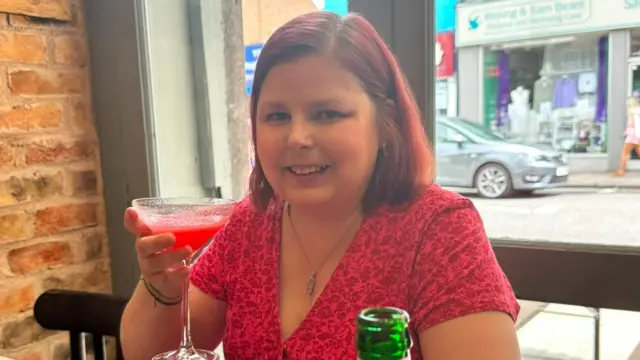
    A young woman with pink, shoulder length hair is sat at a restaurant. She's holding up a drink and smiling to the camera

    Ellie was only 29 when she was diagnosed with cervical cancer, shortly after giving birth to her first child. She had no symptoms, was healthy and hadn't been losing weight – but a scan revealed a tumour on her cervix.

    She tells me it was a "real shock", especially as her first cervical screening test suggested everything was normal.

    A hysterectomy removed the cancer, but the following year, Ellie was re-diagnosed after an MRI showed a cancerous tumour in her pelvis. Today, she's talking to me after being in remission for five years.

    Ellie has two young daughters and says they will definitely be vaccinated when they're old enough. She says it's "amazing" that cervical cancer is becoming "something we can eradicate".

    She now lives with "a myriad of health conditions" and mobility issues as a result of the cancer and treatment.

    "I would hate to see any other young person see their life destroyed by it," Ellie tells me.

  15. Many still missing out on HPV protectionpublished at 13:39 BST

    Michelle Roberts
    Health editor

    Cancer Research UK is warning that too few teenagers and young people are coming forward for an HPV jab.

    Figures for England show close to 1 in 4 young people , externalcurrently leave school unprotected against HPV.

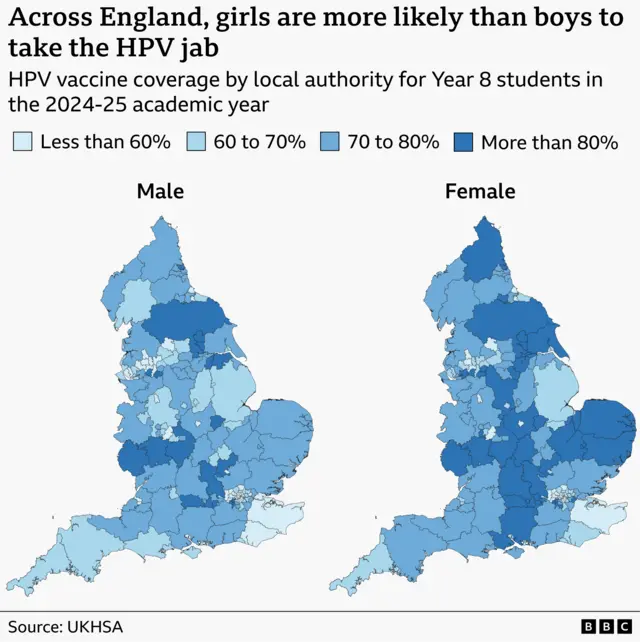
    In some regions, including much of London, uptake has fallen below 70% among those who have just become eligible for the jab.

    In the UK, all secondary school aged children aged 11-13 are offered it. Any who missed their vaccine can get it for free via their GP up to the age of 25.

    A graphic which shows a map of England, shaded in blue, reading "Across England, girls are more likely than boys to take the HPV jab".
  16. Can men get HPV and what are the risks?published at 13:23 BST

    Smitha Mundasad
    Health reporter

    Steve, from Cheltenham, says he has a rare condition called Recurrent Respiratory Papillomatosis, caused by specific strains of HPV, which causes recurring growths on and around his voice box.

    Men can get HPV and many do – it can be passed on to male and female partners through vaginal, anal or oral sex or genital skin-to-skin contact. Most men will not know they have HPV and won’t get symptoms.

    But some types of HPV can cause genital warts and other more high-risk types can cause penile and anal cancers and cancers at the back of the throat, base of the tongue and tonsils.

    Another rare disease caused by HPV is Recurrent Respiratory Papillomatosis (RRP) where mostly non-cancerous tumours grow in the airways and around the voice box.

    A purple banner with white writing that reads 'your voice'
  17. What you need to know about HPVpublished at 13:11 BST

    This Flourish post cannot be displayed in your browser. Please enable Javascript or try a different browser.

  18. Why cervical screening is still important if you've had HPV vaccinepublished at 13:02 BST

    Michelle Roberts
    Health editor

    We're answering your questions around cervical cancer, screening and HPV.

    Laura in London, who had the vaccine as a child, says she later tested positive for HPV after going for a smear test and had abnormal cells removed.

    While the HPV vaccine is extremely effective, it is still possible that some people will develop cervical cancer.

    HPV infections are very common and the jab is designed to protect against infections - but does not treat them.

    Women are still advised to go for cervical screening to check for HPV.

    If it is found, more checks can be done to know if any monitoring or treatment is needed. Screening and HPV vaccines prevent cancers and save lives.

    BBC your voice banner
  19. What is a smear test and is it different to a HPV test?published at 12:38 BST

    Michelle Roberts
    Health editor

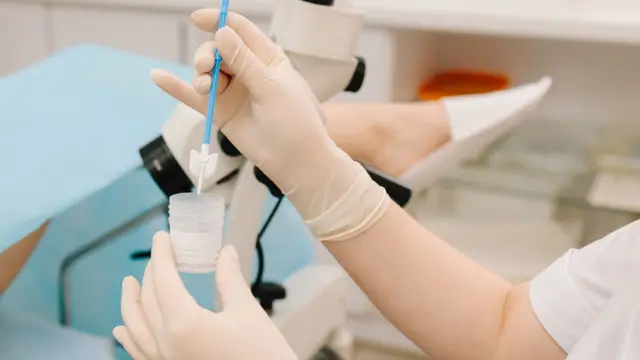
    Gynecologist collects a Pap smear sample for cervical screening.Image source, Getty Images

    Cervical screening used to be called a smear test.

    This was the test used before HPV testing, which is what we use today. Nearly all cases of cervical cancer are linked to high-risk HPV.

    During the HPV test, a nurse or doctor uses a soft brush to take a sample of cells from the cervix.

    This is then sent off for testing at a laboratory to see whether high-risk HPV is present.

    If it is, then the sample will be checked for signs of cell changes which could develop into cancer over time if left untreated.  

  20. 'When vaccination is easy to access and explained clearly, uptake is strong'published at 12:20 BST

    Elliot Burrin
    Live reporter

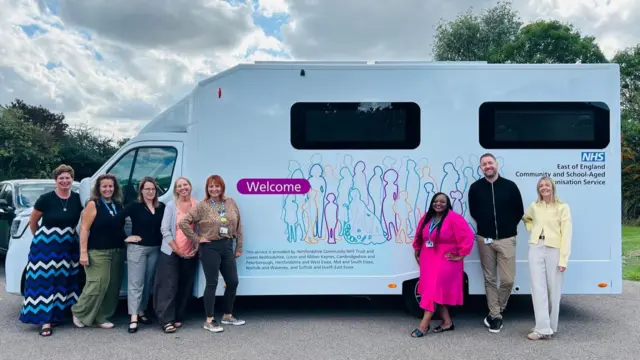
    Eight people stand smiling, posing for a photo in front of a van that is used to deliver vaccinations for children. The people are wearing staff lanyards and the van is marked 'NHS East of England Community and School-Aged Immunisation Service'.Image source, Hertfordshire Community NHS Trust

    Caroline Shepherd works as an assistant director for Child Health and Immunisations in the East of England - a region which has the highest HPV vaccine uptake rates in the country.

    When young people come to get their jab from the NHS service, Caroline says some of them are nervous, so it's important to explain what the vaccine does and the types of cancers it can prevent.

    "It's often a much more positive experience than they expected," she says, adding that many of them "leave feeling proud" after getting vaccinated.

    The service, which goes into schools, is also tackling declining national vaccination rates by reaching out to households where children haven't got the HPV vaccine.

    "When vaccination is easy to access and explained clearly, uptake is strong," Caroline says.

    "The vast majority of parents continue to support vaccination, but vaccine hesitancy, anxiety, lack of information or reasonable adjustment leads to a vaccination being missed," she tells me.