Summary

  • More than 5,000 flights in the US are cancelled or delayed on Friday after airlines were told to cut traffic during the government shutdown

  • Domestic flights at 40 of the country's busiest airports will be affected as officials try to ease pressure on air traffic controllers

  • Airports have been grappling with air traffic controller shortages, who are either calling in sick or taking side jobs as they work without pay during the federal government shutdown

  • The Federal Aviation Administration (FAA) says reductions will start at 4% of internal flights before rising to the full 10% by the end of next week - or up to 15% or 20% "if the shutdown doesn't end relatively soon" says the US transportation chief

  • Several of the largest US airlines are assuring customers they'll be able to get full refunds for the cancelled flights - here's what some, including United and Delta, are saying

  • Have your flights been affected? Get in touch here.

Media caption,
Watch: 'Devastating' - Airline travellers react to flight reductions
  1. What's happening in the US Senate?published at 17:39 GMT 7 November 2025

    Ana Faguy
    Reporting from Washington DC

    We're keeping an eye on the US Senate right now to see when the upper chamber will vote on a bill that would pay essential workers during the government shutdown.

    The legislation, introduced by Wisconsin Republican Ron Johnson, would pay essential workers, members of the military, and contractors who are currently working without pay because of the shutdown.

    "We hope to pass the bill today by unanimous consent or voice vote. No Republican senator objects to the bill, and we hope the same is true among the Democrat senators," Johnson said in a statement to CBS News, the BBC's US partner.

    Stick with us and we'll keep you updated.

  2. Many flights go ahead as scheduled, but travellers are stressedpublished at 17:24 GMT 7 November 2025

    Kwasi Gyamfi Asiedu
    Reporting from Washington's Reagan National Airport

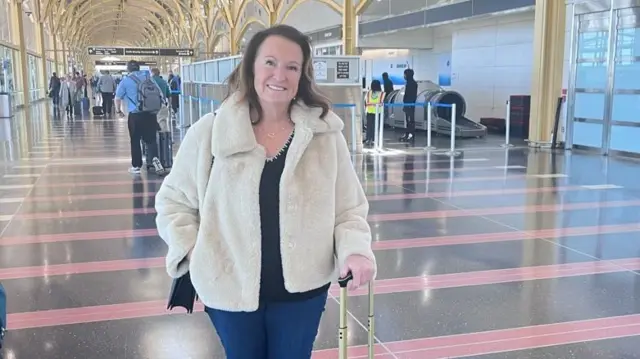
    A woman holding a suitcase at an airportImage source, Kwasi Asiedu / BBC
    Image caption,

    Leslie Sgro

    Leslie Sgro’s flight to St Louis, Missouri has not been cancelled, but she says it was on her mind on the way to the airport this morning.

    "I checked two or three times over the last 24 hours to make sure the flight was on time and that it was actually gonna go," she tells me. She thought about contingency plans. "If I needed to, I would rent a car and drive. It's about a 15 hour drive," she says.

    The Thanksgiving holiday in two weeks is also front of mind.

    "I have family traveling to us, and we worry that they'll be able to get to us and we also worry [if] it's going to be safe," she says.

    I also talked with Anne Torza, who gestured "knock on wood” when I asked about the status of her flight to a wedding in Huntsville, Alabama.

    It’s not impacted yet, and she hopes it stays the same for her return flight.

    "I have to go to work on Monday… Just crossing our fingers, hoping for the best."

  3. Air traffic controller union chief says problems will get worsepublished at 17:07 GMT 7 November 2025

    Nick Daniels, the president of the National Air Traffic Controllers Association, says they are being used as political pawns in the government shutdown.

    "We know the problems are going to get worse. They're going to increase, and anything that helps improve safety, we 100 percent stand by ensuring the safety of the American flying public," he told CNN.

    Daniels said air traffic controllers are going to continue to show up and "do the job".

    "We are going to do everything we can, but what we can't do is somehow, suddenly put money in our own pocket," he said. "We need Congress to open the government to do that."

  4. The political fight to stop the shutdownpublished at 16:56 GMT 7 November 2025

    Nomia Iqbal
    North America correspondent, reporting from Washington's at Ronald Regan airport

    This shutdown, which began on 1 October, has caused unprecedented disruptions in the country.

    Food aid programmes have been paused, hundreds of federal workers remain unpaid, and there are huge flight disruptions at major airports like here in DC.

    For weeks, Democrats have refused to vote to reopen the government without major investments in reducing health care costs.

    The revised bill put forward will likely keep the federal government's lights on past Thanksgiving.

    But if significant changes to health care aren’t in the bill, it’s unlikely to pass.

  5. Senate about to meet to discuss shutdownpublished at 16:47 GMT 7 November 2025

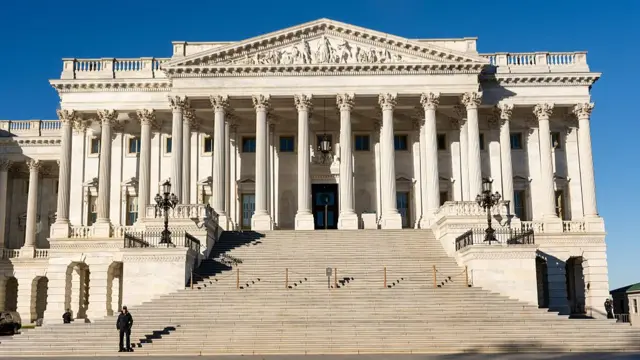
    A U.S. Capitol Police officer stands watch on the Senate steps on November 6, 2025 in Washington, DC.Image source, Getty Images

    The US Senate will convene at 12:00 EST (17:00 GMT) to try and find a way forward to bring the 37-day shutdown to an end.

    There is no time yet for when a vote might occur to end the shutdown, but a notice from Majority Whip John Barrasso's office, quoted by the BBC's US partner CBS News, says "roll call votes are expected during Friday's session of the Senate".

    Senate majority leader John Thune told Fox News the Senate would vote on paying people who are working, as many essential federal workers have still had to show up to work without any pay - including air traffic controllers.

    Democrats have so far refused to support the short-term measure on government funding unless Republicans agree to extend healthcare subsidies for low-income Americans.

    Republicans have resisted, accusing Democrats of holding the government hostage over unrelated policy priorities.

  6. Ground stop ordered in San Franciscopublished at 16:24 GMT 7 November 2025

    A ground stop has been ordered at San Francisco International Airport because of staffing shortages.

    It means a stoppage in flights that are due to arrive in the city, and it could also impact departures.

    We've seen similar ground stoppages happen at a handful of US airports during the government shutdown.

    For flyers in San Francisco, the ground stop will mean delays and perhaps cancellations of flights.

  7. 'I don't know what this means', pilot tells passengerspublished at 16:06 GMT 7 November 2025

    Bernd Debusmann Jr
    Reporting from Houston

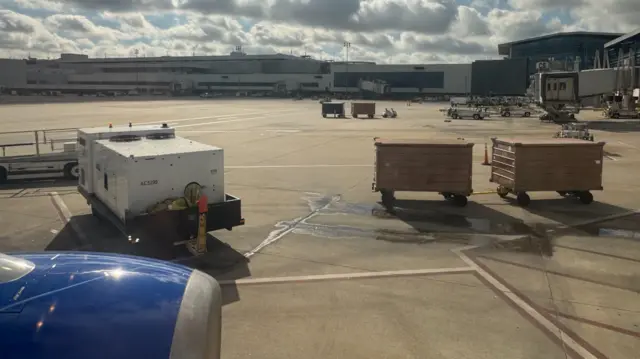
    A view of airline baggage carts and an airplane engine from inside the cabin of a United Airlines planeImage source, Bernd Debusmann Jr / BBC

    I'm just returning from a work trip from El Paso, Texas, to Washington DC.

    I'm currently in Houston - although I was supposed to be in Denver by this time.

    It's been slightly chaotic. Last night, my airline called me to say I was rebooked on another, earlier flight, because of changes to the flight schedule.

    That's not a problem - although it did mean a 2am wake up.

    As we descended, the pilot of the aircraft warned passengers of the shutdown potentially impacting the airport.

    "I don't know what this all means," he said candidly. "Check the boards and ask United staff for help or information."

    In Houston, there were quite a few people that seemed to be having a tough time. I heard several people shouting into their mobile phones, presumably to their airlines.

    At another part of the airport, there were about 75 people gathered around a screen to see the fate of their own voyage.

    Overall, however, this has not been as chaotic as expected. The airports in El Paso and Houston seemed to be functioning smoothly, with no major hiccups so far. I fully expected one or both of my flights to be cancelled, and local Texas TV coverage of the shutdown provided a gloomy forecast.

    I boarded and sat down a few minutes ago. Within seconds, the pilot chimed in over the loudspeaker to say we would be delayed in taking off, potentially by up to an hour.

    "That's those ATC staffing issues," he said. "We'll let y'all know what we hear."

  8. Airlines offer no fee changespublished at 15:54 GMT 7 November 2025

    As US airports grapple with delays and cancellations following a mandated reduction in operations, airlines have begun issuing advice for customers.

    United Airlines has published a comprehensive list of cancelled flights across its network for today and over the weekend. The vast majority are short haul, regional or commuter flights. Passengers are eligible for refunds or can rebook, even if their specific flight is not on the list. The airline also stresses its international routes and flights connecting its major US hubs will not be impacted.

    American Airlines has said that for those travelling through certain airports and who meet certain criteria any change fee will be waived if passengers want to rebook.

    Southwest Airlines has said the "vast majority" of their flights will not be impacted but that passengers will travel booked until next Wednesday can change plans or receive a refund at no cost.

    Alaska Airlines has also implemented a flexible travel policy.

    As a reminder, the transport secretary and FAA published a list of 40 major airports which would be affected.

  9. Traveller's back-up plan is $300 seven-hour train journeypublished at 15:34 GMT 7 November 2025

    Kwasi Gyamfi Asiedu
    Reporting from Washington's Reagan National Airport

    One traveller has a long, expensive back-up plan for a cancelled flight.

    I caught up with Anna just before she headed to her gate for a flight to Boston.

    She tells me she is traveling to see her parents and her husband to celebrate her one-month wedding anniversary.

    Her flight was slated for later this afternoon, but she changed it to this morning in case it got cancelled.

    “I figured there will be more options for alternatives than later in the day,” she says.

    Anna has also prepared for her flight back to DC on Monday.

    She has bought a $300 refundable Amtrak train ticket in case that flight gets cancelled.

    The 430 mile (692km) journey by train will be seven hours long instead of an hour and half by air.

  10. Nearly 2,000 US flights impacted by shutdown todaypublished at 15:12 GMT 7 November 2025

    As many as 1,238 flights into the US, out of the US or within the country have been delayed so far today.

    A further 824 flights have been cancelled altogether.

    As many as 40 flights out of Chicago O'Hare International airport were cancelled, and a further 57 were delayed.

    And at Hartsfield-Jackson Atlanta International Airport in Georgia had 38 cancellations and 30 delays.

  11. International flights won’t be impacted, transportation secretary sayspublished at 14:55 GMT 7 November 2025

    Kwasi Gyamfi Asiedu
    Reporting from Washington's Reagan National Airport

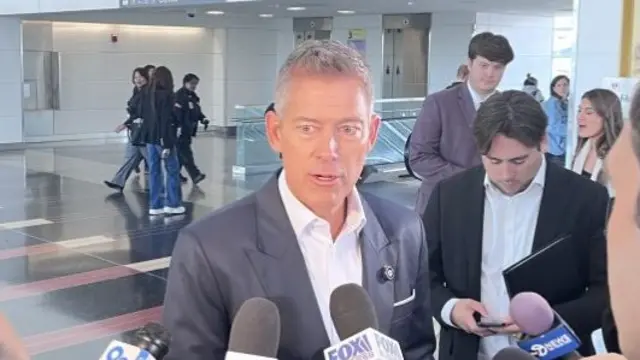
    US Transportation Secretary Sean Duffy in front of several reporters' microphones

    I just spoke with US Transportation Secretary Sean Duffy here at the airport, where he says he was observing any impacts of the reduction in flights.

    I asked if international flights could be cut next if the shutdown stretches on.

    “We have international agreements that we have to abide by,” he says.

    “Because of those international agreements, I'm not going to impact those international flights.

    "If I do, what will happen is we have other countries that are waiting to have a breach of those contracts from the US so they can cut down American flights, and that would have a very long-lasting impact on our ability to send travellers from the US to those partnering countries.”

    But that doesn’t mean international travellers will not be impacted.

    While the official directive released yesterday says international flights are to remain the same, it also leaves open the possibility of further cancellations. And if there is a shortage of air traffic controllers at airports, it could lead to wide-spread delays.

  12. Airports up and down the US affectedpublished at 14:13 GMT 7 November 2025

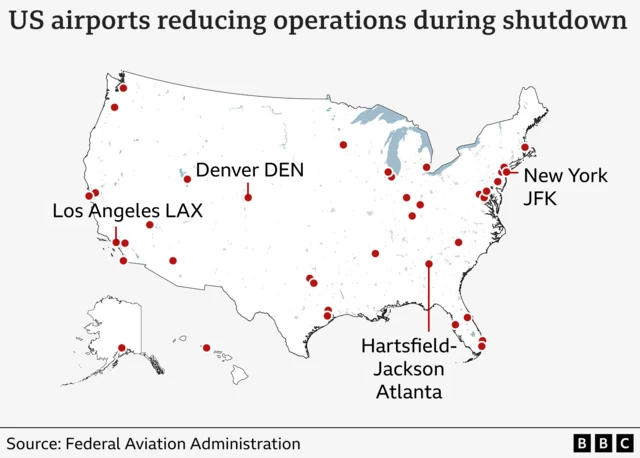
    There are 40 US airports that will be impacted by the FAA-mandated reduction of flights.

    These include major transport hubs like New York's JFK, Los Angeles LAX and - the busiest airport in the world by passenger numbers - Hartsfield-Jackson Atlanta International Airport.

    You can read the full list of airports here.

    A map of the United States showing major airports reducing operations due to government shutdown. Red dots mark affected airports across the country. Four airports highlighted are Los Angeles International Airport (LAX) on the west coast, Denver International Airport (DEN) in the central region, Hartsfield-Jackson Atlanta International Airport in the Southeas and New York’s JFK Airport on the east coast.
  13. Departures steady so far at Washington National Airportpublished at 13:51 GMT 7 November 2025

    Kwasi Gyamfi Asiedu
    Reporting from Washington's Reagan National Airport

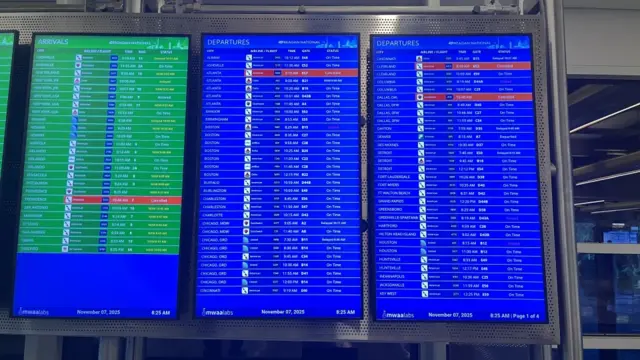
    Departures board at Washington National Airport

    I’m at Washington National Airport in Virginia, just across the river from the US capital. This is one of the airports listed as among the 40 busiest where the US transportation department has ordered a reduction in service to ease pressure on air traffic controllers.

    On the departures board, so far only a few flights are in the red on the first day of this directive, but it’s still early in the morning here and more flights are due.

  14. Surge in car rentals ahead of flight disruptionpublished at 13:43 GMT 7 November 2025

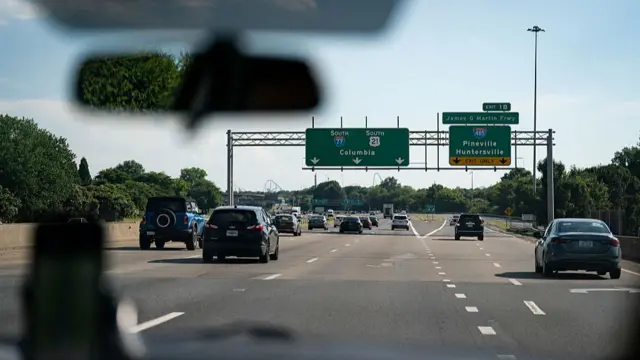
    View ahead from inside a car as vehicles travel on Interstate 77 in Charlotte, North CarolinaImage source, Getty Images

    Some travellers are choosing to avoid the airports altogether and drive instead.

    Car rental company Hertz says it has seen a big increase in one-way bookings for Saturday - when the reduction in air traffic is expected to reach 5%.

    The company says its bookings for the coming weekend spiked by more than 20% compared to a year ago, following the Federal Aviation Administration's announcement of the planned cuts on Wednesday.

    CEO Gil West has urged Congress to end the shutdown to "restore certainty for travellers".

    "Every day of delay creates unnecessary disruption," he says.

  15. Flight cuts will reduce 'pressure' on staff, transportation secretary sayspublished at 13:26 GMT 7 November 2025

    Headshot of Sean DuffyImage source, Reuters

    In the last hour or so, US Transportation Secretary Sean Duffy has spoken with the BBC's US partner CBS News.

    He starts the interview by saying his number one job is "safety", and explains that his decision to reduce flight capacity at airports across the country will take "pressure" out of the system.

    Some air traffic controllers are working 10-hour days, six days a week, he says, with fatigue setting in and others calling in sick or looking for second jobs.

    "My job is to be pre-emptive," he says, adding that he will share the data behind the federal government's decision later, when pushed by CBS.

    In our last post, we wrote about one air traffic controller who described the added financial anxiety he was experiencing on top of the pressures of his day job.

  16. Air traffic controller delivering food to make ends meet says he feels 'betrayed'published at 13:02 GMT 7 November 2025

    Air Force OneImage source, EPA
    Image caption,

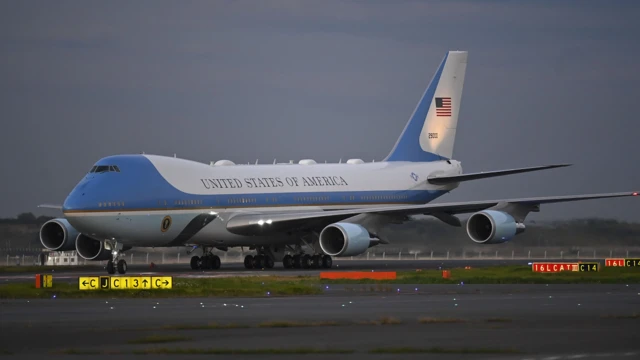
    Joint Base Andrews in Maryland is the home base for Air Force One

    Air traffic controller Jack Criss, who works at Joint Base Andrews in Maryland, has told the BBC he has been doing food deliveries for DoorDash on his lunch break and after work in order to make ends meet.

    Criss tells the BBC World Service's Newsday programme that not knowing when he might get paid has prompted anxiety on top of the already stressful job that he does.

    He says he almost feels "betrayed" by the government, adding that although he loves his job at the military base, ultimately people go to work to get paid.

    "None of us should have to worry about having to go to work and not knowing exactly when our pay check will hit," he says.

    Criss is raising his daughter as a single parent and also has other family members relying on him. He now does food deliveries where he can to ensure an income, but adds that he wouldn't compromise on his sleep knowing the focus which is required to do his day job safely.

  17. Why do government shutdowns only happen in the US?published at 12:35 GMT 7 November 2025

    Robin Levinson King
    BBC News North America

    In other countries, governments keep functioning, even in the midst of wars and constitutional crises. So why does this uniquely American phenomenon keep happening?

    In the US, shutdowns have become a kind of bargaining tool for political leaders - and a perennial phenomenon.

    America's federal system of government allows different branches of government to be controlled by different parties. It was a structure devised by the nation's founders to encourage compromise and deliberation, but lately it has had the opposite effect.

    That's because in 1980, the attorney general under President Jimmy Carter issued a narrow interpretation of the 1884 Anti-Deficiency Act. The 19th Century spending law banned the government from entering into contracts without congressional approval. For almost a century, if there was a gap in budgets, the government had allowed necessary spending to continue. But after 1980, the government took a much stricter view: no budget, no spending.

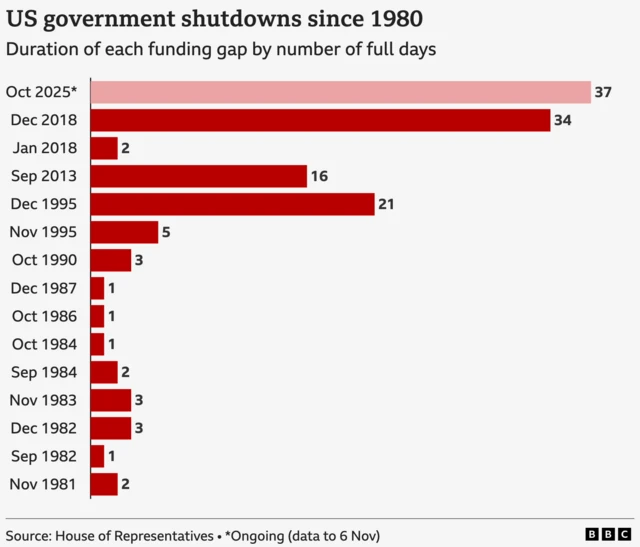
    The first US shutdown occurred shortly after in 1981, when President Ronald Reagan vetoed a funding bill, and lasted for a few days. Since then, there's been at least 10 others that led to government agencies shutting their doors, lasting anywhere from half a day to more than a month.

    This current one, entering its 38th day, is the longest on record.

    Horizontal bar chart titled ‘US government shutdowns since 1980: Duration of each funding gap by number of full days.’ The bars run in chronological order from the current shutdown labelled ‘Oct 2025 (ongoing)’ at 37 days, followed by Dec 2018 at 34 days, Dec 1995 at 21 days, Sep 2013 at 16 days, and others ranging from 1 to 5 days dating back to 1980. Source: House of Representatives; note indicates the data for the current shutdown goes to 6 Nov.
  18. Republicans eye another attempt to end shutdown on Fridaypublished at 12:20 GMT 7 November 2025

    Senate Majority Leader John Thune (R-SD) speaks at a press conference wearing a black suit and red tieImage source, Reuters
    Image caption,

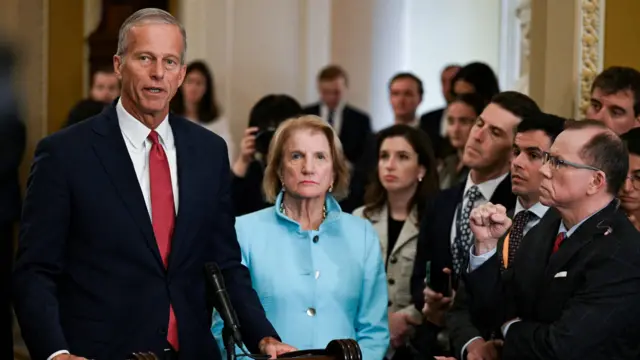
    Senate Majority Leader John Thune is considering a temporary spending measure

    As the shutdown enters its 38th day, Senate Republicans are said to be planning another vote in a bid to end it.

    Sources have told the BBC's US partner CBS News the plan involves a vote on advancing the continuing resolution - which is a temporary funding measure to end the shutdown - which was passed by the House.

    In a bid to sway Democrats, Senate Majority Leader John Thune is reportedly considering putting forward a new temporary spending measure that would reopen the government until January, as well as funding bills for agriculture, military construction and legislative agencies.

    The key demand of Democrats is a vote on extending healthcare subsidies. Beyond that, different Democrats are pursuing different strategies for extracting concessions from Republicans.

    "My hopes and expectations are always that we're going to have enough Democrats to actually proceed, but I don't know, we'll see," Thune told reporters at the Capitol.

    Friday's vote would need 60 votes to succeed, a bar that the Senate has failed to clear for the last 37 days.