Summary

  • This live coverage has closed - see our analysis here

  • Ballots are being counted in four Indian state elections - West Bengal, Tamil Nadu, Kerala and Assam - and the federal territory of Puducherry

  • Voting trends show PM Narendra Modi's BJP is well ahead in Assam and West Bengal and its alliance looks set to return to power in Puducherry

  • West Bengal's incumbent Chief Minister Mamata Banerjee is headed for a shock defeat after serving three terms

  • A setback for Banerjee, as trends suggest, could weaken the opposition bloc in the run-up to the 2029 general election, analysts say

  • Tamil Nadu too is seeing huge political disruption as a new party led by superstar Vijay races ahead, shocking older regional rivals

  • In Kerala, the Congress looks set to defeat a Left party alliance, which had governed the state for two consecutive terms

  1. From Mamata Banerjee’s aide to BJP’s Bengal challengerpublished at 05:24 BST 4 May

    Soutik Biswas
    India Correspondent

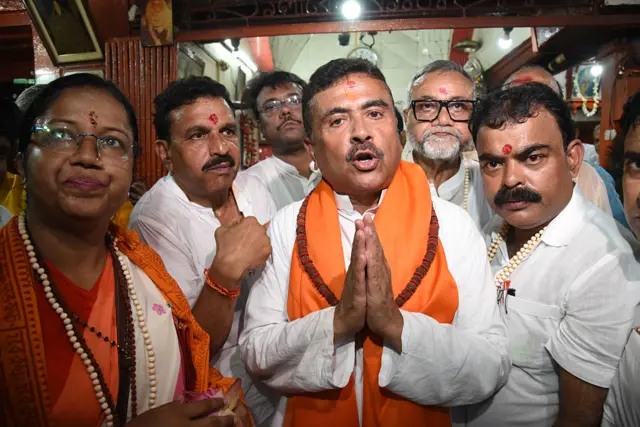
    Senior BJP leader Suvendu Adhikari, contesting from the Bhabanipur and Nandigram assembly constituencies, offers prayers at the Firinghi Kalibari Temple before participating in a road show alongside BJP candidatesImage source, NurPhoto via Getty Images
    Image caption,

    Senior BJP leader Suvendu Adhikari (centre) is contesting from Bhabanipur against Mamata Banerjee

    Suvendu Adhikari was Chief Minister Mamata Banerjee’s trusted lieutenant in the movement that toppled the state's 34-year Communist rule in 2011.

    Today, the 55-year-old has emerged as Banerjee’s fiercest rival and is locked in a neck-and-neck battle with her in Kolkata’s Bhabanipur seat, the state’s most closely watched contest.

    "We are forming the government," Adhikari told reporters in Kolkata a while ago. "There is an anti-incumbency trend and there is Hindu consolidation is favour of BJP."

    After defecting from the TMC in 2020, Adhikari defeated Banerjee in Nandigram in 2021, cementing his rise as the face of the BJP in Bengal.

    A powerful organiser from the influential Adhikari political family in coastal East Midnapore, he has combined grassroots mobilisation with sharp anti-TMC attacks to become the BJP’s principal challenger to Banerjee’s dominance.
  2. Can another actor break into Tamil Nadu’s political fray?published at 05:16 BST 4 May

    Nikita Yadav
    BBC News, Delhi

    An interesting new battle is playing out in Tamil Nadu. For decades, politics here has been dominated by the DMK and the AIADMK, which have alternated in power.

    But this time, there’s a new player - superstar-turned-politician C Joseph Vijay, contesting his first election with the Tamilaga Vettri Kazhagam (TVK).

    The southern state has a long history of film stars joining politics - often commanding large, loyal followings - including former chief ministers MG Ramachandran and J Jayalalithaa.

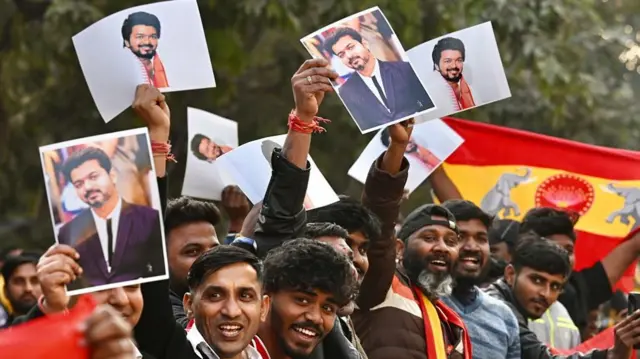
    Supporters of actor-turned-politician Joseph Vijay Chandrasekhar raise slogans as he arrives at CBI Headquarters in Delhi after getting summoned for questioning in Karur stampede case on 12 January.Image source, Hindustan Times via Getty Images
    Image caption,

    Supporters of actor-turned-politician Vijay gather in Delhi where he was called for questioning in connection with a stampede case

    Vijay’s campaign drew large crowds, especially young voters. But there have been setbacks. A deadly crowd crush at one of his rallies last year, which killed 40 people brought heavy scrutiny to the party’s organisation.

    Most analysts and exit polls do not expect the TVK to form the government - but say it could still influence the outcome by cutting into votes in a tightly fought race.

    You can read more about Vijay and his career here.

  3. Early trends suggest BJP making inroads in West Bengalpublished at 05:10 BST 4 May

    Early trends reported by Indian media suggest Modi's BJP is leading in more than 140 seats, while Mamata Banerjee's TMC is ahead in around 110 seats.

    A party or coalition needs 148 seats in the state to form a government.

    A note of caution: these are very early trends and can change dramatically.

  4. Election Commission releases initial trendspublished at 05:06 BST 4 May

    The Election Commission has released very early trends now that show the BJP leading in Assam with 19 seats, the Congress party in Kerala with 28 seats and the AIADMK in Tamil Nadu with 11 seats. In West Bengal - the most closely watched state - Modi’s BJP is ahead in three seats.

    These are, however, very early trends and are expected to change as counting continues.

  5. Women’s vote in Bengal - and the battle for benefitspublished at 05:02 BST 4 May

    Soutik Biswas
    India Correspondent

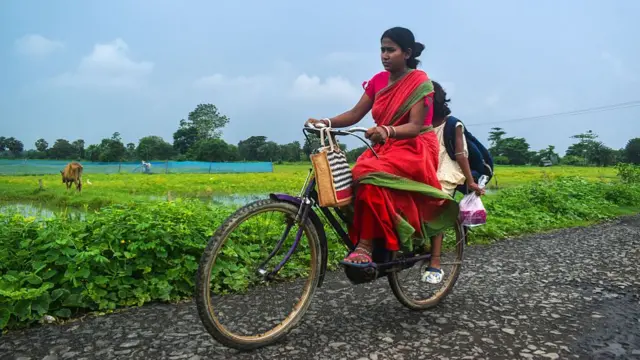
    A lady rides a bicycle in cloudy weather on the outskirts of Kolkata, India, on June 29, 2025Image source, NurPhoto via Getty Images
    Image caption,

    Polls suggest TMC's support among women is near 50%

    In Bengal, female voters are no longer a demographic - they are a political force capable of deciding elections.

    And few leaders have understood that better than Mamata Banerjee.

    According to the Lokniti-CSDS post-poll survey, her party TMC's support among women touched 50%, four points higher than among men in the 2021 assembly elections.

    While the TMC led the BJP by six percentage points among male voters, its lead among women was a striking 13 points - suggesting women were instrumental in driving up the party’s seat tally.

    Analysts attribute this to years of women-focused welfare politics.

    Banerjee has also pushed for greater female representation in politics, fielding 52 women candidates in this election.

    The BJP now hopes to break that advantage by promising higher cash transfers and expanded welfare benefits of its own.

  6. Why is the Muslim vote critical in Bengal?published at 04:54 BST 4 May

    Soutik Biswas
    India Correspondent

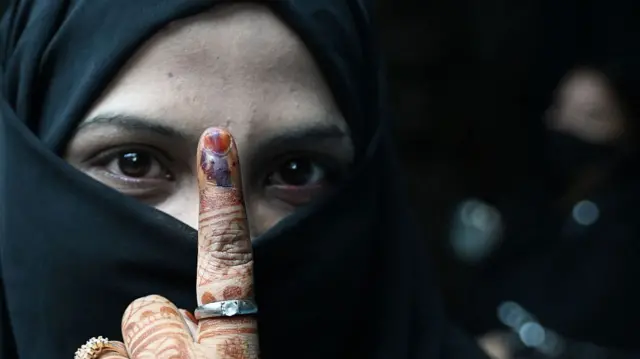
    A voter shows her inked finger after casting her ballot during the second and final phase of West Bengal Legislative Assembly elections in Kolkata on 29 April.Image source, AFP via Getty Images
    Image caption,

    A voter in West Bengal state shows her inked finger after casting ballot

    Muslim voters are central to West Bengal’s electoral arithmetic.

    They make up roughly 27% of the population and are heavily concentrated in politically decisive districts such as Murshidabad, Malda, Uttar Dinajpur and parts of south Bengal. Of the state’s 294 seats, around 88 have a Muslim population above 30%, making the community critical to any winning coalition.

    The 2021 election showed the scale of that influence: the TMC won 75 of 85 Muslim-dominated seats, signalling a sharp consolidation behind Mamata Banerjee.

    For the BJP, Bengal’s route to power has, therefore, depended on splitting or weakening this bloc while consolidating Hindu votes. That explains why debates around “infiltration”, border districts and demographic change dominated its campaign.

    This election has become even more contentious because critics say a controversial voter-roll revision disproportionately affected the Muslim electorate in several districts.

  7. What’s happening in Puducherry?published at 04:50 BST 4 May

    The tiny federally-administered region in southern India is governed by the BJP-led National Democratic Alliance (NDA).

    The election in this coastal enclave is being watched as a test of political stability. For the BJP, it reflects a broader push to expand its footprint in southern India. For the main opposition Congress and its allies, the contest is an opportunity to rebuild credibility after recent electoral setbacks.

    Economic management, delivery of welfare schemes and coordination with the federal government remain central issues here, given Puducherry’s continued reliance on support from Delhi.

  8. What is at stake in Kerala?published at 04:39 BST 4 May

    Sharanya Hrishikesh
    BBC News

    Elections in Kerala - which scores high on literacy and social development - are usually a heated contest between two coalitions headed by the Communist Party of India (Marxist) and the Congress.

    While for decades, each coalition managed to defeat the other every five years, this trend was overturned in 2021, when the Left alliance won a second successive term.

    The Left alliance, headed by veteran Chief Minister Pinarayi Vijayan, will be hoping to make history by winning a majority of the 140 assembly seats and returning to power for a third term. But it is facing tough competition from the Congress-led alliance, which is pinning its hopes on the anti-incumbency sentiment and internal tensions within the Left parties.

    Exit polls predict a win for the Congress and its allies (but as we have mentioned, exit polls have been wrong in the past).

    Modi’s BJP is not a big player in Kerala, having won only one assembly seat there in the past. It will hope to change that this time and set a stronger base for its long-term ambitions in Kerala.

    People stand in queues to cast their votes at a polling station during the Kerala state assembly election in Kochi, India, on April 9, 2026Image source, NurPhoto via Getty Images
    Image caption,

    Elections in Kerala are usually a heated contest between the CPI(M) and the Congress

  9. The bitter contest in Assampublished at 04:36 BST 4 May

    Abhishek Dey

    Politics in north-eastern Assam is shaped by identity, migration and ethnic diversity. The state shares a 262km-long (163 miles) border with Bangladesh.

    Undocumented immigration and fears of demographic change have influenced daily politics here for decades. The state is governed by the BJP and some smaller regional allies and they are seeking a third consecutive term, while the opposition aims to regain ground after years of electoral setbacks.

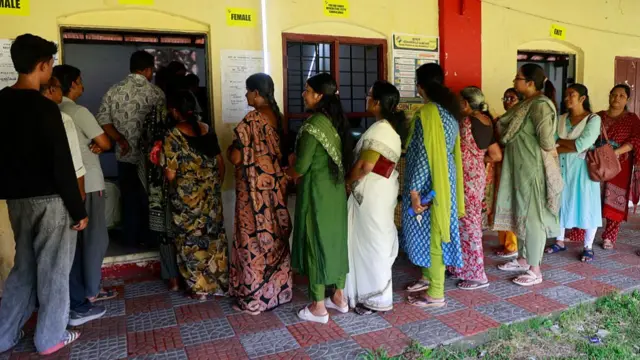
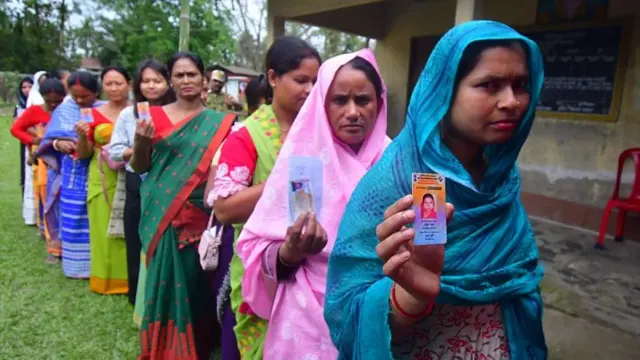
    Women voters stand in a queue to cast their ballots at a polling booth in Assam's Nagaon district on 9 April.Image source, Getty Images
    Image caption,

    Women voters in a queue outside a polling station in Assam

    Chief Minister Himanta Biswa Sarma has positioned himself as a decisive leader focused on development and welfare, while also emphasising on the protection of the indigenous Assamese identity. Measures such as eviction drives targeting alleged undocumented settlers - mostly Muslims of Bengali origin - have been central to this positioning.

    Opposition parties have accused him of targeting Muslims and exaggerating his claims on development.

    This election has also been a closely watched contest between Sarma and state Congress leader Gaurav Gogoi, the son of Sarma’s mentor and former Assam CM Tarun Gogoi.

    Their rivalry also has a personal history. Gogoi has accused Sarma of betraying his father after holding senior roles in Congress governments before switching to the BJP in 2015.

  10. Early trends are in - but they can change dramaticallypublished at 04:29 BST 4 May

    We have started getting early trends now. Here is a quick breakdown for you as reported by the Indian media:

    • West Bengal: The BJP is leading in over 70 seats, followed by the TMC in more than 40 constituencies.
    • Tamil Nadu: The DMK is leading in more than 40 seats, followed by the AIADMK in almost 25 constituencies.
    • Assam: The BJP is leading with a huge margin with more than 40 seats while the Congress is leading in over a dozen seats.
    • Kerala: The coalition led by the Congress party is leading in over 20 seats, followed by the incumbent CPI(M)-led coalition in almost 10 seats.

    A note of caution: these are very early trends and can change dramatically.

  11. What’s happening in Tamil Nadu?published at 04:22 BST 4 May

    Zoya Mateen
    BBC News, Delhi

    For decades, politics in Tamil Nadu has been dominated by two regional parties - the Dravida Munnetra Kazhagam (DMK), which is currently in power, and its main rival, the All India Anna Dravida Munnetra Kazhagam (AIADMK). But this contest is more competitive than in the past.

    The DMK, led by Chief Minister MK Stalin, is seeking to retain power in a state known for alternating governments, with a campaign focused on its welfare-driven model.

    The AIADMK is attempting a comeback after its 2021 defeat, but remains weakened by internal divisions and leadership questions.

    National parties are also trying to expand their footprint. Modi’s BJP is contesting as part of an alliance with the AIADMK, while the main opposition Congress remains aligned with the DMK.

    A key new factor is the emergence of actor-turned-politician Vijay and his party, Tamilaga Vettri Kazhagam (TVK), which is contesting in all 234 seats and is seen as a potential disruptor, particularly among younger voters.

    The key questions are: will the state continue under its current leadership, see a return of the opposition, or move towards a more fragmented political landscape? Could a Tamil superstar play kingmaker if the contest is close? We’ll find out the answers today.

    Voters queue to cast their votes outside a polling station during the Tamil Nadu Legislative Assembly elections in Chennai, India, on April 23, 2026.Image source, Getty Images
    Image caption,

    Voters lining up outside a polling station in Tamil Nadu state

  12. What’s at stake for Modi’s BJP in Bengal?published at 04:09 BST 4 May

    Soutik Biswas
    India Correspondent

    For the BJP, Bengal has long been the great unfinished project.The party's Bengal ambition stretches back decades - to the late 1980s, when then leaders like LK Advani and Atal Bihari Vajpayee saw the state as the great ideological frontier the BJP had never conquered.

    A victory here would mean far more than winning another state. It would give the BJP its first real foothold in eastern India’s biggest political prize and symbolically complete its expansion from a largely northern and western party into a truly pan-Indian force.

    Bengal also carries enormous ideological value for the BJP: a state shaped by intellectual liberalism, Left politics and Bengali regional identity.

    Winning it would validate years of aggressive political investment, polarising campaigns and organisational expansion - and cement Modi’s dominance deep into a third term.

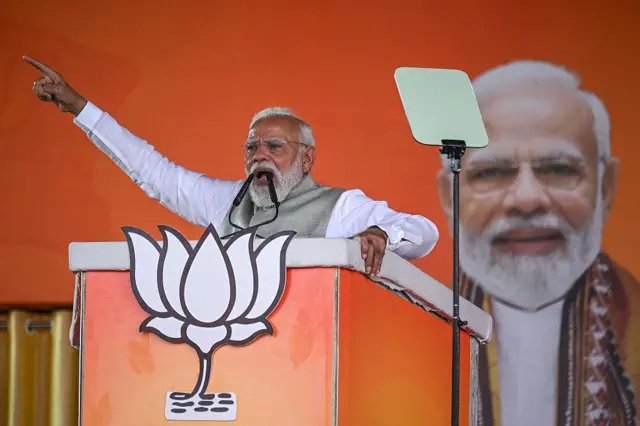
    India's Prime Minister and Bharatiya Janata Party (BJP) leader Narendra Modi addresses his supporters during a mass rally in Kolkata on March 14, 2026Image source, AFP via Getty Images
  13. All eyes on West Bengalpublished at 04:02 BST 4 May

    Soutik Biswas
    India Correspondent

    Of all the states that voted in April, most attention has been on this eastern Indian state.

    Because this election is no longer just about who governs a state of 100 million people. It has become a referendum on competing political futures.

    After 15 years in power, Chief Minister Mamata Banerjee and her regional Trinamool Congress (TMC) appear to be facing their toughest challenge yet from a surging BJP, turning Bengal into the country’s biggest ideological battleground.

    The stakes are national: a BJP win would redraw India’s political map in the east; a TMC victory would reinforce the power of strong regional parties against Delhi’s dominance.

    Add a highly controversial voter roll revision that has left nearly three million potential voters off the rolls, record turnout, polarised campaigning, fierce welfare politics and razor-tight exit polls, and Bengal has become the election everyone is trying to decode - even though pollsters have famously got it wrong here before.

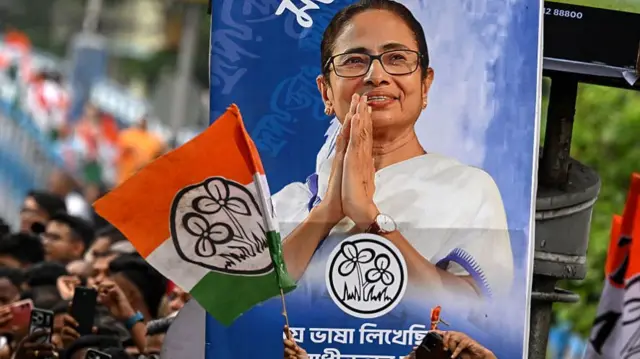
    All India Trinamool Congress party attend a rally of Chief Minister of West Bengal Mamata Banerjee ahead of the second phase of the legislative assembly elections in Kolkata on April 27, 2026.Image source, AFP via Getty Images
    Image caption,

    This appears to be Mamata Banerjee's toughest challenge yet from Modi's BJP

  14. Tight security in place as counting beginspublished at 03:56 BST 4 May

    Counting of votes is taking place at hundreds of heavily-guarded centres.

    Early trends will start coming soon - stay tuned for updates!

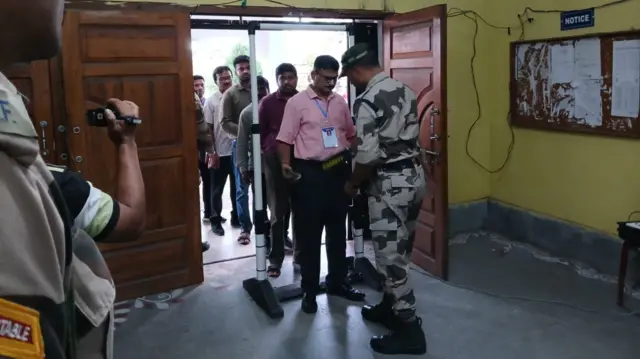
    Security personnel checking officials at a counting centre in BengalImage source, CEOWestBengal/X
    Image caption,

    Security personnel check officials entering a counting centre in West Bengal state

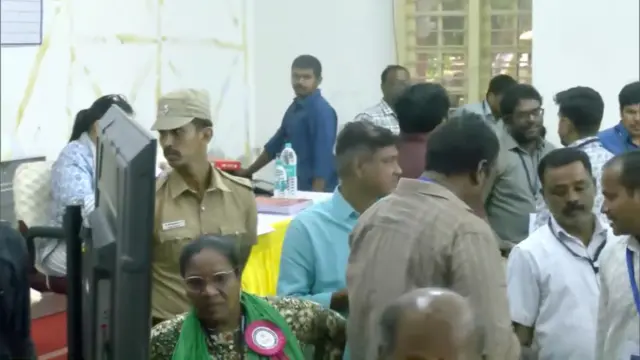
    People inside a counting booth in Tamil NaduImage source, ANI
    Image caption,

    Counting in progress at a centre in the southern state of Tamil Nadu

  15. What’s happening today?published at 03:49 BST 4 May

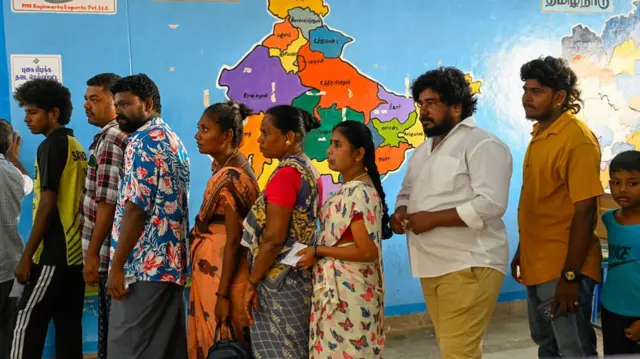
    Votes are being counted in four states and one federally-administered territory after assembly elections that saw high-octane campaigns and a fair share of political controversies.

    Exit polls (which don’t always get things right) have predicted close contests in West Bengal and Kerala where the opposition is looking to unseat incumbent parties that have been in power for long.

    Although the counting of votes could go on until the night, clearer trends should begin to emerge in the next few hours.

    There could also be surprises along the way - so stay tuned!

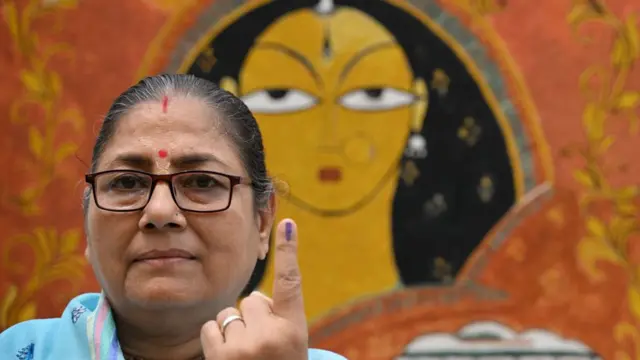
    A woman wearing a saree and glasses shows her inked finger after casting voteImage source, AFP via Getty Images
    Image caption,

    A voter shows her inked finger after casting her ballot in West Bengal state

  16. Why these elections matterpublished at 03:31 BST 4 May

    The results of these polls will be seen as an early test of support for Modi and his BJP ahead of the next general election in 2029.

    The BJP is aiming to retain power in Assam and make gains in Tamil Nadu and Kerala, where it has traditionally struggled.

    Much of the attention, however, will be on West Bengal which is governed by the opposition Trinamool Congress (TMC) party.

    The BJP, which has never ruled the state, has mounted a strong challenge and exit polls suggest a close contest - though such projections have proved unreliable in the past.

    As votes are counted, we'll bring you quick insights and analysis from each state.

  17. Counting of votes beginspublished at 03:30 BST 4 May

    It’s just turned 08:00 in India [02:30 GMT] and the Election Commission has begun counting votes in what is shaping up to be one of the most closely watched state elections in India in recent years.

    Counting has started with postal ballots. These are limited to specific groups such as government and defence personnel, election staff and those aged over 85.

    Officials will soon begin opening the electronic voting machines, or EVMs, which typically give the first clear indication of how the contest is unfolding. Early trends should start to emerge within the next couple of hours, with most seats likely to be called by the afternoon.

    That said, not all results come quickly. Closer contests can take longer, especially where margins are tight or recounts are needed.

  18. Welcome to our live coveragepublished at 03:29 BST 4 May

    Welcome to the BBC’s live coverage of India’s state election results.

    Votes are being counted in West Bengal, Tamil Nadu, Kerala and Assam states and the federally-governed territory of Puducherry.

    The results will be seen as an early test of support for Prime Minister Narendra Modi and his Bharatiya Janata Party (BJP) ahead of the next general election in 2029.

    It’s likely to be a day of surprises, with the kind of twists and turns that often define a closely fought Indian election. Stay with us as we bring you all the updates and analysis through the day!