Summary

  1. Neither side wants all-out war - but they're ready to keep punchingpublished at 10:15 BST 9 July

    Lyse Doucet
    Chief international correspondent

    “A ceasefire there is much different than a ceasefire in other parts of the world.”

    That’s how Donald Trump recently described the fragile ceasefire with Iran – a truce, and an interim deal signed last month which continues to be tested.

    The region seems set to live in this “no war, no peace” uncertainty rooted in the short and vaguely worded “memorandum of understanding”, which is now understood differently by each side.

    Iran believes the deal gave it a say in the workings of the strategic Strait of Hormuz and that vessels must use its chosen routes.

    The US believes it achieved a return to a free flow of maritime traffic.

    Neither side wants to return to all-out war, but they’re also ready to keep punching to make their point.

    Both are under pressure from hawkish hardliners within their ranks.

    In the midst of this escalation, Trump has again used the phrase “they want to make a deal so badly” to describe Iran.

    That’s usually a signal that, behind the scenes, mediators are working hard to cool tensions and keep them talking.
  2. Investors remain 'skittish' despite surprise factor of attacks fadingpublished at 10:01 BST 9 July

    Nick Edser
    Business reporter

    Stock markets in Europe have mostly steadied on Thursday after the resumption of US attacks on Iran triggered steep falls on Wednesday.

    However, while the surprise of the attacks has started to ease on markets, investors remain “skittish”, according to Susannah Streeter, chief investment strategist at investment service Wealth Club.

    The UK’s FTSE 100 share index was down 0.5% on Thursday morning, after having dropped 1.7% yesterday. Meanwhile Germany’s Dax index and France’s were up by about 0.4%, rebounding slightly from Wednesday when they both fell more than 2%.

    “Deep unpredictability still lingers following this major setback to peace hopes,” Streeter says.

    “Investors are wary that the calm may prove short-lived. If energy prices start climbing again, higher costs would rapidly ripple through businesses across multiple sectors, while pricier fuel would eat into household budgets and encourage more cautious consumer spending.”

  3. Rail line to city where supreme leader's funeral being held 'damaged in strike'published at 09:46 BST 9 July

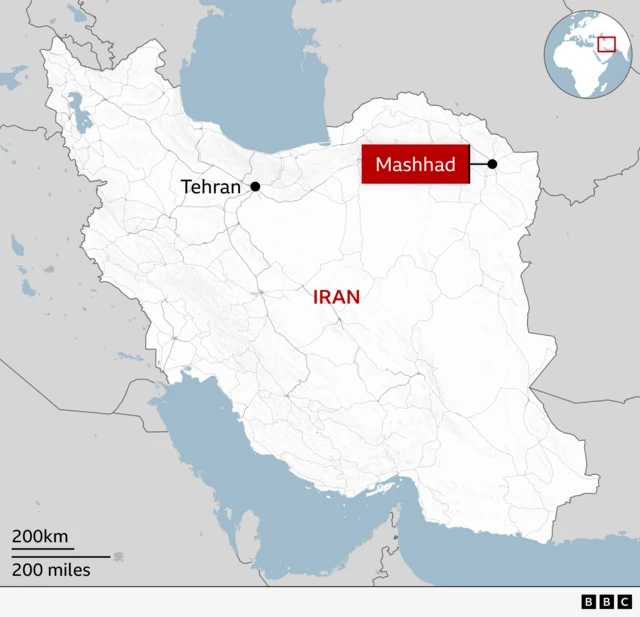
    Train services between Tehran and Mashhad, where the late supreme leader's funeral is due to take place later today, have been disrupted.

    Iranian state media says the line was targeted by a US strike, while the foreign ministry says two bridges were destroyed.

    "Efforts are being made to repair this route as soon as possible," a spokesperson for the Islamic Republic of Iran Railways told Tasnim, a news outlet affiliated to Iran's IRGC military wing.

    The railway route between the capital, Tehran, and the north-eastern city of Mashhad is reportedly the busiest route in Iran.

    Map of Iran showing the capital, Tehran, in the north-central part of the country and Mashhad in the northeast near the border with Afghanistan and Turkmenistan. An inset map highlights Iran's location in the Middle East.
  4. Body of late Supreme Leader Ali Khamenei arrives in Mashhadpublished at 09:30 BST 9 July

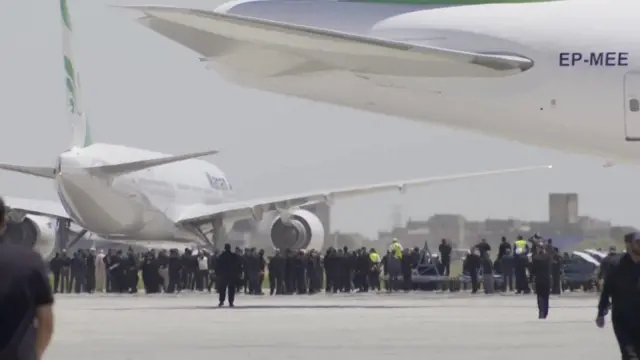
    A plane on some tarmac with crowds of people surrounding itImage source, IRIB

    A plane carrying the body of former Supreme Leader Ali Khamenei has arrived in Mashhad, Iran's holiest city.

    The IRGC-affiliated Tasnim news agency reports that the final stages of the days-long funeral procession will begin at 14:00 local time (11:30 BST).

    Khamenei's coffin has been displayed around Iran and Iraq for six days and will be buried in Mashhad, where the former supreme leader was born.

  5. Oil price calm despite another night of strikespublished at 09:16 BST 9 July

    Nick Edser
    Business reporter

    Traders on the floor of the New York Stock Exchange on 8 JulyImage source, Getty Images
    Image caption,

    Traders on the floor of the New York Stock Exchange on Wednesday

    The oil price has not seen much movement this morning despite a second night of attacks by the US on Iran.

    On Wednesday, benchmark Brent crude jumped by more than 5% in response to the first wave of attacks - but today the price has dipped slightly to around $77.90 (£58) a barrel.

    Sunaina Sinha Haldea, global head of private capital advisory for Raymond James, tells Radio 4's Today programme: “Markets are now getting a bit immune to this up and down cycle of, ‘Are we in full conflict mode? Are we going back to the negotiating table?’ - and back and forth."

    She says that while there was a “pop” in the oil price on Wednesday, it was “nowhere near” the jump in the price seen at the start of the conflict when the Strait of Hormuz waterway, through which roughly 20% of the world's oil and liquefied natural gas usually passes, was effectively closed.

    “The expectation is that we go back to the negotiating table,” she says.

  6. UK defence secretary brands Iran’s attacks ‘unacceptable’published at 09:06 BST 9 July

    Frank Gardner
    Security correspondent

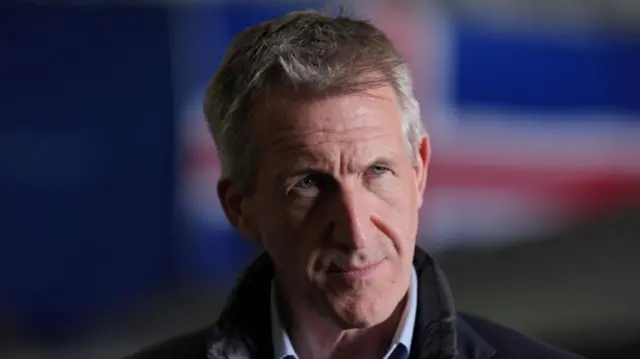
    Dan Jarvis wears a jumper and a blue shirt and stands in front of a blurry Union Jack flagImage source, PA Media

    Britain’s Defence Secretary Dan Jarvis has told BBC News that the recent attacks by Iran on shipping in the Strait of Hormuz are "completely unacceptable".

    Speaking on the sidelines of this week’s Nato summit in Ankara and before the most recent US air strikes, Jarvis said: "We absolutely need to make sure that the memorandum of understanding that's recently been negotiated is properly implemented.

    "It is in everybody's interest to resolve this conflict as quickly and effectively as possible, and it's in everybody's interest to make sure that the Strait of Hormuz is opened."

    Jarvis, who took up the post of defence secretary after his predecessor John Healey resigned over funding for defence, said "we're feeling the cost of it [the Strait of Hormuz] being closed".

    He continued: "My constituents feel that in their pockets, so that's why the UK is working closely with our international partners to support that process and make sure that we can find a resolution as quickly as possible."

    The UK did not participate in the joint US-Israel war on Iran but the UK and France are leading a group of nations willing to deploy a naval security force to the strait once the fighting is over - an offer that has been derided by Donald Trump.

  7. Iran's health ministry says 14 killed in two nights of US strikespublished at 08:50 BST 9 July

    Iran's Ministry of Health says 14 people have been killed during this latest round of fighting.

    US attacks targeting five provinces in Iran over 8 and 9 July have also injured 78, says Hossein Kermanpour, head of public relations at the ministry.

    Of the injured, 47 people remain in hospital, he adds.

    Meanwhile, the governor of Iranshahr, a county in the south of Iran, told state media that one person had been killed in a US attack on a building at the airport.

    Return to the latest post
  8. Seafarers suffering from ‘cycle of violence’ in Strait of Hormuzpublished at 08:35 BST 9 July

    Nick Edser
    Business reporter

    There had been an "exuberance of optimism" around shipping in the region following the signing of the memorandum of understanding between Iran and the US last month, according to Phil Belcher from Intertanko, an international organisation for independent tank owners.

    However, "now the threat is very much there" in the Strait of Hormuz, he tells BBC Radio 4's Today programme, since the attacks have resumed.

    "This cycle of violence, this cycle of up-and-down, positive-negative news, it's having an enormous impact both on business [and] on the seafarers themselves," he says.

    "These are civilian seafarers coming from the Philippines, from the UK, from Norway, India, who know all of this is going on [and] their families at home are hearing all of this as well.

    "Hopefully, we can have some cooler heads looking at this, and we can break this cycle. But at the moment, the strait is not very open."

    Yesterday, the UN's shipping agency said around 6,000 sailors remain stranded on ships there.

    This Flourish post cannot be displayed in your browser. Please enable Javascript or try a different browser.

  9. Bahrain says it stopped several Iranian attacks overnightpublished at 08:19 BST 9 July

    Bahrain's army says air defence systems "intercepted and destroyed several" Iranian projectiles this morning.

    It comes after a statement from the Iranian army a short while ago saying it had targeted US fuel storage facilities in Bahrain with drones.

  10. Renewed fighting looms over funeral of supreme leaderpublished at 08:05 BST 9 July

    Lyse Doucet
    Chief international correspondent

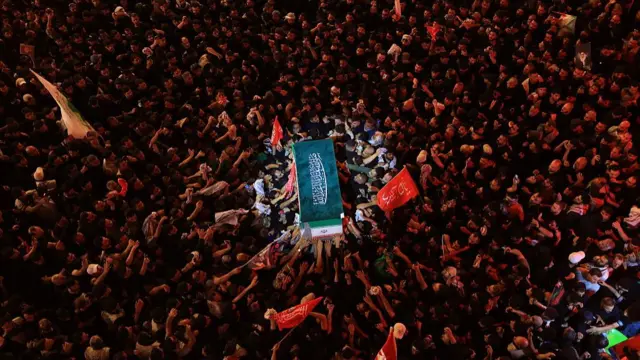
    Ayatollah Khamenei's coffin being carried through a crowd in Karbala, IraqImage source, Getty Images
    Image caption,

    Thousands of mourners attended Ayatollah Khamenei's funeral procession in Iraq yesterday, with his body due to be buried in Iran's Mashhad later

    Today is the last day of a choreographed spectacle of public mourning which stretched over six days and five cities in Iran, as well as in neighbouring Iraq.

    It was an effort by Iran’s new leaders to project unity and strength, and to underline that their supreme leader, assassinated in the first hours of this war, matters not just to Iran but to the wider community of Shia Muslims.

    At every stop, the funeral procession has been slowed by huge emotional crowds – including today in Iran’s holiest city of Mashhad, which is also Ayatollah Ali Khamenei’s birthplace.

    Iran may have hoped that the interim deal signed last month with the US, called a memorandum of understanding, would have ensured these ceremonies would not be marred by war.

    But a fragile ceasefire, and a vaguely worded agreement understood differently by both sides, always carried this risk.

    Iran, and the wider region, looks set to live in a situation of no war, no peace – occasional exchanges of fire, and ongoing efforts to continue talking on the most important issues, including control over the Strait of Hormuz and Iran’s nuclear programme.

    As Donald Trump puts it, a ceasefire in the Middle East is different than in other parts of the world.

  11. Traffic through US-backed Strait of Hormuz route down to 'single figures'published at 07:49 BST 9 July

    Nick Edser
    Business reporter

    There has been a “dramatic” drop in the number of ships travelling through the Strait of Hormuz since hostilities resumed, according to Phil Belcher, marine director at Intertanko, an international organisation for independent tank owners.

    “The number of ships that are going through overnight is sort of about single figures in the southern route, which is maintained off the coast of Oman by the US,” he told BBC Radio 4's Today programme, while about 20 travelled through a northern route overseen by Iran.

    The daily figure of about 30 ships is down from about 70 a week ago, he said, and well below the normal number of 130 ships that was seen before the Iran war began earlier this year.

  12. Iran says it's targeted three Gulf nations in overnight strikespublished at 07:33 BST 9 July

    Iran's army says it has targeted US military sites in Kuwait, Qatar and Bahrain with drones.

    A US Patriot missile system in Kuwait, a satellite antenna early warning system in Qatar, and US fuel storage facilities in Bahrain were targeted "by a large number" of "various types" of attack drones.

    It says the attacks took place "a short time ago" and were "a continuation" of the Iranian army's "attacks on US bases in the region".

    The statement was shared by multiple Iranian news outlets, including the country's state-run broadcaster.

    Earlier, several Gulf nations - including Bahrain, Kuwait and Qatar - reported attacks or issued security alerts.

  13. Who blinks first over the Strait of Hormuz?published at 07:23 BST 9 July

    Frank Gardner
    Security correspondent

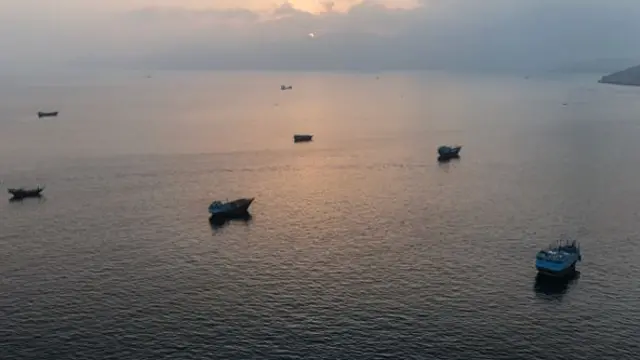
    A series of boats sit on the water in the GulfImage source, AFP via Getty Images
    Image caption,

    Boats anchored off Oman's coast near the Strait of Hormuz, 27 June

    There is a grim predictability about what’s happening around the Strait of Hormuz right now.

    The Islamic Revolutionary Guards (IRGC), for reasons known only to themselves, attacked three tankers at the beginning of the week.

    The US responded by hitting around 80 targets on Iran’s coast. Iran responded by firing drones and missiles at US bases in Bahrain and Kuwait.

    The same thing happened during Wednesday night, followed by fighting talk from both sides.

    This is, to some extent, a case of who blinks first.

    After surviving more than 24,000 air strikes by the combined air forces of the US and Israel earlier this year, the IRGC are feeling somewhat invincible.

    They want to impose a new paradigm on the way shipping passes through the Strait, forcing ships to pass through a checkpoint and be inspected by IRGC officers.

    Iran has declared that things will never go back to the way they were before the war started on 28 February.

    But the US, the Arab Gulf states and indeed the International Maritime Organization (IMO) all say this is unacceptable.

    None of this was resolved in last month’s memorandum of understanding and now, after the flare-up in fighting, it will be harder than ever to reach a lasting deal.

  14. Three killed in US strikes - Iranian mediapublished at 07:13 BST 9 July

    Iranian state media is reporting that three people were killed by US strikes overnight.

    Deputy governor of Khuzestan in the south-west says others were injured in an attack on the outskirts of the city of Ahvaz.

  15. 'I just don't know if they're worthy of making a deal' - Trumppublished at 06:56 BST 9 July

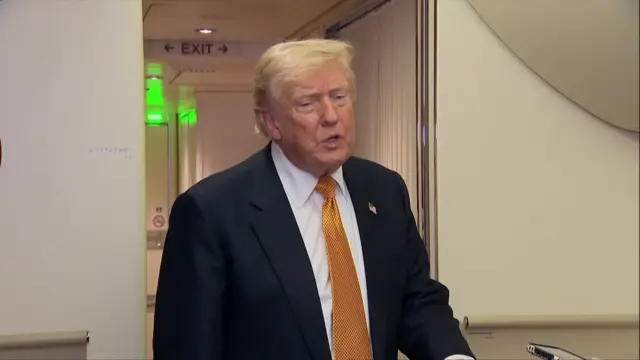
    Donald Trump wears a black suit and a yellow tie and stands inside Air Force OneImage source, US Pool

    More from Trump, who has just finished speaking on board Air Force One.

    He says on Iran "we just hit them very hard", and that the US "has already won militarily, they have very little left".

    Having also said that Iran has asked for a deal, he says: "I just don't know if they're worthy of making a deal, I don't know that they're gonna honour the deal."

  16. Iran has asked to make deal, says Trumppublished at 06:45 BST 9 July

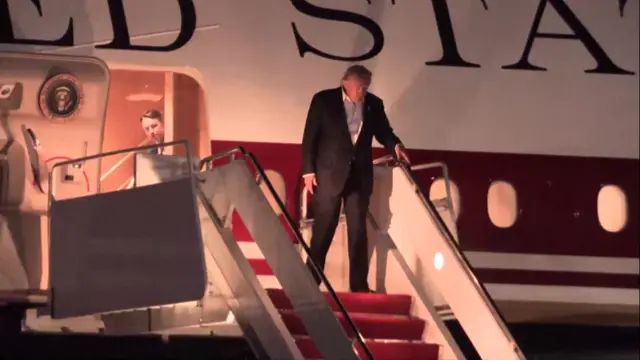
    Trump wears a black suit and walks down red carpeted steps off Air Force OneImage source, US Pool
    Image caption,

    Trump disembarked Air Force One moments ago

    Donald Trump says that Iran has asked him to make a deal.

    The US president has been speaking from Air Force One, which has just landed back in Maryland from Ankara in Turkey, where he was attending the Nato summit.

    Trump says that Iran "called a little while ago", and that "they want to make a deal so badly".

    Yesterday he said the ceasefire was "over" and talks were a "waste of time".

    As would be expected, the Iranians have not confirmed Trump's latest comments publicly.

  17. US military says it hit 170 targets in two nightspublished at 06:32 BST 9 July

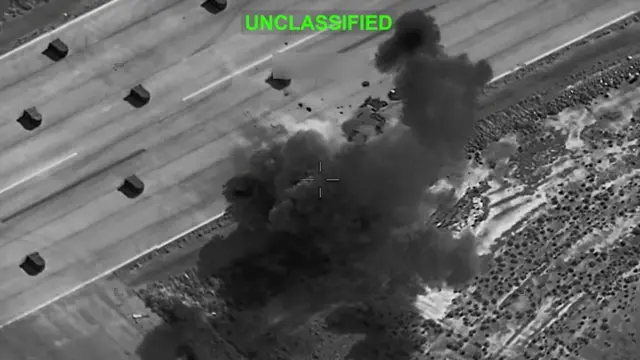
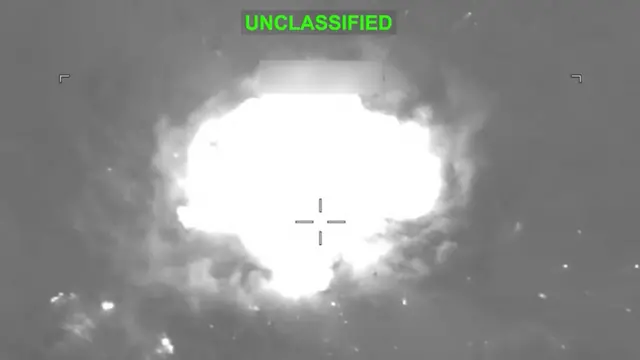
    Drone footage of a US strike on IranImage source, CENTCOM
    Image caption,

    The US military has released drone footage of strikes against targets in Iran overnight

    This is the second round of strikes launched by the US against Iran in the last 48 hours.

    The American military says it struck 170 targets across the two waves of attacks.

    On Tuesday, Iran's military said eight of its soldiers were killed in Tuesday's strikes, with targets clustered around the coastline of the Strait of Hormuz.

  18. War heats up but oil plays it cool - for nowpublished at 06:01 BST 9 July

    Peter Hoskins
    Business reporter, Singapore

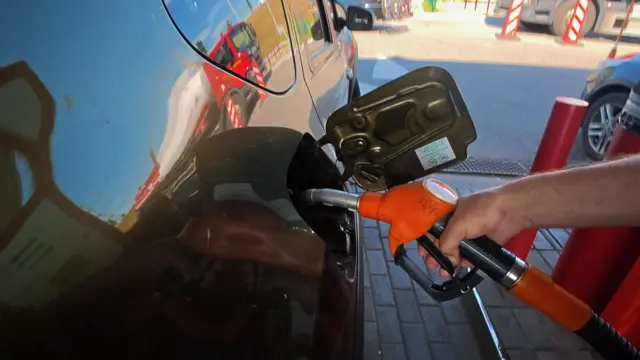
    A man refuels his car at a petrol station.Image source, EPA

    The war may be heating up but oil traders appear to be playing it cool - for now.

    On Wednesday, benchmark Brent crude jumped by more than 5% after the US launched fresh strikes on Iran in response to Tehran targeting shipping.

    But despite more US attacks, oil markets seem markedly calmer at the moment - so far today Brent is up by around 1% at $78.80 (£58.82).

    That may be the highest level in the last couple of weeks but not that much higher than when the conflict started at the end of February and way lower than the almost $120 mark it hit in April.

    Traders will now be closely watching how long this latest round of military exchanges might last and what impact it has on the movement of energy in the key Strait of Hormuz waterway, through which roughly 20% of the world's oil and liquefied natural gas usually passes.

  19. IRGC confirms attacks on Kuwait and Bahrainpublished at 05:54 BST 9 July

    The Islamic Revolutionary Guard Corps (IRGC) has confirmed that it launched retaliatory strikes on US military bases in Kuwait and Bahrain overnight.

    It called the attacks the "first phase of the punitive response against the American treaty-breakers" and warned the US that it would expand strikes to other bases in the region if "aggression" continued.

  20. Centcom says it hit 90 Iranian targets in the latest round of strikespublished at 05:13 BST 9 July

    The US military says it struck approximately 90 targets across Iran in its second consecutive night of attacks on the country.

    In a post on X accompanied by a video compilation of air strikes, the military's Central Command said the goal was to "further degrade Iran's ability to attack commercial shipping and innocent civilian mariners in the Strait of Hormuz".

    Targets included air defence systems, coastal surveillance assets, missile and drone storage sites, naval capabilities, and military logistics infrastructure along Iran’s coastline.

    "The latest strikes follow successful execution of offensive strikes in Iran the night before," Centcom said.

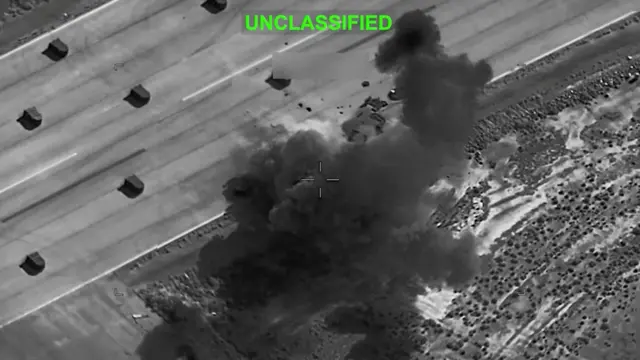
    Fire and smoke rise from explosions at an unknown location, following what US Central Command said were strikes on Iranian military targets, in this screen grab from a video released on July 8, 2026.Image source, Centcom
    Fire and smoke rise from explosions at an unknown location, following what US Central Command said were strikes on Iranian military targets, in this screen grab from a video released on July 8, 2026.Image source, Centcom