Summary

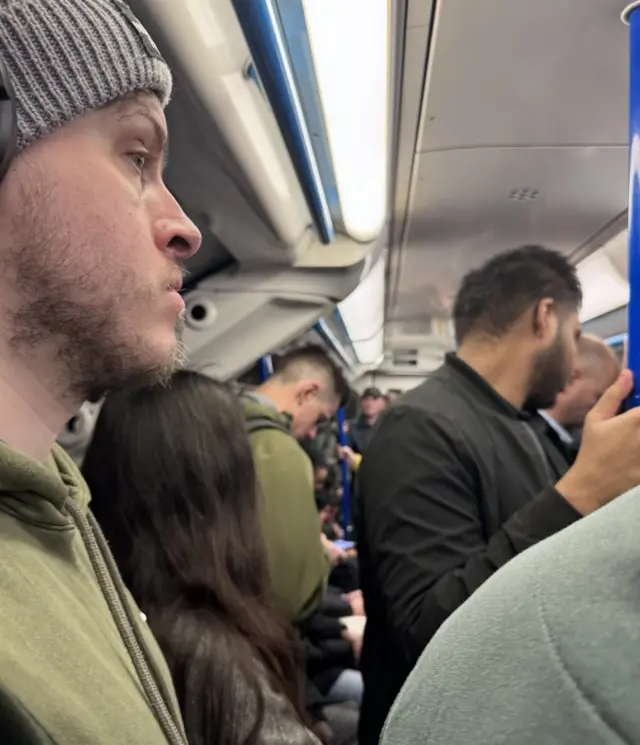
  1. Busy Victoria line train to the officepublished at 08:20 BST 24 April

    Chirag Trivedi
    BBC London

    People standing in a busy Tube carriage

    It was a pleasant surprise to see the Victoria line running this morning having been warned it there would be no services before 07:30.

    It was busy on board but got me in time for work!

  2. People crowd on to Elizabeth line with Central line part suspendedpublished at 08:09 BST 24 April

    James W Kelly
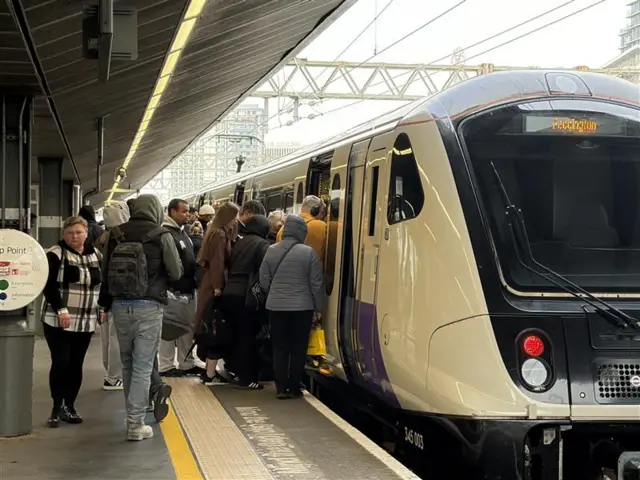
    At Stratford station

    People boarding Elizabeth line train at Stratford

    At Stratford station, the Elizabeth line is starting to get busy as rush hour takes effect.

    While always popular, the service is expected to be busier while the Central line is suspended between Liverpool Street and White City.

    It is noticeable how many commuters are switching from the Central line to the Elizabeth line to continue their journeys west.

  3. 'I didn't even notice the strikes' - Covent Garden visitorpublished at 07:55 BST 24 April

    Nisha Patel
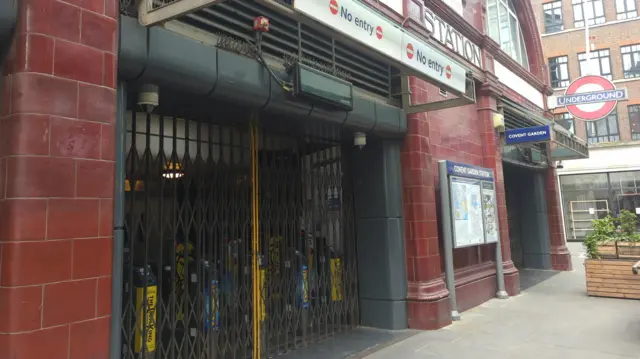
    At Covent Garden Underground station

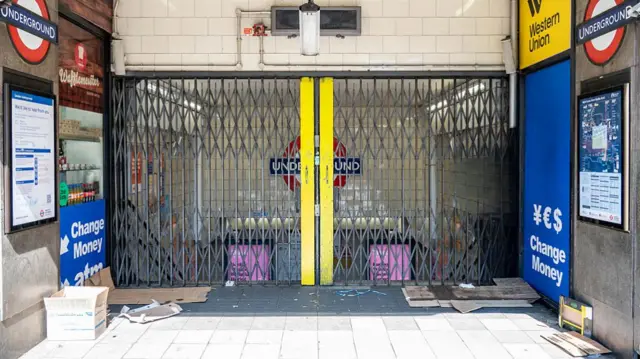
    Shuttered entrance to Covent Garden station

    I just walked from Piccadilly Circus to Covent Garden and it's been a quiet start to the morning with plenty of bikes on the roads.

    I spoke to one man from Birmingham as he was walking around Covent Garden.

    He said he didn't even notice the strikes were on as he just walked everywhere and planned on doing so for the rest of the day.

    In fact, most of the commuters I've spoken to are just walking and don't seem too fussed!

  4. 'We want to be back up and running as quickly as possible' - London Undergroundpublished at 07:50 BST 24 April

    The director of London Underground's customer operations tells the BBC he is looking forward to the end of today's industrial action at midday and wants to get the Tube system "back up and running just as quickly as possible".

    Nick Dent tells BBC Radio London he is pleased to see that despite yesterday's disruption he estimates that 88% of journeys in London still took place compared to a normal day using all different modes of public transport.

    He adds that talks between the RMT and Aslef unions are set to go ahead next week and is "very keen" to avoid the next planned walkouts in May and June.

    "We fully recognise the disruption that this causes to Londoners, to visitors to the city and of course to businesses.

    "We do have more drivers coming to work now than in previous strikes which is positive to see," he says.

  5. Quiet platform at Overground station during early rush hourpublished at 07:31 BST 24 April

    James W Kelly
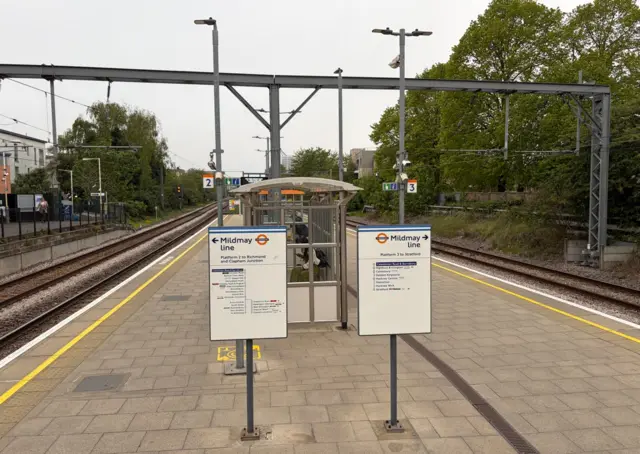
    At Caledonian and Barnsbury Overground station

    The platform at Caledonian and Barnsbury Overground station which has a few people sitting under a shelter

    At the chilly Caledonian and Barnsbury Overground station this morning, the commute doesn’t feel like it has got into full swing yet.

    Despite the opening of some Tube lines over the last hour, the Piccadilly line station at nearby Caledonian Road remains closed.

  6. Hospitality and visitor economy hit hardest by strikes, says business grouppublished at 07:18 BST 24 April

    During this week of strikes we've heard from several London businesses who say the walkouts have hurt them.

    On Thursday Ed Richardson, who is transport programme director at Business London, told BBC Radio London the disruption has had a "big impact in the way people move around the city" - but it'll be businesses that rely on this "footfall" that will be "hit hardest".

    He said restaurants, cafes, pubs and retail, as well as theatres, museums and galleries, would be most affected, especially if bookings are made and then abandoned due to disruption.

    While some services are still running, and Londoners are making do by walking and cycling, Richardson said it "can't replicate that Tube network when it's fully functional".

  7. Why are these strikes happening?published at 06:57 BST 24 April

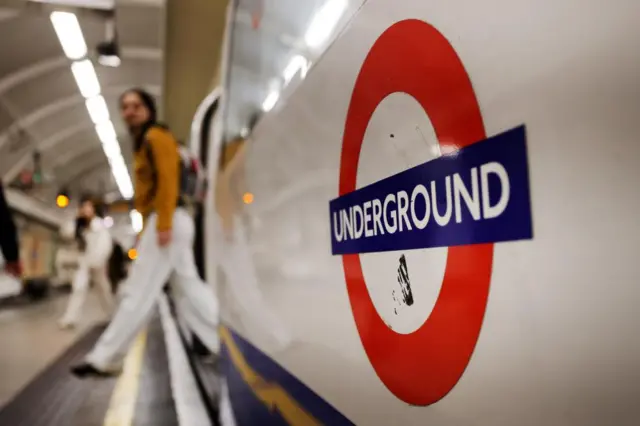
    London Underground logo shot from platform heightImage source, EPA/Shutterstock

    Members of the Rail, Maritime and Transport union (RMT) are striking in the second of six 24-hour walkouts over plans to introduce a voluntary compressed four-day working week.

    Two major unions represent Tube drivers: the RMT and Aslef. In September, both unions took industrial action as part of a different dispute - but this time it's just the RMT, which means around half of Tube drivers are on strike.

    Under the proposals, most drivers would see their working week reduced from 36 hours to 35 hours - meaning longer shifts at work, but fewer days per week. Their contractual hours would remain the same because paid meal breaks would be introduced.

    The union argues the proposed longer shifts could lead to fatigue and compromise safety.

    Transport for London says the changes are optional and would give drivers more days off without reducing pay.

  8. Some Tube lines open earlier that expectedpublished at 06:39 BST 24 April

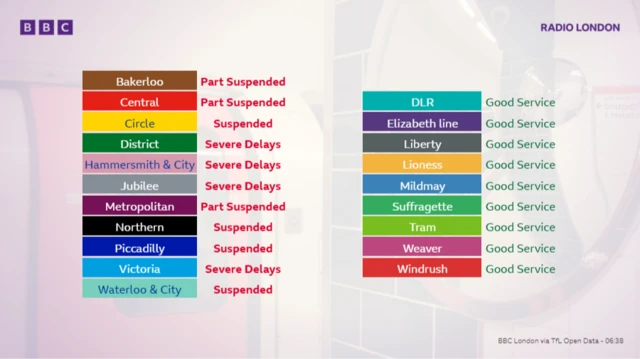
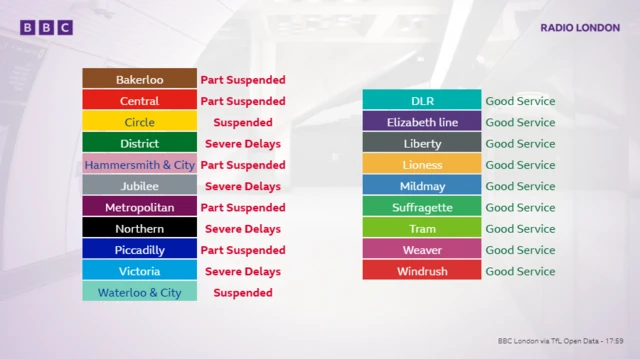
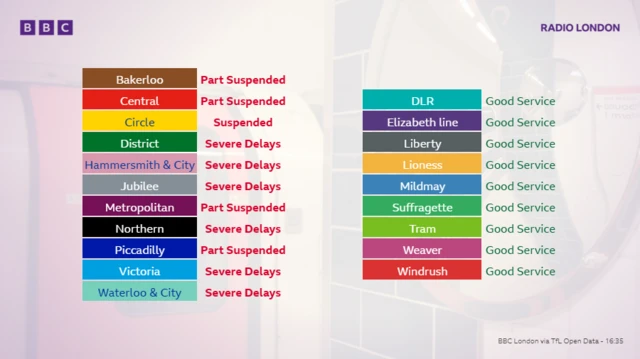
    Chart showing status of Tubes

    Unlike during the first strike this week, it appears several Tube lines are starting to run earlier this morning.

    Transport for London's (TfL) Tube status tracker currently shows only four lines are currently entirely suspended, while the others are either part suspended or have severe delays.

    Previously, the transport body had warned trains would not begin until 07:30 BST.

  9. Tube lines closed as Friday rush hour set to beginpublished at 06:24 BST 24 April

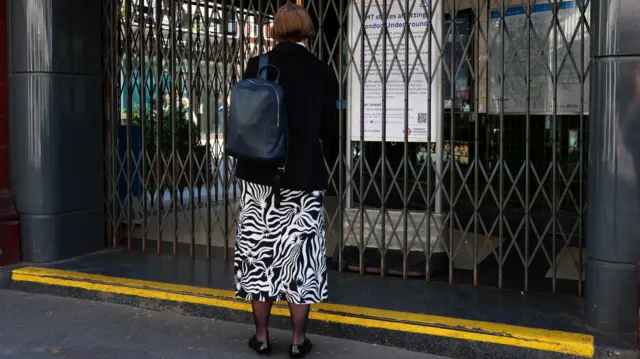
    A woman reads a sign while standing outside a closed Tube stationImage source, Reuters

    Tube strikes will continue to affect London today as we enter the final hours of the Rail, Maritime and Transport (RMT) union's 24-hour industrial action.

    It began at midday on Thursday and will be in place up until 11:59 this morning, although disruption is expected to last until this evening, according to Transport for London.

    The entire Circle line has been suspended throughout the action, while the Waterloo & City line was closed by 18:00 on Thursday.

    Other routes faced part suspensions or severe delays with lines operating with a progressively shrinking service throughout the evening.

    The first Tubes aren't expected to start running until around 07:30 according to TfL, but other services like the Elizabeth line, Overground and DLR are functioning as normal.

  10. Fewer passengers use Underground as London's businesses feel Tube strike's impactpublished at 19:55 BST 23 April

    Victoria Hollins
    BBC London

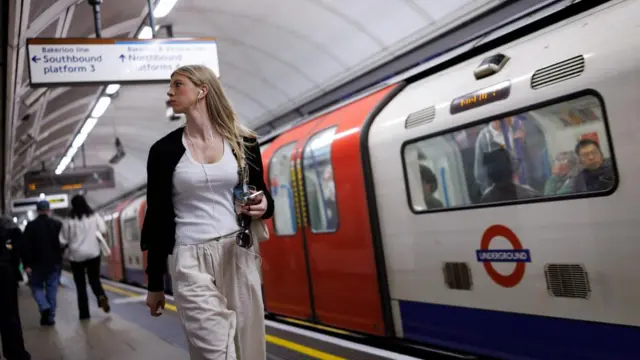
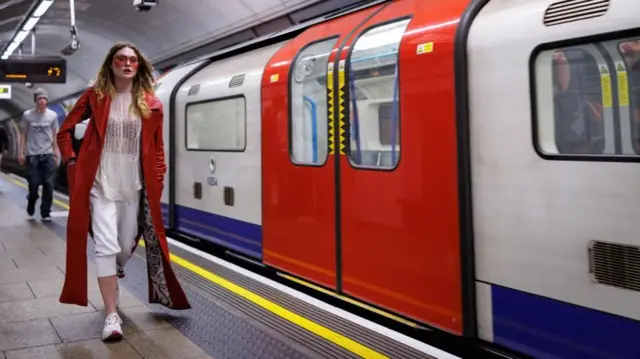
    A woman walks along a Tube platform with her wired headphones in while carrying her phone and sunglasses. A Tube train with its doors closed can be seen behind herImage source, EPA/Shutterstock

    This strike is different to previous industrial disputes on the London Underground, not least because there are so many different ways of getting around the capital.

    More people are able to work from home as well, and crucially only one of the main unions, the RMT, are involved in this dispute.

    Nonetheless it is having a major impact, not least reputationally.

    We know from recent data that around half of Tube services were affected during the first 24 hour strike this week.

    Oyster data also shows a 21% drop in tap-ins, so there have been a lot fewer people using London Underground services.

    But it is businesses that are really feeling the impact around London, particularly in the hospitality sector.

    We're pausing our live coverage there, but we'll be back on Friday with regular updates before the second strike comes to an end at 11:59.

    Remember, Underground services are not expected to resume until 07:30 on Friday, with delays and cancellations expected through the morning.

  11. How Thursday's Tube strikes have hit people in the capital - in five quotespublished at 19:38 BST 23 April

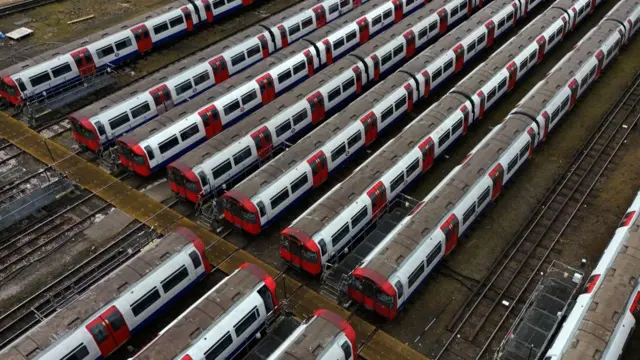
    A row of Tube trains are seen in a depot at the Cockfosters Depot on TuesdayImage source, EPA/Shutterstock

    We have been hearing from a wide variety of voices today as the BBC travelled around London looking at how the city is coping with the strikes.

    Here's a summary of what we have heard around the capital:

    "We’re proud to be helping so many Londoners get to where they need to be this week," says Lime's UK policy chief, Hal Stevenson after the bike company reported a 23% increase in usage on Tuesday.

    “We heard about the strikes, so we’ve been getting Ubers everywhere,” a tourist in Westminster tells the BBC.

    “The buses get too full. It doesn’t stop at the stop, and then you’ve got to wait for the next one,” one city worker tells the BBC as she tries to show her friends visiting the sights in central London.

    "I wouldn't be able to afford to stay open. It needs to change," says a coffee shop owner after losing thousands in revenue due to strikes this week and back in September.

    “We’ll be celebrating soon!” Resolute Londoner Katy tells the BBC of her alternative plans to take a taxi and the Uber Boat to get to Mamma Mia! The Party.

  12. Coffee shop owner warns continued strikes could force him to closepublished at 19:14 BST 23 April

    Peter Dore-Smith speaks to the BBC inside one of his Kaffeine coffee shops in Fitzrovia

    A coffee shop owner in Fitzrovia has described the latest round of Tube strikes as "just ridiculous" and warns the industrial action is a "massive concern for hospitality across the whole capital".

    Peter Dore-Smith, who first opened Kaffeine in 2009 before opening a second shop, says he has lost at least 10% of his revenue so far during the two strikes this week.

    He tells the BBC the strikes have been worse for businesses trading in the evening.

    Dore-Smith explains during the last wave of strikes in September he lost thousands in revenue in one of his shops after he was forced to close its doors for four days.

    "That's a real big effect for a small, independent business," he says. "You just can't continue with that. If that happened three times this year I would be very close to closing this shop down. I wouldn't be able to afford to stay open.

    "It needs to change."

  13. Unions split on decision to strike over proposed four-day working weekpublished at 18:50 BST 23 April

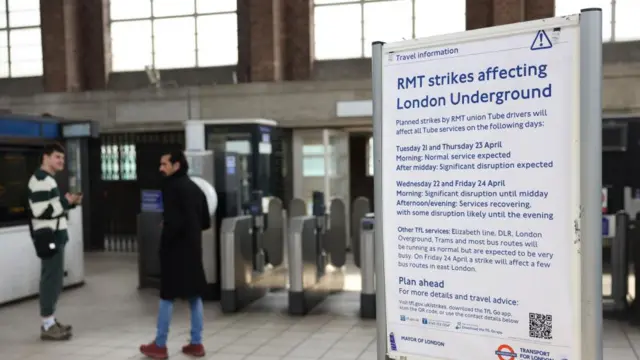
    A travel information sign near a Tube barrier displays information about how the RMT strikes are affecting the London UndergroundImage source, EPA/Shutterstock

    Around half of Tube drivers are taking part in the latest round of Tube strikes after the Rail, Maritime and Transport union (RMT) voted to oppose the introduction of a four-day working week with condensed hours.

    As we explained in an earlier post, the union is concerned about shift lengths, unacceptable working times and the impact fatigue can have on safety.

    A spokesperson for the RMT argues the "imposed 'fake four-day week'... amounts to five days' work compressed into four".

    But drivers who are part of the Aslef union are not taking part in this round of strikes.

    A spokesperson for Aslef, the union representing a slightly larger share of Tube drivers, said on Monday they were "surprised that the RMT has decided to take this action".

    Aslef has agreed to the voluntary compressed four day week, saying it gives participating drivers an extra 35 days off a year "in return for some fairly minor changes to working conditions".

    "It will be the first strike in the history of the trade union movement designed to stop people having a shorter working week and more time off," Aslef's spokesperson added.

    Both Aslef and the RMT went on strike together in September nearly halting all Underground services.

  14. Remind me, why are Tube drivers on strike?published at 18:27 BST 23 April

    A London Underground Tube station, with the entrance closed off as it is shutImage source, AFP via Getty Images

    Members of the Rail, Maritime and Transport union (RMT) are in the midst of six 24-hour strikes over plans to introduce a voluntary compressed four-day working week.

    Under the proposals, most drivers would see their working week reduced from 36 hours to 35 hours - meaning longer shifts at work, but fewer days per week. Their contractual hours would remain the same because paid meal breaks would be introduced.

    The union argues the proposed longer shifts could lead to fatigue and compromise safety.

    Transport for London says the changes are optional and would give drivers more days off without reducing pay.

    Two major unions represent Tube drivers: the RMT and Aslef. In September, both unions took industrial action as part of a different dispute - but this time it's just the RMT, which means there are fewer drivers on strike.

  15. Both Circle and Waterloo & City lines suspended six hours into strikepublished at 18:00 BST 23 April

    If you're planning on heading home from the office, here's how the Underground network is looking six hours into the strike.

    A reminder, TfL is advising that passengers complete their journeys by 20:00 this evening - and if you're back in the office again on Friday morning, expect services to only resume from 07:30.

    TfL tube board showing live disruption
  16. Lime reports 23% increase in e-bike and e-scooter hirepublished at 17:42 BST 23 April

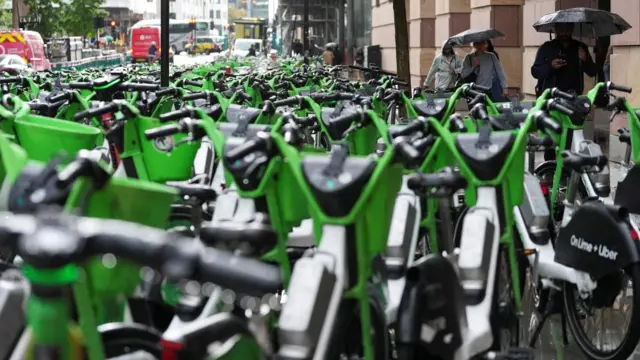
    Lots of Lime bikes parked on a pavementImage source, Reuters
    Image caption,

    Lime e-bikes were popular during the September tube strike

    Lime has reported a 23% increase in usage on Tuesday, compared to the number of trips made on the same day last week.

    The popular e-scooter and e-bike provider says it's increasing the number of staff on standby during the strike action, to replace batteries and clear e-bike parking bays.

    During the September strike, e-bike usage surged during rush hour, as commuters found other ways to navigate the city.

    "We’re proud to be helping so many Londoners get to where they need to be this week," says Lime's UK policy chief, Hal Stevenson. He also reminds users to "ride safely and park responsibly".

    And another e-bike hire firm, Forest, said it had experienced a 50% increase in rides during the Wednesday morning peak compared to the same time last week, with a 35% increase during the afternoon peak.

  17. Tube disruption affecting lines to Heathrow Airportpublished at 17:18 BST 23 April

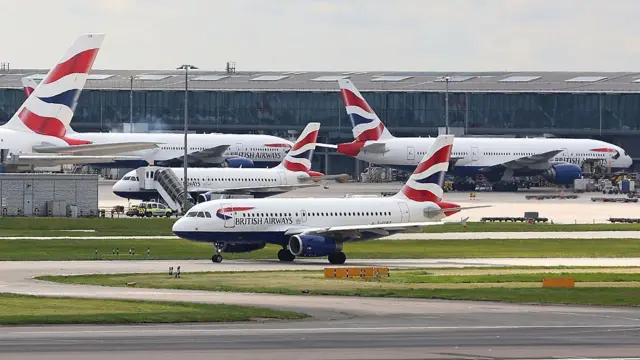
    Planes waiting at Heathrow AirportImage source, Getty Images

    Among the Tube lines part suspended is the Piccadilly line which is not running between Heathrow Terminals 2 & 3 and Heathrow Terminal 5.

    It's also running a reduced service to the Heathrow terminals from Acton Town, with Tubes coming every 20 minutes.

    When posting about the disruption on Monday, Heathrow Airport reminded customers that Heathrow Express, the Elizabeth line, and bus services will run as normal for those affected by the disruption.

    "Please plan your journey before travelling to Heathrow and allow extra time where necessary, as these services will be busier than usual," Heathrow Airport said on X.

  18. French House hit by strikes on Tuesday but 'busier than usual' in the Thursday sunpublished at 16:58 BST 23 April

    Jacob Phillips
    Live reporter

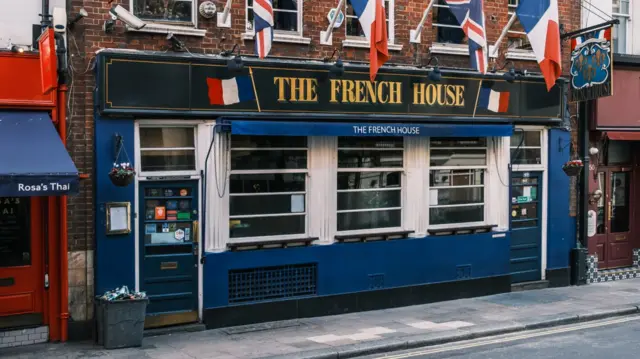
    The blue front of The French House can be seen with the door closed. Several French and Union Flags can be seen hanging above the barImage source, Getty Images
    Image caption,

    The French House remains one of Soho's most popular pubs

    One of Soho's most famous pubs says it had around half as many customers in its bar on Tuesday during the first Tube strike earlier this week.

    Lesley Lewis, who owns the French House in central London, tells me the bar has also been quieter during lunch hours but the seven tables of its upstairs restaurant remained booked out.

    But Lewis says the pub is busier than usual and there is a "lovely atmosphere" on Thursday afternoon as the sun has been shining and the Elizabeth line is still running nearby at Tottenham Court Road station.

    "It was difficult for the staff coming in because there was some traffic on the roads," she says. "But everyone was here more or less on time."

    Earlier the chair of UK Hospitality told BBC Radio London that the Tube strikes are particularly damaging in the city centre and tend to lead to a 40% cut in sales.

  19. A reminder of the strike action as we head towards rush hourpublished at 16:41 BST 23 April

    Jacob Phillips
    Live reporter

    A woman wearing a red coat and orange sunglasses walks next to a Tube train on ThursdayImage source, EPA/Shutterstock

    Tube drivers walked out for the second time this week at midday bringing the Circle line to a standstill and causing disruption on other lines.

    The 24-hour strike means that some London Underground lines will close earlier than usual while other services such as the Elizabeth line, London Overground and trams are expected to be busy.

    Londoners appear to be working from home today to avoid the strikes, writes our reporter at a quiet Liverpool Street station, while cycle paths have been absolutely rammed as other commuters take to two wheels to get to work.

    Around half of Tube drivers are taking part in the strike after the Rail, Maritime and Transport union (RMT) voted to oppose the introduction of a four-day working week with condensed hours.

    The union said it was concerned about shift lengths, unacceptable working times and the impact fatigue can have on safety.

    But Transport for London (TfL) has described the strike action and future plans in May and June as "completely unnecessary".

    A diagram shows the latest update on the Tube maps
  20. When are the other planned strikes?published at 16:18 BST 23 April

    A reminder that once this strike is over, there are still another four walkouts due to take place in May and June - although negotiations between the RMT and TfL could always happen before them.

    If any talks fail they are set to happen on:

    • 19–20 May (12:00 Tuesday - 11:59 Wednesday)
    • 21–22 May (12:00 Thursday - 11:59 Friday)
    • 16–17 June (12:00 Tuesday - 11:59 Wednesday)
    • 18–19 June (12:00 Thursday - 11:59 Friday)