


Power of the gun
The fluid operations of that first summer of the war solidified into the trench warfare that came to dominate the Western Front for so much of the war, and at the First Battle of Ypres the fire of British regulars again checked determined German attacks. But the cost was terrible. In those battalions that had landed in August with perhaps 30 officers and 1,000 men, there remained on average just 2 officers and 20 men of the original compliment.
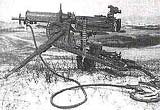
'... the machine gun is the weapon most often associated with the war ...'
Machine-guns, initially very primitive, had been in use for about 50 years. Each infantry battalion - around 1,000 men in theory, though often reduced by losses to around half that - had two belt-fed water-cooled machine guns, and the number of machine guns would rise astronomically as the war went on.
But although the machine gun is the weapon most often associated with the war, in fact the casualties it caused paled into insignificance before those inflicted by the war’s greatest killer, the shell. As British infantrymen braced themselves to meet repeated German attacks at Ypres in the autumn of 1914, their real enemy was not rifle-fire but the bowel-loosening, landscape-changing power of the gun.
About the author
Richard Holmes is professor of military and security studies at Cranfield University. His books include The Little Field Marshal: Sir John French and Riding the Retreat, and he is general editor of The Oxford Companion to Military History. He enlisted into the Territorial Army in 1965 and rose to the rank of brigadier. He was the first reservist to hold the post of Director of Reserve Forces and Cadets in the Ministry of Defence, until he retired in 2000.
