


Crannog research
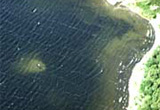
The realisation that these mounds were the remains of ancient dwellings, inspired people such as Dr Robert Munro and the Reverend Odo Blundell to carry out limited excavations in south-west Scotland and the Highlands. They had heard of similar discoveries in Switzerland, when extremely low water levels revealed the timber stilts of an ancient village in Lake Zurich. Reverend Blundell was the first to investigate a crannog underwater when, in 1908, he donned helmet, canvas suit and lead boots to examine Cherry Island in Loch Ness.
'Several partial excavations of crannogs were carried out between the late 19th century and the mid 20th century.'
Several partial excavations of crannogs were carried out between the late 19th century and the mid 20th century. Finds of structural timbers, artefacts and plant materials generated much public interest, and many theories about how and why these dwellings had been constructed.
Although they never reached the bottom of the mounds, the early excavators thought that the ancient builders had used stone, or rafts of timber and brushwood, to create an island, on which they built a house. Several decades later, however, in a different location, new evidence from underwater excavations presented a very different theory.
Published: 2005-01-25
