Parmesan recipes
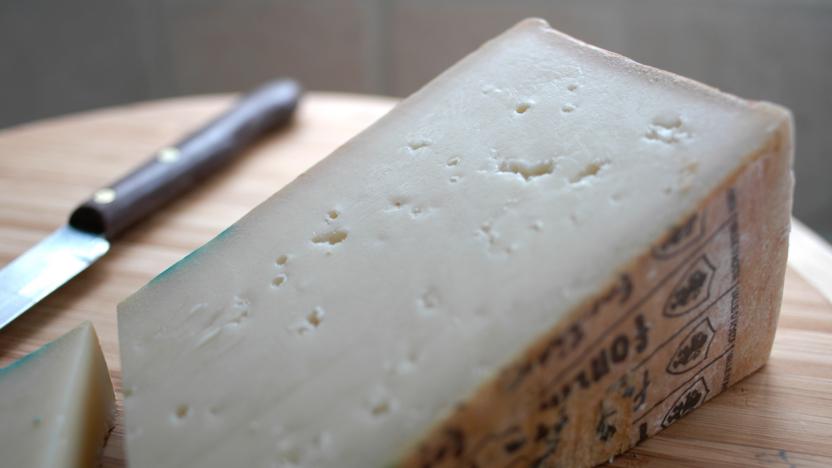
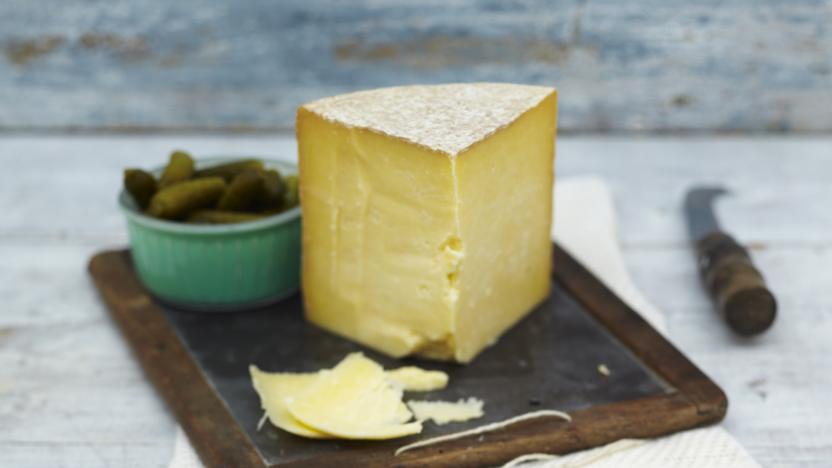
Originating from the Parma region of Italy, this is one of the world’s most popular cheeses, stamped with the official Parmigiano Reggiano mark as a guarantee of origin. Fragrant and tangy, it has a hard, grainy texture and a buttery yellow colour. Once tasted, it's hard to resist the delicious piquant taste and crumbly texture of Parmesan. There are countless ways to savour the flavour.
Parmesan, or Parmigiano-Reggiano to give it its proper name, is one of those magical flavour-enhancing ingredients. A few curls of finely shaved Parmesan, for example, make a salad taste irresistible, just as a chunk of Parmesan rind transforms a slow-simmered minestrone into a gorgeous savoury meal.
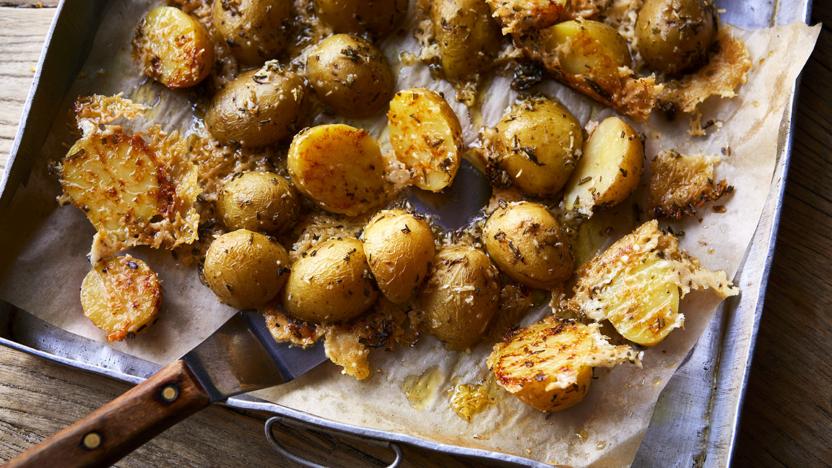
These roasted Parmesan potatoes are so utterly irresistible that you'll struggle not to eat them straight off the tray. Coated in garlic, oil and herbs, before roasting on a layer of finely grated Parmesan that goes beautifully golden and crisp they are best finished with a sprinkle of freshly chopped parsley.
More Parmesan recipes


Buyer's guide
Buy fresh Parmesan where possible; the taste is far superior to pre-packed cheese – and avoid ready-grated cheese at all costs. Because Parmigiano Reggiano cheese is not made with vegetarian rennet, strict vegetarians avoid it. However, there are good vegetarian Parmesan-style cheeses available in most supermarkets, including one made in the UK. It's worth reading Parmesan labels and quizzing cheesemongers on the age of their Parmesan. Each age has different characteristics.
12-15 month Parmigiano-Reggiano has a milky, verdant flavour with a soft texture. It's ideal as an aperitif or crumbled into salads. 18 month Parmesan is often exported as a good quality everyday Parmesan that has a good flavour for cooking, such as freshly grated in pastas and risottos. 24-28 month Parmigiano-Reggiano is considered by Italians to have reached perfection and its rounded flavour works well in most dishes. It has a complex aroma of melted butter and dry fruit and tastes wonderful with all sorts of vegetables and fruit from spinach gnocchi and griddled asparagus to poached pears. 36-48 month Parmigiano-Reggiano has an intense, spicy flavour, drier texture and darker colour. This can be eaten like a good Stilton at the end of a meal or baked in cheese sticks, pastries and dough.
Storage
Store Parmesan in an airtight glass or plastic container to prevent it from drying out or absorbing any fridge odours. It is better to store Parmesan in a block, rather than grated, as it will dry out easily. Parmesan can be frozen for up to a year, but ensure it is well-wrapped.