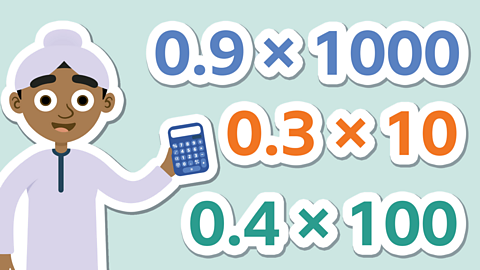
What is division?
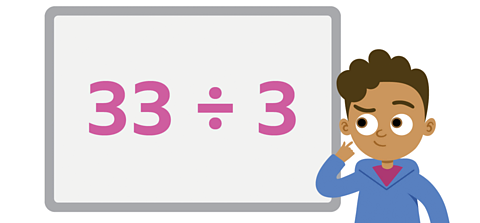
Division is the opposite of multiplication.
It's when a number is shared into another number.
Knowing your times tables can be very useful when multiplying or dividing.
Let’s take a look at some methods you can use to help you divide.
Activity: Divide a 2-digit number by a 1-digit number
Complete this interactive activity to understand how divide a two-digit number by a one-digit number, then put your knowledge to the test.
Methods for dividing
Division happens when a number is shared into another number. There are different methods that can help with dividing.
Let’s look at some different ways to solve this problem:
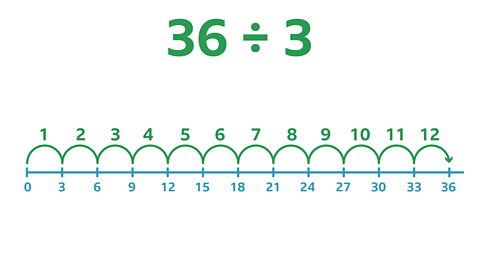
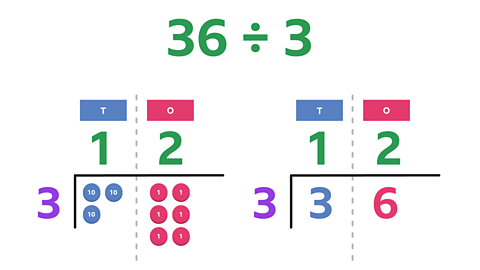
36 ÷ 3 = ?
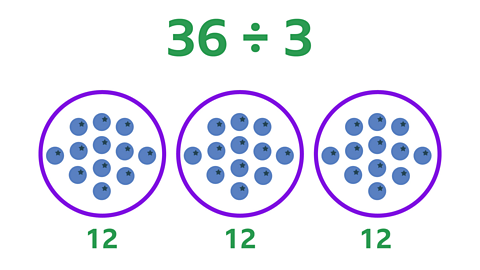
Image caption, Sharing
You can share things into equal groups. If 36 counters are shared out into 3 equal groups, there are 12 counters in each group.
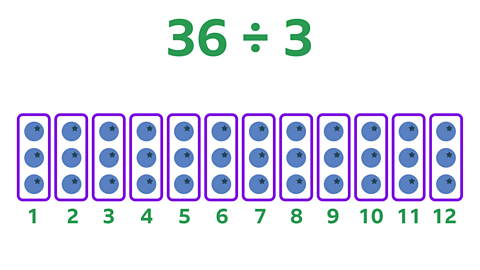
1 of 4
It doesn’t matter which method you choose, they all show that:
36 ÷ 3 = 12
Example 1
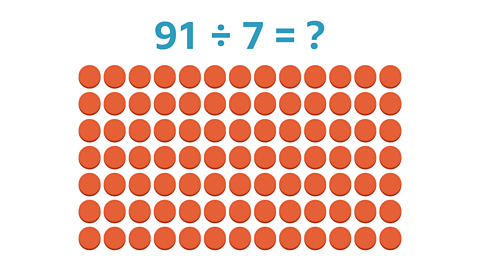
Can you solve this division problem using the array?
91 ÷ 7 = ?
✓ 13
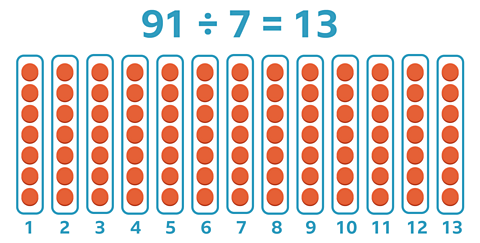
There are 7 counters in each column.
There are 13 columns altogether.
There are 13 groups of 7 in 91.
91 ÷ 7 = 13
Example 2
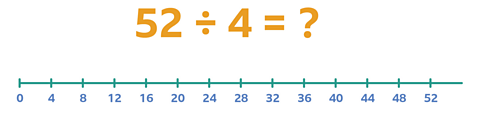
Can you solve this division problem using an empty number line?
52 ÷ 4 = ?
✓ 13
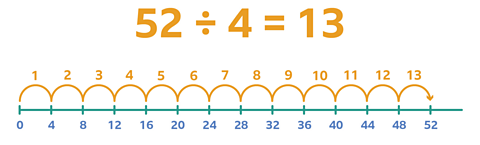
You can use a number line to count up in groups of 4.
You count on in jumps of 4 until you reach 52.
There are 13 jumps of 4 in 52.
52 ÷ 4 = 13
Example 3
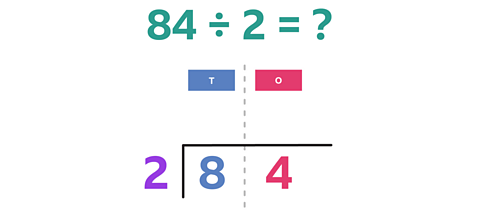
Can you solve this division problem using a written method?
84 ÷ 2 = 42
✓ 42
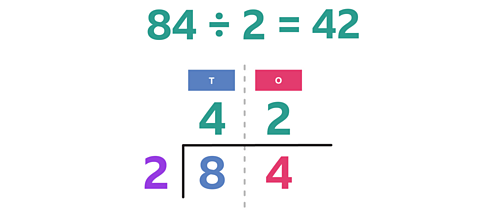
There are 4 groups of 2 in 8, so you write 4 above the line in the tens column.
There are 2 groups of 2 in 4, so you write 2 above the line in the ones column.
84 ÷ 2 = 42
Primary maths teaching resources
Visit BBC Bitesize for Teachers to see videos, activities and more resources to use in maths classes for KS1 and KS2.

More on Multiplying and dividing
Find out more by working through a topic
- count23 of 32
- count24 of 32
- count25 of 32
- count26 of 32