The evolution of fast food
Today, it is almost impossible to visit most places around the world without spotting some form of fast food. From “quick service” big brand restaurants to popular items sold on food stalls, supermarket meals and more, we're not supposed to eat them all the time, but we do have our favourites.
Over the past century, the modern fast food model has gone on to dominate food culture worldwide. In recent months, however, the UK has introduced a nationwide ban on food advertising, preventing certain adverts from appearing on television before 9pm and at any time online. Designed to tackle childhood obesity, the restrictions apply to foods and drinks high in fat, salt and sugar (HFSS), bringing long-established advertising practices to an end.
But what is fast food and how did it become so popular?
Here, BBC Bitesize takes a closer look at the origins of fast food and how it has evolved over time. We’ve also delved into the archives to look at what fast food chains looked like in the UK decades ago.
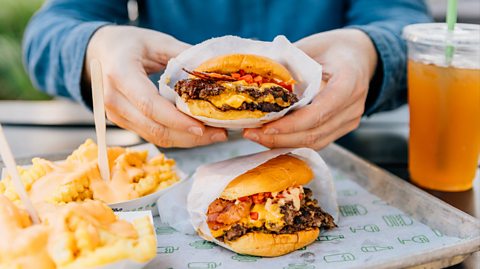
What is fast food?
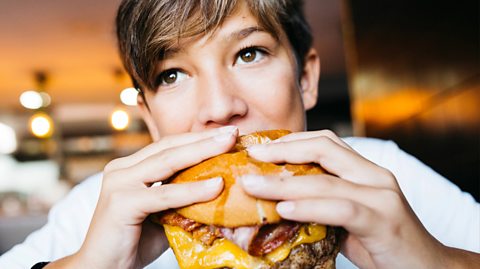
The commercial term fast food usually refers to mass-produced food prepared and sold quickly by the likes of ‘quick service’ restaurants, concession stands or shops. When you think of fast food, you typically picture hamburgers, French fries, pizza and hot dogs, and often associate it with brands like McDonald’s or KFC…
But the products, depending on who makes them or where they are bought, tend to feature easily prepared ingredients, processed foods, pre‑cooked foods or frozen foods. To prioritise speed and convenience, certain sites or businesses also offer takeaway options or drive-thru.
Many of us love to enjoy a fast food treat from time to time, but frequent consumption of fast food is generally bad for your health. Fast food options are typically high in calories, unhealthy fats, sugar and sodium and, if eaten often, can cause various health issues.
What were the first fast food restaurants like?
Modern fast food chains date back to the early 20th century, evolving and expanding as the decades followed. But the concept of a fast food restaurant or chain isn’t as recent a phenomenon.
Through time, there are many examples of early fast food offerings. But the concept or ancient equivalent of fast food can be traced back to Ancient Rome. According to Guinness World Records, the earliest examples of what is today considered to be fast food date back to the 1st and 2nd centuries CE.
These eateries were known as thermopolia, which translates as “a place where something hot is sold.” Before the days of big brands and modern drive-thrus, these street-front counters served hot and ready-to-eat meals to the public, many of whom lacked kitchens in their own homes
What is the oldest fast food chain?
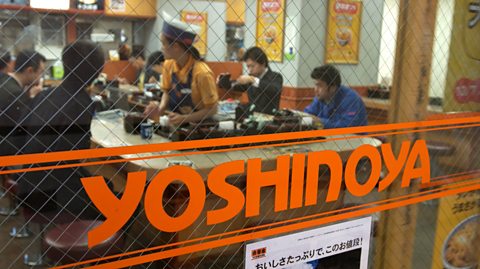
When it comes to the oldest fast food chains still operating in the world, this depends on what we are defining as a fast food chain. Founded in 1899 in Tokyo, Japan, Yoshinoya is widely recognised as the world's oldest fast food chain.
The business started from humble beginnings when Eikichi Matsuda opened the first restaurant in the Nihonbashi Fish Market, selling fast, affordable beef bowls to busy market workers and fishermen. Today, its motto is “tasty, cheap and fast” and they still serve their signature Gyūdon Beef Bowl in more than 2,000 Yoshinoya locations worldwide.
Most of their locations are in Asia, but since 1975, they have also had numerous locations in the United States. But for many, when you think of fast food you usually associate it with a burger-focused, quick counter service meal, like we see in American films.
When focussing on this type of fast food chain, American restaurant-chain White Castle is widely cited as the world’s first fast food hamburger chain. It was in 1921 that Billy Ingram launched the family-owned business, selling five-cent square burgers, dubbed Sliders, that were sold by the sack.
The first site was in Wichita, Kansas and over a century on, they still have hundreds of restaurants operating in the United States. According to the White Castle website, Time magazine declared their “iconic Original Slider” as the most influential burger of all time in 2014.
When did fast food become so popular?
Modern fast food is thought to have become more popular globally in the 1950s and 1960s. Many say its success was driven by the post-WWII economic boom.
At the time, families in America in particular bought new cars and embraced the convenience of driving to buy quick meals on demand. The success of modern fast food brands was also arguably down to consistency, affordability and above all, convenience.
Although there are numerous early concepts, it was in 1940 that McDonald's began, followed by KFC which was founded in 1952, Burger King in 1954, and Subway which was founded in 1965. As more franchisees and brands opened more sites, chains then began to expand globally, particularly during the 1970s and 1980s.
Transforming our food culture, today it’s impossible to visit a major city without spotting some form of fast food – and you can often buy food at any hour of the day. Some businesses have menu items that have been there from the beginning, but still market older and new concepts to new generations.
How have fast food chains changed in the UK?
While American fast food chains didn’t start to have a presence in the UK until the 1960s, there were a few chains inspired by the American model prior. But before their rapid expansion in the 70s and 80s, dining out in general was not something many families did, and was a rare treat for many families.
In the 1950s, restaurant chain Berni Inn introduced post-war Britain to everything from steak and chips to Black Forest gateau. Founded by brothers Aldo and Frank Berni, who were inspired by a chain of restaurants they had seen in America, Berni Inns arguably paved the way for today’s pub-restaurant chains and for many, it was the first place they experienced dining out.
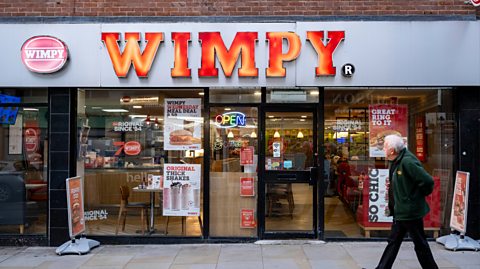
When it comes to fast food, many in the UK will know of burger chain Wimpy, which opened its first branch in London in 1954. It expanded in the 70s but today, there are only a few dozen left and our high streets are dominated by other big brands.
The first UK KFC branch opened in Preston, Lancashire in 1965. In the following decade, McDonald's opened its first UK restaurant in 1974, in Woolwich, London, followed by Burger King in 1976, whose first site was in London’s West End.
In the decades that have followed, so many sites belonging to these big brands, as well as new emerging franchises and long-standing independents, have opened. We’ve seen big change, from prices to portion sizes, ingredients, menu offerings, new concepts, decor and more.
New trends have come and gone, some food items were never loved to begin with, and some brands have become more inclusive, offering alternatives for vegetarians, vegans or those with a food allergy or food intolerance.
1981: Fast Food Burger Boom
Presenter Paul McDowell introduces the Newsround Extra segment.
He said: "Hello again and welcome to another Newsround Extra. Today we're going to look at the latest burger boom.
"It's just beginning and it's a battle for the money that you spend when you pop out for a meal. It's a multi-million pound gamble and whether it works or not depends very much on you.
"The once humble hamburger is the centre of it all. The Burger barons are about to spend over 40 million pounds this year on getting you and your families into what they call fast food centres.
"But for this massive investment to pay off, you've got to change the way you eat. It'll mean less home cooking and more trips out.
"And this is what you'll be buying whether you eat in the restaurant or take it away. Almost all the companies give out this kind of box with the hamburger inside. (Opens box and takes a closer look at burger).
"And of course… all the relishes inside the hamburger. The chips, well they're called French fries, and even they too come in special packets. And it'll all cost about a pound.
"Well, John's been finding out more about the British fast food revolution."
Reporter John Craven narrates over the news segment
He said: "This is Oxford Street in London, Britain's top place to go shopping. And amidst all the smart stores, the newest sort ofplace to eat.
"Fast food centres like this are just starting to spring up on high streets all over the country. Rival firms are spending millions battling for the best, most expensive sites, and younger customers are one of their main targets.
"You can make or break this revolution. In the burger boom, the gamble is that Britain will go for fast food in a big way, with its quick service, tasty meals, lack of fuss, and clean, smart surroundings. But does fast food live up to its name? I went along to a new style hamburger bar in Hammersmith, London."
Reporter John Craven is filmed during the news segment
In a fast food restaurant, a member of staff said: "Can I help you please sir?"
Mr Craven responds: "Can I have a Big Mac please? And some chips."
Staff: "Would you like large french fries?"
Mr Craven: " Small ones, please and a milkshake, I think. Strawberry."
Staff: "Is that to eat here or to take away?"
Mr Craven: "To eat here, please."
Staff: "Thankyou. £1.52, please."
Mr Craven: "£1.52, right, thank you very much."
To camera, Mr Craven said: "Right, let's put the clock on that and see just how fast fast food really is. Now, I've come to the McDonald's just around the corner from our studios in London, but I could have gone to more than 50 McDonald's in the London area, and it would have been exactly the same.
"The same service, the same surroundings, and exactly the same food, because that's the whole point of the fast food revolution. You know exactly what you're going to get. I've had Big Macs in Paris and New York as well, and they taste exactly the same.
(To member of staff collecting food) "Thank you very much. Well, that's 25 seconds it's taken. Thank you.
"They reckon that you shouldn't wait more than two minutes in the queue and one minute to actually get your order. So they've beaten a record today."
Reporter John Craven narrates over the news segment
He said: "Until now, firms like Wimpy's have had it all their own way in the mass sales of hamburgers and everything that goes with them. Now they're having to face the challenge of the new boys.
"Though old-style waitress service will still be around in some places and customers there will still be able to use knives and forks, Wimpy's are spending 10 million pounds on updating their image.
"Hardest hit in this revolution could be Britain's original fast food - fish and chips. The high cost of fish makes the cheapest of the burgers just about the same price.
"But most experts I've talked to think that whatever happens, there'll always be fish and chips. Meanwhile, at one of the very swishest fast food places, Peter Smale of Wimpy's told me of the battle ahead."
Peter Smale of Wimpy's is interviewed on camera
He said: "Well, I would think that by the mid-80s, every high street in Britain will have two or three stores like this sort of thing, fast counter service. It's going to be a real battle.
"It'll be those that spend the money on advertising, give good service and good products that actually win at the end."
Mr Craven asks: "And what about the cost of the hamburgers? Is that going to go up?"
Mr Smale responds: "If anything it iss going to go down, we're taking a supermarket approach, sort of stack it high, sell it cheap."
Originally broadcast on 8 May 1981, this BBC Archive video offers a glimpse into the early days of Britain's burger boom. The Newsround Extra segment shows Paul McDowell and reporter John Craven looking at the influx into Britain of American fast food restaurant chains like Burger King and McDonald's.
BBC Archive offers a unique collection of thousands of archive films, capturing life and events across the UK since the 1940s.
What is the biggest fast food chain?
There are numerous famous brands across the world which are, or are widely considered to be, fast food chains. When measuring which is the biggest, this can refer to how many sites they have, how much revenue they make, how many staff they employ and more.
Across the globe, depending on what data you look at, it is often big names like McDonald’s, Burger King, Subway and KFC that rank as the most popular fast food chains worldwide. In recent years, McDonald’s has often dominated lists as the highest-earning fast food chain in the UK.
Today, Mixue Ice Cream & Tea is widely thought to be the world's largest fast-food restaurant chain, boasting over 46,000 outlets. Founded in China in 1997, it specialises in ice cream and tea-based drinks and is considered to be a fast food chain due to its service model offering high volume and low-price items.
In the UK, Greggs is the biggest fast food chain by number of locations, with over 2,600 sites. The British bakery giant specialises in on-the-go baked goods and sandwiches and was founded in Newcastle in 1969.
Are there healthy fast food chains?
As mentioned, fast food has its benefits like being convenient and cost effective – but it is not healthy to have them regularly as they are typically high in calories and low in nutrients. The food industry has evolved so much in recent years that many businesses offer alternatives or even healthier options.
There are fast food chains around that are healthier and put emphasis on balanced meals and more fresh ingredients. It is up to the customers what food they choose to have in restaurants or fast food outlets.
However, the hospitality industry also has a responsibility when it comes to making healthier options available. Food served in any food outlet is only a part of a person’s diet and recommended guidelines can help customers make good choices when it comes to a balanced diet.
For years, government guidelines have been in place with recommendations for a healthy balanced diet. You can find out more the healthy guidelines here.