"If you've been wondering or worrying about AI skills, let’s not overlook what you already have!" That’s what tech expert, Christina Lovelock was keen to share with Bitesize Careers about how you can prepare for an increasingly AI-enabled world.
Christina has lots of experience in the tech sector, including 20 years working in public sector roles, and has authored a book all about routes into tech. She is seeing firsthand how jobs and workplaces are changing as a result of AI. We asked her to explore some key AI skills. Here’s what she shared…
What are AI skills?
When you hear the phrase ‘AI skills' you might not be confident what that means. Or perhaps it brings to mind new topics that you don't know much about yet. Things like:
- Machine learning
- Building agents
- Large language models.

It’s also easy to believe that if you're not using AI tools much, then you don’t have any AI skills – that’s not the case! In fact, you already have a range of really important skills which can help make interacting with AI successful, including:
- Curiosity
- Communication
- Understanding context
- Problem solving
- Creativity.
Let’s take a closer look at these skills.
Curiosity
AI works best when we ask good questions, explore possibilities, and consider “what if…?” and “why…?”. So, part of learning how to get the best from AI is about strengthening the natural curiosity we're all born with by building everyday habits.
Many people see curiosity as a personality trait, but it’s really a skill. And, like any skill, it can be improved through practice. Learning new things is easier if we are genuinely curious.
We can all decide to bring a little more curiosity into our day-to-day activities by doing things like noting down an unfamiliar word and looking it up, rather than just trying to figure out the meaning of the word from the sentence. Or, following a micro-rabbit hole – setting aside five minutes to explore something unexpected. Another good practice is to swap judgment for curiosity – instead of “that’s weird”, try reframing it to “I wonder why…?” and looking for an answer or range of possible answers.
Curiosity practices

There are also some specific curiosity practices for using AI tools. You could try:
- Alternative prompting: ask the same question three different ways (or to different tools) and compare results.
- Using curiosity to test AI limits: “What can you do with this?” “What can’t you do?”.
- Assumption checking: Consider what assumptions the AI is making and explore any sources that are being used.
Communication
Clear and effective communication is key for navigating our day-to-day lives. In an AI-enabled world, this is just as important. AI can only work with the information we give it, so our ability to explain our intentions, and articulate what we really mean directly shapes the quality of the output. Choosing the right tone or style, asking precise questions, and refining instructions are core skills that make AI useful, safe and reliable.
AI prompts
There are many different frameworks to help us write well-structured prompts for generative AI tools, but we can also use AI tools to guide us to communicate with AI more effectively. For example, you can use AI to become your prompt writing coach:

- Ask AI to provide feedback on your prompt before you send it: “Here’s my prompt. Analyse it and tell me what’s unclear, what context is missing, and how I can improve it.”
- Explore how different framings produce different outputs: ask “Rewrite this prompt in three ways: one highly structured, one creative, one concise and direct.”
- Get AI to design the prompt: use “My goal is X. Write the most effective prompt for achieving that goal.”
- Look for loopholes: stress-test the prompt by asking “Show me three ways my prompt could be misinterpreted and suggest ways to fix each one.”
These approaches help you to anticipate ambiguity, avoid assumptions and get AI supporting you in using the tools, rather than constant trial and error or guesswork.
Investing time and effort in improving your written and spoken communication skills can pay off for interacting with both AI and humans alike!
Understanding context
There is often a lot of focus on The process of explaining clearly to an AI what you want it to do, so it can give you the best possible answer. as a skill for effective AI use but, as we have seen, AI tools can actually help us write good prompts! What the generative AI tools can’t do is provide context.
Context engineering

Imagine you’re packing a suitcase for a holiday. You already know some relevant information, like where you're going and what the weather will be like. This is specific context for your holiday. You might also need to ask questions, like how long the holiday is and what activities you’ll be doing, to help you make the right packing decisions.
If you asked an AI tool, “What shall I pack for my holiday?” it wouldn’t have any of that context, so it would either give a generic list or ask questions to tailor its advice. That’s what context engineering is: giving the right information so the AI can produce the most helpful output.
With so much information available, it takes your skills to decide what is relevant and reliable.
Taking a moment to consider the context is incredibly valuable. Before acting or prompting we need to consider, what's the real goal here? What different perspectives exist on this issue? What are my constraints? This builds situational awareness which is key to understanding the context you're working in.
Problem solving
Problem solving is a skill we are using every minute of the day – it’s not just reserved for maths lessons or big decisions. It’s a constant, everyday human behaviour.
We work out when to set off to get somewhere on time, how to explain an idea to a friend, how to prioritise tasks or what gift someone might like. Most of this happens so quickly and naturally that we don’t even notice it. But these tiny, continuous acts of problem solving are exactly the skills that are useful when working with AI tools: defining what you need, spotting what’s missing, choosing between options, and deciding what to do next. Problem solving is the bridge between what you want and how you ask AI to do it.
Problem-solving practices

A way to practise problem solving is to reflect on a task before starting it. For example, before beginning a piece of homework or an activity like tidying your room, pause for 10 second to consider:
- What’s the goal?
- What are the steps?
- What might get in the way?
This builds the habit of structuring problems before picking a random start point.
Creativity
Sometimes people think technology and creativity are different skill sets. In fact, they are completely interlinked. Technology and AI do not replace human creativity; they rely on it. Every prompt starts with you imagining possibilities, making connections, and expressing something new. Creativity is what turns AI from a tool into a powerful collaborator: it helps you frame problems in interesting ways, consider different perspectives and explore alternative options.
Creative approaches

Creativity is about a way of thinking, not about having particular artistic talents. We can use AI to help generate and refine ideas quickly. AI can also allow us to explore different perspectives from our own by using role-based prompting – telling the AI tool to take a specific viewpoint and area of expertise such as “Explain this as a careers adviser.” or “Rewrite this like a sports coach.”
Different styles can affect how clear, impactful and engaging something is for its audience. Tapping into this, we can use AI to do things like “Turn this explanation into a metaphor.” or “Explain this concept using a cooking analogy.” and tweak until we find a version that lands best.
Preparing for the future of work
Workplaces and jobs are changing as a result of AI, just as they did as a result of desktop computers and the internet. New roles are needed and new skills are needed but some skills will always be valuable. It’s useful to consider the fundamental building blocks you already have which will enable you to navigate the changing expectations and possibilities, at school or college and at work.
You have loads of really relevant skills that will help you in future. Perhaps you can build some of these practices into your day-to-day life, to help you be AI-ready for learning and work.
Discover more from Bitesize Careers
AI and the future of work: The jobs you’re not hearing about
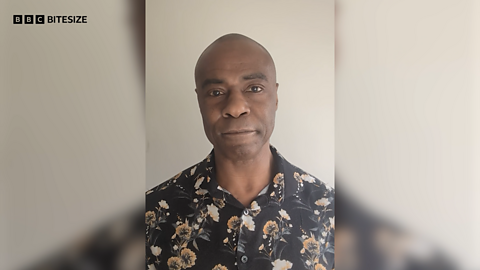
Careers expert Mark Anderson talks about some of the jobs that may develop in AI technology in the future.
The Bitesize Careers Podcast: What are the jobs of the future? video
Join Radio 1's Katie Thistleton and our career experts to find out how you can start shaping your future.

How to find work experience | Career coach advice
Career coach, Mark Anderson, gives advice on three steps for finding a great work experience placement.