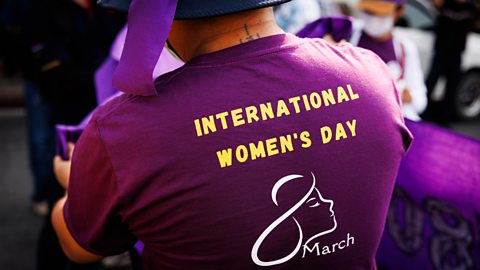
When is International Women's Day celebrated?
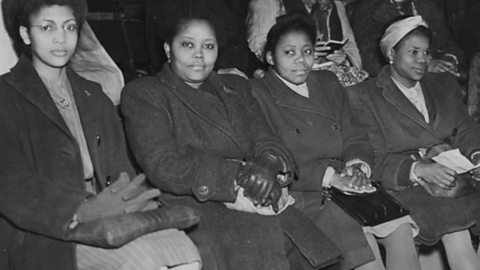
International Women's Day is held on the 8th March every year and has been taking place since the early 1900s. However, it hasn't always been on this date.
The earliest version of the day took place in 1908 when 15,000 women marched through the streets of New York City demanding more pay, better working hours and the right to vote. A year later, the Socialist Party of America declared the first National Women's Day on the 28th February. America's National Women's Day then took place on the last Sunday of February for a few more years after that.
The idea for an international women's day, to take place on the same day all across the world, was first suggested in 1910 by a woman called Clara Zetkin. She was a communist activist and advocate for women's rights. She brought it up at an International Conference for Working Women that was taking place in Copenhagen. There were 100 women there from 17 different countries, who all voted in favour of the day.
When did the first International Women's Day take place?
The first International Women's Day was celebrated the year after, in Austria, Denmark, Germany and Switzerland, on the 19th March.
The date of 8th March came about thanks to a wartime strike. On the 23rd February 1917, the last Sunday of the month, Russian women demanded 'bread and peace' in response to the death of Russian solders in World War One. Four days into the strike, the last emperor of Russia was forced to abdicate and the provisional government gave women the right to vote.
The date of the 23rd February was on the old Julian calendar in use in Russia at the time. The same day on the more widely used Gregorian Calendar was the 8th March.
The day was made official by the United Nations in 1975.
So that's why International Women's Day is now celebrated on 8th March every year.
Why is International Women's Day important?
International Women's Day has become an important day to highlight and celebrate women in all areas of life across the globe.
Although some things have improved for women over the years, there is still a lot of inequality for women around the world. For example, women's rights in Afghanistan have been severely hindered by the resurgence of the Taliban, a legal decision called Roe v. Wade that gave women in America the right to abortion has been scrapped, and there have been deaths in Iran after women have protested against having to wear a hijab.
These are just a few examples from recent years and work still needs to be done, so celebrating International Women's Day is still as important as ever. It aims to:
Celebrate the economic, political and societal achievements of women
Raise awareness of and educate people on gender equality
Call for positive changes that will help women and their rights to move forward
Speed up gender parity between men and women (gender parity means that the genders are equally represented and contribute equally in all dimensions of life, as per the European Institute for Gender Equality).
Raise money for female-focused charities
How is International Women's Day celebrated?
Events for International Women's Day take place in many countries. In some, the day is a national holiday, including in Russia where flower sales double around 8th March.
In China, the State Council advises that women get half a day off work to celebrate. In Italy, International Women's Day is known as la Festa Della Donna and people give each other mimosa blossoms.
The United States takes the day a step further with the whole of March being celebrated as Women's History Month. The President takes part in honouring the achievements of American women.
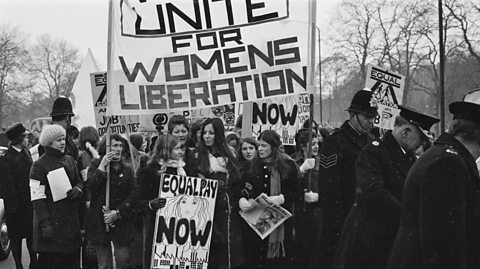
Alongside fun activities such as parties, festivals and gift giving, as a result of its history and what the day aims to achieve, International Women's Day remains a day for many to take a stand in demonstrations and protests about women's rights.
Is there an International Men's Day?
Yes, there is. It takes place on 19th November and its aims are different. They include promoting positive male role models, focusing on areas of men's health that are often ignored, and improving gender relations and equality.
Where can I learn more about women and International Women's Day?
Test your knowledge on some of the world's most incredible women in this International Women's Day quiz from Blue Peter.
Can you separate fact from fake when it comes to women's rights? Find out in this Other Side of the Story quiz.
Pharaohs, female emperors and fighting queens: learn about five formidable ruling women from history.
History is filled with women who took a stand in an attempt to redress the balance in gender inequality: read about seven women who stood up to be counted.