Film vs reality
When we watch a film that we know is based on a historic event, it's hard not to believe everything we see to be accurate. Regardless of the genre, there are so many films based on a real person or story from a specific point in time - but only a handful that completely stick to the facts.
It can be hard to fit every fact into an hour or two production and new concepts can also be added to a film to entertain the audience. But there are several films that have got, let's say, more 'creative' with history.
BBC Bitesize previously took a look at several 'based on true story' films that aren't actually accurate. But here, we focus on six famous blockbuster films and how they got history wrong.
Mary Queen of Scots
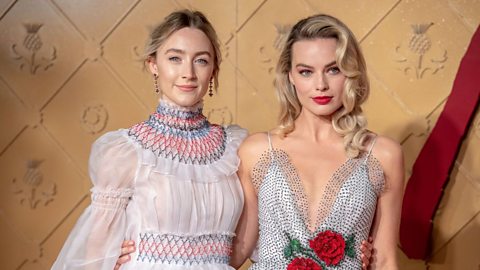
Released in 2018, Mary Queen of Scots is a historical drama surrounding two royal cousins- Mary Queen of Scots, played by Saoirse Ronan, and Queen Elizabeth I, played by Margot Robbie.
The film follows the tensions between England and Scotland during their reigns. But it also shows an emotional meeting, during which Mary pleads with Elizabeth to stop the fighting and unite as sisters to survive in a man's world.
However… the cousins never actually met face to face. Some historians say that if the queens had met, Elizabeth might have felt differently about sanctioning Mary’s tragic ending. So, that’s pretty significant then.
Another inaccuracy might surprise you. You may think that the Queen of Scotland would definitely have had a Scottish accent, right? Wrong. Mary grew up in France and therefore would almost certainly have had a French accent, unlike Mary in the film who sounds very Scottish indeed.
The Favourite

Another period film that came to our screens in 2018 is The Favourite, which won multiple awards in its year of release. The film stars Rachel Weisz, Emma Stone and Olivia Colman and follows the relationship between cousins Sarah Churchill, Duchess of Marlborough, and Abigail Hill, who vie for the attention of Queen Anne.
At the time, it was praised for its accurate portrayal of Queen Anne having (what would then have been) illicit relationships with women in her service, albeit the film over-exaggerated them.
But one crucial part never happened - Emma Stone’s character Abigail Hill didn’t attempt to murder her cousin Sarah, Duchess of Marlborough, played by Rachel Weisz.
It’s certainly possible that they had a strong dislike for one another, but in reality Abigail never put poison in Sarah's tea. Why let truth get in the way of a good plot twist though, eh?
Titanic
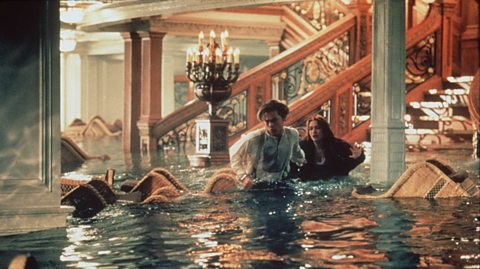
Launched in May 1911, The RMS Titanic remains one of the most famous passenger ships of all time. On its maiden voyage, there were 2200 people on board - 1300 passengers and 900 crew - but tragedy unfolded when the ship struck an iceberg in the North Atlantic Ocean and sank on 15 April, 1912.
In the decades that followed, numerous films and television shows have been made surrounding the Titanic. But perhaps the most famous is James Cameron's historic romance film, Titanic (1997), starring Kate Winslet and Leonardo DiCaprio.
But this multi Oscar-winning epic isn’t free from errors, either. In the film, Rose DeWitt Bukater’s mother looks up at the vessel and says: "So, this is the ship they say is unsinkable." But it’s unlikely she would have said this.
Historians have long disputed the claim that everyone thought The RMS Titanic was impossible to sink. It’s apparently been overstated by movie-makers to make it seem even more prophecy-like when it did eventually end up on the ocean floor.
4. Bohemian Rhapsody
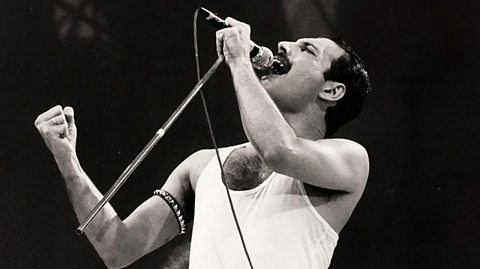
Bohemian Rhapsody was one of the most hotly anticipated films of 2018, and was very successful at both the UK and American box office. The musical biographical drama follows the life of the late Freddie Mercury, lead singer of legendary British rock band Queen.
The film takes its title from one of the band's most famous songs, Bohemian Rhapsody, and sees actor Rami Malek portray Mercury. However, rather than stick closely to the facts of Freddie Mercury’s life, it arguably took some ‘very, very frightening’ liberties.
Fat Bottomed Girls is one example. In the film, the song is performed on Queen’s first tour of America in 1974, but in reality it wasn’t released until October 1978, with Bicycle Race accompanying it.
Also, in the film the band break up just before Live Aid in 1985 - but this never really happened. They did however take a break in 1983, purely because they were all exhausted after touring for 10 years. Who can blame them?
Gladiator
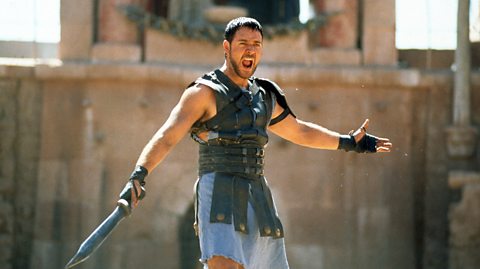
Released in 2000, Gladiator is an epic drama directed by Sir Ridley Scott, starring Russell Crowe. The story follows General Maximus Decimus Meridius, who becomes a gladiator is on the path of revenge after his family is murdered.
Interestingly, the team behind Gladiator specifically hired a few history consultants to ensure accuracy in the film, but they still managed to get some quite important elements wrong. Two significant deaths in the film deviated quite far from the truth.
Firstly, the Roman Emperor, Marcus Aurelius, is shown being murdered by his son, Commodus. In fact, he died of natural causes.
Speaking of Commodus, he’s portrayed as being killed in the gladiator arena by Maximus, but he was actually murdered in the bath by a professional wrestler called Narcissus. Arguably, that’s a much more dramatic demise.
Braveheart
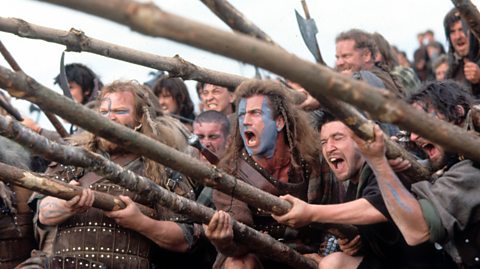
No article about historical inaccuracies in movies would be complete if it didn’t mention Braveheart. The 1995 film, starring Mel Gibson, follows 13th-century Scottish knight William Wallace, who in order to free his homeland led an uprising against King Edward I of England.
To start with, William Wallace, who led the Scottish rebellion against Edward I, was never awarded the title of ‘Braveheart.’ It was actually given to Robert the Bruce, who in real life became the King of Scots. Also, in reality Robert didn’t betray William. We could just leave it there.
There’s more though: William’s kilt wouldn’t have existed when he was alive. Braveheart is set in the 13th century, and kilts weren’t invented until the 16th century. Oops. Clansmen would have actually worn yellow tunics called ‘leine croich’ in battle, dyed with either saffron if they were wealthy, or urine if they weren’t.
This article was published in November 2018 and updated in June 2026