The many oddities of the human body
We have a lot to be grateful for when it comes to the human body.
A vessel for our most vital organs, the body allows us to experience the full range of human experience. From eating delicious food, to taking in beautiful vistas, to perhaps most importantly, scrolling endlessly on the internet.
For the most part, it's pretty obvious what each bit of the body is designed to do: eyes - sight, ears - sound, nose - smell. But what about a few of the less obvious functions?
Here at BBC Bitesize, we've put together this guide to give you the lowdown on all there is to know, from the head down to the toe.
1. Why do we have fingernails and toenails?
In a word, evolution!
Humans are primates, a category of mammal that also includes monkeys, apes and lemurs. It's believed that nails evolved from claws in the early primates, to allow for more precise use of fingers and toes.
For example, clinging onto branches, using tools, and collecting fruit. Fingernails also serve as an important protective layer for the fingertip, helping to prevent things like injury and infection.
When it comes to toenails, it's this protective quality that really matters. Toes are pretty easy to bang, as anyone who's ever stubbed a toe will attest! The ends of our toes are full of nerve-endings, and without that protective layer we could be far too prone to injury or infection.
Want to learn more? Check out this episode of What's Up Docs on BBC Sounds, which breaks down the science of nails and why they're so useful.

2. Why do people have a belly button?
The belly button, also known as the naval, doesn't necessarily have an important role to play by the time we're old enough to notice them. But once upon a time they were linked to a vital aspect of our survival.
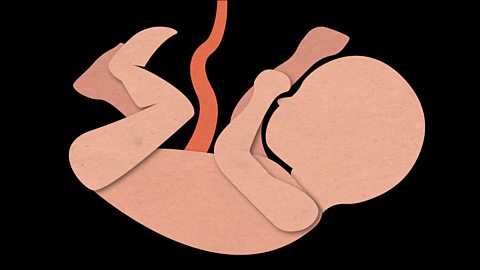
The belly button is one of the first things that develops in the uterus, outpacing both the brain and the lungs in the developmental rat race. Its function? The belly button connects directly to the umbilical cord, which keeps us alive in the womb, providing both oxygen and nutrients.
The belly button might not seem especially useful now, but it isn't completely without purpose. Some surgeries on the stomach use the belly button as an entry point, due to its ideal location relative to other vital organs.
Find out more about the wonder of the human belly button here.
3. Do dogs have belly buttons?
Yes, dogs do have a belly button. Belly buttons are less noticeable on dogs than they are on humans, as they're usually covered over by things like fur, or appear a little flatter than they do for us.
As a matter of fact, the vast majority of mammals have belly buttons. And better yet, new findings actually suggest that dinosaurs might have had belly buttons too!
There are some members of the mammal family that don't have belly buttons. This includes kangaroos and koala bears, whose umbilical cords fall off while they're still in their mother's pouch, preventing a scar from forming. And don't even get us started on the platypus. (No, seriously, don't.)
4. Why do we have eyebrows?
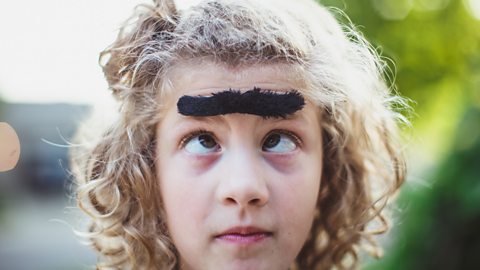
Primarily, our eyebrows are there to keep things like rain and sweat from getting into our eyes. Eyebrows generally curve outwards, away from the eye, redirecting unwanted moisture away from the eyes and down the side of the face, helping to keep our vision clear.
That's not all, though. Eyebrows also help to protect our eyes from dirt and excess light, as well as becoming a vital tool for communication. A study conducted at American University MIT found that a person's eyebrows had more influence on our ability to recognise them than their eyes did!
They're also useful when it comes to expression. Be it sassy or stern, there's nothing quite like a raised eyebrow.
5. Why do people have hair?
As with fingernails, and eyebrows, human hair has both an evolutionary purpose and a social purpose in a modern context.
We have hair on our heads as a way of regulating our body temperature and protecting us from radiation that shines from the sun.
Therefore, hair helps to keep us warm in cool temperatures, and can help to cool us down in warm climates, maintaining a healthy temperature for our brains to function.
But, if hair is so important to us, then why don't we have fur?
The dominant belief among scientists is that early humans lost their fur due to evolution. These primates lived in extremely hot, sunny environments, and losing fur allowed them to cool their bodies more easily.
On top of its survival purpose, hair has also become a tool for self-expression and building communities. Punks, for example, often have very distinct hairstyles, like mohawks, which help them to identify with their culture.
Where can I learn more about the human body?
If you want to better understand the science of the human body, take a look at our biology resources for Key Stage 3 students; test yourself with our GCSE biology quizzes; or watch our classroom videos which delve inside the human body.
For more hair facts, read about afro hair: myths, truths and why it matters. If you're studying Functional Skills English, or just interested in the topic, check out our hair and beauty videos and quizzes.
Still thinking about dogs having belly buttons? We have plenty more weird animal facts and questions like, can pigs look up? And: can dolphins talk? Or even: do penguins have knees?
We've talked a lot about the human body but what about the human mind? Read this article if you've ever wondered why we dream.