|
CATEGORIES | TV | RADIO | COMMUNICATE | WHERE I LIVE | INDEX |  |
SEARCH | |
|
|
|
|
|
|
|
|
|
|
|
|
|
|
|
|
|
|
|
||||||||||||||||||||||||||||
|
 |
|
|
|
|
|
|
||||||||||||||||||||||||||||||||||||||||||||||||||||||||||||||||||||||||||||||||||||||||||||||||||||||||||||||||||||||||||||||||||||||||||||||||||||||||||||||||||||||||||||||||||||||||||||||||||||||||||||||
|
|
|
You are in: World: Africa | ||||||||||||||||||||||||||||||||||||||||||||||||||||||||||||||||||||||||||||||||||||||||||||||||||||||||||||||||||||||||||||||||||||||||||||||||||||||||||||||||||||||||||||||||||||||||||||||||||||||||||||||||
|
|
|
Saturday, 16 November, 2002, 15:21 GMT
Zimbabwe freezes prices
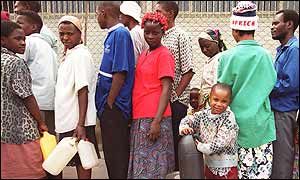
Zimbabweans have been facing fuel shortages since 1999
The Zimbabwean Government has announced sweeping price freezes on a wide range of goods in a move to tackle the country's deepening economic crisis.
The freeze applies to products such as food, fuel, medicines, electrical appliances, agricultural machinery, fertilisers and school textbooks, according to the state-owned Herald newspaper. Inflation in Zimbabwe is running at a record level of 135% and nearly half the country's 12 million inhabitants are facing starvation. In his budget speech on Thursday, Finance Minister Herbert Murerwa said price controls imposed earlier on some staple goods were not working. Business leaders say the measures have led to increased shortages and more black market trading. Currency crackdown According to The Herald, the latest price freeze has been imposed to stop manufacturers evading price controls "by re-branding and reducing the size of some products to those not controlled".
It is not clear how the controls will be enforced. Price controls on staple food products were introduced in October last year, but Zimbabwe still faces critical shortages of cornmeal, sugar, milk and cooking oil, among other goods. Earlier this week, the government announced plans to close every bureau de change in the country and introduce tighter currency controls in an effort to curtail the black-market currency business. The announcement formed part of this year's budget statement, during which the finance minister admitted that the country's economy would contract by 11.9% this year, after shrinking by 7.3% in 2001. Many economists blame corruption, mismanagement and the near-complete disruption of commercial farming by government-approved seizures of land - as well as the drought - for Zimbabwe's economic crisis.
|
|
See also:

14 Nov 02 | Business
15 Oct 02 | Africa
08 Nov 02 | Business
18 Sep 02 | Business
26 Jul 02 | Business
11 Jul 02 | Africa
Internet links:
The BBC is not responsible for the content of external internet sites Top Africa stories now:
Links to more Africa stories are at the foot of the page.
|
||||||||||||||||||||||||||||||||||||||||||||||||||||||||||||||||||||||||||||||||||||||||||||||||||||||||||||||||||||||||||||||||||||||||||||||||||||||||||||||||||||||||||||||||||||||||||||||||||||||||||||||
|
|
|
 E-mail this story to a friend E-mail this story to a friend |
|
|
|
Links to more Africa stories |
|
|
|
||
 |
||||
 |
|
|
||
|
----------------------------------------------------------------------------------
To BBC Sport>> | To BBC Weather>> | To BBC World Service>> ---------------------------------------------------------------------------------- © MMIII | News Sources | Privacy 
|