
 |
CATEGORIES | TV | RADIO | COMMUNICATE | WHERE I LIVE | INDEX |  |
SEARCH | |
|
|
|
|
|
|
|
|
|
|
|
|
|
|
|
|
|
|
|
||||||||||||||||||||||||||||
|
 |
|
|
|
|
|
|
||||||||||||||||||||||||||||||||||||||||||||||||||||||||||||||||||||||||||||||||||||||||||||||||||||||||||||||||||||||||||||||||||||||||
|
|
|
You are in: Politics | ||||||||||||||||||||||||||||||||||||||||||||||||||||||||||||||||||||||||||||||||||||||||||||||||||||||||||||||||||||||||||||||||||||||||||
|
|
|
Monday, 15 July, 2002, 10:00 GMT 11:00 UK
Transport policy will 'clog up roads'
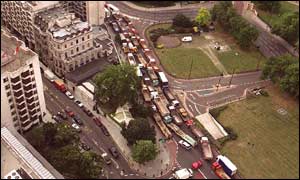
The academics fear a grid-locked future
The government's transport policy will increase road congestion, 28 leading transport academics have said in an open letter to Transport Secretary Alistair Darling.
They are calling on Mr Darling to take radical action to make motorists leave their cars at home. The academics say they "share society's widespread dissatisfaction" with the transport network and want more road space for buses, bikes and pedestrians. The letter comes on the day plans to charge motorists £5 a day to drive into central London are to be challenged in the High Court.
One of its signatories, Phil Goodwin, of University College London, told The Times newspaper that Stephen Byers' resignation had created "a window of opportunity to re-think the 10-year plan". "A long-term view covering 10, 20 or 30 years is needed." The £180bn 10-year plan promises a 6% drop in congestion and a 17% rise in traffic. But the government's policy of building 100 bypasses and widening 360 miles (579.6 kilometres) of main roads will increase both, according to the experts. "There will have to be active policy intervention to manage the demand for road space," the letter says. And if motorists are charged by-the-mile road tolls, far fewer new bypasses and main roads will be needed, according to the professors. They are also calling for a target of a minimum 10% rise in the number of people travelling by bus. And the letter points out that while motoring costs are set to fall in real terms, public transport fares are more likely to rise.
|
|
See also:

12 Jul 02 | Business
15 Jul 02 | England
26 May 02 | Politics
Internet links:
The BBC is not responsible for the content of external internet sites |
||||||||||||||||||||||||||||||||||||||||||||||||||||||||||||||||||||||||||||||||||||||||||||||||||||||||||||||||||||||||||||||||||||||||
|
|
|
 E-mail this story to a friend E-mail this story to a friend |
|
|
|
|
|
|
|
||
 |
||||
 |
|
|
||
|
----------------------------------------------------------------------------------
To BBC Sport>> | To BBC Weather>> | To BBC World Service>> ---------------------------------------------------------------------------------- © MMIII | News Sources | Privacy 
|





