
 |
CATEGORIES | TV | RADIO | COMMUNICATE | WHERE I LIVE | INDEX |  |
SEARCH | |
|
|
|
|
|
|
|
|
|
|
|
|
|
|
|
|
|
|
|
||||||||||||||||||||||||||||
|
 |
|
|
|
|
|
|
||||||||||||||||||||||||||||||||||||||||||||||||||||||||||||||||||||||||||||||||||||||||||||||||||||||||||||||||||||||||||||||||||||||||||||
|
|
|
You are in: Health | ||||||||||||||||||||||||||||||||||||||||||||||||||||||||||||||||||||||||||||||||||||||||||||||||||||||||||||||||||||||||||||||||||||||||||||||
|
|
|
Wednesday, 17 July, 2002, 02:11 GMT 03:11 UK
Needs of terminally ill 'ignored'
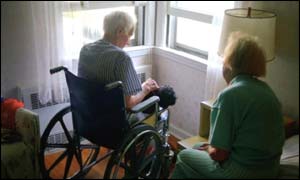
The report backs better help for the terminally-ill
The NHS fails to provide adequate emotional or practical support to terminally-ill patients, a leading think tank has suggested.
The King's Fund called for better help for people who are dying. In a discussion paper, published on Wednesday, it calls for primary care trusts to play a greater role in helping these people.
It adds that PCTs, social services, and voluntary and community groups should work together to boost the support available to people who are dying. Emotional support Speaking at the launch of the paper, King's Fund chief executive Rabbi Julia Neuberger said: "Dying people are not afforded nearly enough emotional, practical or spiritual support by the NHS." She said psychosocial support, encompassing emotional and practical help, was patchy. "People with terminal illnesses need more than good medication in their final months and weeks of life. "They very often want to get help in coming to terms with their death, in choosing where they die, in making funeral arrangements and in day-to-day tasks such as cleaning and shopping. "Yet psychosocial support of this type is patchy, especially for those dying of illnesses other than cancer." Rabbi Neuberger said PCTs were in a strong position to improve the plight of terminally-ill people. "As part of their new responsibility for the full range of health services in their areas, primary care trusts should look to fill the gaps in psychosocial support." "By learning from some of the good practice illustrated in our discussion paper, PCTs can go a long way towards giving dying people back some control over what happens in their lives and towards making their end as peaceful and as in accord with their own wishes as is humanly possible." Lack of funding The NHS Alliance, which represents primary care organisations, said a lack of funding prevented many PCTs from providing top level care to terminally ill patients.
"We know that primary care, general practice and community services are not well funded and that one of the groups that often miss out on adequate humane care are people with terminal illnesses." But the Department of Health said the UK is a world leader in palliative care. A spokeswoman added: "In March 2002, the government announced £70m of New Opportunities Fund money to fund flexible and innovative palliative care services for both adults and children with cancer and other life-threatening illnesses. "This includes care and support for people in their own homes, care and respite services provided by hospices and bereavement services for families." Liberal Democrat health spokesman Dr Evan Harris called on the government to do more to help terminally-ill people. "The government does not consider palliative care a core service of the NHS," he said. "The way we treat dying patients is a litmus test of whether we provide a caring health service. "Quality of care cannot be measured by simplistic targets or outcomes, and therefore palliative care will always lose out in an NHS which is target-driven, not patient-centred."
|
|
See also:

19 Mar 02 | Health
17 Jun 02 | Health
24 May 01 | Health
Internet links:
The BBC is not responsible for the content of external internet sites Top Health stories now:
Links to more Health stories are at the foot of the page.
|
||||||||||||||||||||||||||||||||||||||||||||||||||||||||||||||||||||||||||||||||||||||||||||||||||||||||||||||||||||||||||||||||||||||||||||
|
|
|
 E-mail this story to a friend E-mail this story to a friend |
|
|
|
Links to more Health stories |
|
|
|
||
 |
||||
 |
|
|
||
|
----------------------------------------------------------------------------------
To BBC Sport>> | To BBC Weather>> | To BBC World Service>> ---------------------------------------------------------------------------------- © MMIII | News Sources | Privacy 
|





