|
CATEGORIES | TV | RADIO | COMMUNICATE | WHERE I LIVE | INDEX |  |
SEARCH | |
|
|
|
|
|
|
|
|
|
|
|
|
|
|
|
|
|
|
|
||||||||||||||||||||||||||||
|
 |
|
|
|
|
|
|
|||||||||||||||||||||||||||||||||||||||||||||||||||||||||||||||||||||||||||||||||||||||||||||||||||||||||||||||||||||||||||||||||||||||||||||||||||
|
|
|
You are in: Entertainment: Arts | |||||||||||||||||||||||||||||||||||||||||||||||||||||||||||||||||||||||||||||||||||||||||||||||||||||||||||||||||||||||||||||||||||||||||||||||||||||
|
|
|
Wednesday, 14 August, 2002, 14:37 GMT 15:37 UK
Ancient treasures go on display
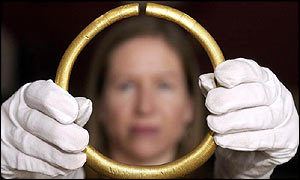
Gold Bronze Age torcs were found in Milton Keynes
Hoards of ancient jewellery found by amateur treasure-hunters with metal detectors are being unveiled by the British Museum, where many of them will be put on display.
The finds, some of which are more than 3,000 years old, were dug up in fields across the UK by enthusiasts before being offered for sale to museums.
The display is intended to show that a change to the law has allowed more treasures to be saved for the nation and put on public show. It brings together the most important finds in the UK in the year 2000, including a collection of gold jewellery discovered in a farmer's field near Winchester, Hampshire, which is worth £350,000. It was hailed as one of the most significant Iron Age discoveries of the last 50 years. Two gold Bronze Age gold torcs, or necklaces, and three gold bracelets that were found near Milton Keynes and are worth £290,000 are also on show. Profit An ancient burial site near Shillington, Bedfordshire, yielded an Iron Age silver brooch and bronze mirror with Celtic designs, worth £35,000. A change in the law in 1996 means treasure-hunters are now more likely to report finds, and therefore give museums the chance to purchase them, the government says. Before the change, it was difficult for those who made the discovery to make money out of it through official avenues because finds of gold and silver more than 300 years old are "Treasure Trove" and ultimately belong to the Crown. But the revision meant that if a discovery was reported, it would be offered for sale to museums with the proceeds usually split between the finder and the owner of the land on which the treasure was found. Benefits "The Treasure Act has clearly been a success," Arts Minister Tessa Blackstone said. "It has led to more finds being offered to museums, which benefits the public, and has increased the knowledge of artefacts and where they can be found around the country." Ms Blackstone was launching the Department for Culture, Media and Sport's annual Treasure Report, which said 221 finds were reported in 2000, compared with an average of 24 per year before the law was changed. Further changes to encompass prehistoric base-metal objects should be in place by January 2003, she said. |
|
See also:

07 Aug 02 | Wales
01 Aug 02 | England
05 Apr 02 | England
24 Jan 01 | UK
06 Feb 02 | England
16 Aug 00 | UK
10 Nov 99 | UK
Internet links:
The BBC is not responsible for the content of external internet sites Top Arts stories now:
Links to more Arts stories are at the foot of the page.
|
|||||||||||||||||||||||||||||||||||||||||||||||||||||||||||||||||||||||||||||||||||||||||||||||||||||||||||||||||||||||||||||||||||||||||||||||||||
|
|
|
 E-mail this story to a friend E-mail this story to a friend |
|
|
|
Links to more Arts stories |
|
|
|
||
 |
||||
 |
|
|
||
|
----------------------------------------------------------------------------------
To BBC Sport>> | To BBC Weather>> | To BBC World Service>> ---------------------------------------------------------------------------------- © MMIII | News Sources | Privacy 
|