
 |
CATEGORIES | TV | RADIO | COMMUNICATE | WHERE I LIVE | INDEX |  |
SEARCH | |
|
|
|
|
|
|
|
|
|
|
|
|
|
|
|
|
|
|
|
||||||||||||||||||||||||||||
|
 |
|
|
|
|
|
|
|||||||||||||||||||||||||||||||||||||||||||||||||||||||||||||||||||||||||||||||||||||||||||||||||||||||||||||||||||||||||||||||||||||||||||||||||||||||||||||||||||||||
|
|
|
You are in: Business | |||||||||||||||||||||||||||||||||||||||||||||||||||||||||||||||||||||||||||||||||||||||||||||||||||||||||||||||||||||||||||||||||||||||||||||||||||||||||||||||||||||||||
|
|
|
Wednesday, 4 December, 2002, 17:24 GMT
Iraqis sketch out post-war needs
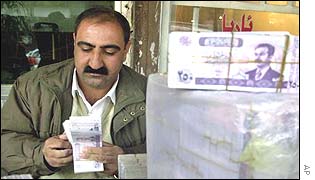
These banknotes would have to be changed
Iraq will need a new currency, freedom from debts and continuing humanitarian aid if its economy is to recover after any change in regime, a group of opposition members and exiles has said.
About 30 Iraqis opposed to Iraqi president Saddam Hussein have just finished a meeting to discuss the economic aspects of reconstruction after a US-led war against the country. The meeting, which aims to provide ideas for a future Iraqi government, was held in Washington under the auspices of the US State Department, which has run more than 12 seminars on various aspects of the country's future. Although the Iraqis stressed that they represented only themselves, they are largely affiliated to the Iraqi National Congress, a US-based coalition of opposition groups. One step at a time The Iraqis see post-war reconstruction moving in stages. In the first six months, the authorities should concentrate on distributing food, rebuilding hospitals and maintaining order. Then, the focus would be on raising the level of services, especially telecoms, of which Iraqi provision is woefully weak. The group's financial adviser, Rubar Sandi, has also called for sweeping reforms to Iraq's banking system and for a new currency, as well as privatisation to lure in foreign investors. "Our only concern is the welfare and the security of the people," Mr Sandi said. Brain storming The group's other ideas include continuing the United Nations' oil-for-food programme for up to one year, with the aim of ensuring that oil revenues go to humanitarian projects. A post-Saddam Iraq would also need a temporary freeze of foreign debt payments and a renegotiation of the country's foreign military debt. The group's ideas are, however, a long way from becoming reality. They are contingent on a swift and relatively orderly change of regime in Iraq, the acquiescence of any later government, and the agreement of the US and other sources of finance.
|
|
See also:

04 Dec 02 | Middle East
04 Dec 02 | Middle East
03 Dec 02 | World
03 Dec 02 | Europe
03 Dec 02 | Politics
03 Dec 02 | Middle East
Internet links:
The BBC is not responsible for the content of external internet sites Top Business stories now:
Links to more Business stories are at the foot of the page.
|
|||||||||||||||||||||||||||||||||||||||||||||||||||||||||||||||||||||||||||||||||||||||||||||||||||||||||||||||||||||||||||||||||||||||||||||||||||||||||||||||||||||||
|
|
|
 E-mail this story to a friend E-mail this story to a friend |
|
|
|
Links to more Business stories |
|
|
|
||
 |
||||
 |
|
|
||
|
----------------------------------------------------------------------------------
To BBC Sport>> | To BBC Weather>> | To BBC World Service>> ---------------------------------------------------------------------------------- © MMIII | News Sources | Privacy 
|






