
 |
CATEGORIES | TV | RADIO | COMMUNICATE | WHERE I LIVE | INDEX |  |
SEARCH | |
|
|
|
|
|
|
|
|
|
|
|
|
|
|
|
|
|
|
|
||||||||||||||||||||||||||||
|
 |
|
|
|
|
|
|
|||||||||||||||||||||||||||||||||||||||||||||||||||||||||||||||||||||||||||||||||||||||||||||||||||||||||||||||||||||||||||||||||||||||||||||||||||||||||||
|
|
|
You are in: Business | |||||||||||||||||||||||||||||||||||||||||||||||||||||||||||||||||||||||||||||||||||||||||||||||||||||||||||||||||||||||||||||||||||||||||||||||||||||||||||||
|
|
|
Wednesday, 9 October, 2002, 16:43 GMT 17:43 UK
US academics win Nobel economics prize
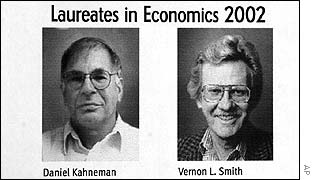
Winners Daniel Kahneman and Vernon L. Smith
One of the most prestigious prizes in economics has been awarded to two Americans, Vernon Smith of George Mason University in Virginia, and Daniel Kahneman of Princeton, who also holds Israeli citizenship. The Bank of Sweden Prize in Economic Sciences in Memory of Alfred Nobel, is awarded annually by the Royal Swedish Academy of Sciences. The academy said this year's prize has been awarded to the pair for their work in two areas that are converging - psychological and experimental aspects of the subject. The two men share a prize worth about $1m (£645,000). Bread and butter When it comes to testing economic theories, researchers have usually had to rely on statistics from the real world. Laboratory experiments, the bread and butter for many working in the natural sciences, have generally been assumed to be of little use to economists. Professor Vernon Smith, however, has been doing experimental economics since the early 1960s. In many of his experiments he has used volunteers and assigned them roles as buyers or sellers. Influential In what is probably Mr Smiths most influential work, he used the technique to examine how the design of auctions can affect the final price agreed between buyer and seller. His work is particularly relevant to organising privatisation and energy markets where auctions are often used. Professor Daniel Kahneman, who is actually a psychologist, has also used experimental techniques to explore an assumption underlying a great deal of economic theory - that of rational human beings pursuing some goal, such maximising company profits or personal material well being. His work showed that people are incapable of fully analysing complex situations and instead rely on rules of thumb, some of which are inconsistent with basic principles of probability theory.
|
|
See also:

10 Oct 01 | Business
11 Oct 00 | Business
14 Oct 99 | The Economy
10 Dec 98 | South Asia
Top Business stories now:
Links to more Business stories are at the foot of the page.
|
|||||||||||||||||||||||||||||||||||||||||||||||||||||||||||||||||||||||||||||||||||||||||||||||||||||||||||||||||||||||||||||||||||||||||||||||||||||||||||
|
|
|
 E-mail this story to a friend E-mail this story to a friend |
|
|
|
Links to more Business stories |
|
|
|
||
 |
||||
 |
|
|
||
|
----------------------------------------------------------------------------------
To BBC Sport>> | To BBC Weather>> | To BBC World Service>> ---------------------------------------------------------------------------------- © MMIII | News Sources | Privacy 
|





