|
||
 |
||
 |
||
 |
|
|
|
|
|||||||||||||||||||||||||||||||||||||||||||||||||||||||||||||||||||||||||||||||||||||||||||||||||||||||||||||||||||||||||||||||||||||||||||||||||||||||||||||||||||||||||||||||||||||||||||
|
|
African resistence
On location "I'm standing in front of the inner wall of the Gwolu protective wall, which protected the great Gwolu from slave raiders and encroachments into Gwolu city in ancient times. We have two walls and this is the inner wall. In ancient times when slavery was rampant, our great great ancestor King Tanja Musa built the wall to ward away slave raiders and slave traders from coming into Gwolu to enslave our people. The reason we have the inner and outer wall is that between the two walls we had ponds and farms, so that the inhabitants would be protected from being kidnapped by slave raiders. First, there was only the inner wall. Then they realised that people who went to farm, find firewood and fetch water were kidnapped by slave raiders. The king found it necessary to construct a second wall and that is why it is a two-walled city. And I know that in the whole of Ghana there are only two such walls."
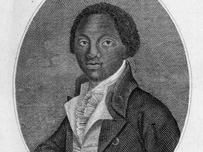
Critics in Africa Afonso I, King of the Congo similarly saw the slave trade rapidly grow out of control to the detriment of his authority and the wealth of his kingdom. "There are many traders in all parts of the country. They bring ruin?Every day people are kidnapped and enslaved, even members of the King's family." - Excerpt from letter from Afonso I, King of the Congo to King of Portugal Joao III, 18th October 1526. Quoted by Hugh Thomas' The Slave Trade. The Muslim leader and reformer Nasr al-Din denounced slavery to the people of Senegal in the 1670's and banned the sale of slaves to Christians there, undermining the French trade in slaves. Even some of the captains in charge of slave ships knew it was wrong. "I can't think there is any intrinsic value in one colour more than another, that white is better than black, only we think it so, because we are so, and are prone to judge favourably in our own case." - Captain Thomas Phillips, in his account of his life published in 1694. In 1851, some 17 years after slave owning was declared illegal by the British, locally owned slaves in Calabar (now Nigeria), rebelled against the practice of being killed and buried when a king or chief died. The occasion for the revolt was the illness of King Archibong I of Duke Town. Fearing his imminent death, the slaves of Duke Town plantations got together and took an oath never to allow themselves funeral sacrifices to happen again, and then went on the rampage. King Eyo Honesty II of Creek Town (himself the owner of thousands of slaves) then forbade any more killing and burying of slaves when leaders died. Abolitionists of African descent "...kings are the minister of God, to do justice, and not to bear the sword in vain, but revenge wrath upon them that do evil. But if they do not in such a case as this, the cruel oppressions of thousands, and the blood of the murdered Africans who are slain by the sword of cruel avarice, must rest upon their own guilty heads..." Olaudah Equiano (also known as Gustavus Vassa) offers a vivid and detailed account of his life from early childhood in what is now eastern Nigeria through to enslavement. The Life of Olaudah Equiano, published in 1789, was a bestseller. "As I was the youngest of the sons, I became, of course, the greatest favourite with my mother, and was always with her; and she used to take particular pains to form my mind. I was trained up from my earliest years in the art of war; my daily exercise was shooting and throwing javelins; and my mother adorned me with emblems, after the manner of our greatest warriors. In this way I grew up till I was turned the age of eleven, when an end was put to my happiness..." A quarter of a century later the writer and journalist and former slave Frederick Douglass published his Narrative of The Life of Frederick Douglass in 1845. "The whisper that my master was my father, may or may not be true; and, true or false, it is of but little consequence to my purpose whilst the fact remains, in all its glaring odiousness, that slaveholders have ordained, and by law established, that the children of slave women shall in all cases follow the condition of their mothers..." Douglass travelled all of Europe campaigning for abolition. Solidarity with Africa Abolition becomes law |
|
||||||||||||||||||||||||||||||||||||||||||||||||||||||||||||||||||||||||||||||||||||||||||||||||||||||||||||||||||||||||||||||||||||||||||||||||||||||||||||||||||||||||||||||||||||||||||||
| |||
|
|
|
|
| |||
 |
^^ Back to top | |
|