From Xi’an into Shaanxi Province
The top four tourist routes
Whether you want to take a step back into China’s past or roam the rolling rural landscapes of Shaanxi Province, there’s a path for every passion. Discover yours on one of these special tourist treks.
Once you’ve witnessed the grandeur of Xi’an’s historical centre, you’ll be eager to seek out the treasures that lie waiting elsewhere in Shaanxi Province.
Get ready to unearth the region’s hidden beauty for yourself and follow these routes along the four compass points, mapping out the gems buried beyond the city wall.
The East Route
Step into ancient Chinese history
Just a bus ride from Xi’an town centre you’ll find Banpo Museum, which displays archaeological remains and replicas of housing from the Neolithic period, some 6,000 years ago.
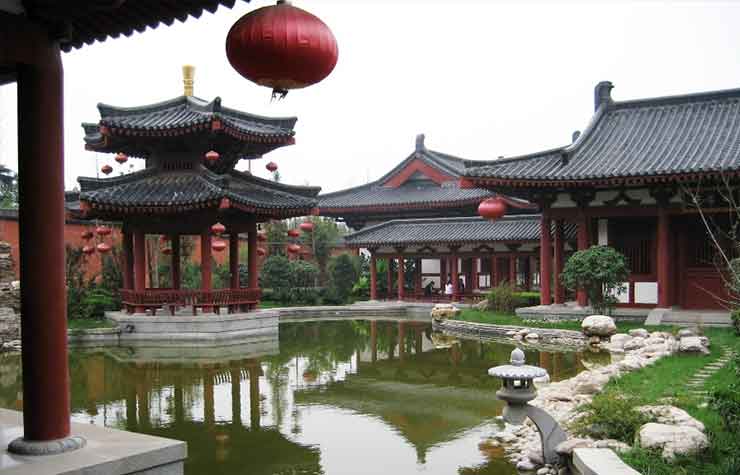
From here you can catch another bus to the huge museum that houses the Army of Terracotta Warriors and Horses, the figures that once stood guard over the tomb of Qin Shi Huang, First Emperor of China.
This incredible collection of more than 8,000 terracotta soldiers, horses and chariots dates back to the 3rd Century BCE and was first uncovered in 1974 when local farmers discovered pottery near the site. It remains the largest archeological find of its kind in China, and is a must-see for any visitor.
Also set at the northern foot of Mount Li is Huaqing Palace and its famous Hot Springs. These man-made pools were built in 723 CE by Emperor Xuanzong of the Tang Dynasty using locally-occurring geothermal heating.
Said to be the scene of the emperor’s romance with consort Yang Guifei, and the site of the 1936 kidnapping of Chiang Kai-shek, the surrounding gardens, with their grand sculptures and spectacular views of the mountain, are the perfect place to unwind and reflect on China’s past.
The West Route
Majestic monuments and spiritual wonders
Starting with a series of buildings devoted to China’s ancient historical figures, the ‘Five Mausoleums’ of the Western Han Dynasty give an insight into the lives and legacies of China’s regal past. One highlight is the Maoling Mausoleum, the tomb of Emperor Wu of Han. Known as ‘the Chinese pyramid’, this 46.5m-high mound of earth took 53 years to build – at great public expense – before Wu’s death in 86 BCE.
At Qianling Mausoleum you can admire the stone statues of horses with wings, lions, ostriches, officials, foreign envoys and the octagonal pillars that line Spirit Way to ward off evil spirits.
Travel a little further and you’ll also witness the impressive mountain backdrop that complements the splendour of the Zhaoling Mausoleum.
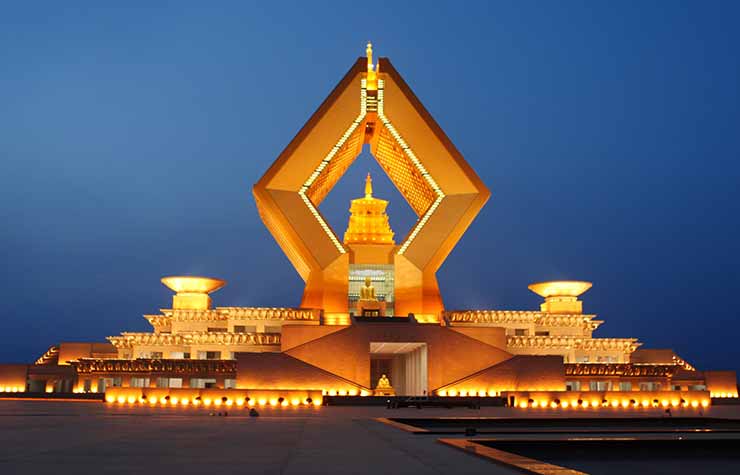
It’s also worth making the expedition to see the Famen Temple. Not only has the site played in important part in Chinese history, but the discovery of religious relics in its underground palace mean that it is an important pilgrimage site for Buddhists. In particular, the ‘true relic’ – enclosed in boxes made of gold, silver and jade – is thought to be part of a finger bone of the Sakyamuni Buddha himself.
Not far away is the Sanyuan Temple of Town God. This ancient temple is one of the best preserved examples from the Ming and Qing Dynasties.
Head to Baoji Bronzeware Museum for rare and priceless displays of more than 400 jade, pottery and gold relics, and then finish your trip by relaxing in the green glades of Guanshan Pasture, where endless fields seem to stretch beyond the skyline.
The North Route
Journey to the roots of Chinese civilisation
Celebrate the provenance of Shaanxi’s incredible craftsmanship with a trip to the Ceramic Kiln of Yao County. This contrasts well with the nearby sculptures of Yaowang Mountain, where some 200 figures are scattered around the scenic terrain.
Next, press on to the Yuhua Palace of the Tang Dynasty: as the largest 'temporary' palace of its time. The building is sacrosanct for Buddhists, as large sections of the Buddhist sutra were translated in its grounds.
Take in more rich history by seeing the Mausoleum of the Yellow Emperor, which includes the restored walls of the Xuanyuan Temple. There are many sights of untainted natural beauty along the way as you head north, like the Hukou Waterfall, the Baiyun Mountain and the Hongjianchou Scenic Spot.
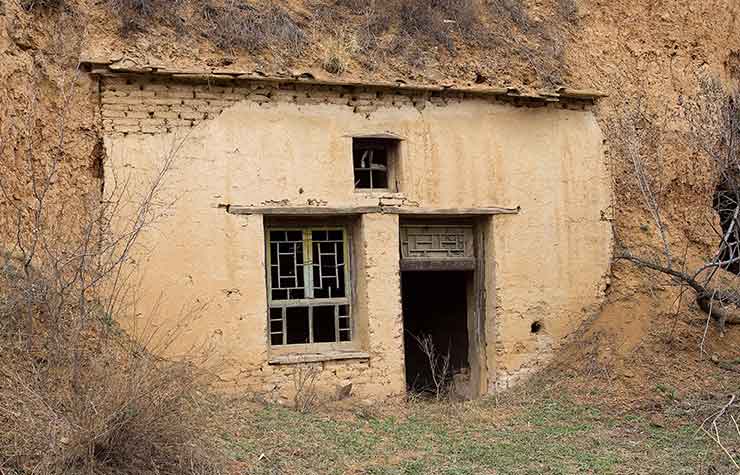
Near the end of the North Route you’ll find the Cave Dwellings in the Loess Plateau.
These remarkable houses date back to the Bronze Age when they were first carved into the mountain landscape, but many millions of Chinese live in similar housing to this day. While there, you might be lucky enough to witness some of their local folk customs, which include vibrant processions to celebrate births and weddings.
The South Route
Take in the striking rural scenery
Start out south into the stunning countryside and one of your first stops will be the Hanzhong History Museum. Retelling moments in history that span as far back as the second century BCE to World War II, the stories told within this building help give context to what you’ll see on your trip.

If you’re brave enough to trek through the Shimen Plank Way with its steep drops and rugged paths, you’ll get a feeling of what it was like for workers of years gone by to strike out into this wilderness. Stop off at the Wuhou Temple and Tomb to absorb more classical culture before heading out to the Natural Reserve in Yang County. Filled with verdant greenery and natural water features, it provides a slice of unsurpassed serenity.
Foping National Nature Reserve will enthrall animal lovers with giant pandas, golden monkeys, Asiatic black bears, musk deer and giant flying squirrels. And if you are still longing for more of Mother Nature’s spectacles, then there are many more scenic spots along the way at Nanhu, Yinhu, Xiangdidong and Jinshixia.
These natural wonders culminate at the Za Shui Cave of Limestone: known in China as the ‘geological museum’. The mountain is famous for its oddly-shaped peaks, a ‘wind cave’ with constant air currents and an ‘ice cave’, which never thaws no matter what time of year. There is also a wealth of limestone karsts, standing like solid sculptures, carefully moulded by the erosion of time.