How to spend 72 hours in Xi’an
No visa required
Take advantage of China’s new visa-free transit policy and discover the best of the ancient capital in a hand baggage-sized stopover.
Embodying China’s unique blend of economic power and magnificent classical heritage, Xi’an is a must-see destination for global adventurers heading to the Far East.
On a short break taking in the sights, you’ll see first-hand how China’s imperial past has influenced its modern development – and why Xi’an will soon become one of the world’s most influential cities.
72 hour visa
To encourage trade and tourism throughout its regions, China has implemented a 72-hour visa waiver so now it’s even easier to take in Xi’an and its awe-inspiring landmarks.
The waiver has been adopted by eleven cities, and means a range of visitors from over 51 approved countries – including citizens from the EU, USA, Australia, Korea and Japan – can enjoy a stay of up to three days without a visa.
Xi’an was the eighth urban area in China to adopt the scheme, allowing travellers the perfect amount of time for a whistle-stop tour of the city before travelling on to their final destination.
So if you are passing through on a swift sojourn, here’s how to make the most of your visit.
Day One
Scope out the city
Xi’an is the capital city of Shaanxi province and first found fame on the global stage as the starting point of the Silk Road.
This ancient network of trade routes dates back to 114 BCE and was hugely significant in connecting cultures in China to those in the Indian sub-continent, Persia and even Europe.
To understand the influence of Xi’an’s trading past, the best way to start your tour is with a stroll around the Muslim Quarter. Paved with blue flagstones and shaded by trees, this is where traders from Persia and Arabia would sell their wares. Nowadays it’s known for its well-preserved architecture, including the Hanguang Gate of the Tang Dynasty, Xicheng Gate Tower Cluster of the Ming Dynasty and the Grand Mosque – collectively forming a timeline of Xi’an’s rich history.
Also near the Muslim Quarter you’ll find Drum Tower. This iconic pagoda is lined with antique drums that were traditionally struck to mark the setting of the sun.
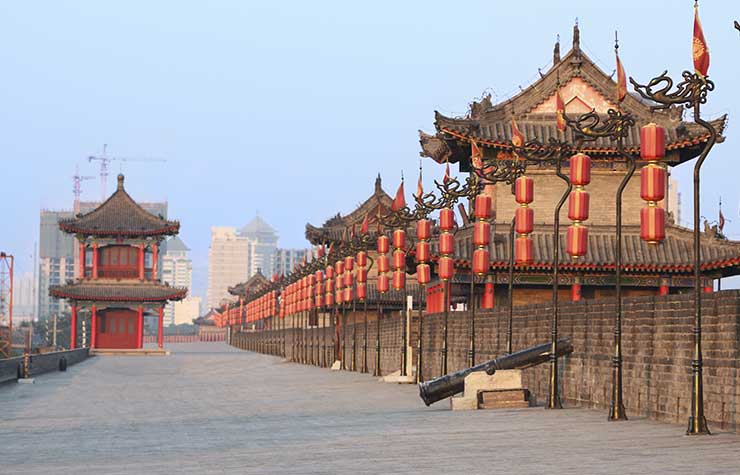
For a different perspective, the path along the top of Xi’an’s City Wall is perfect for a bike ride or an evening stroll. At almost 14km long and up to 14m wide it is the most complete surviving city wall in China. From the stunning South Gate you can hire a bicycle to ride around the ramparts.
Capture some culture by checking out the Forest of Steles Museum – a collection of historical stone slabs carved with calligraphy and illustrations that mark China’s history. Meanwhile at the Shaanxi History Museum, you’ll find out more about the importance of the province in Chinese culture and history.
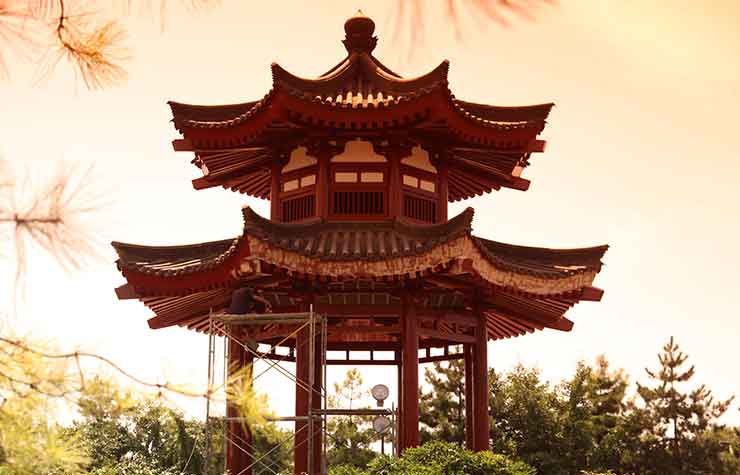
Finish the day by wandering around the serene gardens and tranquil water features of the Big Wild Goose Pagoda, then take a trip to the Tang Dynasty Music Palace, where you can sit back and soak up some ancient Shaanxi song and dance. Buy a combined evening meal and show ticket for the full Shaanxi experience.
Day Two
Delve deeper into history
From the city centre you can catch a bus out beyond the city walls to the Xi’an Banpo Museum and the archaeological remains of ancient civilisations dating back 6,700 years. You can see the site of the excavation itself, as well as stunning pottery and remains from the burial sites.
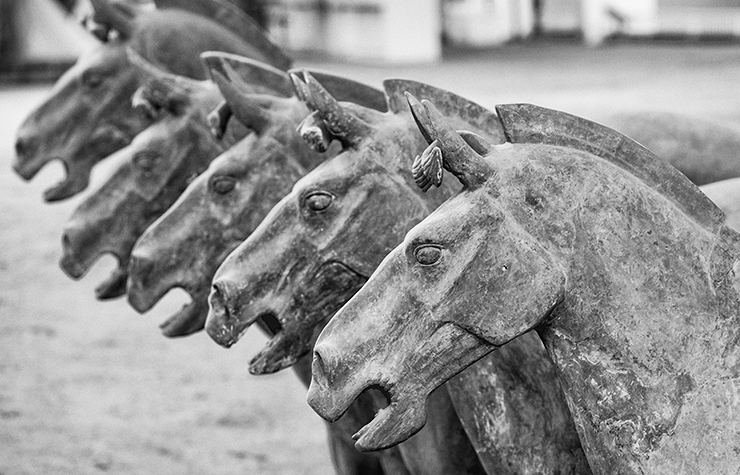
Just a short bus ride from Banpo stands the Army of Terracotta Warriors and Horses. This incredible collection of more than 8,000 terracotta soldiers, horses and chariots was discovered by local farmers in 1974.
Such is the intricate detail and craftsmanship that goes into each remarkably well-preserved figure, it’s hard to believe the they date back to the 3rd century BCE when they were built to stand watch over the tomb of emperor Qin Shi Huangdi.
Set at the northern foot of Mount Li, about 20 minutes from the Terracotta Warriors, you’ll find Huaqing Palace and its famous Hot Springs. These man-made pools were built in 723 CE by Emperor Xuanzong of the Tang Dynasty using locally-occurring geothermal heating.
Said to be the scene of the emperor’s romance with consort Yang Guifei, and the site of the 1936 kidnapping of Chiang Kai-shek, the surrounding gardens, with their grand sculptures and spectacular views of the mountains, are a great place to unwind.
After grabbing a bite to eat and having a nap back at your hotel, you can live it up by partying at 1+1 – Xi’an’s most popular nightspot. Two dance floors play a mixture of J-Pop and hip-hop, while a relaxed open-air bar on the fifth floor has live music every night.
Day Three
Search for souvenirs and local specialities
Whether you want to bag a memento or simply mooch about, the recently restored Xi’an Tang Dynasty West Market is the largest trading centre for antiques in China. The two-storey building boasts more than 700 stalls offering a wide collection of artefacts, paintings, calligraphy, bronze sculptures and artwork.
If you’re looking for something more individual, indulge in a treasure hunt at Xi’an Antiques Market near the Small Wild Goose Pagoda. You’ll be able to pick up anything from a miniature replica terracotta warrior to a traditional-style Chinese painting.
Seek out some exquisite street food in the nearby stalls and try delicious delicacies such as Guan Tang Baozi – meat and gravy dumplings – or Xi’an Liangpi – a tasty blend of noodles and spices, served cold.
If you manage to squeeze all this into to 72 hours, you’ll have done pretty well. Even if you don’t, it will at least whet your appetite for a longer visit to Xi’an and Shaanxi province in years to come.
China’s 72-hour visa waiver for passengers in transit
If you plan to take advantage of the waiver, make sure you:
- check your native country is one of the 51 approved for the scheme;
- inform the airline at check-in so that they can declare your request to customs at the respective Chinese airport before landing
- look out for the special lanes for visa-free passengers on arrival at Xi’an airport
The 72 hours starts from 00:00 the day following the entry date in all airports except Beijing, where it starts at your flight’s scheduled arrival time.
The waiver is only available if you are arriving in transit and departing from the same airport. You cannot use the visa if your onward destination is in China, or your airport of origin.