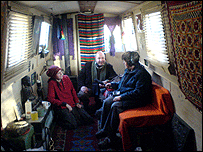
The sight of a narrowboat chugging along is a familiar one to many a towpath walker, jogger or cyclist, living as we do in a region criss-crossed by canals. Some may have taken a short tourist-trip, or had a meal in a floating restaurant. Many of us may dream of a nomadic life on board, or have even tried it for a week or two. Not many, however, would easily give up the comforts of four walls and mains electricity. Meet two boaters who've chosen the life afloat, and feel no urge to return! Tired of the view out of your kitchen window? No problem - simply shift a few metres down the canal, and moor up for a change of scene! And where else can you open your curtains in the morning, and find yourself eye to eye with a duck – or a kayakist – but make sure you've got your pyjamas on! “Narrowboats” were originally working boats built in the 18th, 19th and 20th centuries for carrying goods on the canals built during the industrial revolution – horsepower being gradually superseded by engine power. Boatmen's families originally lived ashore, but in the 1830's, as canals started to feel competition from the railways, the families took up home afloat - partly because they could no longer afford rents, partly to provide extra hands to work the boats harder, faster and further, and partly to keep families together. The rear portion of the boat became the cosy "boatman's cabin", familiar from picture postcards and museums, famous for its space-saving ingenuity and for its interior made attractive by a warm stove, a steaming kettle, gleaming brass, fancy lace, painted house-wares, and decorated plates. Nowadays, working boats are few and far between, but the legacy of a warm welcome remains. Mine's a cuppa, cap'n! |