Run records & miserly Aussies - what we've learned from T20 World Cup
- Published
The T20 World Cup group stage is heading towards its crucial point.
England have qualified and Australia are almost there but there is a battle on behind them.
What else have we learned from the tournament so far as we head towards the semi-finals? What tactics are teams using and where are some weaknesses?
BBC Sport digs into the CricViz data.
Runs, runs, runs
More runs are being scored at this tournament than ever before.
Five of the highest six team totals at a Women's T20 World Cup have been made over the past two weeks, with four scores of 200 or more.
This has come, in part, through the increase in the number of boundaries with the tournament boundary percentage higher than any previous edition.
The percentage of runs coming in boundaries is 52% for this tournament - a reflection of the increasing power in the women's game but also organisers' wish for good batting surfaces.
In the 2024 tournament in the United Arab Emirates, when surfaces were slower and lower, that figure was down at 40%.
Interestingly, three of the four highest successful chases have also come in this tournament. There had only been two in the nine editions of the tournament to this point but there have been three already in 2026.
"The pressure of a chase isn't as daunting because there is more cricket being played," former England spinner Alex Hartley said. "World Cups are so often.
"If you come to a World Cup and have chased a big score seven times, what is the difference doing it an eighth?"
Australia remain team to beat
With four wins from four, Australia are on the brink of qualification although there is still a scenario in which they could be eliminated on Sunday should they lose to India.
They still appear the team to beat. Their bowling, in particular, has been a cut above the rest.
Australia, with no bowler in the top five wicket-takers' list but with seven different wicket-takers, have been the most economical side in every phase of the innings - the powerplay, middle overs and death.
They have taken wickets consistently through the start and middle of the innings too.
England have four wins from four and have made a promising start to the tournament but their economy in the powerplay is 7.29 - considerably more expensive than Australia's 5.95.
India spin to win, South Africa hit with pace
With seamer Kim Garth at the top, spinners Sophie Molineux, Georgia Wareham, Alana King and Ash Gardner to follow, and Annabel Sutherland bowling at the death, Australia delivered an even split between the number of overs bowled by spinners and pacers in the tournament.
In contrast, India have massively favoured spin, with only 29% of their overs bowled by quicks.
The lack of success for their pace bowlers has been a significant problem so far with only two wickets coming in 15.1 overs of seam bowling with an economy rate 8.50.
Group One rivals South Africa have gone the other way by giving 69% of their overs to the seamers - the most of any team.
That has not been particularly successful either with their powerplay economy rate of 7.77 only better than Netherlands.
England's new strength
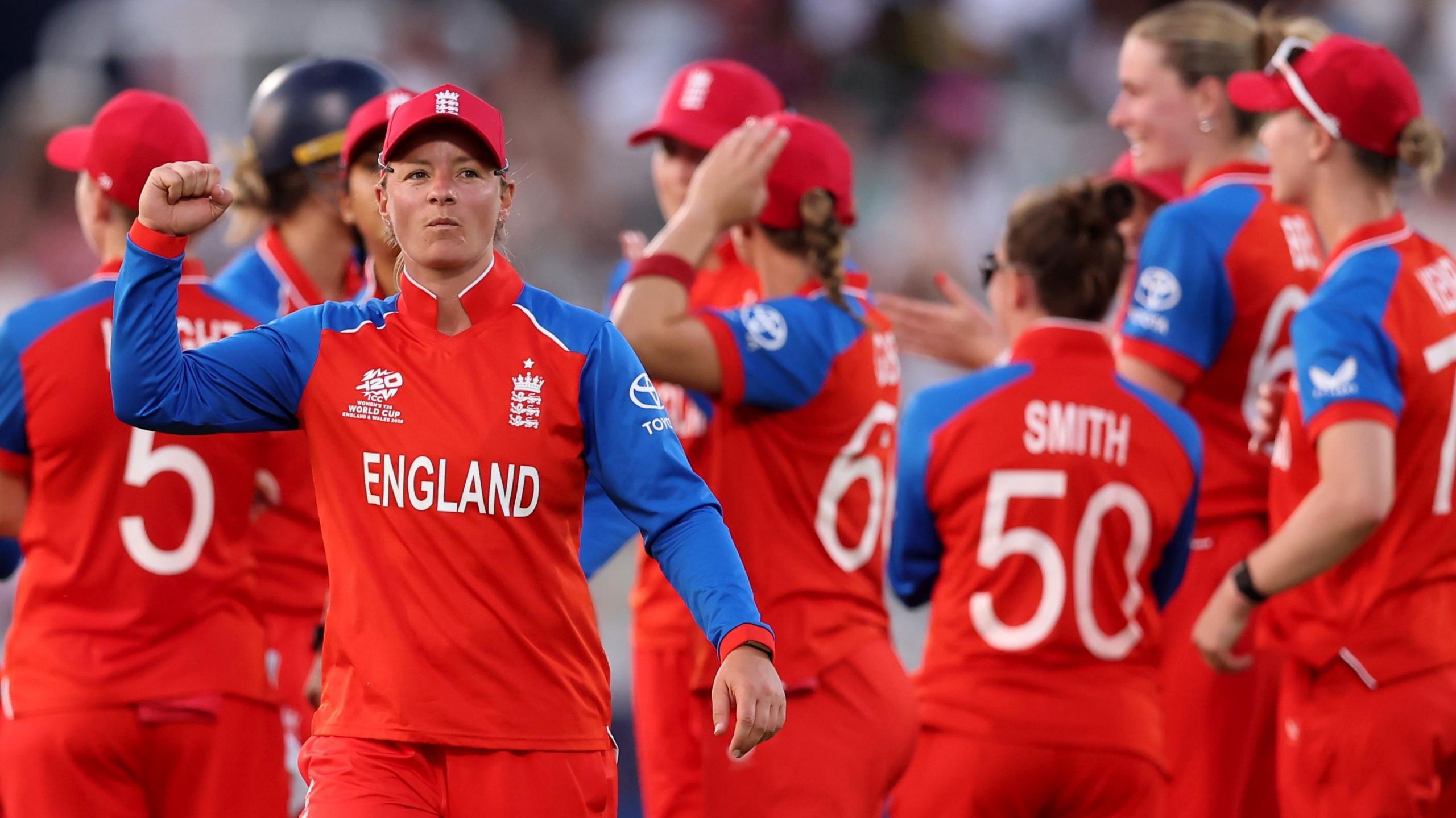
While their powerplay bowling can improve, England's big strength at this tournament has been the way they are finishing an innings.
Even with Freya Kemp and Dani Gibson failing to repeat their fireworks from Leeds on Wednesday, they are scoring at 11.88 runs per over at the death - comfortably the most of any team.
When Kemp and Gibson failed against West Indies, Charlie Dean and Sophie Ecclestone found boundaries to finish the innings.
Taking into account only the last three overs, England have scored 146 in 57 balls. They have hit a boundary on 25 of those deliveries.
More inventive batting than ever
A wider development has been the increase in invention shown by batters at this World Cup.
There have already been more runs scored with the scoop shot this year (136) than the entirety of any of the previous editions - and batters are doing it with a significantly better strike-rate (219.35).
Netherlands' Babette de Leede, West Indies' Shemaine Campbelle and Australia great Ellyse Perry have been the most successful exponents but this is not a trend skewed by one or two batters.
More players are scooping than ever before and are doing it more successfully.
There were only 67 runs scored with a scoop at the last T20 World Cup, 91 in 2023 and 55 in 2020.

Batters are finding the boundary 44% of the time when playing the scoop or reverse scoop, with the majority going to fine leg
Related topics
- Published24 June
- Published24 June