The Power of the Human Voice
How we use our voice and how our voices are used.
The human voice is a thing of great power and persuasion; we use it to speak to one another, to sing and cry, to laugh and scream. But our voices - which are as ancient as humanity itself - are also at the forefront of the very latest developments in technology. Increasingly, our voices activate machines, are used to prove innocence or guilt in criminal trials, to provide a means of digital communication for people with voice disorders. With Suzy Klein to discuss the human voice are the cognitive psychologist Diana Deutsch the acoustic, forensic and voice analysis expert Professor Peter French and the opera singer Anna Devin.
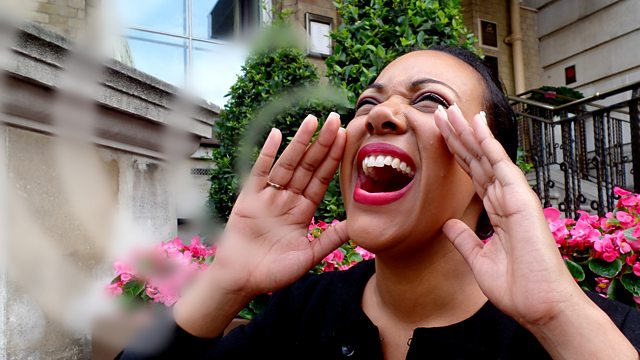
Photo: A shouting lady (credit: Shan Pillay)
Last on

Clip
-
![]()
The mystery of the human voice.
Duration: 01:10
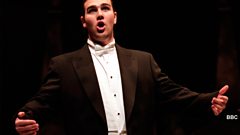
Chapters
-
Peter French
What does a forensic voice analyst do?
Duration: 08:47
-
Diana Deutsch
How closely related are vocal patterns that express happiness and anger?
Duration: 13:06
-
60 Second Idea
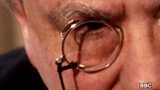
Bring back the monocle.
Duration: 03:04
-
Anna Devin
Describing her voice and how she uses it to sing.
Duration: 14:00
Peter French
Professor Peter French is the UK’s most experienced expert
in the field of forensic speech and
acoustics and works at the Department of Language and Linguistic
Science, University of York and is chairman of J P French Associates. He has worked in the field for 30 years.
Prof. French has provided evidence in thousands of cases
across the whole range of forensic speech and audio. His evidence has been for UK Crown Courts and
courts across the world, including: Australia, Canada, Ireland, Germany, Ghana,
Gibraltar, Hong Kong, Mauritius, The Netherlands, New Zealand, Singapore and
the United States of America. He has
worked on cases heard by the International War Crimes Tribunal and the Bloody
Sunday Inquiry in the UK. He’s interested in how we can break down the
component parts of the human voice in order to recognise who is speaking and
talks about developments in voice recognition and analysis.
Diana Deutsch

Diana Deutsch is a British-American perceptual and cognitive
psychologist, born in London, England. She is currently Professor of Psychology
at the University of California, San Diego, and is one of the most prominent
researchers on the psychology of music. She is probably most famous for the
musical and auditory illusions that she’s discovered which include the octave
illusion, the scale illusion, the glissando illusion, the tritone paradox, the
phantom words illusion, the speech-to-song illusion and the cambiata illusion,
among others.
She also studies the cognitive foundation of musical
grammars, the ways in which we hold musical pitches in memory, and the ways in
which we relate the sounds of music and speech to each other. In addition, she
is highly acclaimed for her work on absolute pitch, or perfect pitch, which she
has shown is far more prevalent among speakers of tone language. She talks
about the importance of pitch in the human voice and how our voices have
evolved.
Anna Devin
Irish soprano Anna Devin is fast becoming established as one
of today’s brightest young sopranos, highly praised for her strong stage
presence and vocal versatility. She sings a wide repertoire of both sacred and
secular works, and she has appeared as part of the BBC Proms with the Hallé
Orchestra under Sir Mark Elder in Parsifal, the London Handel Festival,
Brighton Early Music Festival, Belfast Festival as well as with the RTÉ NSO and
Ulster Orchestra.
Anna is dyslexic and talks about how this has affected her
approach to singing, especially in foreign languages and more generally how she
thinks about her voice.
Sixty Second Idea to Change the World
Broadcasts
- Mon 20 Jul 2015 01:05GMTBBC World Service Online
- Tue 21 Jul 2015 08:05GMTBBC World Service Online
Podcast
-
![]()
The Forum
The programme that explains the present by exploring the past