
Shame
Can shame be a force for good? Or is it always in danger of being a tool of repression? Bridget Kendall explores shame with evolutionary biologist Dan Fessler, philosopher A.C Grayling and environmental social scientist Jennifer Jacquet.
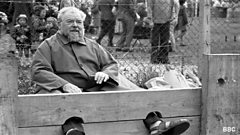
Photo: A person feeling shame (BBC/ Shan Pillay)
Last on

Clip
Chapters
-
Jennifer Jacquet
Shame used as a tool for social good.
Duration: 08:14
-
A. C. Grayling
The history of shame.
Duration: 10:15
-
60 Second Idea
Dan Fessler: evolutionary heritage needn’t stop us choosing a moral or ethical position.
Duration: 05:01
-
Dan Fessler
The evolutionary history of shame.
Duration: 12:02
Jennifer Jacquet

A.C. Grayling

Anthony Grayling is a public philosopher and Master of the New College of the Humanities, and a Supernumerary Fellow of St Anne's College, Oxford. He has written and edited over thirty books on philosophy and other subjects. Anthony feels that shame, when negotiated from an ethical rather than moral perspective by society, is a useful social regulator. But agrees with philosopher J. S. Mill who said that opprobrium, ie: the shaming of the individual, is usually repressive.
Dan Fessler

Sixty Second Idea to Change the World

Dan Fessler argues that understanding our evolutionary heritage needn’t determine how we behave towards each other. We can and should choose to be kind, to be good, to be just.
Broadcasts
- Mon 13 Apr 2015 01:05GMTBBC World Service Online
- Tue 14 Apr 2015 08:05GMTBBC World Service Online
Podcast
-
![]()
The Forum
The programme that explains the present by exploring the past