Rewilding
What happens when nature is left to take its own course on abandoned land? Tim Marlow talks to George Monbiot, Frans Schepers and Joan Nassauer.
From the release of captive species to their natural habitats, to restoring ecosystems in rural and urban areas, to “rewilding the child”, Tim Marlow explores ideas about rewilding. With environmentalist and writer George Monbiot, Frans Schepers from Rewilding Europe and Joan Nassauer Professor of Landscape Architecture at the University of Michigan.
(Photo: The Gray Wolf; the species was reintroduced to Yellowstone National Park, USA in 1995. Credit: AP)
Last on

Chapters
-
Environmentalist George Monbiot
Rewilding and genetic memory
Duration: 12:12
-
Conservationist Frans Schepers
Rewilding Europe
Duration: 08:58
-
60 Second Idea:
Political rulers should lead their troops into battle
Duration: 04:18
-
Professor of landscape architecture Joan Nassauer
New ecosystems in the city of Detroit
Duration: 13:12
George Monbiot
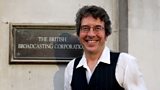
George Monbiot is an environmentalist and journalist. He describes rewilding as the mass
restoration of ecosystems in which nature is left to find its own way. But he says that it also involves the
rewilding of individual lives: a rediscovery and wonder at the delights of
nature which could help to repair the living planet. In his most recent book Feral – searching for
enchantment on the frontiers of rewilding, he describes his own hunger for new
environmental experiences and his efforts to re-engage with nature.
(Photo: Anna Behrmann/ BBC)
Frans Schepers
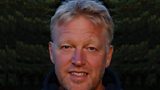
Photo: courtesy of Frans Schepers
Joan Nassauer

Joan Iverson Nassauer is Professor of Landscape Architecture at the University of Michigan. Her research shows how abandoned former residential areas of cities such as Detroit in the US, can play important ecological functions. She describes how the return of wild plants and animals to the inner city have created “novel eco-systems” on small parcels of land. Residents there are more likely to be comfortable living in this semi-wild urban landscape if they can perceive signs that it is being cared for by human hands in some way. Her research also explores how vacant neighbourhoods can be used to improve water quality for the city.
Photo courtesy of Joan Nassauer
Sixty Second Idea to Improve The World:
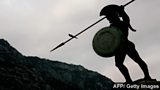
Photo credit: AFP/Getty Images
Broadcasts
- Sat 20 Sep 2014 21:05GMTBBC World Service Online
- Sun 21 Sep 2014 09:05GMTBBC World Service Online
- Mon 22 Sep 2014 02:05GMTBBC World Service Online
Podcast
-
![]()
The Forum
The programme that explains the present by exploring the past