The accidental ‘insurance policy’ that might just save the endangered Scottish wildcat from extinction
22 January 2018
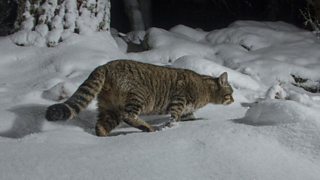
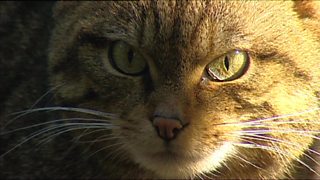
There are thought to be fewer than 300 Scottish wildcats left in the wild because cross-breeding with domestic and feral cats has drastically reduced their numbers.
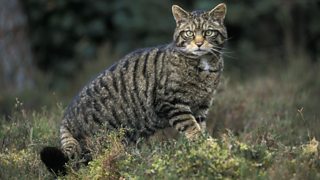
Conservation efforts aiming to stamp out cross-breeding are underway but there is also an “insurance policy” in place, in the form of captive breeding.
“Regardless of what we do in the wild for wildcats, there are just not enough of them to conserve,” explains David Barclay of the Royal Zoological Society of Scotland on Open Country.
This means that releasing wildcats from captive populations into the wild has becomes a viable option.
Wildcats were first brought into captivity forty years ago. And this, according to David, was a stroke of luck.
“We didn’t do it because we were looking forward into the future,” he says. “We were doing it so people could learn about them and get close to a very elusive, iconic species.”
But this act may have inadvertently become the key to saving the Scottish wildcat.
How to identify a Scottish wildcat
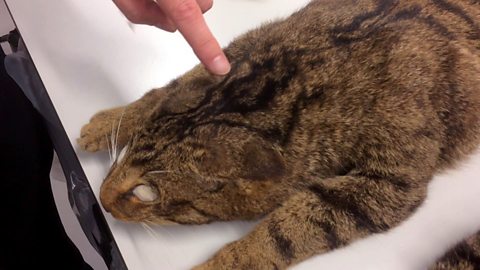
How to identify a Scottish Wildcat
Dr Andrew KItchener, National Museum of Scotland
Full programmes on BBC Radio Scotland
-
![]()
Open Country: Wild Cats in the Highlands
The Scottish wildcat is Britain's last native cat species and it is now rarer than the tiger with less than 400 left in the wild. David Lindo visits Strathpeffer to find out more.
-
![]()
Brainwaves: The Scottish Wildcat
Pennie Latin goes on the hunt for and explores efforts to save the Scottish Wildcat.
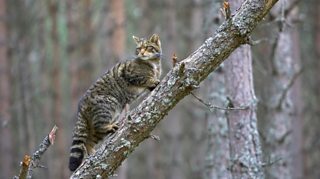
The secretive Scottish wildcat
-
![]()
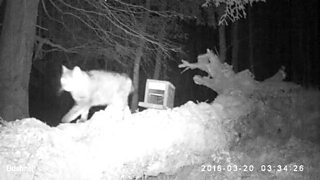
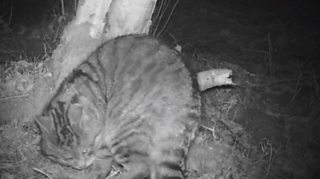
Night shots capture Scottish wildcat
Night cameras have captured footage of Scottish wildcats in Aberdeenshire.
-
![]()
Camera trap photographs Scottish wildcat in Cairngorms
A rare Scottish wildcat has been photographed on a camera trap rigged up by a wildlife cameraman.
-
![]()
Feral cats neutered to protect rare Scottish wildcats
About 80 feral cats have been neutered across Scotland as part of a project to prevent them breeding with wildcats.
-
![]()
Scottish wildcat conservation warning
There has been a warning that last ditch efforts to save the Scottish wildcat from extinction are at risk, because of conflict between rival conservation groups.
Latest features from BBC Scotland
-
![]()
'Wild swimming helps me process the grief of losing my son'
The benefits of cold water therapy.
-
![]()
Winter adventures are appealing, but an expert advises caution
Trips in winter require particular knowledge and skills.
-
![]()
The rescuers: Why volunteers risk their lives in mountain emergencies
Landward meets members of the Cairngorm Mountain Rescue Team.
-
![]()
‘Look for the light’ – practical tips to help you through another winter with SAD
Useful advice and tips to combat low moods at this time of year.
-
![]()
How you could be a binge drinker without even knowing
Binge drinking is classed as fewer units than many people may realise.
-
![]()
How chocolate biscuits and drama classes helped one man leave prison behind
The healing power of creativity.
-
![]()
'When people believe in you, it’s life-changing'
Author Graeme Armstrong revisits the man who helped turn his life around.
-
![]()
The 'breath-taking' display of US birds swept on to British soil
Recent storms have brought rare birds to our shores.
-
![]()
Six things we learned about Alan Cumming on Take the Floor (Spoiler: includes accordions)
The actor spoke to Take the Floor's Gary Innes.
-
![]()
How street gangs trap young men in a dangerous cycle of violence
The almost inescapable pull of life in a gang.
-
![]()
Why stylist Gok Wan believes there's no such thing as bad fashion
The fashion expert says we should stop following rules and do what feels right.
-
![]()
Is sending a CV still the right way to apply for a job?
They've been central to job applications for years, but are they worth it?