|
|
 |
Watching
more birdies
Here's
numbers six through ten of the top ten common garden birds in North
Yorkshire.
Each
small image links to a popup page with a larger image and a sample
of birdsong.
6.
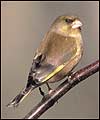
Greenfinch
Like
all finches, it has a short, triangular-shaped beak. Male is brighter
and more clearly marked, with green back, greenish-yellow underparts,
yellow panel on the side, which is actually the front edge of the
wing. The rest of the wing has a mixture of greys, greens and yellows.
In flight, the yellow edges to the tail are clearly visible. The
female is much more drab with a brownish back and grey-green underparts.
7.
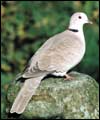
Collared dove
These
are small doves of about 28cm with pale pinkish or grey-brown feathers.
They have a black half-collar, black primary feathers and a long,
white-edged tail. The chances are, if you are reading this in the
British Isles, you are within a mile or less of a collared dove.
Yet, just 40 years ago, the closest would have been no nearer than
France, Holland or Denmark.
8.
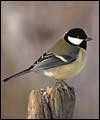
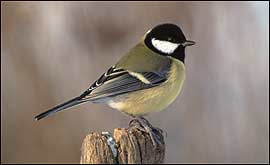
Great tit
Great
tits have a wingspan of 14-16cm, a body length of 14cm and weigh
14-22g. Great tits have blue and yellow plumage with a black cap.
Both sexes have a black stripe running down the middle of the chest,
but the stripe is much broader in the males.
9.
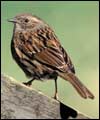
Dunnock
A smaller,
neater bird than the house sparrow, with a fine beak and brighter
orange-brown legs. It is grey underneath. It hops and shuffles on
the ground under shrubs and around flower beds, not usually on the
bird table.
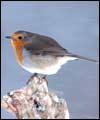
10.
Robin
The
bright red breast and throat make it perhaps the most distinctive
bird in the UK. Despite their cute appearance, robins are aggressively
territorial and are quick to drive away intruders. You'll rarely
see more than one robin at a time, unless it's with a mate. Traditionally
birds of the woodland, these birds live wherever there is a combination
of trees or bushes and open ground.
|



 Just like people, birds need water all year round for drinking
and bathing.
Just like people, birds need water all year round for drinking
and bathing.