|
Boot It Out
16
April 2004
 There
comes a time when a shrub becomes too old to
rejuvenate.There are also those that have to
be disposed of either because they are in the
wrong position or you want a change. There
comes a time when a shrub becomes too old to
rejuvenate.There are also those that have to
be disposed of either because they are in the
wrong position or you want a change.
Fortunately many shrubs are well behaved and
are easy to dig out. Some, however, are determined
to retain their grip on earth proving nearly
impossible to remove.
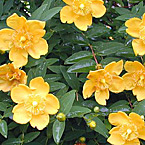 Plants
which sucker or spread by stolons are a problem.
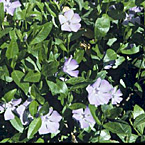
Hypericum calycinum, (Rose of Sharon) vinca,
lamium and Gaultheria mucronata are quick to
spread forming a dense mat of growth. They are
not deep rooting and the young plants can be
scraped off with a spade. Plants
which sucker or spread by stolons are a problem.
Hypericum calycinum, (Rose of Sharon) vinca,
lamium and Gaultheria mucronata are quick to
spread forming a dense mat of growth. They are
not deep rooting and the young plants can be
scraped off with a spade.
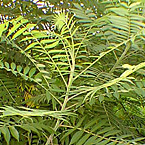
The Stag’s horn shumach, Rhus typhina
is more of a problem as the horizontal roots
may be as deep as 6-8 inches and will send up
strong suckers many yards from the parent plant.
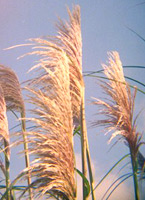 Pampas grass can be a real headache. Large clumps
are difficult to remove and the best advice
is to keep them in check by removing the outer
growths every year before they can form a massive
clump. Where large specimens have to be taken
out you may need the help of a mini-digger.
Alternatively, cut all the leaves about 12 inches
above ground level and dig them out using a
spade. Sharpening the blade will help cut through
the massive clump of roots. Wear gloves as the
edges of the leaves are razor sharp.
Pampas grass can be a real headache. Large clumps
are difficult to remove and the best advice
is to keep them in check by removing the outer
growths every year before they can form a massive
clump. Where large specimens have to be taken
out you may need the help of a mini-digger.
Alternatively, cut all the leaves about 12 inches
above ground level and dig them out using a
spade. Sharpening the blade will help cut through
the massive clump of roots. Wear gloves as the
edges of the leaves are razor sharp.
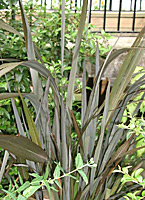 The
New Zealand flax, Phormiun tenax is even worse.
It is clump forming with tough roots and sword-like,
evergreen leaves. As a small plant it can be
very effective providing shape and texture to
the garden. As it matures the outer leaves die
but remain attached to the plant. This gives
it a scruffy, untidy appearance. If all efforts
at digging up a clump fail then the answer is
to cut the foliage back to 6 inches. A chain
saw or power clippers may be used to cut the
foliage. Light a small fire in the centre of
the plant and allow it to burn the crown of
the plant down to the roots. The
New Zealand flax, Phormiun tenax is even worse.
It is clump forming with tough roots and sword-like,
evergreen leaves. As a small plant it can be
very effective providing shape and texture to
the garden. As it matures the outer leaves die
but remain attached to the plant. This gives
it a scruffy, untidy appearance. If all efforts
at digging up a clump fail then the answer is
to cut the foliage back to 6 inches. A chain
saw or power clippers may be used to cut the
foliage. Light a small fire in the centre of
the plant and allow it to burn the crown of
the plant down to the roots.
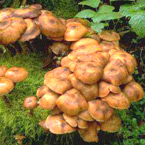 It
is advisable to remove by the root the woody
stumps of shrubs and trees .This will reduce
the risk of an attack of honey fungus disease
which spreads from plant to plant killing as
it goes. It
is advisable to remove by the root the woody
stumps of shrubs and trees .This will reduce
the risk of an attack of honey fungus disease
which spreads from plant to plant killing as
it goes.
Back to John's index page
|