|
House Plant Care
15th
January 2005
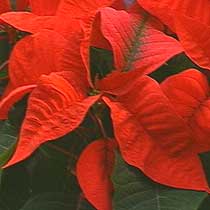
Christmas
is a traditional time for giving and receiving
indoor pot plants. Poinsettias, pot chrysanthemums,
orchids, cyclamen, azaleas and a host of other
common and unusual plants take up residence.
 Some
of them die before their time, often the result
of over watering, cold draughts, extremes of
temperature or neglect. Some
of them die before their time, often the result
of over watering, cold draughts, extremes of
temperature or neglect.
One
of the difficulties for every gardener is when
to water and how much to give. There is no one
piece of advice to suit all plants however,
as a general rule, plants require less water
in winter when growth slows down and there is
less daylight. Allowing the surface of the compost
to become dry before applying more water is
a common practice.
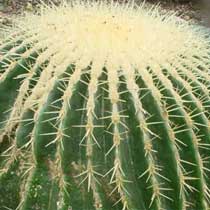 When
you get to know your plants you can tell if
they need water by the weight of the pot and
the compost. Soilless composts dry out more
quickly than those containing some soil. Never
allow the compost to dry out to the stage where
it contracts away from the pot edge .Any water
applied will run straight through at the sides
without wetting the compost. To rewet, plunge
the plant, in its pot, into a bucket if water
and leave it until all bubbling has ceased.
Allow the excess water to drain off. When
you get to know your plants you can tell if
they need water by the weight of the pot and
the compost. Soilless composts dry out more
quickly than those containing some soil. Never
allow the compost to dry out to the stage where
it contracts away from the pot edge .Any water
applied will run straight through at the sides
without wetting the compost. To rewet, plunge
the plant, in its pot, into a bucket if water
and leave it until all bubbling has ceased.
Allow the excess water to drain off.
Over
watering is often the result of standing the
pot in a saucer that retains the water keeping
the compost wet. Check that the drainage holes
in the base of the container are not blocked.
House
plants with hairy leaves such as African violets
(Saintpaulia) and begonia rex varieties must
be watered through the base of the pot. Water
splashed on the leaves will cause the tiny hairs
on the surface to die leaving unsightly marks.
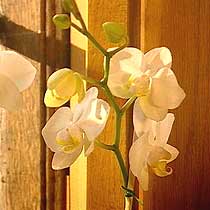 Plants
may require different composts. Orchids need
a very free draining compost with a high organic
content while cacti prefer a well drained mixture
with additional grit and coarse sand. Plants
may require different composts. Orchids need
a very free draining compost with a high organic
content while cacti prefer a well drained mixture
with additional grit and coarse sand.
Low
levels of daylight in winter can cause problems
so position your plants close to a South facing
window.
Extremes
of temperature will cause plants to suffer.
Most rooms tend to be hot during the day and
evening becoming cold during the night. Where
the room temperature difference is more than
10 degrees F. house plants should be relocated.
 Less
feeding is necessary in winter. Follow the directions
on the plant label and if in doubt apply nutrients
at half strength or not at all until growth
starts. Less
feeding is necessary in winter. Follow the directions
on the plant label and if in doubt apply nutrients
at half strength or not at all until growth
starts.
Wait
until spring before repotting.
Remove
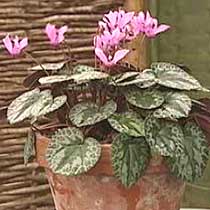
dead flowers and leaves as they appear especially
with cyclamens.
Back to John's index page
|