|
No
More Weeds...
...Well
hardly any, if it all goes according to plan!
After all the rain in May a few days of warm
weather is all it takes for the weeds to be
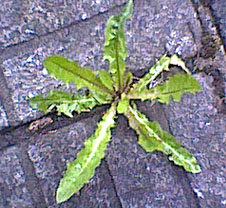
jumping out of the ground. Annual weeds are
troublesome but can be managed providing they
are removed before they set seed.
Hoeing works well when the weather is fine and
the soil surface is dry. The weeds wither and
die on the ground. When there is moisture they
will reroot if they are not collected up and
composted.
Cultivating the soil brings more weed seeds
to the surface where they germinate. Seeds may
lie dormant in the soil for decades until they
get the right conditions for germination, light,
heat and moisture.
 A
flame gun is an effective method of killing
seedling weeds in a path or ground which is
fallow. Perennial weeds are more difficult to
conquer. It is a battle and gardeners usually
lose. Plants such as nettles, buttercup, horse
tail, ground elder, bindweed, docks and thistles
have a vigorous root system which travels deep
or spreads far. A
flame gun is an effective method of killing
seedling weeds in a path or ground which is
fallow. Perennial weeds are more difficult to
conquer. It is a battle and gardeners usually
lose. Plants such as nettles, buttercup, horse
tail, ground elder, bindweed, docks and thistles
have a vigorous root system which travels deep
or spreads far.
It is essential that the root is killed using
chemicals such as glyphosate or it is dug out
in its entirety .If you are prepared to wait
for a couple of years, cover the weeds with
black plastic sheeting or old carpet. In the
fullness of time the exclusion of light will
weaken or kill the weeds, but dont hold
your breath.
Once you eliminate the weeds you have to keep
the area weed free. Where landscape fabric can
be used on the soil surface prior to planting
it works well. The woven fabric allows water
to penetrate but
prevents weeds coming up through the material.
Covering the fabric with a 2 inch layer of washed
gravel or bark mulch will further reduce the
weeding in future months.
After all that work take a break.
Planting a weed free site with ground covering
plants is a good deterrent. The dense covering
of foliage excludes light, preventing weeds
from growing. Think of the floor of a forest
where only shade
tolerant plants such as ferns survive.
Mat forming conifers such as Juniperus conferta
and J.horizontalis as well as carpeting plants,
including vinca and ajuga, quickly spread to
cover large areas.
back
to John's index page
|