| Pond
Weed
20
July 2006
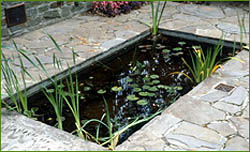 There
are two main weeds that cause trouble in ponds.
Blanket weed appears in late spring as thick
strands of bright green weed threading its way
through the water. It may be removed by winding
it around a stick or broom handle and pulling
it out. It should be left close to the edge
of the pond for 24 hours to allow insects to
escape and return to the water. Blanket weed
may be used in thin layers in the compost heap. There
are two main weeds that cause trouble in ponds.
Blanket weed appears in late spring as thick
strands of bright green weed threading its way
through the water. It may be removed by winding
it around a stick or broom handle and pulling
it out. It should be left close to the edge
of the pond for 24 hours to allow insects to
escape and return to the water. Blanket weed
may be used in thin layers in the compost heap.
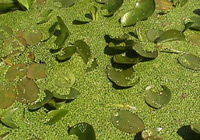 Duck
weed is a floating weed made up of thousands
of tiny plants with light green leaves. They
float together forming sheets and quickly covering
the surface of the pond. It's easily removed
using a child’s fishing net or by skimming
the surface of the water with a timber board
and lifting out the weed. Duck
weed is a floating weed made up of thousands
of tiny plants with light green leaves. They
float together forming sheets and quickly covering
the surface of the pond. It's easily removed
using a child’s fishing net or by skimming
the surface of the water with a timber board
and lifting out the weed.
The trouble is that if one piece of Duck weed
is allowed to remain then it will quickly multiply,
again covering the pond. Contamination is frequently
the result of plant gifts from friends and keen
gardeners. Wash the roots and foliage of all
new aquatic plants to reduce the risk of duck
weed before placing them in the pond .It is
also carried on the feet of water fowl hence
the common name.
Blanket weed is less of a problem where the
water balance is good. Insects, aquatic plants
and oxygenating plants help to achieve that
balance. Where there is water movement that
pushes oxygen into the pond that will also reduce
the risk of weed.
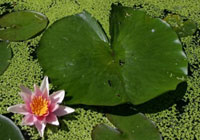 Aggressive
plants can be considered as weeds especially
some of the large leafed lilies that cover the
surface pushing their leaves out of the water.
Oxygenating plants can grow rapidly smother
smaller plants and filling small ponds with
their foliage. In late spring and in early autumn
the pond should be overhauled when spreading
plants that are taking over can be curtailed. Aggressive
plants can be considered as weeds especially
some of the large leafed lilies that cover the
surface pushing their leaves out of the water.
Oxygenating plants can grow rapidly smother
smaller plants and filling small ponds with
their foliage. In late spring and in early autumn
the pond should be overhauled when spreading
plants that are taking over can be curtailed.
back
to John's index page
|