 A
path should lead somewhere. It is very disappointing
to make your way along a path only to have
to retrace your steps to the starting point.
A
path should lead somewhere. It is very disappointing
to make your way along a path only to have
to retrace your steps to the starting point.
Even in a small garden the route can meander
around shrubs and through beds to give the
impression of space.
If
there isn’t space to return through
a different part of the garden then make the
visitors believe that it could have but you
wanted them to see what was at the end of
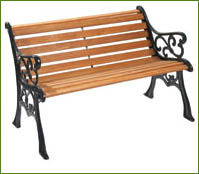
the path. A garden seat will do nicely. After
a chat and a rest they will be happy to return
especially if some new plants are in vision
that were screened from the other direction.
 Other
path endings include the garden shed, a bird
bath or a sun dial.
Other
path endings include the garden shed, a bird
bath or a sun dial.
Where space allows make the path sufficiently
wide for two people to walk side by side.
It spoils good conversation if one person
is talking over their shoulder to the person
looking at their back.
The surface may be tiles or gravel and can
be made more interesting if low growing and
mat forming plants are allowed to creep over
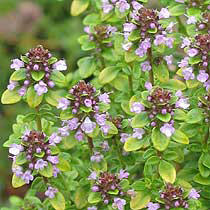
the edge of the path. Creeping thyme will
give off a pleasant aroma when walked on.
With a gravel path it will be necessary to
edge both sides with stones, tiles, bricks
or kerbing to prevent the gravel spilling
onto the beds or grass at either side.
Paths through a copse or a woodland area can
be made of wood chip or bark mulch with a
rough timber edge held in place with pegs.
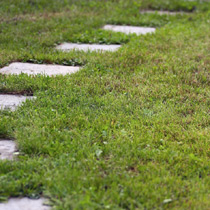
Stepping stone paths made of flat stones or
tile slabs laid through the lawn are tempting,
especially if they disappear through a shrub
bed. Curiosity will make visitors want to
see where the path leads. It can be continued
beyond the bed and curved back to another
feature such as a pond, patio or pergola.
 Small
trees or large shrubs such as Cotoneaster
cornubia overhanging the path will add interest.
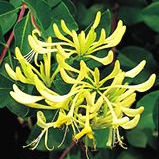
Planting a honeysuckle or clematis to scramble
up through the overhead branches will provide
a vertical dimension, making sure the walk
is anything but boring.
Small
trees or large shrubs such as Cotoneaster
cornubia overhanging the path will add interest.
Planting a honeysuckle or clematis to scramble
up through the overhead branches will provide
a vertical dimension, making sure the walk
is anything but boring.
back
to John's index page