|
Summer Prune
1 August
2005
 Every
good gardener is aware that winter and spring
pruning is essential. Then the secateurs are
put away for another year with no thought of
summer use. Every
good gardener is aware that winter and spring
pruning is essential. Then the secateurs are
put away for another year with no thought of
summer use.
This
is the time to prune with next year’s
fruit and flowers in mind.
There is still time to prune
plum, cherry and greengage fruit trees that
must be pruned in summer. At this time the spores
of killer diseases such as bacterial canker
and silver leaf that enter through pruning cuts
are dormant.
 Trained
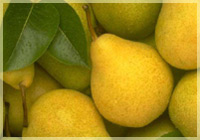
fruit trees of apples, pears and peaches are
pruned in summer to reduce the long, young side
shoots and keep the tree in shape. Shorten the
stems back to 4-5 leaves making the sloping
cut immediately above a bud. The portion remaining
is where the spurs that carry the blossom and
fruit will form. The leader is trained and allowed
to grow without being shortened. Trained
fruit trees of apples, pears and peaches are
pruned in summer to reduce the long, young side
shoots and keep the tree in shape. Shorten the
stems back to 4-5 leaves making the sloping
cut immediately above a bud. The portion remaining
is where the spurs that carry the blossom and
fruit will form. The leader is trained and allowed
to grow without being shortened.
Summer fruiting raspberries
have finished cropping. All the stems that carried
fruit are cut down to ground level. Try not
to leave any stumps as they encourage disease.
The new growths are tied into
the supporting wires to replace those removed.
Surplus shoots are thinned out and burnt.
Strawberry plants can be tidied
up. Remove the older leaves and any runners
not required as new plants.
 Bush
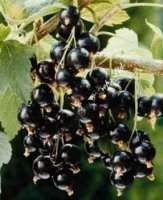
fruit such as blackcurrants can be pruned. Remove
the older branches that have black rather than
brown bark. Remove the branch as close to the
ground as possible to encourage strong, new
growths from the base of the plant. Thin out
the centre of the plant to allow air movement
and for ease of harvesting next year. Bush
fruit such as blackcurrants can be pruned. Remove
the older branches that have black rather than
brown bark. Remove the branch as close to the
ground as possible to encourage strong, new
growths from the base of the plant. Thin out
the centre of the plant to allow air movement
and for ease of harvesting next year.
Wisteria is summer pruned in
the same way as trained apple trees. The long
side shoots of this year’s growth are
shortened to within 5-6 leaves of the older
wood. They are again cut back to 2-3 leaves
in winter. This stump of wood produces the flower
buds that result in the spectacular trailing
racemes of blue, purple or white, early summer
flowers.
Trained
laburnum should be pruned now. Remove the older
or diseased branches tying in replacement shoots
to fill any gaps. Shorten new side shoots to
2-3 leaves to form spurs that will carry flowers.
Remove surplus or badly placed
branches.
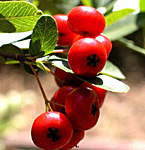 The
green fruit will be forming on pyracantha. Where
they are trained on walls or timber trellis
then the side shoots can be cut back to within
3-4 leaves of the clusters of fruit. This will
allow the yellow, red or orange berries to be
seen and keep the plant from growing away from
the support. The
green fruit will be forming on pyracantha. Where
they are trained on walls or timber trellis
then the side shoots can be cut back to within
3-4 leaves of the clusters of fruit. This will
allow the yellow, red or orange berries to be
seen and keep the plant from growing away from
the support.
The secateurs will also be needed
to remove suckers from trees, shrubs and grafted
rose bushes. Reversion where a single branch
of a variegated plant reverts to all green leaves
is easily spotted in summer. The whole branch
should be pruned out before the stronger green
shoot takes over the plant.
back
to John's index page |