| Wall
Fruit
1st July 2005
The
walls of the dwelling, garage and any outhouses
will provide you with the opportunity to extend
your garden by growing plants vertically.
Those
facing south and west will be warm and are particularly
suited to growing fruit such as apples, pears,
plums, cherries and peaches.
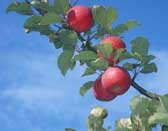 A
fruit tree has a long life and with good planting
it will provide pleasure and fruit for years. A
fruit tree has a long life and with good planting
it will provide pleasure and fruit for years.
The
soil at the base of a wall is usually a mixture
of topsoil, builders rubble and clay. Close
to the wall there is a strip that seldom sees
rain and when it does get wet the wall and the
foundations soon absorb the moisture.
Dig
a large hole and add a layer of rotted farmyard
manure or old compost to the base. Mix 100-150
grams of bone meal through the excavated topsoil.
Position the tree with the graft union (the
swollen area on the stem just above the roots)
above ground level. Work the soil through the
roots and firm with your foot. Dish the surface
of the soil to retain water and water well to
settle the soil around the roots.
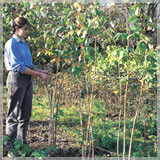 It
will be necessary to train the tree to grow
against the wall with the branches spaced allowing
the fruit to be in sunlight. It
will be necessary to train the tree to grow
against the wall with the branches spaced allowing
the fruit to be in sunlight.
Some
form of wall support will be essential to tie
the trained branches to. For fan shaped fruit
trees secure a 6ft x 6 ft timber trellis panel
to the wall. Espalier trees can be tied to horizontal,
galvanised wires 15 inches apart and fixed to
the wall with vine eyes or hooks.
Trained
fruit trees will need to be pruned in summer
to shorten the new shoots and again in winter
to further reduce their length. The section
of wood remaining produces fat buds which are
the fruit buds for next spring.
Feed
in late July or early August with a balanced
fertilizer. In late summer give a single liquid
feed of a high potash fertilizer. This will
harden the new growths and help the plant prepare
for winter.
Unfortunately
fruit trees suffer from serious pests and diseases
and regular attention and inspection will pay
dividends.
The
rootstock that the fruit tree has been grafted
on to is as important as the variety of fruit.
Generally there are both vigorous and dwarf
rootstocks available in garden centres.
Where
you decide on self- fertile varieties then a
single tree will bear fruit. Most varieties
however require a pollinating variety. Choose
those that are compatible assisting each other
with pollination.
Home
grown fruit tastes better.
back
to John's index page
|