|
Fruit For
The Future
14th
October 2004
Those
of us who grow apples and pears are happy this
autumn. It may not have been a great summer
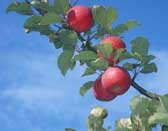
for some crops but fruit trees have excelled
themselves. Bumper crops of large fruit have
weighed down the branches to the extent that
commercial growers are having difficulty meeting
E.U. standards for size.
I’m
sure this year has been a one-off but with all
the talk of climate change this could be a good
time to consider growing more fruit.
 There
is a better chance of success with trained trees
grown against a South or West facing wall. Extra
effort at planting time will pay off later on.
Excavate a large planting hole and incorporate
lots of old, well rotted, farmyard manure. Plant
at the same depth as before with the graft union
above soil level. Water and mulch with more
farmyard manure or compost to help retain moisture.
There are now apple, plum, cherry and pear varieties
that are self fertile. Where space is limited
one of each variety will still crop. Some of
those available include ‘Red Falstaff’
apple, ‘Conference’pear, ‘Victoria’
plum, and ‘Lapins’cherry. Where
pollinating varieties are required select those
that are compatible. There
is a better chance of success with trained trees
grown against a South or West facing wall. Extra
effort at planting time will pay off later on.
Excavate a large planting hole and incorporate
lots of old, well rotted, farmyard manure. Plant
at the same depth as before with the graft union
above soil level. Water and mulch with more
farmyard manure or compost to help retain moisture.
There are now apple, plum, cherry and pear varieties
that are self fertile. Where space is limited
one of each variety will still crop. Some of
those available include ‘Red Falstaff’
apple, ‘Conference’pear, ‘Victoria’
plum, and ‘Lapins’cherry. Where
pollinating varieties are required select those
that are compatible.
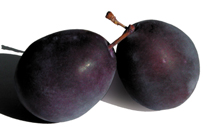 Wall
trained trees will only fruit well when there
are lots of suitable branches with fruit buds.
With cherries and plums, two year old branches
are best and pruning should be carried out in
summer to encourage a build up of strong new
growths which will crop the following year.
Apples and pears form fruiting spurs on branches
two years old and older. A spur is a collection
of fruit buds that is retained for several years.
Young growths are shortened in summer and further
reduced in winter to leave short lengths of
well ripened branches which will produce fruit
buds. Wall
trained trees will only fruit well when there
are lots of suitable branches with fruit buds.
With cherries and plums, two year old branches
are best and pruning should be carried out in
summer to encourage a build up of strong new
growths which will crop the following year.
Apples and pears form fruiting spurs on branches
two years old and older. A spur is a collection
of fruit buds that is retained for several years.
Young growths are shortened in summer and further
reduced in winter to leave short lengths of
well ripened branches which will produce fruit
buds.
Late
frosts play havoc with fruit trees as they come
into flower and are the most common cause of
a failure to fruit. Avoid planting in areas
prone to spring frosts and protect early flowering
trees with a sheet of horticultural fleece.
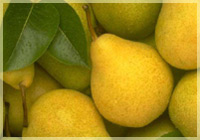 Remove
the newly formed fruit from young trees to allow
them to grow strongly for the first two years.
Training the branches to wires secured to the
wall will allow you to shape the tree and support
the weight of fruit on each branch. Remove
the newly formed fruit from young trees to allow
them to grow strongly for the first two years.
Training the branches to wires secured to the
wall will allow you to shape the tree and support
the weight of fruit on each branch.
There
is nothing nicer than picking and eating your
own fruit straight from the tree. If you tire
of eating fresh fruit, think of all that home
made jam.
back
to John's index page
|