Summary

  • Iran's Islamic Revolutionary Guard Corps (IRGC) says it has hit two UAE tankers in the Strait of Hormuz, as the US carries out a third night of strikes in a row on Iran

  • The UAE called the attack "brazen", adding that an Indian crew member was killed and eight others were injured - BBC Verify tracks the tankers' recent movements

  • The IRGC also confirmed it had targeted US facilities in Jordan and Bahrain overnight

  • Meanwhile the US military says it has completed strikes on targets aimed at degrading "Iran's ability to attack commercial shipping"

  • Oil prices rose this morning, with Brent crude up by 1.9% at $84.87 (£63.48) a barrel, while US-traded oil rose by 2% at $79.75

  • It comes after President Donald Trump said the US was reinstating a naval blockade of Iranian ports and would impose a 20% charge on all cargo shipped through the Strait of Hormuz - what we know so far

  1. Why is the Strait of Hormuz so vital?published at 17:34 BST 13 July

    The Strait of Hormuz connects the Gulf with the Arabian Sea and is deep enough for the world's biggest crude oil tankers to pass through.

    In 2025, about 20 million barrels of oil and oil products passed through the Strait of Hormuz per day, according to estimates from the US Energy Information Administration (EIA).

    About 20% of the world's oil and liquefied natural gas is shipped through the strait. The oil comes not only from Iran but other Gulf states such as Iraq, Kuwait, Qatar, Saudi Arabia and the UAE.

    About 3,000 ships usually sail through the strait each month but this dramatically decreased during the US-Iran war.

    At the narrowest point, the strait and its shipping lanes lie entirely within Iran and Oman's territorial waters - making it a particularly prominent sticking point in the ongoing hostilities.
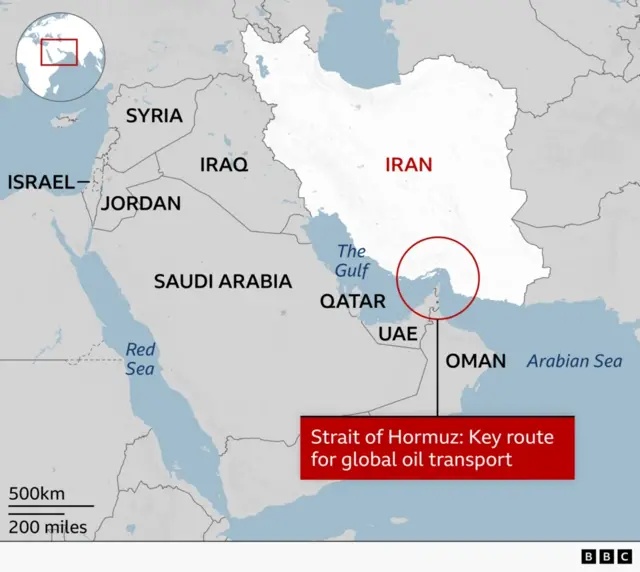

    Map of Strait of Hormuz.
  2. 'We don't need foreign workers to protect the strait' - Iranian parliamentarianpublished at 17:11 BST 13 July

    We've heard from Iranian parliamentarian Ebrahim Rezaei, a spokesperson for the country's National Security and Foreign Policy Commission, following Trump's announcement of a new blockade of Iranian ports.

    In response to the US president's assertion that the US will be the "guardian" of the Strait of Hormuz, he writes on X: "We don’t need foreign workers to protect the strait!"

  3. BBC Verify

    How much oil is thought to have left Iran since the first US blockade was lifted?published at 16:55 BST 13 July

    By Thomas Copeland

    After the deal to end the war between the US and Iran was signed on 17 June, Washington lifted its two-month blockade of Iranian ports in the Strait of Hormuz.

    It also eased decades-old sanctions by allowing for the temporary sale of Iranian oil.

    This was due to expire on 21 August but the US withdrew its permission after a series of attacks on ships in the strait early last week.

    In the month since the license was issued, 59 tankers left the Gulf laden with oil and petrochemicals, according to United Against a Nuclear Iran, an advocacy and monitoring group.

    It says the exports amounted to about 72 million barrels of oil which could provide potential revenue of more than $5.5bn (£4.1bn) for the Iranian government.

  4. US stock markets fall as conflict fuels inflation fearspublished at 16:40 BST 13 July

    Michael Race
    Business and economics reporter

    US stock markets have fallen in morning trading on Monday as investors react to the escalating situation in the Middle East.

    All three of the main indexes, the Dow Jones, Nasdaq and S&P 500, are down amid fears of inflation, with oil prices climbing more than 4% to around $79 (£59) a barrel for Brent crude, the global benchmark.

    The US and Iran renewed attacks over the weekend and Tehran said it had closed the Strait of Hormuz, a key waterway used in global trade.

    However, President Trump says the strait will remain open and that he will reinstate a blockade on Iranian ports, which he claims will stop "Iran's ships or customers from entering or leaving", but be open for other countries which will be required to pay a 20% cargo charge.

    Concerns over global oil supplies since the outbreak of the war have led to prices becoming volatile. While they have risen on the latest news, they remain well below where they were in May.

    The US stock markets are also being affected by a tough start to the month for technology and microchip firms, with investors continuing to grapple over high valuations and concerns of an AI bubble. Shares in Nvidia, SpaceX and Intel were all in the red in early trading.

  5. US struck submarine and ship maintenance facility in overnight Iran strikes - Centcompublished at 16:33 BST 13 July

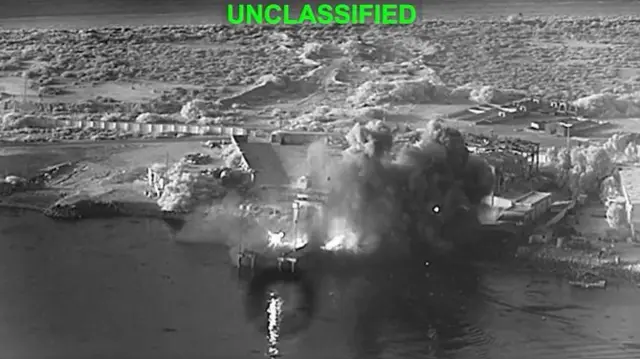
    Video footage from US Centcom shows overnight strikes on Iranian targetsImage source, Centcom / X

    US Central Command (Centcom) says, in an update, that American military forces struck a submarine and ship maintenance facility in Iran overnight.

    It says multiple one-way attack surface drones hit the port at Bandar Abbas Naval Base in southern Iran, and shares video footage of the operation.

    "Last night’s strikes degraded Iran’s ability to continue attacking commercial shipping," Centcom adds in a statement on X.

    The US had previously said it conducted its strikes in response to Iranian attacks on commercial ships in the Strait of Hormuz.

  6. BBC Verify

    What happened during the last US blockade?published at 16:14 BST 13 July

    By Thomas Copeland

    President Donald Trump first introduced a US naval blockade of Iranian ports three months ago to the day on 13 April, after Tehran effectively closed the Strait of Hormuz in response to US and Israeli strikes on Iran.

    The blockade was lifted last month as part of a deal to end the war between the US and Iran.

    During the blockade, the US military says it redirected at least 142 commercial ships going to or from Iranian ports and fired on at least nine vessels which it said refused to comply with its directions.

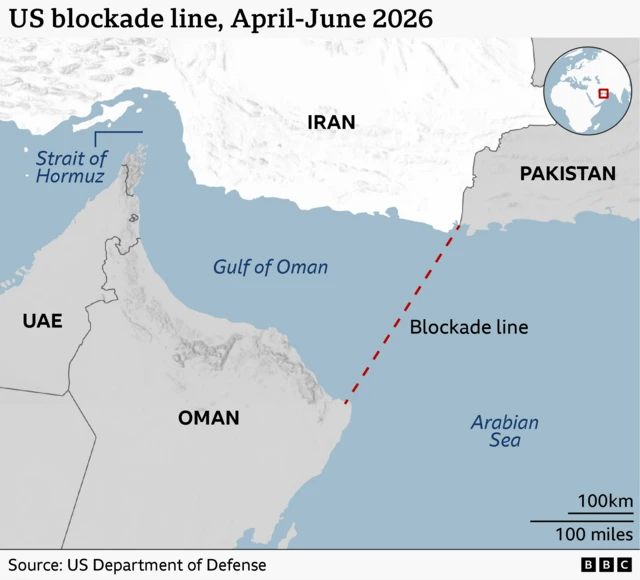
    While the Pentagon did publish a blockade line, stretching across the entrance to the Gulf of Oman, US forces intercepted multiple ships well outside of the region too.

    A tanker called Tifani, for example, was intercepted east of Sri Lanka more than a week after leaving the Gulf.

    A map showing a line stretching from the coast of Oman to the Iran-Pakistan border which the US military termed its blockade line. It said non-Iranian linked ships would be able to cross freely but those linked to Iran could be intercepted or ordered to turn back.
  7. Trump offers few details of how Hormuz blockade will work in practicepublished at 16:03 BST 13 July

    Bernd Debusmann Jr
    White House reporter

    What Donald Trump's latest announcement of a new blockade on Iranian ports means in practice remains unclear.

    Many US allies are likely to baulk at the prospect of reimbursing the US and paying 20% of all cargo shipped - and his detractors at home and abroad are likely to point out that the strait was open and unencumbered before Operation Epic Fury began on 28 February.

    The announcement could also become politically complicated for the president domestically.

    Some lawmakers - including Republicans - had openly questioned what the US gained from the ceasefire, its extension and further negotiations.

    Many Americans are also likely to wonder why - despite repeated promises to the contrary - oil prices are inching up again. Trump is not on the ballot for the upcoming midterm elections, but other Republicans are and will be hearing from constituents concerned about prices.

    The announcement could also be a bid to restart negotiations and push other countries to be more involved, a tactic that Trump has used in the past.

    In a few hours' time we will hear from Trump on-camera, when he may provide more detail about the announcement.

  8. A 20% charge on cargo: How this blockade is different to the lastpublished at 15:53 BST 13 July

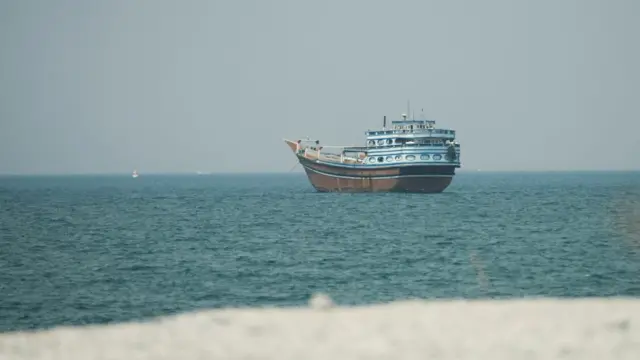
    A ship in the Strait of Hormuz, as seen from Oman on 13 July.Image source, Reuters

    This is not the first time Trump has blockaded Iranian ports in the Strait of Hormuz.

    In April, US forces announced they would intercept or turn back vessels travelling to or from Iran's coast. The US wanted to restrict Tehran's ability to profit from oil exports in an attempt to put pressure on the country.

    The UN's maritime agency, the International Maritime Organisation, says no country has a legal right to block shipping in straits used for international transit.

    "We're not going to let Iran make money on selling oil to people that they like and not people that they don't like," Trump said at the time.

    Iran called the move "piracy".

    The two countries had agreed to lift the blockade and reopen the Strait of Hormuz in the interim deal - or memorandum of understanding - agreed on June 17.

    This time round, Trump has also imposed a charge of 20% on all cargo shipped through the vital waterway, but he did not explain how this would work.

  9. Trump says US reinstating blockade on Iranian portspublished at 15:27 BST 13 July
    Breaking

    US President Donald Trump has just said the US will reinstate the blockade on Iranian ports.

    Here's his Truth Social post in full:

    "The Hormuz Strait is OPEN, and will remain OPEN, with or without Iran. We are reinstating the THE IRANIAN BLOCKADE, so named because it is only stopping Iran’s ships or customers from entering or leaving. All other countries will have fair and open use of the Strait.

    "The U.S.A. will be, from this point forward, known as 'THE GUARDIAN OF THE HORMUZ STRAIT,' but as such, and as a matter of FAIRNESS, will be reimbursed, at the rate of 20% on all cargo shipped, for any and all costs necessary to do the job of providing safety and security to this very volatile section of the World. The process and formation will begin immediately."

  10. BBC Verify

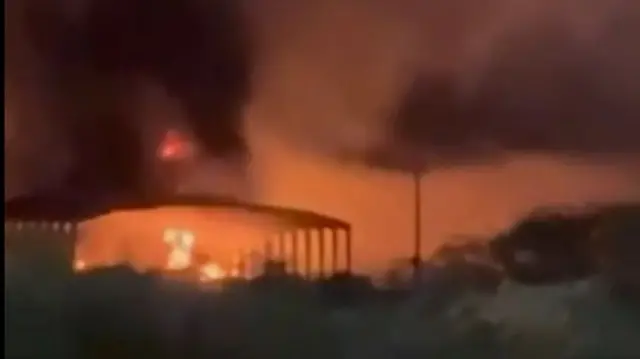
    Videos show separate fires near Iranian airport and port on Strait of Hormuzpublished at 15:18 BST 13 July

    A still image from a verified video showing a fire in a hangar at Aghajari Airport in Omidiyeh, south-western IranImage source, Telegram

    By Shayan Sardarizadeh and Benedict Garman

    A large fire at a hangar at Aghajari Airport in Omidiyeh, south-western Iran, has been captured in footage apparently showing the aftermath of overnight US strikes on Iran.

    Multiple videos and still images captured around half a mile east of the airport show the same incident. From that distance it is unclear whether the hangar itself is on fire.

    Elsewhere, verified video captured at Suru Beach Park in Bandar Abbas on the Strait of Hormuz shows an orange glow and a plume of black smoke rising in the direction of Shahid Bahonar Port, south-west of the city.

  11. US has 'seriously jeopardised' oil and gas supplies, says IRGC spokespersonpublished at 14:57 BST 13 July

    In another statement shared on Tasnim news agency, a spokesman for Iran's Islamic Revolutionary Guard Corps says the US has "seriously jeopardised the security of global oil and gas supplies" by interfering in the Strait of Hormuz.

    The statement adds that Iran continues to control the strait and "will force foreign powers and their allies to submit to the will of the Iranian people".

    "We will bring them [the US] to even greater humiliation and despair in their new acts of aggression," it says.

    Oil prices jumped at the start of trading this morning after the latest tit-for-tat attacks, but remain significantly below the peak seen at the height of the conflict.

    This Flourish post cannot be displayed in your browser. Please enable Javascript or try a different browser.

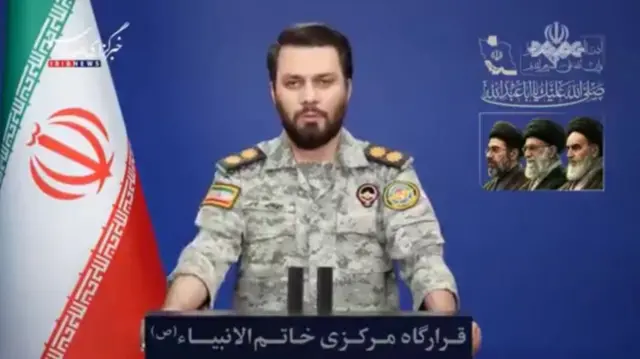
  12. Iran's military says it will not allow US to interfere in Strait of Hormuz 'management'published at 14:39 BST 13 July

    Man in military fatigues reads statement on Iranian media
    Image caption,

    The statement was carried on Iranian media

    Iran's top military headquarters, Khatam al-Anbiya, says it will not allow the US to "interfere in the management" of the Strait of Hormuz.

    In a statement shared by Iran's Tasnim news agency, the Iranian military says "frequent misadventures" from the US in the strait have "seriously jeopardised the security of the region".

    It adds "we do not and will not allow" the US to control the crucial waterway - and that Iran's armed forces are dealing with any disturbances from the "bandit army" of the US.

    Any cooperation with the US will be considered an act of "war" against Iran's sovereignty, it adds, warning that if the conflict spreads "the flames of war will engulf all the countries of the region".

    Earlier today, Donald Trump said the US was "taking over the strait".

  13. Trump claims Iran had '11-hour' meeting yesterdaypublished at 14:15 BST 13 July

    More now from Donald Trump's phone call with Fox News.

    He says Iran had an "11-hour meeting" yesterday, adding that "everything was agreed to", seemingly referring to a deal with the US.

    "Everything is 11 hours with these guys," he adds. "It should be one minute."

    But he says Iran then left the room and called back, saying "we had to make a couple of changes".

    "Always changes, you know, they're professional negotiators, that's all they are. I don't even call them good at it... they've got nothing from me," he says.

    He accuses Iran of "tapping" presidents along for 47 years, including Clinton, Bush, and Obama - who, he says, was "the worst of all".

    Return to the latest post
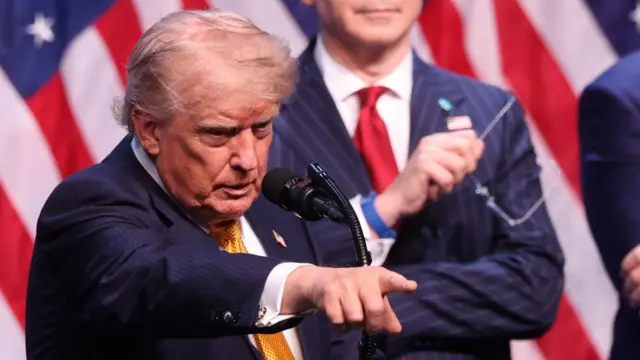
  14. Trump: 'We are taking over the strait'published at 14:00 BST 13 July
    Breaking

    Donald Trump points his finger while wearing a navy suit and a gold coloured tie.Image source, EPA/Shutterstock

    Donald Trump has said the US will "probably run" the Strait of Hormuz, claiming that Iran "broke" a deal that was made with the US.

    Speaking to Fox News, the US president says: "We are taking over the strait. They have nothing. They've got nothing."

    He says the US hit Iran "very hard last night", referencing a series of strikes carried out by US Central Command (Centcom) overnight on military assets in the country.

    Trump adds: "We have them. We have them in the run. Most of their equipment is gone. Their anti-aircraft stuff is gone."

    Iran's embassy in the UK said earlier on Monday it has established a temporary safe maritime corridor "free of technical and military barriers" in the strait, but that US military aggression has turned the waterway into a "high-risk zone".

    • We'll have more from Trump's interview on Fox in our next post
  15. Analysis

    Yemen airport incident is a significant escalation in largely dormant conflictpublished at 13:54 BST 13 July

    Sebastian Usher
    Global affairs correspondent

    The details of the incident at Sanaa Airport remain unclear, but it already appears to be the most significant escalation in the largely dormant conflict between the internationally-backed Yemeni government and the Houthis for several years.

    Both sides are supported by rival regional powers - the government by the Saudis and the Houthis by Iran. That's why the Houthis have immediately accused Saudi Arabia of carrying out airstrikes on Sanaa Airport.

    A spokesperson for the movement said that it would not pass "without a response and punishment". That raises the prospect of reigniting direct conflict between the Houthis and Saudi Arabia.

    Reports of a tanker being approached by several small boats off the coast of Yemen will also raise concerns that the Houthis may be reactivating attacks on shipping.

  16. Houthis report Iranian plane lands in Yemen, despite alleged runway attackpublished at 13:46 BST 13 July

    We have an update now on the reports Yemen's army had targeted a runway at Sanaa International Airport to prevent an Iranian plane from landing.

    Houthi media now says the Iranian plane has landed.

    As we explained earlier, the Houthis are backed by Iran and control Sanaa, while Yemen's internationally-recognised government is based in Aden in the south of the country.

  17. Yemen's army reportedly targets runway to prevent Iranian aircraft landingpublished at 13:29 BST 13 July

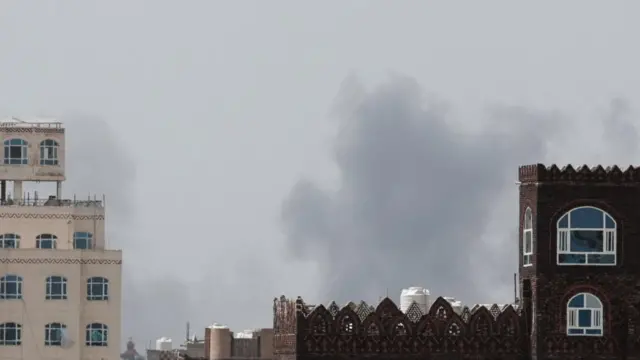
    Smoke rises after an airstrike hit the Sanaa International Airport in Yemen.Image source, Reuters
    Image caption,

    Smoke rises at Sanaa International Airport in Yemen, as seen from the city of Sanaa

    Yemen's armed forces have reportedly targeted the runway of Sanaa International Airport to prevent an Iranian aircraft from landing, according to Yemeni state media.

    Yemen's capital Sanaa is under the control of the Iran-aligned Houthi group, while the internationally-recognised government, which has the backing of Saudi Arabia, operates out of Aden in southern Yemen.

    The Houthis have called it a "blatant and unjust aggression" in a post on Telegram. "We affirm that this aggression will not go unpunished," says Houthi spokesperson Yahya Sarea.

  18. BBC Verify

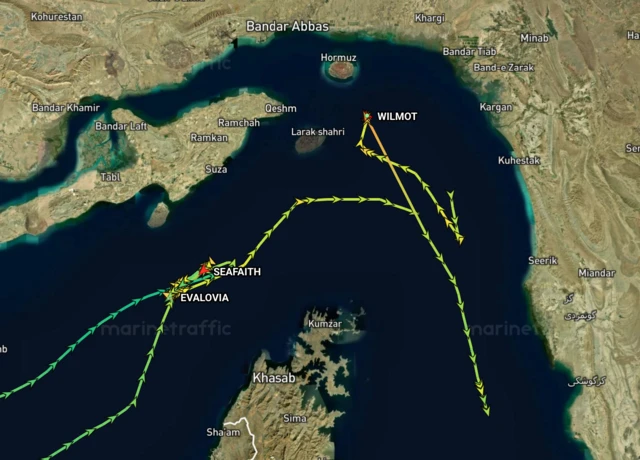
    Commercial vessel movement remains restricted in Strait of Hormuzpublished at 13:08 BST 13 July

    Vessels alter course after Iran government’s Persian Gulf Strait Authority said transit through the strait isn’t possibleImage source, MarineTraffic

    By Shruti Menon

    A small number of vessels appear to be moving through the Strait of Hormuz although traffic remains restricted, according to the ships we can track on the website MarineTraffic.

    Two vessels - Wilmot and Seafaith - appear to be sailing east into the Gulf of Oman with their location transmitters switched on according to tracking data.

    Wilmot is broadcasting Pakistan as its destination without specifying a port and Seafaith is sailing to Sohar in Oman.

    Two other ships, Evalovia and Aisana, stopped transmitting their locations after previously appearing to head out of the strait. Their current locations cannot be confirmed.

    MarineTraffic tracking showed Wilmot, Evalovia and Seafaith each altered course while outbound towards the Gulf of Oman and had reversed direction. Wilmot and Seafaith have resumed their outbound journeys. Evalovia also appeared to turn back towards the Gulf of Oman before it went dark - meaning it switched off its location transponders.

    Vessels often switch off their location transmitters when there is a risk to their safety.

    Cargo ship Bayaze D and a small number of Iranian vessels appear to be sailing west through the strait likely towards ports in Iran.

    Earlier, ship-tracking data showed no vessels had transited the Strait of Hormuz since yesterday evening.

  19. UK government will 'step up' ability to counter state threatspublished at 13:02 BST 13 July

    More from the recent government statement on its move to pass emergency legislation to outlaw three groups, including the IRGC.

    The Home Office said the move will step up the government’s ability to counter state threats linked to foreign powers and will hand the police "stronger powers" to deal with activity carried out by the three groups.

    "New offences for supporting and assisting these groups could result in a 14-year prison sentence," the statement adds.

    "It will now be easier to bring anyone caught working with them to justice and put them behind bars for longer."

    The government adds it has already taken "robust action" against Iran by sanctioning the IRGC in its entirety and more than 550 Iranian-linked individuals and entities.

    Home Secretary Shabana Mahmood says those working for the three groups "will be tracked down and put behind bars" and vows to leave "no stone unturned to keep our country safe".

    Foreign Secretary Yvette Cooper adds Russia and Iran's use of proxy groups "to carry out state-backed activity" is "reprehensible" and the UK will take all measures necessary "to protect the British people, at home and abroad”.

  20. IRGC to be outlawed by UK governmentpublished at 12:46 BST 13 July
    Breaking

    Iran's Islamic Revolutionary Guard Corps (IRGC) is to be outlawed by the UK government following emergency legislation to crack down on foreign state-backed activity, the Home Office confirms.

    The Islamic Movement of Companions of the Right (IMCR) and Russia’s GRU Volunteer Corps (GRU) are also designated.

    If approved by Parliament later this week, those conducting acts of sabotage including arson on behalf of these groups could face life imprisonment.

    UK Prime Minister Keir Starmer said: "We will never let Britain be a playground for states who want to spread fear, division and violence on our streets."